Nebraska WMA Ice Riding Rules
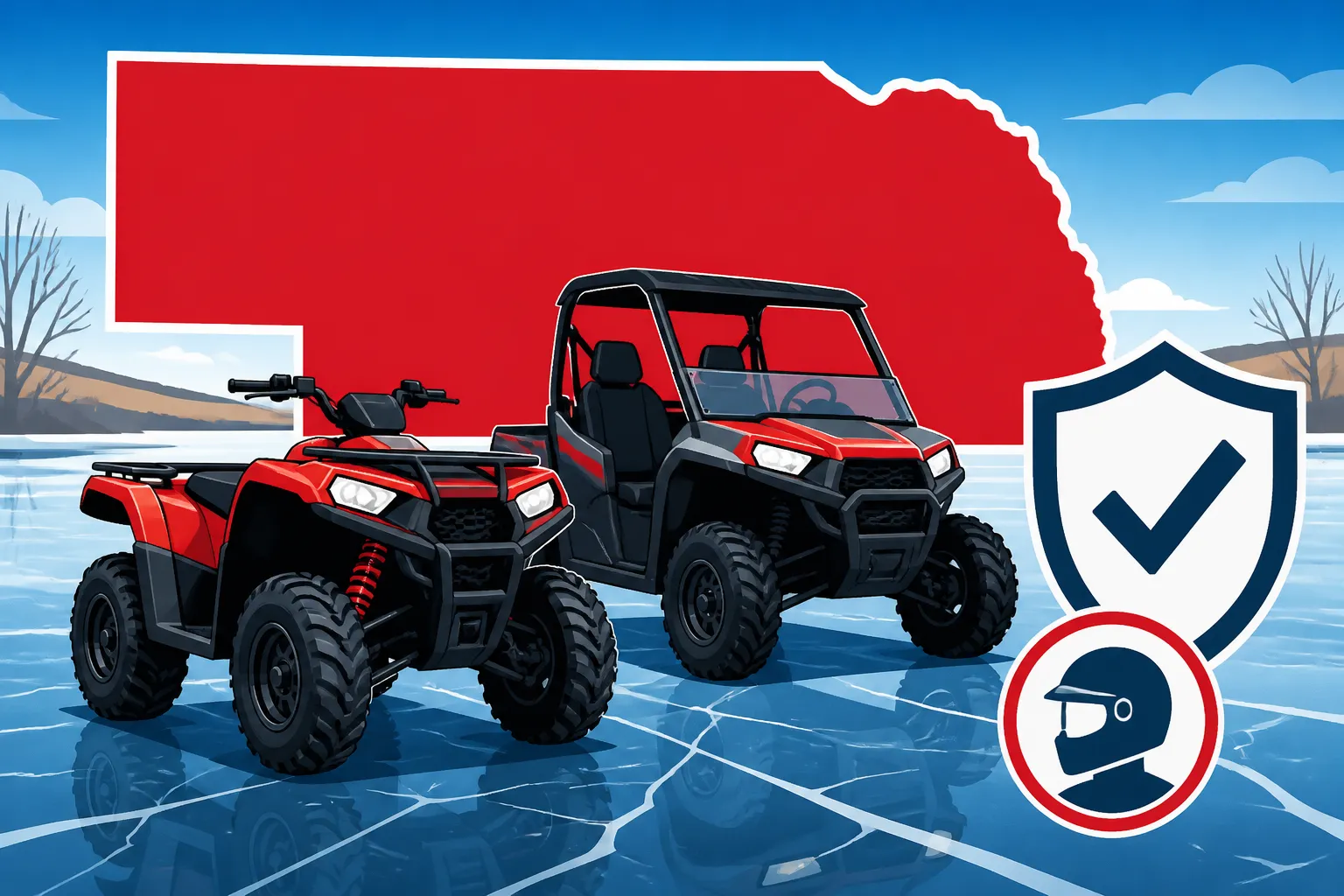
A frozen lake can look like an open riding area, but that does not mean every Nebraska Wildlife Management Area (WMA) allows ATVs or UTVs on its ice. Rules can vary by location, and signs may close an area even when the ice looks usable. Before you unload, confirm that motorized ice riding is allowed at that WMA, where you may travel, and what access or parking rules apply.
When Ice Riding May Be Allowed on a Nebraska WMA
The key point is that permission to enter a WMA is not the same as permission to ride anywhere within it. Nebraska WMAs have rules limiting motorized travel, and access may be restricted to designated roads or other specifically authorized areas. A frozen lake can be an exception at a particular location, but it is not a statewide, all-WMA permission to ride on any frozen water.
That distinction matters because a machine can be on ice while still being in an area where motorized use is prohibited. A route that is open to vehicles on land may not authorize riding across a lake. Conversely, a WMA may have a specific ice-riding allowance that does not apply to its roads, shoreline, parking areas, or other sections.
Before making the trip, check the rules for the exact WMA and the specific water you plan to use. Look for posted notices at the access point and review the current area information from Nebraska Game and Parks. If the wording is unclear, contact the agency or the local office responsible for the area before riding. Do not rely on a rule you remember from another WMA or from a previous winter.
The practical approach is:
- Identify the specific WMA and the lake or water body you intend to ride.
- Check the area’s current rules for motorized use, including any winter or frozen-water conditions.
- Read signs at the entrance, parking area, and shoreline before unloading.
- Confirm whether riding is limited to a designated route, a defined part of the lake, or certain conditions.
- If there is no clear permission, do not treat silence as approval. Ask before riding.
This is the same reason it helps to review Nebraska WMA Vehicle Rules before planning a visit. General WMA access does not automatically make every route or surface open to motor vehicles.
| What you want to do | What to confirm first |
|---|---|
| Ride on a frozen lake | Whether that specific WMA permits motorized use on that water |
| Reach the lake by ATV or UTV | Whether the route from the parking area is open to motor vehicles |
| Ride beyond a designated road | Whether the area has a separate authorization for that route or surface |
| Park near the water | Which parking areas are permitted and whether the vehicle must stay in a marked lot |
| Ride when signs are posted | Whether the signs close the lake, a route, or the entire area to motorized use |
The broader rule is straightforward: use only the locations and routes that the WMA’s current rules allow. For additional context on the roadway side of the question, see Nebraska WMA Roadway Rules. A designated roadway and an ice-riding area are different permissions, so confirm both if your trip involves traveling from a lot to a lake.
How to Check the Rules for a Specific WMA
A WMA name alone may not tell you whether ice riding is allowed. Rules can depend on the particular water body, access point, season, or temporary closure. A good check combines official area information with what is posted at the site.
Start with the WMA’s official listing or area materials. Look for language about motor vehicles, designated roads, winter access, frozen water, and closures. Make sure the information applies to the WMA you are visiting; similar names or nearby recreation areas can have different rules. If an online description is general, ask the agency whether it covers the exact lake and route you have in mind.
Then check the signs on arrival. Signs may be posted at the entrance, road junctions, parking areas, or shoreline. A notice may prohibit vehicles on the ice, close a particular section, or limit access to a road. Read the full sign rather than assuming that a familiar symbol or short phrase covers the whole area. If signs conflict with what you found online, follow the posted restriction and seek clarification before riding.
A useful rule-checking routine looks like this:
- Check the right location. Confirm the WMA boundary and the name of the water body. A nearby lake or public access can be managed differently.
- Check the activity, not just access. “Open” or “public access” does not necessarily mean open to ATVs and UTVs.
- Check the surface and route separately. Permission to ride on ice does not necessarily allow travel across shoreline, wetland, grass, or closed roads.
- Check for temporary restrictions. Closures or conditions can change, particularly when ice, wildlife, or site conditions raise concerns.
- Ask if the rule is ambiguous. A direct answer from the responsible office is safer than interpreting a vague sign or an old post.
For more about how frozen-water allowances work, see Frozen Water as an Exception. If a closure sign is present, Reading the Signs That Close a Frozen Lake can help you think through what the restriction may cover, but it is not a substitute for checking the current rule at the site.
Do not assume that an ice-riding allowance extends to every kind of machine. If the rule refers to a particular vehicle type, follow that wording. If it does not clearly cover your ATV or UTV, ask before unloading. The same applies to passengers, towing, and riding in a group: a general allowance to use the ice does not necessarily answer every question about how you may use it.
When calling or emailing, give the office enough detail to answer accurately. Name the WMA, the lake, your machine type, and the route you expect to take from the parking area. Ask whether motorized riding is currently permitted on the ice, whether any designated area or conditions apply, and whether there are temporary closures. That is more useful than asking only whether “the WMA is open.”
Signs, Routes, Parking, and Other Limits
An area may allow riding on part of a frozen lake and still restrict movement elsewhere. Follow the boundaries and routes given by the WMA’s rules and signs. Do not use an apparent opening in a fence, an existing tire track, or another rider’s path as proof that an area is authorized.
Access routes deserve special attention. Even if ice riding is allowed, the road or trail from the parking area to the lake may be restricted. Stay on routes explicitly open to motorized vehicles, and do not cut across vegetation or shoreline to reach the ice. For details about where to leave a vehicle, review [Nebraska WMA Parking Rules]. Parking in an unmarked spot can block access, damage habitat, or put a vehicle in a closed area.
Pay attention to signs that limit use in only one place. A closure might apply to a stretch of shoreline, a particular road, or the frozen water itself. When a sign is unclear, do not assume the narrowest possible interpretation simply because the rest of the WMA appears open. Ask the managing agency before continuing.
Other limits may apply alongside the ice-riding rule. For example, an area may have boundaries or wildlife-related restrictions that affect where people can travel. A hunting license, an invitation to hunt, or general public access does not by itself authorize riding outside the motorized areas. If you are visiting for hunting or another activity, confirm the vehicle rules separately; [Nebraska Hunting License and Land Access] explains why those permissions are not interchangeable.
Also separate WMA access from state park access. A WMA’s rules are not automatically the same as a state park’s permit system. Do not buy or display a park permit on the assumption that it authorizes riding on WMA ice, and do not assume that a WMA’s access rules answer permit questions for a nearby park or recreation area. For the distinction, see Does a Frozen WMA Lake Need a Park Permit?. If you plan to visit more than one type of public land, check each location’s requirements individually.
Keep your visit low-impact. Avoid riding through vegetation, wet shoreline, or areas marked for protection. Do not move barriers or signs, and do not make a new route around a closure. If an area is muddy, thawing, or showing damage from vehicle traffic, turn back rather than widening the disturbance. A place being frozen in one spot does not mean the adjacent ground can support a machine.
Ice Safety and a Simple Pre-Ride Plan
Legal permission does not mean the ice is safe. Ice thickness can vary across one lake and change with weather, currents, springs, inflows, vegetation, and other local conditions. A surface that appears solid near shore may be weaker farther out or around a pressure crack. Snow can hide thin areas, open water, and changes in the ice.
Never use an ATV or UTV to test whether ice is safe. Do not rely on another rider’s tracks as proof that the route will support your machine. Check local conditions through reliable, current sources and use conservative judgment. If you cannot verify that the ice is safe, stay off it. No riding plan is worth the risk of a machine breaking through.
Before leaving, make sure everyone in the group knows the planned route and the rules for the WMA. Carry a charged phone, but do not count on cell service in every area. Tell someone where you are going and when you expect to return. Wear appropriate cold-weather and flotation equipment, and keep enough distance between machines to avoid crowding a weak area. These precautions reduce risk; they do not make unsafe ice safe.
A simple pre-ride checklist can help prevent both rule violations and avoidable emergencies:
- Confirm that the exact WMA and water body allow motorized ice riding.
- Check for current closures and read every sign at the access point.
- Confirm the route between the parking area and the ice is open to motorized travel.
- Park only where the WMA allows it.
- Check current ice conditions using reliable local information.
- Carry communication and emergency supplies, and tell someone your plan.
- Turn around if conditions, signs, or boundaries are uncertain.
If you arrive and cannot confirm permission, do not ride while you try to sort it out on the ice. Stay in an authorized parking area, contact the appropriate office, and choose another legal riding location if you cannot get a clear answer. Rules can vary from one WMA to another, and a careful check is the simplest way to avoid an unsafe trip or an unexpected violation.
Disclaimer
This article is for general informational purposes only and does not constitute professional advice. Laws, prices and regulations vary by location and change over time. Consult a qualified professional for guidance on your specific situation.