Titling a Machine Bought at a Farm Auction
Buying an ATV or UTV at a local farm auction can be a fantastic way to find a solid machine at a good price, but the excitement can quickly turn into a headache when you realize the paperwork isn't as straightforward as buying from a dealership. Many folks find themselves scratching their heads, wondering how to legally make that new-to-them quad truly theirs when there’s no shiny manufacturer’s statement of origin or neatly organized previous title. This guide is here to unravel that mystery, walking you through the specific steps and potential hurdles for successfully titling an ATV or UTV you’ve snagged at a Nebraska farm auction.
The Unique Nature of Farm Auction Purchases
When you head to a farm auction, whether it's out in the Sandhills or closer to the Platte River Valley, there's a certain thrill to the bid. You're looking for that diamond in the rough, the well-maintained machine that's been doing honest work. But the nature of an auction sale, especially for off-road vehicles, comes with its own set of rules and, often, a distinct lack of traditional paperwork. It’s not like buying a new machine from a dealer where all the titling is handled for you, and it’s often not even like a private sale where you might get a signed title in hand.
Why Auctions Are Different from Dealers
The biggest difference between an auction and a dealership is the "as-is" nature of the sale. When you buy from a dealer, they're typically obligated to provide a clear title or the Manufacturer's Statement of Origin (MSO) which is basically the birth certificate for your new machine. They also handle the sales tax collection and often submit your titling paperwork to the county treasurer on your behalf, sometimes for a small fee. At a farm auction, however, you're usually buying directly from a previous owner, an estate, or a business, and the sale is final with whatever documents (or lack thereof) are provided on the day.
This can be a real point of frustration for many buyers. You might drive home with your new quad, only to realize you have little more than a handwritten receipt or an auction manifest. There’s no dealer standing by to answer questions about the previous owner or to help you track down missing documents. This puts the entire burden of proving ownership and navigating the titling process squarely on your shoulders. It's exhilarating to get a good deal, but it can be deflating when the bureaucratic hurdles start piling up.
Common Scenarios at a Nebraska Farm Auction
Farm auctions are rich with history, and often, the machines being sold have quite a story. You might find a trusty utility quad that’s been part of a ranching operation for decades, passed down through generations, or a side-by-side from a farming operation that’s downsizing. In these scenarios, it’s not uncommon for the original MSO to be long lost. The machine might even predate Nebraska's titling requirements for ATVs, which came into effect in 2004. So, if you're buying a machine that was originally purchased new before 2004, it might never have had a title in the first place.
Another common situation is a machine that has simply never been titled because it was always used exclusively on private farm land. In Nebraska, ATVs and UTVs used solely for agricultural purposes on private land don't necessarily need a title until they are sold or transferred. This means a perfectly legal and legitimate machine could be changing hands without any previous title paperwork. The seller, whether a farmer, an estate executor, or a business liquidator, might only provide a simple auction receipt or a basic bill of sale, if anything at all. Understanding these possibilities before you bid can help you prepare for the titling challenge ahead.
Essential Documents You'll Need (or Create)
The key to successfully titling an ATV or UTV purchased at a farm auction in Nebraska lies in assembling the right paperwork. Since you likely won't receive a clean, signed-over title, you'll need to build a paper trail that proves ownership to your county treasurer's office. This might involve creating new documents or leveraging what the auction house provides. Without this documentation, you'll hit a brick wall when trying to secure your title.
The Bill of Sale – Your Most Crucial Document
While an auction receipt confirms your purchase, a detailed bill of sale is often your most crucial document when titling an ATV bought at auction. This document is your primary proof of who bought what, from whom, and for how much. It needs to be comprehensive and clear to satisfy the requirements of the county treasurer. Imagine a scenario where the auction house only gives you a basic manifest with the lot number and price; that's often not enough on its own.
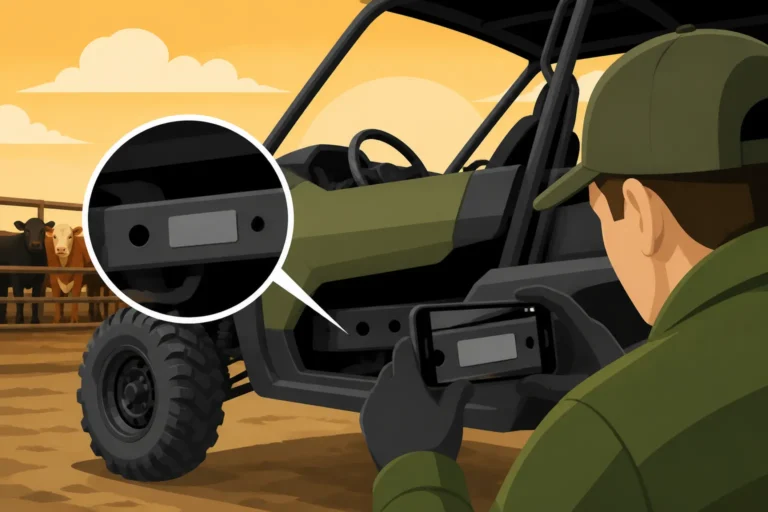
A robust bill of sale should include the full legal names and addresses of both the buyer and seller, the date of sale, the exact purchase price, and a detailed description of the ATV or UTV, including its make, model, year (if known), and most importantly, the Vehicle Identification Number (VIN). The VIN is paramount for identification and will be cross-referenced by the treasurer’s office. If the auctioneer’s paperwork is sparse, don't be afraid to create your own comprehensive bill of sale, ensuring all these details are included and that both parties (or the auctioneer as the seller's agent) sign it. For drafting such a document, resources like LawDepot can provide templates that ensure you cover all the necessary legal bases, offering a structured approach to what might otherwise be a quick scribble on a scrap of paper. Getting it notarized, while not always possible at an auction, adds an extra layer of authenticity if you can manage it.
Proof of Ownership from the Auction House
Beyond a personalized bill of sale, the official documentation from the auction house itself serves as critical proof of ownership. This typically comes in the form of an auction receipt or an invoice. While it might not contain all the minute details you'd find on a traditional title or MSO, it should clearly indicate that you were the successful bidder for the ATV or UTV in question.
When you receive your auction receipt, scrutinize it immediately. Make sure it explicitly identifies the machine by its VIN, if possible. If the VIN isn't present, or if it's incorrect, point this out to the auction staff immediately. Getting it corrected on the spot, even with a handwritten note and initial, is far easier than trying to rectify it later. This receipt, coupled with a detailed bill of sale, forms the cornerstone of your ownership claim. If the VIN on the machine somehow doesn't match the paperwork, you'll have a much tougher time, potentially requiring further investigation by law enforcement to ensure the machine isn't stolen, before the county treasurer will proceed.
Tackling Missing Previous Titles or MSOs
This is arguably the most common and frustrating hurdle when buying an older ATV or UTV at a farm auction. Many machines, particularly those that have stayed on farms for generations, simply don't have a current title or the original Manufacturer's Statement of Origin (MSO). This doesn’t automatically mean the machine is stolen or untitleable, but it does mean you’ll have extra steps to take to satisfy the state's requirements. Nebraska began requiring titles for ATVs bought new after 2004, so older machines might genuinely not have one.
When faced with missing paperwork, your primary tool will be Nebraska Form 6ATV, the Application for Certificate of Title for an All-Terrain Vehicle or Utility-Type Vehicle. This form allows you to apply for a title even without a previous one, often referred to in common parlance as titling a machine where there's [Nebraska Machines With No Paperwork]. On this form, you'll declare how you acquired the machine and swear to its ownership. You'll need to provide the full details of the previous owner (the auction seller) and ideally, some contact information. The county treasurer's office will often conduct a lien check and may even try to verify the ownership history based on the information you provide. They might require an additional affidavit stating the circumstances of the purchase and the lack of prior title. It’s a process designed to ensure legitimate ownership in the absence of traditional documentation.
The Titling Process at Your County Treasurer's Office
Once you’ve gathered all your documents, or figured out which ones you need to create, the next step is a visit to your local county treasurer’s office. This is where the rubber meets the road, so to speak, in Nebraska’s titling process. It can feel a bit daunting, especially if you’re unsure about your paperwork, but going prepared will make the experience much smoother. Remember, these clerks deal with these situations regularly, so don’t hesitate to ask questions if you’re genuinely stuck.
Gathering Your Paperwork and Heading to the Treasurer
Before you even step foot out the door, take a moment to double-check that you have everything you might possibly need. Think of it like packing for a long trail ride – you don't want to forget anything essential! For titling your auction-bought ATV or UTV in Nebraska, this means having your detailed bill of sale, the official auction receipt, your completed Form 6ATV (if no previous title exists), proof of your identity (like a driver's license), and proof of your Nebraska address. You'll also need funds to cover the titling fees and sales tax.
The [Nebraska County Treasurers Handle ATV Titles], not the Department of Motor Vehicles, which can sometimes surprise people. Each county office is typically well-versed in the requirements. Be aware of the [Nebraska's 30-Day Titling Deadline] from the date of purchase. Missing this window can result in penalties, so it's best to handle this promptly after the auction. Make one trip count by ensuring you have [What to Bring to the County Treasurer's Window] beforehand, saving yourself the frustration of a second visit.
Sales Tax and Fees for Your Auction Buy
Another crucial aspect of titling your newly acquired off-road machine is dealing with sales tax and fees. Even though you bought it at an auction, the state wants its share, and this is typically collected at the time of titling. Many buyers assume sales tax is handled at the point of sale, but in Nebraska, for private sales and most auction buys, it’s the county treasurer who collects the sales tax.
The sales tax calculation will be based on the purchase price listed on your bill of sale or auction receipt. Nebraska has a state sales tax rate, and depending on your specific county or municipality, there might be additional local sales taxes that apply. The county treasurer’s office will add these together to determine your total sales tax due. This process is detailed in the rules around [Nebraska Sales Tax Collected at Titling]. Beyond sales tax, you'll also pay a specific titling fee, which is generally a set, smaller amount. While I can't give specific current figures, rest assured that the [Nebraska ATV Title Cost] is a relatively modest fee compared to the sales tax. If the purchase price on your documentation seems unusually low, the treasurer's office might question it, as they are tasked with ensuring fair tax collection.
Here's a quick overview of what to expect for costs and required items:
| Item | Description | When Needed | Collected By |
|---|---|---|---|
| Sales Tax | State (and sometimes local) percentage based on purchase price. | At time of titling. | County Treasurer |
| Titling Fee | A standard, flat fee for issuing the certificate of title. | At time of titling. | County Treasurer |
| Bill of Sale | Detailed document with buyer/seller info, VIN, price, date. Crucial for proof of ownership and sales tax calculation. | Must be presented at titling. | Buyer provides |
| Auction Receipt | Official document from the auction house confirming the sale. | Must be presented at titling. | Buyer provides |
| Form 6ATV | Application for Certificate of Title. Used when no prior title exists (common with auction machines). | Must be completed and presented at titling, if applicable. | Buyer completes & provides |
| Photo ID | Valid government-issued identification for the buyer. | For identity verification. | Buyer provides |
| Proof of Address | Document confirming your current Nebraska residential address (e.g., utility bill, driver's license). | For residency verification. | Buyer provides |
Addressing Special Circumstances
Sometimes, your auction purchase might present unique challenges beyond just missing a previous title. These can include issues with the machine's identification numbers or its history, and they require specific approaches to resolve. While less common, it’s good to be aware of them.
One significant hurdle is an unreadable or missing VIN. The VIN is the unique identifier for your ATV or UTV, and without it, or if it's illegible, the county treasurer cannot process your title application. If you encounter this, the treasurer’s office will likely require a law enforcement inspection to verify the machine's identity and ensure it hasn't been reported stolen. They may also require an affidavit explaining the circumstances of the missing or defaced VIN. This step is critical for preventing the titling of illicit machines. Another special circumstance arises if your machine is a custom build or has been heavily modified, perhaps making it an "assembled machine." In such cases, you might need to follow the specific procedures for [Nebraska Assembled Machine Titles], which often involves a detailed inspection and additional paperwork to document its construction. Lastly, if the machine has a history of severe damage and was previously declared a "total loss," it might carry a [Nebraska Salvage Title Steps]. If this is the case, you'll need to follow the proper steps to apply for a rebuilt title once the machine is repaired, often requiring inspections to ensure it's safe to operate.
After You Have Your Nebraska ATV Title
Congratulations! You’ve navigated the unique path of titling an ATV or UTV bought at a farm auction. Now that you have that official piece of paper in hand, it’s important to understand what it means for your ownership and how it impacts your responsibilities as a machine owner in Nebraska. This isn't the final step in responsible ownership, but rather a new beginning.
Understanding the "Not To Be Registered" Notation
One of the first things you might notice on your new Nebraska ATV title is a clear notation: "NOT TO BE REGISTERED." For new ATV owners, especially those coming from states with different rules, this can be incredibly confusing. It might lead you to believe there’s an issue with your machine or that you can’t legally operate it. However, it simply reflects Nebraska's approach to off-road vehicles.
Nebraska is one of the states that titles ATVs and UTVs but does not generally require or allow them to be registered for general road use with a license plate. That notation on your title is specifically there to clarify this fact. It means your machine is not intended for the same kind of public road use as a car or motorcycle. Therefore, you won't be getting a license plate or a registration sticker for your ATV from the state. For a deeper dive into this, check out [Why an ATV Title Says Not To Be Registered] and [Why a Titled ATV Still Has No Plate]. This distinction is crucial for understanding where and how you can legally operate your ATV within the state. While there are some exceptions for agricultural use or city/county ordinances on roads, the primary intent of this titling is for identification and proof of ownership, not road legality.
Responsible Ownership Post-Titling
With your title secured, you've established legal ownership, but your responsibilities don't end there. Keeping your title safe is paramount. It’s a vital document, proving your claim to the machine. Store it in a secure location, separate from where you keep the ATV, to prevent loss or theft. Consider making a digital copy for your records, but remember that the physical original is often required for sale or transfer.
Understanding the legalities of using your ATV is also critical. Even though it's now titled, remember the "not to be registered" notation. While Nebraska does require [Nebraska Insurance Required Only on Roads] for certain on-road use cases, it's wise to consider insurance for theft, damage, or liability even if you only ride on private property. A comprehensive policy can protect your investment, especially if you're riding a valuable machine. When the time eventually comes to sell your machine, having a clear title makes the process much simpler and more appealing to prospective buyers. You’ll be able to transfer ownership smoothly, completing the full circle of responsible ownership. For your future sales, you might find LawDepot useful again for drafting a clear and legally sound bill of sale when [Selling a Titled Machine in Nebraska]. Taking these steps ensures your auction find remains a source of enjoyment, not ongoing headaches.
Disclaimer
This article is for general informational purposes only and does not constitute professional advice. Laws, prices and regulations vary by location and change over time. Consult a qualified professional for guidance on your specific situation.