Finding the Serial Number on an Older Quad
So, you've got an older quad or side-by-side, maybe one that's been in the family a while, or you just picked up a fantastic deal through a private sale. Now you're ready to get it officially titled here in Nebraska, or perhaps you just need to confirm its identity for maintenance, only to realize you have no idea where the heck the serial number is hiding. It's a common frustration, believe me, and it can feel like a real scavenger hunt. This guide is here to walk you through exactly where to look for that all-important serial number on your older ATV or UTV and what steps to take if it's playing hard to get.
Why the Serial Number is So Crucial for Your Machine in Nebraska
Before we dive into the nitty-gritty of hunting down that elusive number, let's chat for a moment about why this little string of digits is such a big deal, especially here in Nebraska. It’s not just a random factory code; it’s the legal fingerprint of your machine, essential for a whole host of reasons that protect you as an owner and ensure everything is above board.
The Foundation of Ownership and Titling
In Nebraska, if your ATV or UTV was bought new after 2004, it absolutely needs a title. This title is the official record of who owns the machine, and without a clear, legible serial number (often referred to as a Vehicle Identification Number, or VIN), you simply can't get that title. The serial number is the direct link between your physical machine and the paper trail that proves you own it. When you head down to the [Nebraska County Treasurers Handle ATV Titles], the very first thing they'll look for is that VIN to match it against your paperwork. Missing or unreadable, and you're stuck before you even begin. This is particularly true if you're trying to title a machine you bought used, perhaps through a [Nebraska Titles After a Private Sale]. Without that VIN, proving legitimate ownership can become a real headache.
Theft Deterrent and Recovery Aid
Think of the serial number as your quad's social security number. It's unique to that specific machine. If, heaven forbid, your ATV or UTV ever goes missing, that serial number is the primary piece of information law enforcement will use to try and recover it. Without it, or if it's obscured, identifying your stolen machine becomes incredibly difficult, potentially making it impossible to get it back, even if it's found. Many insurance companies also rely heavily on VINs for claims, and if you ever need to report an [Nebraska Accident Reporting for an ATV Crash], the serial number will be a key detail. It's a critical tool in the fight against theft and essential for protecting your investment.
Maintenance, Parts, and Recalls
Beyond the legal and ownership aspects, your serial number is surprisingly important for the everyday life of your ATV or UTV. When you go to order parts, especially for older or less common models, manufacturers and dealers will often ask for the VIN. This helps them ensure you're getting the exact right part for your specific year, make, and model, as parts can vary even within the same model line over time. Furthermore, if there's ever a safety recall issued by the manufacturer, they use VINs to identify affected machines and notify owners. Having that number handy can save you a lot of guesswork and ensure your machine stays safe and reliable. It's also helpful for checking the history of a used machine, allowing you to search for past recalls or service bulletins.
Common Locations for ATV/UTV Serial Numbers
Alright, let's get down to business. The good news is that manufacturers, for the most part, tend to stick to a few common areas when stamping these all-important serial numbers. The bad news is that over years of use, mud, rust, and even enthusiastic pressure washing can make them incredibly hard to spot. Here’s where to start your search.
On the Frame, Near the Front
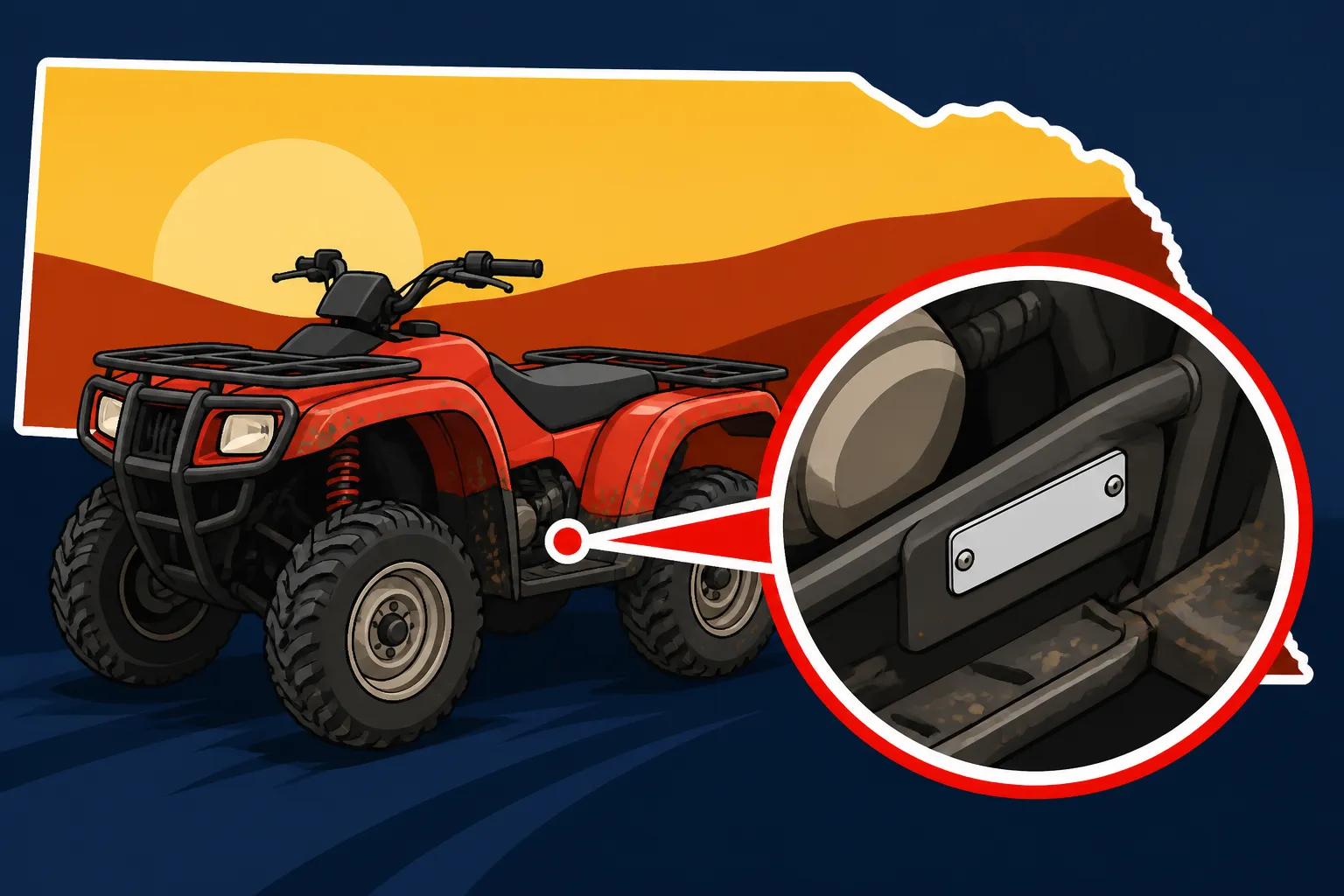
This is probably the most common spot for a VIN on many ATVs and UTVs, especially on older models. You'll want to focus your attention on the right-hand side of the machine (when you're sitting on it). Look along the main frame rail, just behind the right front tire, often near where the A-arms attach or near the foot peg. Sometimes it's tucked up under a plastic fender, so you might need to get down low with a flashlight.
- ATVs: Get on your knees and look at the main frame tube that runs horizontally. It could be stamped directly into the metal or on a small metal plate welded to the frame.
- UTVs/Side-by-Sides: These often have more protective bodywork, but the principle is the same. Look at the passenger-side frame rail, usually closer to the front suspension. You might need to gently push aside some plastic cladding or mud guards to get a clear view.
- Tips for spotting: Rust and dirt are your biggest enemies here. Bring a strong flashlight, a stiff wire brush, and maybe some penetrating oil or a gentle degreaser. Scrub gently but thoroughly. Don't be afraid to use a rag soaked in a cleaner to wipe away grime. Sometimes, just running your finger along the frame can help you feel the indentations of the numbers, even if you can't see them clearly.
Under the Seat or Fuel Tank
Another popular spot, especially on older quads, is under the seat or even under the fuel tank. This area is usually better protected from the elements, but can still accumulate dust and debris.
- ATVs: Lift the seat. Sometimes, the VIN plate or stamping is on the frame crossmember directly beneath the seat, or on a vertical frame member closer to the back. If you don't see it there, you might have to temporarily remove the fuel tank, but this is a more involved step to save for later.
- UTVs/Side-by-Sides: Check underneath the passenger seat or even the driver's seat. It could be stamped into the frame or on a sticker applied to a frame component. These machines sometimes have a small compartment under the seat where the VIN sticker might be found, though physical stamping is often more reliable on older models.
- Tips for spotting: Again, a flashlight is your friend. If it's a sticker, be prepared for it to be faded or peeling. For stamped numbers, a good wipe-down should reveal them. This area is less prone to deep rust, which is a plus.
Other Less Common (But Still Possible) Areas
While the front frame and under the seat are the primary culprits, manufacturers sometimes get a little creative. Don't give up if you don't find it in the first two spots.
- Engine Casing: Some manufacturers will stamp a portion of the serial number directly onto the engine block or crankcase. This isn't the primary VIN, but can sometimes offer clues, especially if you're dealing with a truly mystery machine or trying to piece together a [Nebraska Assembled Machine Titles] project. Look near the cylinder head, or around the transmission housing.
- Steering Column/Headstock: On some models, you might find a VIN plate or stamping on the steering column itself, or on the headstock where the handlebars attach to the frame. This is more common on some motorcycles but occasionally seen on ATVs.
- A-Arms/Suspension Components: Very rarely, you might find a small sticker or stamping on a durable suspension component, though this is less common for the primary VIN and more for part numbers.
- Manufacturer's Sticker: Newer machines often have a main sticker with all the vehicle info, including the VIN, typically in a prominent place like a glove box, under the hood, or inside the wheel well. Older machines might have had these, but they are often the first things to disappear or become unreadable over time.
To give you a better idea of typical locations, here's a general guide. Remember, this is general, and your specific machine might vary!
| Manufacturer (Example) | Common VIN Location(s) |
|---|---|
| Honda | Right front frame rail (near A-arm) |
| Yamaha | Right front frame rail (near A-arm/footpeg) |
| Polaris | Right front frame rail, sometimes under seat |
| Kawasaki | Right front frame rail, sometimes near engine mount |
| Suzuki | Right front frame rail (often just behind front wheel) |
| Can-Am | Right front frame rail, sometimes under seat/body panel |
| Arctic Cat | Right front frame rail, sometimes on a crossmember |
Remember to check all these spots meticulously. A clean and well-lit area is crucial for this detective work.
Strategies for Finding a Stubborn or Obscured VIN
Sometimes, despite your best efforts, that serial number just doesn't want to show itself. Or maybe you find it, but it's caked in so much rust or grime that it's illegible. Don't throw in the towel yet! There are a few more tricks up our sleeves to help you coax those numbers into view.
The Cleaning and Lighting Offensive
Your first line of attack for an obscured VIN is a thorough cleaning, combined with optimal lighting. This sounds simple, but many people don't go far enough.
- Deep Cleaning: Start with a sturdy wire brush. Not the soft kind for dishes, but one meant for metal. Gently scrub the area where you suspect the VIN is. If there's heavy rust, you might try a little rust penetrant or even a rust-removing gel (follow product instructions carefully!). For thick layers of grease and mud, a degreaser and a stiff plastic brush, followed by wiping with an old rag, can work wonders. Be patient; it might take several rounds. Just be careful not to damage the underlying metal.
- Flashlight Power: Don't just rely on ambient light. Get a powerful LED flashlight. Angle it from different directions. Sometimes, the shadows cast by the indentations of the stamped numbers will make them visible even if the numbers themselves are filled with grime. You can also try a UV flashlight if you suspect a hidden security marking, though this is less common for primary VINs.
- Chalk or Pencil Rubbing: This is an old trick but it works! Once the area is as clean as you can get it, take a piece of white chalk (or a soft pencil) and rub it over the suspected VIN area. The chalk will settle into the indentations of the numbers, making them stand out against the surrounding metal. This can be surprisingly effective for even very faint stampings.
- Smartphone Camera: Your phone's camera can be a powerful tool. Take high-resolution photos of the suspected areas, both close-up and from a slight distance. Sometimes, reviewing these photos on a larger screen, or zooming in, can reveal numbers that you missed with the naked eye. The camera's flash can also provide excellent directed light.
Researching Your Specific Model
Sometimes, the best approach is to leverage the collective knowledge of other riders. If you know the make, model, and approximate year of your quad, a quick online search can often pinpoint the exact VIN location.
- Owner's Manual: If you're lucky enough to still have the original owner's manual, it will almost certainly have a diagram showing the VIN location.
- Online Forums and Groups: Join ATV or UTV specific forums (like those dedicated to your brand – Honda, Polaris, etc.) or Facebook groups. Post a picture of your machine and ask if anyone can tell you where the VIN is on that specific model. Riders are usually more than happy to help a fellow enthusiast.
- Manufacturer Websites: Check the manufacturer's official website. They often have FAQs or support documents that detail VIN locations for various models.
- Dealer Service Departments: Give a local ATV/UTV dealer for your machine's brand a call. Their service technicians are experts and can usually tell you exactly where to look based on your make and model.
This research step can often save you a lot of crawling around in the garage!
What to Do If You Can't Find or Read the VIN
Despite your best efforts, there might be a scenario where you simply cannot find or clearly read the serial number. This can feel like a dead end, especially when you're trying to title the machine or sell it. But don't despair – there are still avenues to explore in Nebraska.
When the Number is Just Gone
If the frame is so corroded, or the number was ground off (a serious red flag for a stolen machine, by the way), or otherwise truly missing, you're facing a more challenging situation. In Nebraska, the county treasurer's office is your primary resource for all things titling, and this includes handling unique situations.
- Contact Your County Treasurer: This is the most important step. Explain your situation clearly. They deal with all sorts of titling issues, including machines with missing or illegible VINs. They might direct you to the local law enforcement for a VIN inspection. This is where the police or sheriff's department will come out to inspect the machine and attempt to verify its identity. This step is crucial to rule out any possibility of the machine being stolen and to confirm if a new VIN needs to be assigned. Be prepared to provide any and all paperwork you do have, no matter how sparse. Even an old bill of sale or previous owner's contact info can help.
- Law Enforcement Inspection: If directed, the police or sheriff will perform a physical inspection. They have specialized tools and training to find hidden VINs or determine if one has been tampered with. If they can't find one, or if it's truly unreadable, they might issue a report that you can then take back to the county treasurer. This inspection is a critical step in the process, especially for [Nebraska Title Without a Bill of Sale] scenarios, where proof of ownership relies even more heavily on physical inspection.
- Assigned VIN Process: In very rare cases, if the original VIN is completely unrecoverable and the machine is confirmed not stolen, the state of Nebraska might issue an assigned VIN. This is a special, state-issued serial number that will then become the official identifier for your machine. This process is involved and requires strict adherence to state guidelines, so be ready for some extra steps and potentially more paperwork, potentially even creating a detailed affidavit, sometimes with the help of online legal document providers like LawDepot for custom forms.
What if You Suspect It's Stolen?
Finding an obscured or obviously tampered-with serial number should immediately raise a red flag. It's a critical moment where your due diligence is paramount.
- Do NOT Proceed with Titling or Purchase: If you have any reason to suspect the VIN has been altered or removed, do not try to title the machine or complete a private sale. This could inadvertently implicate you in a criminal matter.
- Contact Law Enforcement: Immediately contact your local sheriff's department or police. Provide them with all the details and let them investigate. They can run checks on the partial VINs or any other identifying marks you've found. [How to Check Whether a Used Quad Is Stolen] is a critical step before buying any used machine, and an obscured VIN is a major warning sign.
- Protect Yourself Legally: If you bought the machine and then discovered an issue, keep all purchase records, communications, and any evidence you have. If you used a service like LawDepot to draft a bill of sale, review its terms for recourse. This might become a civil or even criminal matter depending on the seller's intent.
Finding the serial number on an older ATV or UTV can indeed be a journey, but it's a vital one for legal ownership, safety, and peace of mind. Taking the time to properly locate and record this number will save you countless headaches down the road, whether you're trying to get a [Nebraska Title for a Youth Quad] or a [Nebraska Title for a Ranch Machine].
Disclaimer
This article is for general informational purposes only and does not constitute professional advice. Laws, prices and regulations vary by location and change over time. Consult a qualified professional for guidance on your specific situation.