Titling a Side-by-Side in Nebraska
It can feel a bit overwhelming trying to figure out all the ins and outs of owning an off-road vehicle in Nebraska, especially when you've just invested in a side-by-side. These versatile machines blur the lines between recreation and utility, leading to confusion about what paperwork is truly necessary. This comprehensive guide will walk you through everything you need to know about titling your side-by-side in Nebraska, from understanding the legal requirements to navigating the paperwork, so you can enjoy your machine without a hitch.
Why Titling Your Side-by-Side Matters in Nebraska
You might think of a title as just another piece of paper, but for your side-by-side in Nebraska, it’s far more than that. It’s the cornerstone of your ownership, safeguarding your investment and ensuring you can legally operate and transfer your machine. Ignoring this crucial step can lead to significant headaches down the road.
The Legal Requirement for Ownership Proof
First and foremost, a title serves as the official proof of ownership for your side-by-side in Nebraska. While it might not require a license plate like a car or truck, the state mandates that all ATVs and UTVs (which include side-by-sides) acquired new after January 1, 2004, must be titled. This isn't just a suggestion; it's a legal obligation designed to protect both buyers and sellers from fraud and to ensure clear ownership records. Imagine buying a machine, only to find out later that the seller didn't legally own it – the title is your shield against such unfortunate scenarios.
Without a proper title, proving that the side-by-side belongs to you can become incredibly difficult. This can complicate everything from reporting theft to selling the machine later. The state’s requirement for [Nebraska Titles Required Since 2004] ensures that there’s a consistent, verifiable record for these vehicles, making transactions smoother and protecting consumers. It's really about establishing a clear chain of custody from the manufacturer or previous owner directly to you.
Protecting Your Investment and Resale Value
A side-by-side is a significant investment, often costing as much as a used car. Just like with any other valuable asset, you want to protect that investment. A clean, properly transferred title is essential for maintaining the resale value of your machine. When it comes time to sell, potential buyers will undoubtedly ask for the title as proof of ownership and to ensure there are no hidden liens or issues. A machine without a title, or one with a murky ownership history, will almost always fetch a lower price and be harder to sell.
Think about it from a buyer's perspective: would you purchase a valuable item like a side-by-side without clear documentation proving it belongs to the seller? Probably not. The title gives both parties peace of mind. It’s a foundational document that proves your machine is legitimate, lien-free (unless a lien is explicitly noted), and ready for its next adventure or owner. Taking the time to title it correctly now saves you potential financial losses and marketability issues in the future.
Side-by-Sides Aren't Just for Fun Anymore
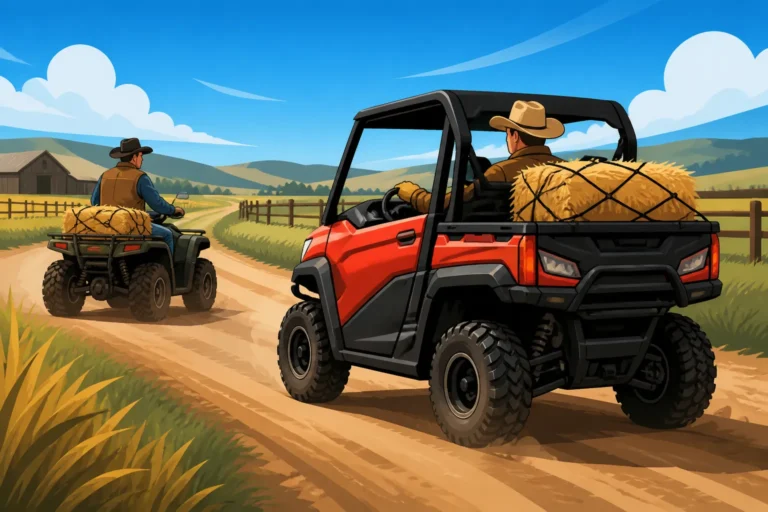
While many side-by-sides are indeed used for recreation on trails and in open country, a large number serve as indispensable tools for work on farms, ranches, and other agricultural operations across Nebraska. This dual nature means they often operate in various environments, sometimes crossing public roads for short distances. Even if your side-by-side is primarily a workhorse, performing tasks like checking fences, hauling feed, or spraying fields, it still needs a title.
The titling requirement doesn't differentiate between recreational or commercial use; if it's an ATV or UTV, it needs a title if purchased new after 2004. This ensures that regardless of its primary purpose, there's an official record of its existence and ownership. This also becomes critical if your machine is ever involved in an accident, stolen, or needs to be included as an asset in an estate. Having the title in order makes these inevitable life events far less complicated than they would be otherwise.
Understanding Nebraska's Titling Agencies and Rules
Navigating government processes can feel like a maze, and titling a side-by-side in Nebraska is no exception. It’s not always the same agency you might deal with for your car, and there are specific timelines and documents you need to be aware of. Knowing who to go to and what to expect can save you a lot of time and frustration.
The County Treasurer's Role in ATV/UTV Titling
One of the biggest differences compared to titling a car in Nebraska is where you go. Unlike cars, which are handled by the Department of Motor Vehicles (DMV) or county clerk offices in some states, ATV and UTV titling in Nebraska falls under the jurisdiction of your local County Treasurer's office. This can sometimes catch new owners off guard, leading to wasted trips to the wrong office. The County Treasurer's office is your one-stop shop for everything from submitting your application to paying the necessary fees and sales tax.
This decentralized system means that while the rules are statewide, the specific experience might vary slightly depending on your county. However, the core requirements and forms remain consistent. When you're ready to title your side-by-side, your first stop, or at least your first phone call, should be to the County Treasurer's office in the county where you reside. They are the experts on [Nebraska County Treasurers Handle ATV Titles] and can provide the most accurate, up-to-date information for your specific situation.
Key Titling Requirements to Keep in Mind
To ensure a smooth titling process, you'll need to gather a few essential items. Regardless of whether you bought your side-by-side new from a dealer or used from a private seller, you’ll generally need proof of ownership, a completed application, proof of identity, and funds for fees and taxes.
For a new machine, this usually means the Manufacturer’s Statement of Origin (MSO) or Manufacturer’s Certificate of Origin (MCO). If you’re buying used, it will be the previous owner’s properly assigned title. In some cases, a bill of sale might be necessary, especially if the machine is older or came from a state without titling requirements, but it's usually supplemental to the MSO or title. You'll also need a valid photo ID and proof of your Nebraska address. Remember, the goal is to establish a clear and verifiable ownership chain, so having all your ducks in a row with these documents is crucial.
The 30-Day Titling Window and What Happens If You Miss It
Nebraska law is quite clear about the timeline for titling your side-by-side: you have 30 days from the date of purchase or acquisition to apply for your title. This 30-day window is a firm deadline, and it's something many new owners overlook in their excitement to hit the trails or put their new machine to work. Missing this deadline can lead to additional costs and complications that are easily avoidable.
If you don't submit your title application within that 30-day period, the County Treasurer's office will assess a late fee. This fee isn't astronomical, but it's an unnecessary expense that you could have avoided by acting promptly. More importantly, delaying the titling process can create issues if you encounter any problems with the machine or need to prove ownership before the title is finalized. It’s always best to make titling your side-by-side a top priority right after bringing it home. Understanding [Nebraska's 30-Day Titling Deadline] and taking action within that timeframe will save you both money and potential stress.
Step-by-Step Guide to Titling a Side-by-Side
Getting your side-by-side titled in Nebraska doesn't have to be a bewildering experience. By breaking it down into manageable steps, you can ensure you have everything prepared before you even set foot in the County Treasurer's office. Let's walk through the process together.
Gathering Your Essential Documents
Before you head out the door, take a moment to collect all the necessary paperwork. This crucial first step will prevent multiple trips and ensure a smooth transaction. You'll typically need:
-
Proof of Ownership:
- New Machine: The Manufacturer's Statement of Origin (MSO) or Manufacturer's Certificate of Origin (MCO). This is the original document from the factory that proves the machine's initial ownership. Ensure all sections are properly filled out and signed by the dealer.
- Used Machine (from a titled state): The previous owner's properly assigned title. Make sure the seller has signed off on the title in the designated spot, and that all odometer readings (if applicable, though less common for ATVs/UTVs) and sale dates are accurate. Any liens on the title should also be released.
- Used Machine (from a non-titled state or older machine): A bill of sale might be your primary proof, alongside any registration documents from the previous state. However, Nebraska prefers a title, so be prepared for potential additional steps if a title isn't available. A comprehensive bill of sale, which you can create using a service like LawDepot, can be incredibly helpful here, detailing the buyer, seller, machine VIN, and purchase price.
-
Photo Identification: A valid government-issued photo ID, such as a driver's license or state ID card. This verifies your identity as the new owner.
-
Proof of Nebraska Residency: Documentation showing your current Nebraska address, which might include utility bills, a lease agreement, or other official mail.
Having all these documents organized in a folder before you leave will make the process at the Treasurer's office much more efficient. Don't forget copies for your own records! For more on specific scenarios, check out [Nebraska Out-of-State Machines Need a Title] if your side-by-side is coming from outside the state.
Completing the Nebraska Form 6ATV
The core application form you'll need for titling your side-by-side is the Nebraska Form 6ATV, officially known as the "Application for Certificate of Title for an All-Terrain Vehicle." This form collects all the vital information about you, the machine, and the transaction. You can usually download this form from your County Treasurer's website or pick up a physical copy at their office.
When filling out Form 6ATV, pay close attention to detail. You'll need to provide:
- Owner Information: Your full name, address, and contact details.
- Machine Information: The make, model, year, and Vehicle Identification Number (VIN) of your side-by-side. The VIN is paramount, so double-check that it matches your MSO or previous title exactly.
- Purchase Information: The date of purchase, purchase price, and seller's name and address.
- Lienholder Information (if applicable): If you financed your side-by-side, your lender will be listed as a lienholder on the title. Ensure you have their correct name and address.
Accuracy is key. Any discrepancies between your form and the supporting documents could lead to delays. If you're unsure about a section, it's better to leave it blank and ask the County Treasurer's clerk for clarification rather than guessing. They are there to help guide you through [Nebraska Form 6ATV Explained].
Paying Taxes and Fees at the Treasurer's Office
Once your documents are in order and Form 6ATV is completed, the final step at the County Treasurer's office is to pay the required fees and sales tax. This is where your wallet comes into play, so make sure you're prepared.
The costs typically include:
- Title Fee: This is a relatively small, flat fee for issuing the certificate of title.
- Sales Tax: Nebraska state sales tax (and any applicable local sales tax) will be collected on the purchase price of your side-by-side, less any trade-in value. This is a significant portion of the total cost and is collected directly by the County Treasurer. For used machines, the tax is based on the purchase price you declare, which is why a clear bill of sale (potentially generated using LawDepot for clarity) is important for private sales.
- Late Fee (if applicable): As mentioned, if you miss the 30-day window, a late fee will be added.
Be sure to confirm the acceptable payment methods with your County Treasurer's office beforehand. Most accept cash, checks, and often debit or credit cards (though card payments might incur an additional processing fee). Understanding [Nebraska Sales Tax Collected at Titling] is critical, as dealers typically don't collect this tax for off-road vehicles.
Common Scenarios and Special Considerations
The titling process isn't always a one-size-fits-all situation. Different circumstances surrounding your side-by-side acquisition can introduce unique requirements or steps. It's helpful to be aware of these common scenarios to avoid surprises.
Titling a Brand New Side-by-Side from a Dealer
Purchasing a brand new side-by-side from a licensed dealer in Nebraska is generally the most straightforward titling process. Dealers are typically well-versed in the requirements and will often help prepare much of the initial paperwork for you.
When you buy a new machine, the dealer will provide you with the Manufacturer's Statement of Origin (MSO) or Manufacturer's Certificate of Origin (MCO). This document is like the birth certificate for your side-by-side. Ensure that the dealer properly fills out their assignment section on the MSO, including the sale date, your name, and any other pertinent information. They may also include a bill of sale or purchase agreement. While the dealer usually assists with the paperwork, it's important to remember that you are still responsible for taking these documents to your County Treasurer's office within 30 days of purchase to apply for the title and pay the sales tax. Don't assume the dealer handles the entire title application unless specifically stated and confirmed.
Handling a Private Sale for a Used Side-by-Side
Buying a used side-by-side from a private seller requires a bit more diligence on your part, as there's no dealer to guide you. This is where clarity and complete documentation become paramount.
The most critical document in a private sale is the previous owner's properly assigned title. Before you hand over any money, verify that the seller's name on the title matches their ID, and that the VIN on the title matches the actual VIN on the side-by-side. Inspect the title for any signs of alteration or liens. The seller must sign the title over to you in the designated area. It's also highly recommended to create a detailed bill of sale, even if the title is available. This bill of sale, which can be easily drafted using resources like LawDepot, should include:
- Date of sale
- Full names and addresses of both buyer and seller
- Make, model, year, and VIN of the side-by-side
- Purchase price
- A statement that the machine is sold "as-is" (if applicable)
- Signatures of both parties
This extra layer of documentation provides proof of purchase and value for sales tax purposes and helps protect you in case of any future disputes. For more details on this, refer to [Buying From a Private Seller in Nebraska].
What to Do If Your Side-by-Side Was Bought Out-of-State
Bringing a side-by-side into Nebraska from another state adds a few wrinkles to the titling process, especially since titling laws for ATVs and UTVs vary widely.
If the machine was previously titled in another state, you'll generally bring that out-of-state title to your Nebraska County Treasurer's office. They will surrender the old title and issue a new Nebraska title. If the previous state did not require titles for ATVs/UTVs, or if the machine is very old and predates titling laws, you might need a notarized bill of sale along with any old registration cards or other proof of ownership. In some cases, a VIN inspection might be required to verify the machine's identity, especially if the paperwork is sparse. It’s always best to call your County Treasurer's office ahead of time to confirm their specific requirements for [Nebraska Out-of-State Machines Need a Title] to ensure you have all the necessary documentation before your visit.
Titling an Assembled or Rebuilt Machine
For the adventurous types who build their own side-by-sides from parts or significantly rebuild a salvaged machine, the titling process is more involved. Nebraska does have provisions for titling "assembled machines," but it requires meticulous documentation.
You'll need to keep detailed records and receipts for all major components used in the build, especially the frame and engine. These receipts prove your ownership of the parts and help establish the machine's value. You will also likely need to complete an affidavit of assembly, detailing how the machine was put together. A VIN inspection by law enforcement might be required to assign a new VIN or verify an existing one if the original frame VIN is not readily identifiable. This process ensures that even unique, custom-built machines can be legally titled and tracked within the state system, falling under the guidelines for [Nebraska Assembled Machine Titles]. Be prepared for a potentially longer process and close scrutiny of your documentation.
Beyond the Title: What a Nebraska Title Doesn't Grant You
It's easy to assume that once you have a title for your side-by-side, you're free to ride it anywhere. However, in Nebraska, a title doesn't automatically grant you carte blanche. There are significant limitations, particularly regarding public road use, and specific notations on your title that highlight these restrictions.
No Automatic Road Registration or License Plate
This is a point of frequent confusion and often leads to frustrated riders. While your side-by-side now has a valid Nebraska title, this does not mean it is registered for road use, nor will it ever receive a standard license plate. Unlike cars or even some motorcycles, ATVs and UTVs are primarily considered off-road vehicles in Nebraska. The state's titling system exists to track ownership, not to facilitate on-road registration for general use.
This means you cannot simply drive your titled side-by-side down the highway to the gas station or to a friend's house. Nebraska has very specific and limited exceptions for ATV/UTV road use, primarily revolving around agricultural purposes or specific city/county ordinances. Don't confuse having a title with having road privileges; they are entirely separate. This fundamental distinction is why [Why a Titled ATV Still Has No Plate] is such a common question among new owners.
Understanding the "Not To Be Registered" Notation
To explicitly clarify the road-use restriction, every Nebraska ATV/UTV title will feature a prominent notation: "NOT TO BE REGISTERED." This isn't a mistake; it's a deliberate and important part of the title. It serves as a clear legal indicator that the machine is not eligible for regular motor vehicle registration that would allow it to be driven on public roads.
This notation prevents any misunderstanding about the vehicle's legal status. It reinforces the idea that while you own it legally and it's documented, its primary domain is off-road. Even if you plan to use your side-by-side strictly for farm work and occasionally cross a county road under agricultural exemptions, the "NOT TO BE REGISTERED" will still be printed on your title. Understanding [Why an ATV Title Says Not To Be Registered] is key to avoiding legal trouble on public thoroughfares.
Insurance Requirements for Road Use
Even though your side-by-side isn't "registered" in the traditional sense, if you plan to use it on public roads under one of Nebraska's specific exceptions (like agricultural use or in a municipality with an enabling ordinance), you absolutely need to carry liability insurance. This isn't optional; it's a legal requirement to protect yourself and others in case of an accident.
The minimum liability coverage amounts for ATVs/UTVs on public roads are generally the same as for other motor vehicles. Driving without this insurance, even if you're legally allowed to be on that specific road segment, can lead to fines, citations, and significant financial risk if you're involved in a collision. It's always wise to discuss your specific usage with an insurance agent to ensure you have adequate coverage, not just for liability, but also for theft, damage, and personal injury, especially if your side-by-side is a valuable asset. Make sure you're up to speed on [Nebraska Requires Liability Insurance on Roads] before taking your machine onto any public surface.
Avoiding Common Pitfalls and Ensuring a Smooth Process
Even with a clear step-by-step guide, real-world situations can throw curveballs. Anticipating common problems and knowing how to address them can save you a lot of time, money, and frustration.
Double-Checking Your Paperwork
The single biggest reason for delays or repeated trips to the County Treasurer's office is incomplete or incorrect paperwork. Before you leave your house, take a moment to carefully review every document.
- VIN Match: Does the VIN on your MSO/title precisely match the VIN on your Form 6ATV and the machine itself? Even one incorrect digit can cause a rejection.
- Signatures: Are all required signatures present on the MSO or previous title? For a private sale, is the seller's signature present and legible? Did you sign your application?
- Dates: Are all dates (purchase date, signature dates) correctly entered and within the 30-day titling window?
- Legibility: Is everything clearly written or typed? Illegible handwriting can lead to misinterpretation.
- Lien Release: If you're titling a used machine that previously had a lien, do you have the official lien release document? Without it, the Treasurer's office can't transfer a clean title to you.
A quick double-check can prevent a lot of headaches. It's worth calling the County Treasurer's office if you have any doubts about specific fields or documents.
Navigating Missing or Incorrect Information
What if you discover a crucial piece of information is missing, or worse, incorrect, after the previous owner is long gone or the dealer closed for the day? This can definitely be a challenging situation, but it's not always a dead end.
If you have a missing signature from a previous owner, you might need to try and contact them to get it. If they're unreachable, your County Treasurer might have procedures for an "affidavit of ownership" or "bond for title," but these are typically more complex and require more time and perhaps legal assistance. If you’ve misplaced a bill of sale, or need one drafted from scratch to verify a sale from a private party, a service like LawDepot can provide a template. For minor errors, like a misspelled name or an incorrect address, an affidavit of correction might be an option. However, for major issues like a VIN mismatch or a missing MSO, you'll need to work closely with your County Treasurer's office to explore the specific options available under Nebraska law. This might involve additional forms, inspections, or a legal process to establish clear ownership.
Resources for Further Assistance
It's natural to have questions, and thankfully, there are resources available to help you.
- Your County Treasurer's Office: This is your primary resource. Their staff are trained in Nebraska's titling laws and can provide the most accurate, up-to-date information for your specific county. Don't hesitate to call or visit their office with your questions. [Nebraska Title Questions Treasurers Hear] covers many of the common queries.
- Nebraska Department of Motor Vehicles (DMV) Website: While the DMV doesn't handle ATV/UTV titles directly, their website often has general information about Nebraska vehicle laws, including links to relevant statutes or forms that might be helpful.
- ATV/UTV Dealer: If you purchased your machine new, your dealer is an excellent resource for initial paperwork questions, especially regarding the MSO.
- Legal Counsel: For complex situations, such as disputes over ownership, lost titles with no previous owner contact, or issues with assembled machines, consulting with an attorney specializing in vehicle titles might be necessary.
Taking the time to understand the requirements and gather your documents will make titling your side-by-side a much smoother process. You’ll be able to hit the trails or get to work knowing your ownership is fully legitimate.
Disclaimer
This article is for general informational purposes only and does not constitute professional advice. Laws, prices and regulations vary by location and change over time. Consult a qualified professional for guidance on your specific situation.