Carrying Your Title Copy on a Ranch Road
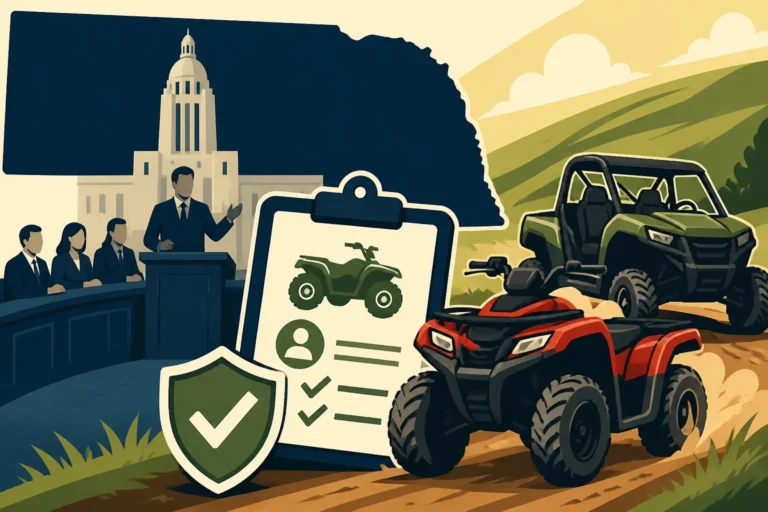
It's a common thought for ATV and UTV owners in Nebraska: "I'm just riding on my own land, or a friend's ranch, why would I ever need to carry proof of ownership?" The truth is, even when you're far from paved roads and public trails, having access to your machine's documentation can save you a world of trouble and heartache. This guide will walk you through why keeping a copy of your title or other ownership proof handy, especially on ranch roads, isn't just a good idea, it's often essential.
Why Proof of Ownership Matters on Private Land
You might be thinking, "This is my quad, I know it's mine, and I'm on private property. What's the big deal?" And honestly, it’s a perfectly valid question. We spend good money on our machines, and the last thing we want is more paperwork to haul around. But here in Nebraska, even on seemingly isolated ranch roads or pastureland, there are very real scenarios where having some proof of ownership for your ATV or UTV becomes incredibly important. It's not about proving it to the trees, it's about protecting yourself and your investment from unexpected situations.
Preventing Complications During a Stop
Let's imagine a scenario: you're out checking fences on a vast Sandhills ranch, perhaps owned by your family or a neighbor. A county deputy, responding to a separate call or just patrolling the area, drives past and spots you. While you might be completely within your rights, a deputy might not know every machine on every piece of private land. If they have a reason to suspect the machine might be stolen, or if there's been recent theft in the area, they might ask you for proof of ownership. This isn't usually meant to be adversarial; it's a standard procedure to ensure everything is legitimate. Without a title copy or other documentation, you could face delays, questioning, or even a temporary impoundment of your machine while they verify ownership. It's a hassle nobody wants, especially when you're just trying to get work done. Having a simple document like a title copy can clear things up quickly, allowing you to go about your day. Think about it, the deputy doesn't want to waste their time any more than you do, and a quick check of paperwork can expedite the whole interaction. It’s also important to know [What Paperwork a Deputy Can Ask to See] even if you are not operating on a public road.
Protecting Against Theft and Recovering Your Machine
Unfortunately, ATV and UTV theft is a real concern, even in rural areas. A machine parked briefly at a remote pasture gate or a hunting cabin can vanish quickly. If your quad is stolen, one of the first things law enforcement will ask for is proof of ownership, specifically the title. The title contains the Vehicle Identification Number (VIN) and your name as the legal owner, which are critical details for entering your machine into national stolen vehicle databases. Without this official documentation, proving the machine was yours and getting it back if it's recovered becomes significantly more difficult, if not impossible. Imagine the frustration of seeing your stolen UTV for sale online, but not being able to formally prove it’s yours because you never kept a copy of the title. A quick police report relies on solid documentation. Moreover, if your machine is financed, the lender will certainly want proof of the title. This is where a clear record of ownership, perhaps even a detailed bill of sale if you recently acquired it, is absolutely crucial.
Facilitating Insurance Claims and Sales
Even if you're not planning to ride your ATV or UTV on public roads where liability insurance is mandated, many owners choose to carry comprehensive or theft insurance for their off-road machines. If you're involved in an accident on private land, or if your machine is damaged by something other than a collision (like a tree falling on it), your insurance company will require proof of ownership before processing a claim. They need to verify you are the legal owner of the insured asset. Similarly, when it comes time to sell your machine, the buyer will undoubtedly want to see the title to ensure they are purchasing it from the rightful owner. Having a clear, unencumbered title available makes the selling process smoother and instills confidence in potential buyers. This is particularly relevant if you are selling a [Nebraska Title for a Ranch Machine], as buyers will want to ensure the chain of ownership is clear.
What Constitutes Valid Proof of Ownership
So, what exactly counts as "proof of ownership" when you're out on the ranch? The goal here isn't to carry your original, irreplaceable title document in your pocket through dusty fields, but rather to have easily accessible copies or supplementary documents that clearly link you to the machine. Let's break down the best options.
Your Nebraska ATV Title Copy
The single most definitive piece of ownership proof for your ATV or UTV in Nebraska is the certificate of title itself. Nebraska titles ATVs but does not register them, so the title is the primary document. This document, issued by your [Nebraska County Treasurers Handle ATV Titles], legally establishes you as the owner. For ranch road use, you absolutely do not want to carry the original title. Instead, make several clear photocopies of your title. Laminate one copy, or keep it in a waterproof baggie, and tuck it into a secure compartment on your ATV or UTV, like a glove box or tool kit. Keep another copy in your wallet or with other important papers in your truck. Having the VIN clearly visible on this copy is key for quick verification if needed. This proves that you are the rightful owner, even if the machine isn't registered for road use (which it won't be in Nebraska).
The Bill of Sale or Purchase Agreement
If you've recently purchased your ATV or UTV, especially in a private sale, you might not have the title in your hand yet. In Nebraska, you have [Nebraska's 30-Day Titling Deadline] from the purchase date to title your machine. During this interim period, your bill of sale or purchase agreement is your temporary proof of ownership. This document should include:
- The buyer's full name and address.
- The seller's full name and address.
- The date of sale.
- A clear description of the ATV/UTV (make, model, year, VIN).
- The purchase price.
- Signatures of both buyer and seller.
Even after you've titled your machine, keeping a copy of the bill of sale can be incredibly useful. It acts as a secondary verification, especially if there were any unique terms in the sale or if you're disputing a warranty issue. If you’re ever selling the machine yourself, a clear bill of sale from your purchase can provide an excellent template for [Writing a Bill of Sale for a Neighbor's Quad]. For peace of mind, especially with significant purchases, some folks even use online platforms like LawDepot to generate robust bills of sale and other legal documents, ensuring all necessary details are included and legally sound.
Manufacturer's Statement of Origin (MSO)
For a brand-new ATV or UTV, before it's ever been titled, the Manufacturer's Statement of Origin (MSO) is the document of truth. This is essentially the birth certificate of your machine, showing it's never been owned by an individual before. When you buy a new machine from a dealer, they'll usually provide you with the MSO, which you'll then take to the county treasurer to get your first title. Like the original title, you absolutely do not want to carry the original MSO on a ranch road. Instead, make a clear photocopy and keep it with you until the title process is complete. This is especially relevant for [Nebraska Dealer Paperwork at Delivery].
Other Supporting Documents
While not primary proof of ownership, other documents can support your claim:
- Proof of Insurance: If you carry insurance, a copy of your policy declarations page can indirectly link you to the machine, as it lists the VIN and your name as the insured. Remember, [Nebraska Requires Liability Insurance on Roads] if you choose to ride on public roads, but it’s a good idea for off-road use too.
- Registration for Other States (if applicable): If you've just moved to Nebraska from a state that does register ATVs, your old registration can serve as temporary proof of ownership until you get your [Nebraska Out-of-State Machines Need a Title].
- Photos of your machine with you: In some very rare circumstances, if you can't access paperwork, clear photos of you with the machine, especially showing unique identifiers or customizations, could support a verbal claim, but should never be relied upon as primary proof.
It's also worth noting that in certain situations, if you acquired a machine without a traditional bill of sale or title (like an inherited machine or a very old one), you might need to explore options like [Nebraska Title Without a Bill of Sale] to establish clear ownership. In such cases, having any available documentation—even old registration cards or repair receipts—is better than nothing. You could even use a platform like LawDepot to create an affidavit of ownership to strengthen your claim if official documents are missing.
Scenarios Where Documentation Is Crucial
It's one thing to know what documents are important, but it's another to understand the real-world situations where having them can make a huge difference. These are the moments when you'll be glad you took a few extra steps to keep your ATV or UTV's paperwork accessible.
Interaction with Law Enforcement
We touched on this briefly, but it's worth reiterating. Deputies in Nebraska are always on the lookout for suspicious activity, and unfortunately, stolen ATVs and UTVs are a reality. If you're stopped on private land, whether it's by a county sheriff, state patrol, or even a local game and parks officer, they have the right to investigate if they have reasonable suspicion. This might be because your machine matches the description of a stolen one, or simply because you're riding in an area not typically open to the public. Being able to quickly produce a copy of your title or a valid bill of sale can de-escalate the situation instantly. It shows you're a responsible owner with nothing to hide. Without it, you might be asked to provide identifying information about the machine and yourself, which could lead to a longer stop and more intrusive questioning. Having the VIN readily available on your document copy will be particularly helpful, as they can run it through their system to verify it isn't stolen. Knowing [How to Check Whether a Used Quad Is Stolen] is also a good practice before you buy.
Dealing with Landowners and Neighbors
Perhaps you regularly ride on a neighbor's property or land that you lease. While you might have a verbal agreement, sometimes circumstances change, or new individuals (like a ranch hand or a relative visiting the property) might question your presence or your machine. In the unfortunate event of a dispute, or if there's damage to property while you're riding, having proof of ownership for your ATV or UTV can clarify your legal standing. It shows you're not just a random person on someone else's machine. This is especially true if you have [Getting Written Permission From a Ranch Landowner], and they want to verify that the machine you are riding is indeed yours and covered under any agreements. Having your documents can help smooth over misunderstandings and demonstrate that you are a legitimate rider with permission.
After an Accident or Breakdown
Even on private land, accidents can happen. If you or someone else is injured, or your machine is severely damaged, an insurance company will be involved if you have coverage. As mentioned, they'll require proof of ownership to process any claim. Beyond that, if your machine breaks down far from home, and you need to arrange for towing or repair, having the VIN and other details from your title or MSO readily available is crucial. Mechanics need this information to order parts correctly and to track the machine's service history. If a repair shop accidentally orders parts for the wrong year or model, you'll be stuck waiting longer and potentially paying more. Your documents confirm exactly what machine you have.
Selling Your Machine Privately
When the time comes to upgrade or move on from your current ATV or UTV, you'll likely want to sell it. Most buyers, especially those who are savvy, will want to see the title and other ownership documents to confirm they are buying from the legal owner and that the machine isn't stolen or encumbered by a lien. While you'll ultimately hand over the original title at the point of sale, having a copy available during the initial viewing and negotiation process can build trust and expedite the sale. It demonstrates transparency and gives the buyer confidence. You can also use forms from a service like LawDepot to generate a professional bill of sale for the new buyer, which includes spaces for the VIN and clear transfer of ownership details.
Here's a quick comparison of key ownership documents:
| Document Type | Primary Purpose | Best Use for Ranch Roads (Carry) | Notes |
|---|---|---|---|
| Nebraska ATV Title | Legal proof of ownership | Photocopy (laminated/bagged) | Most definitive. Contains VIN, owner name. |
| Bill of Sale / Purchase Agr. | Proof of recent purchase | Photocopy | Essential until title is transferred. Must contain VIN and buyer/seller details. |
| Manufacturer's Statement Origin | "Birth certificate" for new machines | Photocopy | Precedes title for new purchases. |
| Insurance Declaration Page | Proof of coverage, indirect ownership | Photocopy | Lists VIN and owner. Good secondary evidence. |
| Written Landowner Permission | Proof of legal access to property | Original or Photocopy | Not ownership proof, but essential for legal riding on private land. |
Practical Tips for Carrying and Storing Documentation
Okay, so we've established why carrying documentation is important. Now, let's talk about the how without making it a burden or risking your original documents. The goal is easy access and protection from the elements.
The "Go-Bag" Approach
Think of your essential ATV/UTV documents as part of a small "go-bag" or emergency kit that always stays with your machine or your tow vehicle. This kit could include:
- Laminated copy of your ATV/UTV title: As mentioned, this is your gold standard for quick proof.
- Photocopy of your bill of sale: Especially helpful if the machine is new to you or if you anticipate selling soon.
- Photocopy of your insurance card/declarations page: If you have coverage.
- Written permission from the landowner (if applicable): Absolutely crucial if you're riding on someone else's land. This confirms you have [Nebraska Landowner Permission Rules] and are not trespassing.
- Your driver's license: While not direct proof of machine ownership, it proves your identity, which will always be requested.
Keep these items together in a sturdy, waterproof bag or container. A Ziploc bag inside a small dry bag works wonders for keeping moisture and dust out.
Where to Store Your Documents on the Machine
The best place to store your document copies on your ATV or UTV is usually a built-in, lockable storage compartment. Many newer machines come with glove boxes, under-seat storage, or small cargo boxes. These are ideal because they protect documents from the weather and reduce the chance of them falling out during a bumpy ride. If your machine doesn't have such compartments, consider adding an aftermarket storage bag or box that attaches securely to your rack. Make sure whatever you choose is waterproof and durable enough to withstand the vibrations and jostling of off-road riding. The key is to have them easily retrievable but also safely tucked away.
Digital Copies as Backup
In today's digital world, having digital copies of your documents is an excellent backup. Snap clear photos or scan your title, bill of sale, and insurance information. Store these on your smartphone, in a cloud service (like Google Drive or Dropbox), or email them to yourself. While a digital copy might not always be accepted as primary proof by law enforcement in a remote area without cell service, it can be invaluable for insurance claims later, or for sending details quickly if your machine is stolen. It's a "better safe than sorry" measure. Always remember, though, that a physical, laminated copy is generally preferred by authorities in the field, as they can be accessed without relying on technology.
Regular Checks and Updates
Before you head out for a long day on the ranch or a weekend riding trip, take a moment to quickly check your document go-bag. Are the copies still legible? Is the bag still sealed and waterproof? If you've recently bought or sold a machine, or if your insurance policy has changed, make sure to update your copies. An outdated document can be just as unhelpful as no document at all. This is a small habit that can prevent big headaches down the road, ensuring that when you need that proof of ownership, it's current and ready.
Ultimately, carrying a copy of your ATV or UTV title, along with other essential documents, on Nebraska ranch roads and private land is about being prepared. It's about protecting your investment, simplifying interactions with authorities, and ensuring peace of mind so you can focus on enjoying your ride or getting your work done. A little foresight goes a long way.
Disclaimer
This article is for general informational purposes only and does not constitute professional advice. Laws, prices and regulations vary by location and change over time. Consult a qualified professional for guidance on your specific situation.