What Paperwork a Deputy Can Ask to See
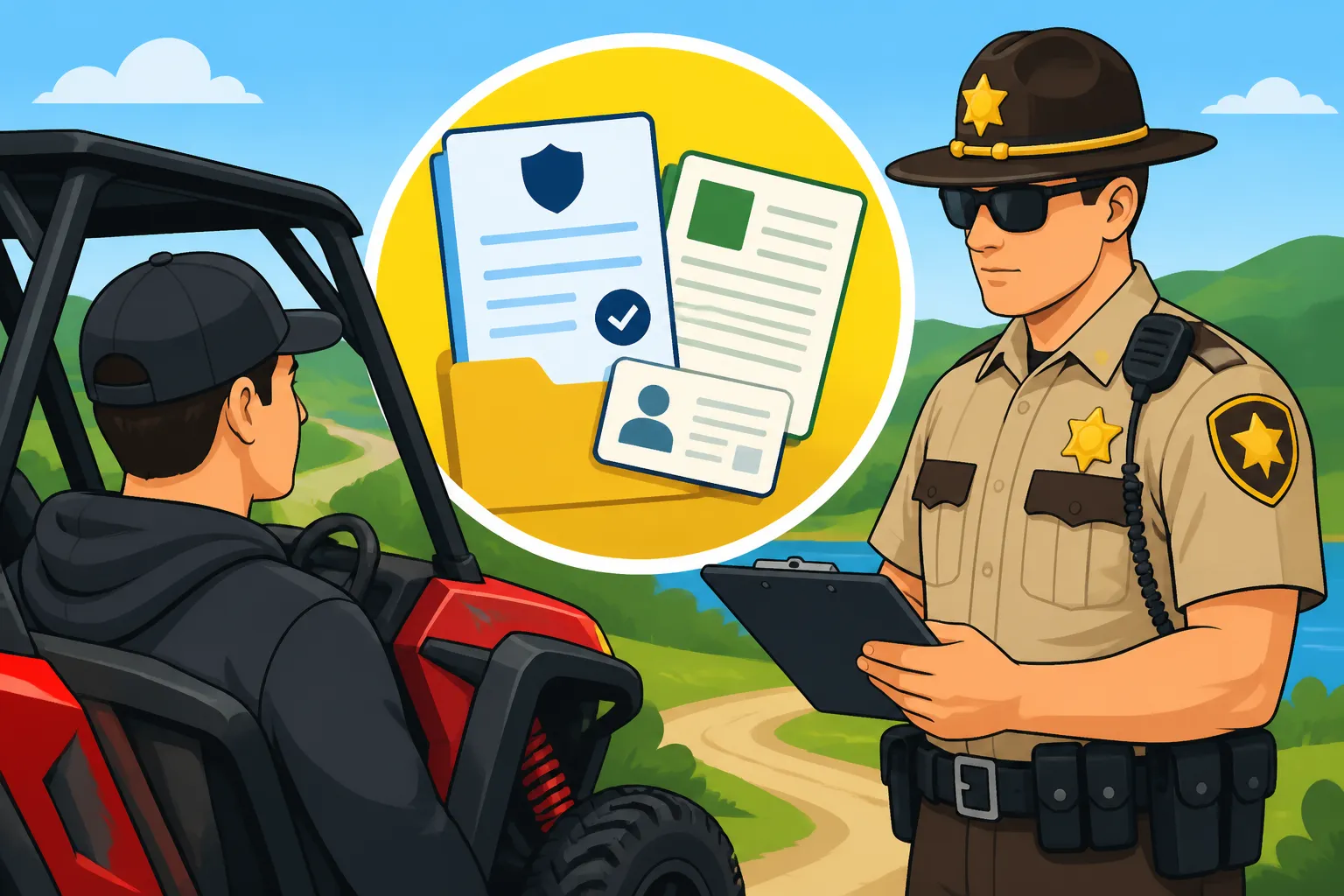
It's a common, unsettling feeling for any ATV or UTV owner in Nebraska: that moment when you see the flashing lights in your rearview mirror, or when a deputy signals you to stop while you're out enjoying a ride. Many riders worry about what a law enforcement officer might ask for, especially since ATVs aren't typically "registered" like cars. This guide will walk you through exactly what paperwork a deputy can legitimately ask to see, helping you ride with confidence and stay compliant with Nebraska law.
The Common Worry: What a Deputy Might Actually Stop You For
Let's face it, getting pulled over is never fun, and when you're on an ATV or UTV, it can feel even more confusing. Unlike cars or motorcycles, ATVs in Nebraska don't have license plates, and there's no statewide registration system for them to be street legal. This unique situation often leaves riders scratching their heads, wondering what exactly they're supposed to have on hand if a deputy pulls them over. The good news is, understanding the rules and having your ducks in a row can turn a potentially stressful encounter into a quick, uneventful one.
Why Deputies Stop ATV Riders
Deputies aren't just out there looking to ruin your fun. Often, stops occur for legitimate safety concerns or suspected violations. Maybe you were observed riding on a prohibited roadway, exceeding a speed limit in an area where ATVs are allowed, or operating your machine in a way that suggests impairment. Sometimes, it's as simple as checking for proper safety equipment or ensuring you have the legal right to be where you are. They're enforcing traffic laws, local ordinances, and property laws, just as they would for any other vehicle operator. It's crucial to remember that while your ATV might not be a "car," you are still operating a motor vehicle, and certain responsibilities come with that.
Understanding Nebraska's "No Registration" Rule
One of the biggest points of confusion for ATV and UTV owners in Nebraska is the concept of registration. Unlike many other states, Nebraska does not have a statewide ATV registration program that issues license plates or annual stickers. This means you won't be asked for a "registration card" in the same way a car driver would. However, this lack of registration does not mean your machine is untraceable or that you're off the hook for proving ownership. In fact, Nebraska titles ATVs but does not register them, a distinction that's important to understand. Since 2004, a title has been required for most ATVs and UTVs purchased new, serving as the official proof of legal ownership. This title, or a copy of it, is often the first thing a deputy will want to confirm if there's any question about who owns the machine you're operating.
Essential Paperwork to Carry When Riding Your ATV or UTV
While you won't be carrying a traditional registration, there are several key documents that can prevent headaches if you encounter a deputy. Having these ready, or at least easily accessible, shows responsibility and can help clarify your legal standing quickly.
Proof of Ownership: Your ATV Title
Your ATV or UTV title is the ultimate proof that you legally own your machine. In Nebraska, [Nebraska Titles Required Since 2004] for machines purchased new after that year, and for all machines bought or brought into the state today. Even if you bought your machine through a private sale, the seller should have signed over their title to you, and you should have completed the transfer at your county treasurer's office. [Nebraska County Treasurers Handle ATV Titles], not the Department of Motor Vehicles.
Now, do you need to carry the original title on your person while riding? Generally, no, and in fact, it's often advised against carrying original vital documents due to the risk of loss or damage. What you should carry, however, is a clear, legible copy of your title. This copy serves as immediate proof of ownership if a deputy has reason to question it, perhaps due to a recovered stolen vehicle report or simply to confirm the machine isn't illegally obtained. Make sure the copy shows your name as the owner and the machine's Vehicle Identification Number (VIN). A deputy might also want to see the title notation that bars road registration in Nebraska, which clearly states the machine is "Not To Be Registered" for highway use. This helps clarify its legal status as an off-road vehicle. For a private sale, ensure you have a signed bill of sale, especially if you haven't processed the title transfer yet. Services like LawDepot offer templates for creating a comprehensive bill of sale, which can be invaluable in these situations.
Proof of Insurance for Road Use
Here's another point where confusion often arises. While ATVs and UTVs typically don't require insurance for off-road use on private land, the rules change drastically if you venture onto public roadways. If you plan to ride your ATV or UTV on any public road, even if it's just a county road or a street in an incorporated village that has an ordinance allowing it, you must carry proof of liability insurance. [Nebraska Requires Liability Insurance on Roads] for any ATV or UTV operating on public roads.
A deputy will ask to see this proof if they stop you on a public road. This is usually your insurance ID card or a declaration page from your policy. Make sure the policy explicitly covers your ATV or UTV and meets Nebraska's minimum liability requirements. Carrying a digital copy on your phone is usually acceptable, but a physical card can be easier in areas with spotty cell service. This is a crucial document, as operating an uninsured vehicle on public roads can lead to fines and other penalties. It's a non-negotiable requirement for road legality.
Your Driver's License or Farm Permit
Just like driving a car, operating an ATV or UTV on public roads in Nebraska requires you to have a valid driver's license. Specifically, you'll need at least a Class O operator's license, which is the standard automobile license. [Nebraska Requires a Class O License or Farm Permit] for those operating ATVs on public roads under specific conditions.
However, there's a notable exception for agricultural use. If you are operating the ATV strictly for farm or ranch purposes, and you are traveling between fields, farm sites, or for other bona fide agricultural reasons, you might be able to use a farm permit instead of a full driver's license. A deputy will ask for this if you are stopped on a road, as it verifies your legal authorization to operate a motor vehicle. If you're a young rider, ensure you meet the Nebraska ATV age requirements for the specific area you're riding in, especially if it's a public space. Always have your license or permit readily available, as it's a basic requirement for any vehicular stop.
Landowner Permission for Private Property
While not a state-issued document, written landowner permission is absolutely critical if you're riding on private property that isn't your own. A deputy has the authority to investigate trespass, and "I thought it was okay" usually isn't going to cut it. Many areas in Nebraska consist of vast stretches of private land, and navigating property lines can be tricky. Even if you're just cutting across a corner of a neighbor's field, it's wise to have permission.
If you are riding on someone else's property, especially a farm, ranch, or hunting lease, [Getting Written Permission From a Ranch Landowner] is your best defense against a trespassing charge. This simple piece of paper can save you a lot of hassle. It should clearly state who has permission to ride, what areas they can access, and for what timeframe. A basic permission form, often found through legal template providers like LawDepot, can be easily filled out and signed by the landowner. Keep this with you, perhaps with your copy of the title, to quickly demonstrate your right to be on the property if questioned by law enforcement or even a vigilant landowner.
Situations Where Other Documents Become Important
Beyond the core documents, specific scenarios might require you to have additional paperwork handy. Being prepared for these less common, but still possible, situations can make a big difference.
Paperwork for Special Circumstances: Loan or Lease
If you don't fully own your ATV or UTV outright – meaning it's financed through a bank, credit union, or dealership, or perhaps you're leasing it – you might not have the physical title in your possession. In such cases, the lienholder (the bank or finance company) typically holds the original title until the loan is paid off.
If a deputy asks for proof of ownership and you don't have the title, you'll need an alternative. This could be a copy of your loan agreement, a lease agreement, or the financing documents that clearly show your name, the machine's VIN, and the lienholder's information. These documents confirm that while you don't hold the title, you are the legal operator of the machine with the lienholder's permission. It’s always a good idea to keep a copy of these papers accessible if your machine is financed. This might even be a simple printout from your online banking portal showing the loan details. [How a Lien Is Recorded on an ATV Title] is a separate, but related, process.
When You're Hauling Your Machine
Sometimes, a deputy might stop you not when you're riding your ATV, but when you're hauling it on a trailer. In this situation, the focus shifts to the legality of your towing setup and the machine being transported. While the ATV itself isn't being operated on the road, you might still be asked to verify ownership, especially if the machine appears suspicious or poorly secured.
For the ATV itself, having a copy of its title is still recommended, especially if you're transporting it across county lines or if it looks new or unusually valuable. For the trailer, you'll need the appropriate documentation for it. In Nebraska, utility trailers usually need their own title and often a license plate if they exceed a certain weight or are used on public roads. So, be prepared to show your trailer's title and registration as well. A deputy will also be checking that your trailer is properly hitched, has working lights, and that your ATV is securely tied down, preventing it from becoming a road hazard.
Riding in Cities or Villages with Ordinances
While Nebraska has no statewide ATV registration, many individual cities and some unincorporated villages have passed their own local ordinances allowing and regulating ATV and UTV use on their streets. These ordinances often come with specific requirements, which a local deputy or police officer will enforce.
If you're riding within the limits of a city or village that has such an ordinance, a deputy might ask for proof of any local permits or registrations required by that specific municipality. For example, some cities might require a yearly sticker or a city-specific registration fee. [Nebraska City ATV Registration Fees] can vary widely, as can [Nebraska City Age Requirements] or specific times you're allowed to ride. Before you hit the streets in any Nebraska town, it's vital to check with City Hall or the county board (for unincorporated villages) to understand their specific rules. Having a copy of your city registration or permit, if applicable, would be essential in these areas.
Beyond the Documents: What Else a Deputy Observes
A deputy's assessment isn't just about paperwork. They'll also be observing the condition of your machine, your safety equipment, and your behavior as a rider. These factors often play a significant role in whether you're stopped in the first place, and how the interaction proceeds.
Machine Condition and Safety Equipment
A well-maintained machine and proper safety gear show responsibility. Deputies are trained to look for safety hazards. For instance, if you're operating on a road, [Nebraska Requires Head and Tail Lights] during specific times, and a 5-foot safety flag is mandatory. If your lights aren't working, your tires are bald, or your exhaust is excessively loud, these could all be reasons for a stop.
While Nebraska does not have a helmet law specifically for ATVs (it covers motorcycles), some local ordinances might impose them, and private riding parks often require them. If you're riding on public roads where allowed, having a properly mounted safety flag that meets [Nebraska Safety Flag Dimensions] can make you more visible and reduce the chance of a stop. Ensuring your machine is in good working order, with all required safety features functioning, is a proactive step that demonstrates compliance and can prevent unwanted attention.
Rider Conduct and Observance of Laws
Ultimately, how you ride and your overall conduct during an encounter with law enforcement are just as important as the documents you carry. Reckless driving, speeding, or operating under the influence are surefire ways to attract a deputy's attention, regardless of your paperwork. If you are stopped, remaining calm, cooperative, and respectful can significantly influence the outcome of the interaction.
Be prepared to answer questions truthfully and provide any requested documents promptly. While you have rights, being argumentative or uncooperative can escalate a simple document check into a more serious situation. Always be aware of where you are riding – whether it's private land, a county road, or a city street – and understand the specific rules that apply to that location. For instance, [Nebraska Bans ATVs on State Highways] and controlled-access highways. Knowing these rules and abiding by them is the best way to avoid a deputy's attention in the first place and ensures your enjoyment of Nebraska's diverse riding opportunities remains safe and legal.
Essential ATV/UTV Paperwork Checklist for Nebraska Riders
To help you keep track, here's a quick reference guide of what a deputy might ask to see, depending on where and how you're riding:
| Situation / Document Type | On Private Land | On County Roads (Farm Use) | On County Roads (Recreational) | In City/Village (Permitted) | Hauling on Trailer |
|---|---|---|---|---|---|
| ATV/UTV Title (Copy) | Recommended | Recommended | Recommended | Recommended | Recommended |
| Proof of Insurance | Not Required | Required | Required | Required | Not Required |
| Driver's License | Not Required | Farm Permit / Class O | Required (Class O) | Required (Class O) | Not Required |
| Landowner Permission | Required | Recommended | Not Applicable | Not Applicable | Not Applicable |
| Loan/Lease Documents | Recommended | Recommended | Recommended | Recommended | Recommended |
| City/Village Permit | Not Applicable | Not Applicable | Not Applicable | Required (if applicable) | Not Applicable |
| Trailer Title/Reg. | Not Applicable | Not Applicable | Not Applicable | Not Applicable | Required |
Remember, this table is a general guide. Always verify specific local ordinances and keep your documents updated.
Disclaimer
This article is for general informational purposes only and does not constitute professional advice. Laws, prices and regulations vary by location and change over time. Consult a qualified professional for guidance on your specific situation.