Nebraska Crossing Rules at Ninety Degrees
It can feel incredibly confusing trying to navigate the rules for riding your ATV or UTV in Nebraska, especially when you encounter something as specific as the "ninety-degree rule" for crossing roads. Many riders worry about making a mistake, facing a hefty fine, or worse, causing an accident because they weren't entirely clear on the nuances. This comprehensive guide is here to break down exactly what Nebraska's ninety-degree crossing rule means, why it exists, and how you can safely and legally cross public roadways with your off-highway vehicle.
Understanding the "Ninety-Degree Rule" for Nebraska ATV Crossings
Nebraska law has very specific stipulations about how All-Terrain Vehicles (ATVs) and Utility Terrain Vehicles (UTVs) interact with public roads. One of the most talked-about, and sometimes misunderstood, is the requirement to cross roads at a ninety-degree angle. This isn't just a suggestion; it's a legal mandate designed for everyone's safety. It's a key part of the larger framework that limits how these machines can be used on state and county roads.
This rule often catches new riders off guard or creates confusion for those who are used to more lenient regulations in other states. The core idea is to minimize the time an ATV or UTV spends exposed to traffic on a public road, which is inherently a more dangerous environment for these types of vehicles. By understanding the underlying reasons and practical implications, you can ensure you're always riding safely and legally within the Cornhusker State.
What "Ninety Degrees" Actually Means on a Road
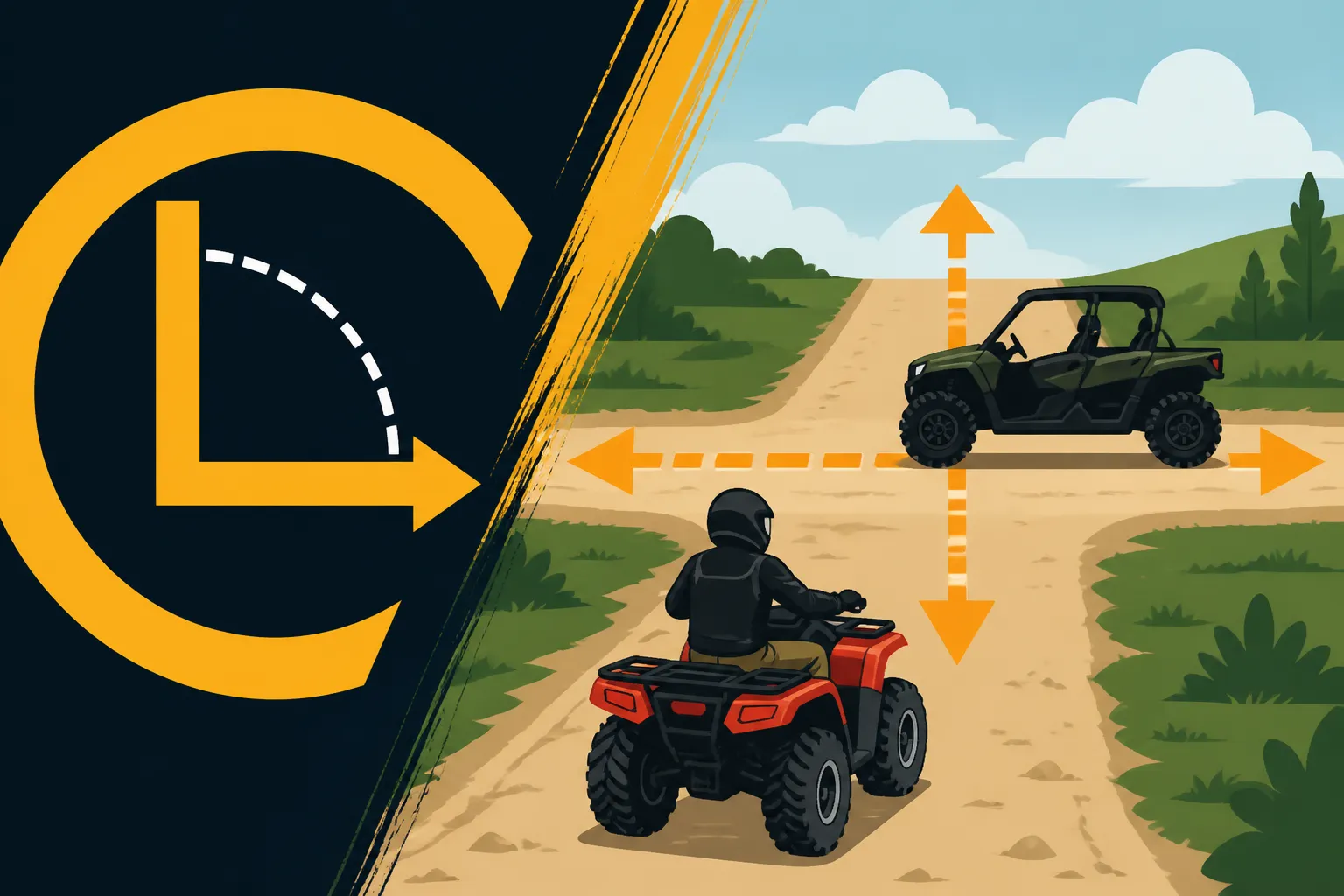
When the law states you must cross a road at a "ninety-degree angle," it means you need to approach the road, turn to face directly across it, and proceed straight over, perpendicular to the flow of traffic. Imagine drawing a perfect 'T' with your ATV as the vertical line and the road as the horizontal line. This isn't about cutting a diagonal path or merging at a slight angle; it's about making the most direct, straight-line crossing possible.
Think of it this way: if you're riding parallel to a ditch or a field edge and come up to a paved or gravel road you need to cross, you shouldn't simply turn slightly and cruise across at an oblique angle. Instead, you'd come to a stop, turn your machine so its front end is pointing straight across the road, and then proceed. This minimizes the length of your vehicle's exposure to traffic in either direction and reduces the chances of a vehicle approaching from the side misjudging your speed or direction. It eliminates the ambiguity that comes with a diagonal path, where other drivers might wonder if you're attempting to merge or turn onto the road rather than just crossing.
The intent behind this specific angle is to make your intentions crystal clear to any other drivers on the road. When you cross straight across, it's unambiguous: you are not joining the traffic lane, you are simply moving from one side of the road to the other as quickly and safely as possible. It’s a moment of heightened vulnerability for an ATV or UTV, so every measure to reduce risk is critical. This approach removes any guesswork for motorists and helps prevent potential collisions that could arise from confusion about your trajectory.
Why Nebraska Imposed This Specific Crossing Rule
The primary reason Nebraska enacted the ninety-degree crossing rule is safety, plain and simple. ATVs and UTVs, by their very design, are not built for road travel. They lack many of the safety features of street-legal vehicles, such as extensive crumple zones, enclosed cabins, and robust signaling systems. Their lower top speeds and different handling characteristics also make them less compatible with typical road traffic.
By requiring a ninety-degree crossing, the state aims to reduce the time an off-highway vehicle is actively occupying a traffic lane. A diagonal crossing, even a shallow one, means the ATV or UTV spends a longer time exposed to potential high-speed collisions. This longer exposure increases the risk of an accident with a car or truck, which can have devastating consequences for the ATV rider due to the inherent lack of protection offered by these machines. This rule forces riders to make a quick, decisive maneuver, rather than lingering on the roadway.
Furthermore, the rule addresses visibility. When an ATV crosses at a sharp angle, it presents a smaller profile to oncoming traffic for a longer period. A ninety-degree crossing, while brief, maximizes the vehicle's side profile to traffic approaching from both directions during its traversal, making it more conspicuous. It's a legislative attempt to mitigate the inherent dangers of mixing off-highway vehicles with on-highway traffic, prioritizing the safety of all road users. This commitment to specific, safety-focused rules underscores Nebraska's overall cautious approach to allowing ATVs and UTVs on public roads.
Practical Application: How to Execute a Ninety-Degree Crossing Safely
Knowing the rule is one thing, but actually executing it safely in real-world conditions is another. It requires a combination of vigilance, good judgment, and careful machine control. Many rural roads in Nebraska might seem quiet and empty, but conditions can change in an instant, and unexpected vehicles can appear quickly. Therefore, every crossing needs to be treated with the utmost seriousness, regardless of how familiar you are with the area. Developing a consistent, safe routine for every road crossing will help instill good habits and minimize risk, protecting both yourself and others.
This isn't a task to be rushed or taken lightly. It's a brief but critical moment where your full attention is required. Thinking through the steps, from your approach to your exit, will help you build confidence and ensure compliance with Nebraska law. Even if you've crossed the same road hundreds of times, a fresh approach each time can prevent complacency from leading to an oversight.
Approaching the Road: Identifying Your Crossing Point
The first step in a safe ninety-degree crossing is selecting the right spot. You don't just want to cross anywhere; you want to cross smart. This means choosing a location that offers the best possible visibility for you and for any approaching traffic. Look for flat, straight sections of road where your view is unobstructed for a good distance in both directions. Avoid crossing at the crest of a hill, around a blind curve, or where tall crops, trees, or buildings might block your line of sight.
Before you even get close to the pavement or gravel, slow your speed. Begin scanning for traffic early, not just when you're at the very edge of the road. Identify any potential hazards on or near the road surface itself – potholes, loose gravel, or debris – that could affect your machine's stability during the crossing. Consider the ground conditions on both sides of the road as well; you want a stable, level approach and exit point for your wheels. Don't pull out of a muddy field directly onto a paved road if you can help it, as this can track mud onto the road and create a slip hazard for other vehicles, in addition to making your own crossing less stable. Choose a spot where you can confidently stop and then restart your machine without getting stuck or losing traction.
A well-chosen crossing point gives you the time and space needed to react if a vehicle suddenly appears. It also gives other drivers ample warning of your presence. Think about what a car driver would see: do they have enough time to register your ATV, understand your intent, and react appropriately? If there's any doubt, move down the ditch or field edge to a better spot. This initial assessment is crucial for setting up a safe and compliant crossing.
The Stop, Look, and Listen Protocol for ATVs
Once you've identified your ideal crossing point and approached it slowly, the next critical step is to come to a complete stop right at the edge of the roadway. This isn't a "California roll" or a brief pause; it's a full stop where your machine is stationary, giving you the time to thoroughly assess the situation. From this stopped position, turn your head and look left, then right, then left again, thoroughly scanning for any oncoming traffic. Pay attention to both immediate proximity and distant horizons.
It's not just about what you see; it's also about what you hear. Many vehicles, especially larger trucks or farm equipment, can be heard before they're seen, particularly if your line of sight is somewhat limited. Turn off your engine if you're in a noisy environment or if there's any doubt, to better hear distant traffic. The "look and listen" component needs to be a deliberate, unhurried process. Don't assume an empty road will stay empty for the duration of your crossing. [Do You Have to Stop Before Crossing a Highway?] is not just good advice, it's a fundamental safety practice for any road interaction.
This protocol is essential for several reasons. First, it ensures you are fully aware of your surroundings before committing to crossing. Second, it demonstrates your caution and compliance with safe riding practices, which can be important if there's ever an incident. Third, it prepares you to execute the ninety-degree turn and crossing with confidence, knowing that the immediate path is clear. Only when you are absolutely certain that the road is clear in both directions, and that you have ample time to complete the crossing, should you proceed.
Accelerating Across: Speed and Control During the Crossing
Once you've stopped, looked, and listened, and determined the way is clear, it's time to execute the actual crossing. Shift into the appropriate gear for a steady, controlled acceleration. For most ATVs and UTVs, a low gear will provide sufficient torque without excessive speed, allowing you to maintain control. Turn your handlebars so your machine is pointing directly across the road, creating that ninety-degree angle to the pavement.
Now, accelerate smoothly but decisively. The goal is to traverse the roadway quickly and efficiently, minimizing your time in the traffic lane, but without losing control. Avoid sudden bursts of speed or aggressive turns that could destabilize the machine, especially if the road surface is uneven, gravelly, or slick. Keep your eyes focused on your intended exit point on the other side of the road, and maintain a straight trajectory. Don't look down at your wheels or get distracted; stay focused on clearing the road.
As you cross, continue to be aware of your surroundings. While you’ve checked for traffic, conditions can change rapidly. Be prepared to react if an unexpected vehicle appears, though a proper stop, look, and listen should prevent this. Once all four wheels (or more, for a UTV) are completely off the public roadway and onto the shoulder or private land on the other side, you can relax slightly and resume your normal off-road speed. The key throughout this entire sequence is maintaining full control of your machine and your focus.
Specific Scenarios and Exceptions to the Ninety-Degree Rule
While the ninety-degree crossing rule is fundamental, Nebraska's laws also acknowledge that not all road interactions are identical. There are nuances, especially when dealing with different types of roads or specific contexts like agricultural use. Understanding these finer points is crucial to avoid misinterpreting the law and potentially placing yourself in a risky or illegal situation. It's not a one-size-fits-all decree, but rather a principle that adapts to the varied landscape of rural and sometimes urban Nebraska.
Many riders, particularly those new to the state or those transitioning from areas with different regulations, often have questions about how these rules apply in unique circumstances. For instance, what happens if you need to cross a busy four-lane highway? Or if your ATV is primarily used for farm work? These distinctions are important because they can dictate not only how you cross but also whether you are allowed to be on that road at all.
Crossing Divided Highways and Intersections
The ninety-degree rule is primarily designed for crossing undivided two-lane roads, which are common throughout rural Nebraska. When it comes to divided highways – those with a median or barrier separating opposing lanes of traffic – the situation changes significantly. Most state statutes generally prohibit ATVs and UTVs from traveling on controlled-access highways, which often include divided highways. Furthermore, crossing a divided highway at any point other than a designated intersection is usually illegal and extremely dangerous.
If you find yourself needing to get from one side of a divided highway to the other, your only legal and safe option is typically to use an established intersection. At an intersection, you would follow the standard rules of the road for any vehicle, which means stopping at stop signs or traffic lights, waiting for a safe gap, and turning or proceeding through the intersection. You would not simply drive across the highway at a ninety-degree angle between intersections. [Crossing a Divided Highway Only at an Intersection] explicitly points to this restriction. This is a critical distinction, as attempting to cross a divided highway outside of an intersection would expose you to very high-speed traffic with little to no protection.
Even at an intersection, extreme caution is warranted. ATVs and UTVs are smaller and slower than most highway traffic, making them less visible and more vulnerable. If you are permitted to use a specific type of road, such as a county road that happens to intersect a divided highway, you must always yield to the traffic on the main highway. This is not a situation where the ninety-degree crossing rule applies in its usual form, but rather one where you adhere to standard intersection traffic laws, with an added layer of caution due to the nature of your vehicle.
Agricultural Use and Farm Equipment Exemptions
Nebraska law recognizes the vital role ATVs and UTVs play in agricultural operations, and it provides certain exemptions for farm use. For machines used solely for agricultural purposes, there can be some flexibility in how they interact with roads. For instance, ATVs and UTVs used for farming may be permitted to travel on certain public roads to move between fields or perform tasks directly related to agriculture, even if general recreational use is restricted. [Nebraska's Agricultural Road Exception] outlines these specific allowances.
However, even with agricultural exemptions, the general principle of safe road crossing often still applies. While a farmer might be moving a UTV slowly along a field edge to get to another parcel, when it comes time to cross a public road, the ninety-degree rule is still the safest and often expected method. The intent is to keep the machine's time on the main travel portion of the road to an absolute minimum. The exemption might allow you to be on the road for a specific purpose, but it doesn't necessarily waive the safety protocols for interaction with that road, especially crossings.
It's important to differentiate between merely being allowed on a road for agricultural work and the specific maneuver of crossing. While the law might grant permission for certain farm-related road travel, it usually doesn't give a carte blanche to disregard fundamental safety practices like yielding to traffic or executing a direct, ninety-degree crossing. Always check the specific wording of the agricultural exemption, and when in doubt, default to the safest method: a complete stop, thorough scan, and a perpendicular crossing.
Crossing in Unincorporated Villages or Opened City Streets
The rules for ATVs and UTVs on roads in Nebraska can become even more localized when you enter cities or unincorporated villages. While state law generally restricts ATV use on public roads, it often allows local municipalities and county boards to pass ordinances or resolutions that open certain streets or roads within their specific jurisdictions. [How a Town Ordinance Opens Its Its Streets to ATVs] discusses how this process works. If a city or county board has explicitly opened its streets to ATVs and UTVs, the ninety-degree crossing rule may still apply as a general safety principle, or it might be superseded by specific local rules.
In a city or village where ATV use is permitted, you're more likely to encounter intersections, traffic signs, and potentially higher traffic volumes. In these environments, while the spirit of the ninety-degree crossing – minimizing road exposure and making clear intentions – remains valid, the literal execution might shift to following standard traffic signals and intersection rules. For example, if you're riding on an approved city street and need to turn left or right, you'd signal and make the turn like any other vehicle, rather than trying to perform a ninety-degree "crossing" within the intersection.
However, if you're simply moving from a private driveway across a local street to another property, the ninety-degree rule still provides a clear, safe method for doing so. The key is to understand the specific local ordinances in effect. Some towns might have very detailed regulations about speed, time of day, and even designated routes. Always consult the specific city or county rules before riding your ATV or UTV on any public thoroughfare in these areas. The general rule of thumb is to assume state law applies unless a local ordinance specifically grants different permissions.
Equipment and Visibility for Safer Crossings
Executing a safe ninety-degree crossing isn't just about your driving technique; it's also heavily reliant on your machine's equipment and your overall visibility to other drivers. ATVs and UTVs are smaller than most cars and trucks, making them inherently less conspicuous on a public road, especially in certain lighting conditions or environments. Nebraska law, recognizing this, mandates specific equipment requirements designed to make you stand out and enhance safety during those brief but critical moments on the road.
Investing in proper lighting and safety accessories isn't just about avoiding a ticket; it's about protecting yourself and others. This is where proactive choices about your vehicle setup can make a real difference in preventing accidents. Don't view these requirements as burdens, but as essential tools for responsible riding, particularly when you need to interact with public roadways.
The Critical Role of Lights and Reflectors
Nebraska law is very clear: if you're going to operate an ATV or UTV on a public road, even for a brief crossing, your machine must be equipped with working headlights and taillights. Furthermore, these lights must be illuminated, even during daylight hours. [Nebraska Requires Head and Tail Lights] is not just a suggestion, it's a critical safety mandate. This might seem redundant on a bright, sunny day, but remember that a vehicle with its lights on is far more noticeable than one without, especially to drivers who might not be actively looking for an ATV.
Beyond the mandatory factory-installed lights, consider adding supplemental lighting or reflective materials. High-visibility LED lights, often available from aftermarket suppliers like SuperATV, can significantly boost your presence on the road. Reflective tape on the front, rear, and sides of your machine, particularly in bright, contrasting colors, can catch the attention of other drivers, especially at dawn, dusk, or in adverse weather conditions. While these additions might not be strictly mandated for all road interactions, they provide an extra layer of safety that can literally be life-saving.
The goal is to make your ATV or UTV as visible as possible from all angles. A ninety-degree crossing is a quick maneuver, but during that brief period, you want no doubt in other drivers' minds that you are there. Working lights confirm your presence, and additional reflectors can help delineate the size and shape of your machine, aiding other drivers in judging distance and speed. Don't rely solely on the expectation that others will see you; actively take steps to ensure you are seen.
The Mandatory Safety Flag: What You Need to Know
Another non-negotiable safety item for ATVs and UTVs operating on Nebraska roads is the safety flag. State law requires that these machines display a triangular flag, at least 30 square inches in size, made of day-glow orange or red material, and mounted on a pole that extends at least five feet above the ground. [Why Road-Legal ATVs Need a 5-Foot Safety Flag] explains this rule in detail, emphasizing its importance for visibility. This flag is not just decorative; it's a crucial visual cue for other drivers.
The purpose of the safety flag is to make your machine visible over obstacles that might otherwise obscure it. Imagine driving down a rural road where tall cornfields line the edges, or where rolling hills create blind spots. A car driver might not see your ATV itself until it's too late, but they can often spot the top of your flag pole rising above the crops or over a small rise. This early warning gives them precious extra seconds to react and adjust their driving.
Ensuring your flag meets the specific size, color, and height requirements is important. A small, faded, or low-mounted flag won't provide the same level of safety. Regularly check that your flag is securely attached and in good condition. A sturdy pole, capable of withstanding wind and vibration, is also essential. This simple, relatively inexpensive piece of equipment provides an outsized benefit in terms of road safety and is a clear indicator that you are a responsible and compliant rider.
Enhancing Visibility with Aftermarket Accessories
While Nebraska law outlines minimum requirements for lights and safety flags, riders committed to maximizing their safety often look to aftermarket accessories for an extra edge. The stock lighting on some ATVs and UTVs might be adequate for off-road trails but could be perceived as insufficient for the demands of public road interaction, even during a brief crossing. This is where companies specializing in off-road accessories come in.
Consider upgrading your factory lights to brighter LED options, such as those offered by SuperATV. Their range of light bars, cube lights, and LED headlights are designed for durability and intense illumination, which can significantly improve your visibility to other drivers, particularly in less-than-ideal lighting conditions or areas with heavy dust. These aren't just for trail riding at night; the added brightness and distinct pattern of LED lights can make your machine stand out during daylight hours too.
Beyond lights, other accessories can indirectly enhance safety during crossings. Sturdy mirrors, for example, can improve your ability to quickly scan for traffic before initiating a crossing. Horns, while often standard, can be upgraded for a louder, more attention-grabbing sound. Even reflective decals, beyond what's legally mandated, can be strategically placed on your helmet, riding gear, or the machine itself to further increase your profile. Every bit of added visibility can contribute to a safer crossing, giving you greater peace of mind and reducing risk.
Penalties for Non-Compliance and Enforcement
Ignoring or misinterpreting Nebraska's road rules for ATVs and UTVs, particularly something as specific as the ninety-degree crossing rule, isn't just a minor oversight; it carries real legal consequences. Law enforcement agencies throughout the state are tasked with ensuring compliance to maintain safety on public roadways. Understanding the potential penalties and how enforcement works is a crucial part of being a responsible rider. It's not just about knowing the rules, but also about appreciating the repercussions if those rules are broken.
The state's goal isn't necessarily to penalize riders, but to prevent accidents and promote safe behavior. However, when rules are violated, the legal system steps in. These penalties can range from financial fines to more serious repercussions, and they serve as a deterrent to unsafe practices. Knowing what to expect if you are stopped can help you understand the gravity of the regulations.
Legal Ramifications of Improper Crossings
If a law enforcement officer observes an ATV or UTV operator failing to execute a ninety-degree crossing correctly, or violating other road-use statutes, they can issue a citation. The specific penalties can vary depending on the severity of the violation, whether it's a first offense, and the discretion of the officer and the court. Generally, you can expect a traffic ticket, which will carry a monetary fine. [Nebraska Ticket Costs for Road Riding] can give you an idea of the financial impact.
Beyond the initial fine, there can be other legal consequences. Depending on the local jurisdiction, you might also incur court costs, and in some cases, points could be added to your driving record if the violation is tied to your driver's license (though many ATV road violations are separate from standard vehicle infractions). Repeated offenses could lead to higher fines, and in extreme cases, the impoundment of your machine. It's always best to treat any citation seriously and address it promptly, either by paying the fine or appearing in court as required.
An improper crossing could also be considered a contributing factor if an accident were to occur. This could significantly impact liability determinations, making you legally responsible for damages or injuries. The legal system views traffic laws as established safety guidelines; deviating from them can place a heavy burden on the violator in civil proceedings. Therefore, adhering to the ninety-degree rule is not just about avoiding a ticket, but about mitigating significant legal and financial risks.
The Role of Law Enforcement in ATV Road Safety
Law enforcement officers, including county deputies, state patrol, and sometimes city police in jurisdictions where ATVs are allowed, play a critical role in enforcing Nebraska's ATV road safety laws. Their primary goal is to ensure public safety and prevent accidents involving off-highway vehicles. They are trained to identify violations, from improper crossings to lack of required safety equipment or operation on prohibited roadways.
If an officer stops you while you're operating an ATV or UTV on a public road, they will typically ask for your identification and may inquire about your purpose for being on the road. They will also check for compliance with equipment requirements, such as lights and the safety flag. [What Paperwork a Deputy Can Ask to See] includes details on what documentation you should be prepared to provide, such as proof of ownership (title) and potentially insurance if operating on a road that requires it.
It's important to always cooperate courteously with law enforcement. Understanding the rules and being prepared with the correct documentation can help make any interaction smoother. Officers are not just looking for violations; they are also educating riders and ensuring that everyone shares the road responsibly. By following the rules, you demonstrate your commitment to safety and help foster a positive relationship between the riding community and law enforcement.
Insurance Implications After an Incident
The financial consequences of an improper road crossing can extend far beyond a traffic ticket, especially if an accident occurs. If you're involved in a collision while illegally or improperly crossing a public road with your ATV or UTV, the liability for damages and injuries could fall squarely on your shoulders. Most standard ATV insurance policies might have exclusions for incidents that occur during illegal operation or in violation of traffic laws. This means your insurance company could deny coverage, leaving you personally responsible for potentially massive medical bills, property damage, and legal fees. [Nebraska Accident Reporting for an ATV Crash] underscores the importance of proper procedure after any incident.
Even if you have liability insurance, if your actions (like an illegal or improper ninety-degree crossing) are deemed negligent or in violation of state law, your insurer might refuse to pay out claims, arguing that you were operating outside the terms of your policy. This could result in you having to pay out-of-pocket for damages to another vehicle, repairs to your own machine, and any medical costs for yourself or others involved. This financial burden can be crippling.
It's critical to review your ATV insurance policy carefully and understand its specific exclusions related to road use. If you anticipate any road crossings or limited street-legal use, discuss this explicitly with your insurance provider to ensure you have adequate coverage for all your intended activities. The small effort to understand and comply with Nebraska's ninety-degree crossing rule is a minimal cost compared to the potential financial devastation of an uninsured or denied claim after an accident.
Best Practices for All Nebraska ATV Riders on Public Roads
Beyond simply adhering to the letter of the law, a truly responsible ATV or UTV rider embraces a set of best practices that prioritize safety and respect for other road users. The ninety-degree crossing rule is a specific mandate, but it fits into a broader philosophy of cautious and considerate operation whenever an off-highway vehicle interfaces with public roads. These best practices are about being proactive, defensive, and always putting safety first, even in situations where the law might seem less clear.
Cultivating these habits not only makes you a safer rider but also contributes to a more positive public perception of ATV and UTV enthusiasts. When riders are consistently seen operating responsibly, it reduces calls for stricter bans and fosters a more inclusive environment for off-highway vehicles. It's about being a good neighbor on the roads, however briefly you're on them.
Always Yield to Oncoming Traffic
This might seem obvious, but it's a fundamental rule that bears repeating: when crossing any public road in Nebraska, an ATV or UTV must always yield to all oncoming traffic. The law views ATVs and UTVs as secondary users of public roads, meaning they do not have the right-of-way over cars, trucks, or other standard vehicles. Even if you think you have plenty of time, if another vehicle is approaching, you must stop and wait for it to pass before initiating your ninety-degree crossing. [Nebraska Yielding at Every Crossing] is a critical principle.
This yielding responsibility applies even if the other vehicle seems far away. Judge distances conservatively. A car traveling at 60 mph covers a lot of ground in a very short amount of time. What looks like a safe gap might quickly become dangerous. Never pull out in front of another vehicle, forcing them to slow down, swerve, or take evasive action. Not only is this illegal and extremely dangerous, but it also creates animosity towards ATV riders.
Defensive driving is key here. Assume that other drivers might not see you, might misjudge your speed, or might not expect an ATV to be on the road. Your job is to make sure you are not the cause of an accident. Waiting an extra few seconds for traffic to clear is a small price to pay for ensuring a safe crossing for everyone involved. Your safety is paramount, and yielding is your primary tool for achieving it.
Riding Single File and Maintaining Control
If you're riding with a group of ATVs or UTVs and need to cross a public road, it's absolutely crucial that you do so in single file. Never attempt to cross two or more machines abreast. Each rider must execute their own ninety-degree crossing independently, with sufficient spacing between machines to allow for individual assessment of traffic and safe traversal. This means the lead rider crosses, then the next rider assesses the traffic and crosses, and so on.
Maintaining control of your machine is paramount throughout the entire process, especially when riding in a group. Ensure you are not distracted by other riders or conversation. Each rider in the group needs to understand the protocol: approach the road slowly, stop at the edge, look and listen, and then cross decisively at a ninety-degree angle when the path is clear. This discipline is essential for preventing chaos and ensuring each crossing is as safe as possible.
Before even approaching the road, have a clear plan for your group. The lead rider should signal the intent to cross and ensure everyone understands the single-file procedure. This structured approach minimizes risks associated with group dynamics and ensures that every rider has the opportunity to make an informed, safe decision before entering the public roadway. Never assume the road is clear just because the rider in front of you crossed; conditions can change in an instant.
Continuous Education and Staying Informed
Nebraska's laws regarding ATVs and UTVs are not static. They can, and sometimes do, change. New legislation might be introduced, existing statutes could be amended, or local ordinances might be enacted or repealed. A responsible rider understands that staying informed about these changes is an ongoing responsibility, not a one-time check. Relying on outdated information could inadvertently lead to violations or unsafe practices.
Make it a habit to periodically review the relevant statutes through official state resources, such as the Nebraska Department of Motor Vehicles website (though titles are handled by county treasurers for ATVs) or the Nebraska Game and Parks Commission for recreational riding areas. Also, be aware of local government websites for cities and counties where you frequently ride, as local ordinances can significantly impact road access. Checking for news from reputable ATV advocacy groups in Nebraska can also provide valuable updates.
Being continuously educated means you're always riding within the current legal framework, ensuring your safety and avoiding potential penalties. It also empowers you to advocate for responsible riding and to correct misinformation among your fellow riders. The more informed the riding community is, the safer and more enjoyable the experience will be for everyone in Nebraska.
Common Misconceptions and Clarifications
Even with clear rules, misconceptions can arise, often from riders applying rules from other states, misunderstanding legal jargon, or simply misinterpreting the intent behind a specific regulation. When it comes to Nebraska's ninety-degree crossing rule, there are a few common points of confusion that deserve specific clarification. Clearing these up can help ensure riders are fully compliant and, more importantly, operating safely.
It's easy to assume certain things or to generalize from one situation to another, but with traffic laws, precision matters. These clarifications aim to provide that precision, helping riders avoid pitfalls and misunderstandings that could lead to tickets or, worse, accidents.
The Difference Between Crossing and Riding Along
One of the most common misunderstandings revolves around the distinction between crossing a road and riding along a road. The ninety-degree rule specifically applies to crossing from one side of a road to the other. It is not a method for merging into traffic or traveling parallel to the road for an extended distance. Nebraska law generally prohibits ATVs and UTVs from operating on the traveled portion of public roads for prolonged periods, with limited exceptions (like agricultural use or specifically opened city streets). [Nebraska Farm Trips Outside City Limits] are one of those exceptions.
If you are using an ATV for a permitted activity, such as agricultural work, and need to travel a short distance along a road to reach another field, you would typically stay as far to the right as safely possible, often on the shoulder or in the ditch, and not necessarily maintain a ninety-degree angle to the road. The ninety-degree rule is a very specific maneuver for traversing the roadway itself, not for longitudinal travel. Confusing these two distinct actions can lead to dangerous situations and violations.
Always remember that if you are traveling along a road, even for a permitted farm use, you must still adhere to all applicable traffic laws, yield to other vehicles, and maintain maximum visibility. The ninety-degree rule is reserved for the brief, perpendicular transition from one side of the road to the other, minimizing your presence in the flow of traffic.
Why a 30 mph Limit Still Applies to Crossings
Even though a ninety-degree crossing is meant to be a quick maneuver, the overall speed limit for ATVs and UTVs on public roads in Nebraska still applies. That limit is generally 30 mph. This means that while you should accelerate decisively to clear the road, you should not exceed 30 mph during the crossing itself. [30 mph at Most] isn't just for sustained travel; it applies to any instance an ATV is on a public road.
Attempting to "fly" across a road at excessive speed, even for a quick crossing, is extremely dangerous. It reduces your reaction time, makes it harder to maintain control, and increases the severity of any potential impact. The spirit of the ninety-degree rule is efficiency and safety, not sheer speed. A controlled, steady acceleration up to the 30 mph limit (if necessary to clear a wide road quickly) is the appropriate approach.
It's also important to remember that if the posted speed limit for the road you are crossing is less than 30 mph, you must adhere to the lower posted limit. Always prioritize safety and control over getting across as quickly as possible. The 30 mph limit is a maximum, not a target, especially for a maneuver like crossing.
Understanding "Daylight Hours" for Road Use
Nebraska law often specifies that ATVs and UTVs, when permitted on public roads for specific purposes, must generally operate only during "daylight hours." While the law also mandates headlights and taillights even during the day, this 'daylight hours' restriction is crucial. [Sunrise to Sunset Only] describes this general rule. The ninety-degree crossing rule is implicitly tied to this, meaning you should not typically be performing road crossings during the dark hours of night.
"Daylight hours" typically refers to the period between sunrise and sunset. While there might be specific exceptions, such as for snow removal, these are generally narrow and well-defined. Attempting a ninety-degree crossing in low light conditions, such as twilight or complete darkness, significantly increases the risk of an accident because your machine is far less visible to other drivers, even with lights on.
Always plan your rides to ensure that any necessary road crossings occur well within the daylight window. If you find yourself in a situation where you need to cross a road after dark, it's best to find an alternative route or wait until daylight. The increased danger and potential legal ramifications of operating an ATV on a public road outside of daylight hours are simply not worth the risk.
Here's a quick summary of key Nebraska ATV/UTV road crossing rules:
| Rule Category | Specific Requirement | Details & Rationale |
|---|---|---|
| Crossing Angle | Must be at a ninety-degree angle. | Minimizes time on roadway, clarifies rider's intent, maximizes visibility. |
| Stopping | Complete stop at roadway edge before crossing. | Allows thorough traffic assessment ("stop, look, listen") from both directions. |
| Yielding | Must yield to all oncoming road traffic. | ATVs/UTVs are secondary road users; safety priority for other vehicles. |
| Speed | Do not exceed 30 mph during crossing. | Overall ATV road speed limit applies; maintain control, avoid excessive speed. |
| Visibility (Lights) | Headlights and taillights must be illuminated. | Mandatory for increased visibility to other drivers, even in daylight. |
| Visibility (Flag) | 5-foot pole, 30 sq. in. day-glow orange/red flag. | Helps drivers see machine over obstacles (e.g., crops, hills) for early warning. |
| Divided Highways | Generally prohibited; cross only at designated intersections if permitted. | High-speed traffic, increased danger; standard intersection rules apply. |
| Agricultural Use | Specific exemptions may apply for farm-related travel. | While on roads for farm work, general crossing safety rules usually still apply. |
| Time of Day | Generally restricted to daylight hours. | Low light increases accident risk due to poor visibility; plan accordingly. |
| Group Riding | Cross in single file with sufficient spacing. | Each rider must assess and cross independently to ensure safety. |
Disclaimer
This article is for general informational purposes only and does not constitute professional advice. Laws, prices and regulations vary by location and change over time. Consult a qualified professional for guidance on your specific situation.