Nebraska Farm Trips Outside City Limits
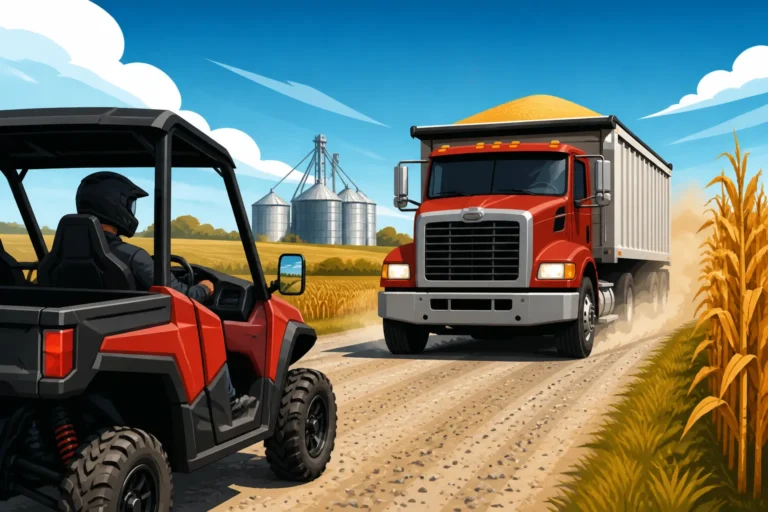
It can be incredibly frustrating trying to figure out where and how you can legally operate your ATV or UTV on public roads in Nebraska, especially when you're just trying to get farm work done. Many folks assume these machines are strictly for off-road use, and while that's generally true, Nebraska carves out specific, vital exceptions for agricultural purposes outside city limits. This guide is here to untangle those rules, clarify what you can and can't do, and help you understand how to use your machine for farm trips legally and safely on county roads.
The Foundation of Nebraska's ATV Road Rules
Let's face it, the idea of taking your ATV or UTV onto a public road can feel like walking a tightrope without a net. Most states, including Nebraska, primarily view these machines as off-highway vehicles. This means a blanket prohibition on their use on streets, highways, and most public rights-of-way. However, agriculture is the backbone of Nebraska, and the state's laws wisely recognize that farmers and ranchers need their machines to get work done. This understanding forms the bedrock of Nebraska's specific exceptions for farm-related road use. It's not about joyriding to town; it's about practical necessity for the hardworking folks who keep our fields productive.
General Prohibition vs. Specific Exceptions
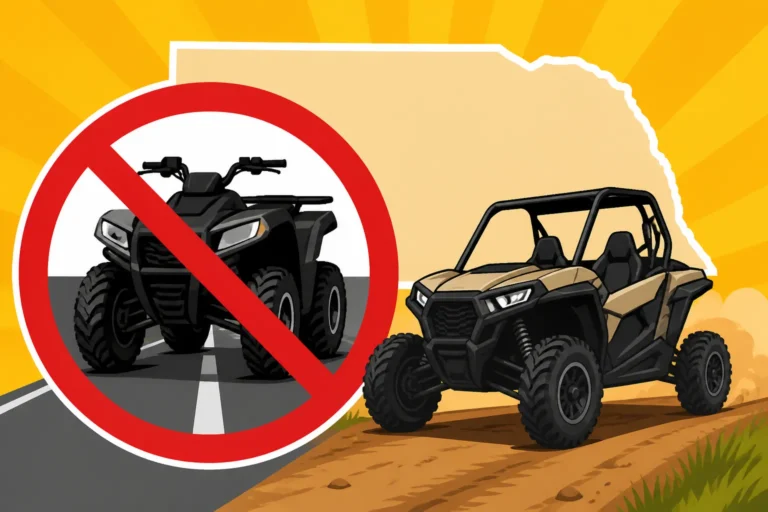
The general rule is pretty straightforward: no ATVs or UTVs on public roads. That's the baseline, and it's a rule designed to keep everyone safe, given the different handling characteristics and lack of traditional road-vehicle safety features on these machines. But laws aren't always black and white, especially in a state like Nebraska, where an ATV might be just as crucial to daily operations as a pickup truck. So, while you can't just take your quad for a cruise down Main Street, the law makes room for specific, well-defined exceptions. These exceptions aren't loopholes; they're deliberate provisions carved out to support agricultural activity. Think of it less like a free pass and more like a specific tool for a specific job, with its own set of instructions and safety measures. It’s crucial to understand these distinctions because straying outside these exceptions can lead to fines, impoundment, or worse, an accident.
For example, you might be tempted to just zip down the road a mile to your neighbor's field to borrow a tool. If that trip isn't directly related to your farm operation, you could be violating the law. The intent and purpose of your travel are just as important as the type of machine you're riding. The law is trying to distinguish between genuine work and casual recreation. If you’re unsure, it’s always better to err on the side of caution or seek clarification. This isn't just about avoiding a ticket; it's about ensuring your safety and the safety of others on the road.
Understanding "Agricultural Purposes"
This is where the rubber meets the road, quite literally. What exactly does Nebraska mean by "agricultural purposes"? It's more than just driving on a field. The law, specifically [Nebraska's Agricultural Road Exception], defines it broadly to include activities directly related to farming, ranching, and other agricultural operations. This means moving equipment between fields, checking irrigation pivots, hauling feed to livestock in a different pasture, or even transporting tools for fence repair on another part of your property. It’s about the essential movements required to manage an agricultural enterprise.
Imagine you're a rancher needing to check on a distant herd across a county road, or a farmer moving a sprayer from one section of land to another. These are classic examples of "agricultural purposes." What it generally doesn't include is going to the local hardware store for personal items, driving into town for lunch, or taking your ATV out for a joyride on a Sunday afternoon, even if you just came from feeding cattle. The distinction can sometimes feel like splitting hairs, but it's vital for staying within the bounds of the law. Your journey on a public road must have a clear and direct connection to your agricultural work. A good rule of thumb is to ask yourself, "Is this trip absolutely necessary for the operation of my farm or ranch?" If the answer is a clear "yes," you're likely in the clear regarding purpose. If it's a "maybe" or "no," you might want to reconsider your route or mode of transportation. For a deeper dive into what makes a trip legal, check out [When Farm Use Makes an ATV Road Trip Legal].
Navigating County Roads for Farm Operations
Once you've established that your trip is genuinely for agricultural purposes and outside city limits, there are still several critical rules you absolutely must follow when operating your ATV or UTV on a public road in Nebraska. These aren't suggestions; they're legal requirements designed to ensure your safety and the safety of other motorists sharing the road. Ignoring them can lead to serious consequences, including citations and potentially dangerous situations. Think of these rules as the essential gear you need before you even think about leaving the field.
The 30 MPH Speed Limit
This is a non-negotiable rule: when operating an ATV or UTV on a public road for agricultural purposes, you cannot exceed 30 miles per hour. This speed limit is in place for a very good reason. ATVs and UTVs are not designed for sustained high-speed road travel. Their suspension, tires, and overall stability are engineered for off-road terrain, not smooth asphalt or gravel at higher speeds. Pushing these machines beyond this limit dramatically increases the risk of losing control, especially if you encounter an unexpected pothole, loose gravel, or have to make a sudden maneuver. It’s a limit set with safety firmly in mind, recognizing the different dynamics of an ATV compared to a car or truck.
Even if the posted speed limit on the county road is 55 mph, your ATV or UTV is still restricted to 30 mph. This can sometimes feel frustrating when you're trying to get a job done quickly, but adhering to this rule is paramount for your safety and legal compliance. Deputies are well aware of this restriction, and exceeding it is an easy way to get pulled over. It's not just about the posted limit; it's about the machine's inherent design and capabilities. So, take your time, plan your route, and respect the 30 mph maximum. You can find more details on this specific rule in [Nebraska's 30 mph Road Limit].
Safety Flag Requirements
Visibility is everything when you're on a smaller machine like an ATV or UTV sharing the road with much larger, faster vehicles. That's why Nebraska law mandates a specific safety flag for agricultural road use. Your ATV or UTV must be equipped with a safety flag that extends at least five feet above the ground level of the machine. This isn't just any flag; it needs to be fluorescent orange and triangular in shape, with a minimum size of 30 square inches. This bright, high-flying flag makes your presence known to other drivers, especially on winding county roads, over hills, or in areas with limited sightlines. It essentially gives your smaller vehicle a taller profile, making it easier for oncoming traffic or vehicles approaching from behind to spot you from a distance.
Think about driving an ATV through cornfields or along tree lines. A car might not see you until it's too late. The flag is an early warning system. Many riders use products from brands like SuperATV to equip their machines with robust flag mounts and durable, compliant flags. It's a small investment that makes a huge difference in your visibility and overall safety. Don't skip this requirement; it's a critical component of safe road operation. For the full lowdown on this rule, look up [Nebraska's 5-Foot Safety Flag Rule].
Here's a quick look at the flag requirements:
| Feature | Requirement |
|---|---|
| Height | At least 5 feet above ground level of machine |
| Color | Fluorescent orange |
| Shape | Triangular |
| Minimum Size | 30 square inches |
| Purpose | Enhance visibility for other road users |
Lighting for Day and Night Use
Even for daylight farm trips, your ATV or UTV needs proper lighting. Specifically, the law requires that your headlight be illuminated whenever you're operating the machine on a public road, even in broad daylight. This is another crucial visibility measure. Just like motorcycles are often required to run with their headlights on, this makes your ATV or UTV more noticeable to other drivers. A machine that might blend into the background on a sunny day suddenly stands out with a lit headlight.
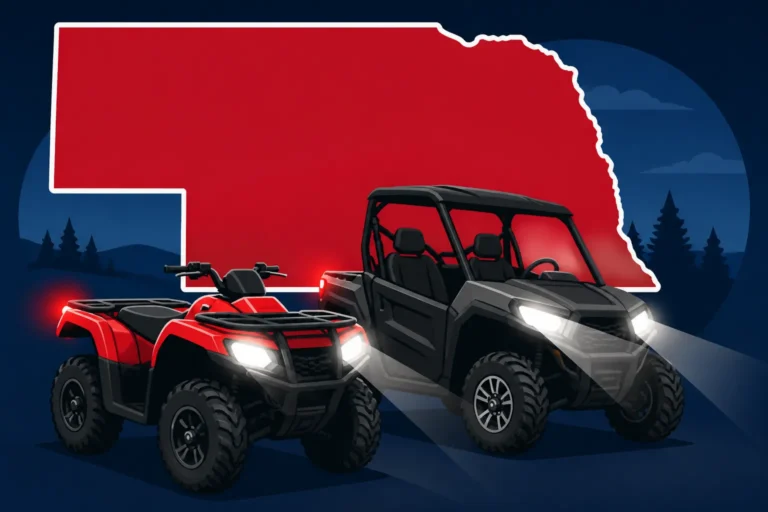
For those times when your agricultural duties extend past sunset, or if you're clearing snow after dark (which is a specific exception allowing night use), your lighting requirements become even more stringent. You'll need both a working headlight and at least one taillight that is clearly visible from 500 feet to the rear. This ensures you're seen from all directions. Always double-check your lights before heading out, especially if you know your trip might extend into dusk or darkness. Proper lighting isn't just about avoiding a ticket; it's about making sure you get home safely after a long day's work. More details on daylight riding rules can be found in [Nebraska Daylight Riding Rule] and [Nebraska Lighting Statute 60-6,357].
Driver and Machine Requirements for Farm Road Use
It's not enough to just have a legitimate reason and the right safety equipment. The person operating the ATV or UTV on the road, as well as the machine itself, must meet certain legal criteria. These requirements are in place to ensure that only qualified individuals operate these vehicles on public roads and that there's a safety net in case of an incident. Understanding these aspects is just as vital as knowing your speed limit or flag requirements.
Licensing and Permits
You can't just jump on your quad and hit the county road without the proper credentials. In Nebraska, anyone operating an ATV or UTV on a public road for agricultural purposes must hold either a valid Class O operator's license (the standard driver's license) or a farm permit. This is a critical point. If you, or whoever is operating the machine, doesn't have one of these, then even if all other conditions are met, the road use is illegal. The farm permit is often used by younger farmhands or individuals who don't hold a full Class O license but are authorized to operate farm machinery. It acknowledges the unique needs of agricultural operations.
This requirement ensures that the operator has at least a basic understanding of traffic laws and safe driving practices, which is crucial when sharing the road with other vehicles. Don't assume that because it's a "farm machine" you don't need a license. It's a public road, and public road rules apply to the operator. For more information on this, check out [Nebraska Requires a Class O License or Farm Permit] and [Can a Farm Permit Replace a Driver's License?].
Mandatory Liability Insurance
Another non-negotiable for road use is liability insurance. If you're going to operate your ATV or UTV on a public road in Nebraska, even for farming purposes, you are legally required to carry liability insurance. This isn't just a good idea; it's the law. This insurance provides a layer of protection in case you're involved in an accident and are deemed at fault, covering damages or injuries to other parties. Without it, you could face significant financial hardship if an incident occurs.
The minimum liability coverage amounts are the same as for other motor vehicles: currently, $25,000 for bodily injury or death of one person, $50,000 for bodily injury or death of two or more people, and $25,000 for property damage. It's important to note that these minimums are set to increase in 2027, so it's always wise to check current regulations and consider higher coverage limits for your peace of mind. Your local insurance agent can help you secure the right policy for your ATV or UTV that meets Nebraska's road-use requirements. This is one area where cutting corners can have devastating consequences. Read up on [Nebraska Requires Liability Insurance on Roads] and [Nebraska Insurance Minimums Today] for more specifics.
Passenger and Equipment Considerations
While the primary focus for farm-use ATVs on roads is often on the operator and the immediate task, there are also considerations for passengers and any specialized equipment being carried. Generally, ATVs are designed for one rider, though some utility models are built for a passenger. If your machine is designed for more than one person, ensure any passengers are seated properly and safely according to the manufacturer's specifications. Overloading an ATV or UTV can severely compromise its stability and handling, especially on paved or gravel roads where the dynamics are different from off-road conditions.
When it comes to equipment, ensure anything you're hauling is securely fastened and does not obscure your visibility, lighting, or the required safety flag. Imagine carrying a fence post that blocks your taillight or the flag; that immediately puts you out of compliance and creates a hazard. Many agricultural operations utilize specialized attachments, like sprayers or small trailers. If you're towing a trailer, ensure it is also properly maintained, lit if necessary, and securely attached. While not explicitly stated for ATVs, general road safety dictates that any towed implement should not create an undue hazard. For example, a heavy-duty cargo box from SuperATV could be excellent for securing tools, but make sure it doesn't obstruct visibility or lights. The key is common sense and ensuring everything is secured to prevent shifting or falling off during transport, which could cause an accident for you or other drivers.
Crossing State Highways and Divided Roads
Even with the agricultural exception, there are strict rules about where and how you can interact with certain types of public roads, particularly state highways and divided roadways. These are higher-speed, higher-volume arteries, and the risks associated with ATV/UTV use on them are significantly amplified. Understanding these boundaries is critical to avoiding serious danger and legal trouble.
The Ninety-Degree Crossing Rule
For certain state highways and other multi-lane roads, outright travel is generally prohibited. However, Nebraska law does allow for a very specific type of interaction: crossing the highway. If you need to get from one side of a highway to another to access different parts of your farm or ranch, you can do so, but only under highly controlled circumstances. The rule is that you must cross the highway at a ninety-degree angle. This means driving directly across the lanes, perpendicular to the flow of traffic, not at an angle that parallels the road even slightly.
This rule is designed to minimize the time you spend in traffic lanes and to make your intentions clear to other drivers. Before crossing, you must come to a complete stop, yield to all oncoming traffic, and only proceed when it is safe to do so. This isn't a race; it's a careful, deliberate maneuver. You are essentially a pedestrian with a large machine, so caution is paramount. This rule also generally applies to crossing a divided highway, but only at an intersection where it's explicitly safe to do so, and you must yield at every step. Never assume a driver sees you or will slow down. Your safety is in your hands. You can learn more about this in [Nebraska Crossing Rules at Ninety Degrees] and [Do You Have to Stop Before Crossing a Highway?].
Prohibitions on Controlled-Access Highways
While crossing certain highways is permitted, there are absolute no-go zones for ATVs and UTVs, even for agricultural purposes. Controlled-access highways, like interstates and some major expressways, are strictly off-limits. You cannot drive on them, and you cannot cross them, except at designated interchanges where traffic is controlled. These roads are designed for high-speed, continuous flow of traffic, and ATVs or UTVs, even with all safety measures, simply do not belong there. The speed differential, the volume of traffic, and the design of these roads make them incredibly dangerous for these types of machines.
Attempting to operate an ATV or UTV on a controlled-access highway is not only illegal but extremely hazardous. It puts you and every other motorist at severe risk. This prohibition is unwavering, regardless of your agricultural needs. If your farm operation requires access that would involve using or crossing a controlled-access highway, you must find an alternative route that uses county roads or other permissible paths. There are no exceptions for agricultural use on these specific types of roadways. This is one of the most important rules to remember for your safety and to avoid severe penalties. Find out more about what roads are banned in [Nebraska Bans ATVs on State Highways] and [Nebraska Bans Crossing a Controlled-Access Highway].
Common Misconceptions and Best Practices
Navigating the rules for ATV and UTV use on Nebraska roads for farm trips can be confusing, and there are many common misunderstandings. Beyond just knowing the letter of the law, a good dose of common sense and best practices will help keep you safe and compliant. Let's clear up some lingering questions and offer practical advice.
The Myth of a Statewide "Sticker"
One of the most persistent misconceptions riders encounter is the idea that there's some kind of statewide registration or "sticker" that makes your ATV or UTV street legal. This simply isn't true for Nebraska. Unlike many other states that might require an off-highway vehicle (OHV) permit or registration sticker for trail use, Nebraska does not have a statewide ATV or UTV registration system that allows general road use. Your machine will receive a title, which is different from a registration. The title is proof of ownership, but it does not grant permission for road operation.
When you title your ATV or UTV in Nebraska, the title itself will often bear a notation like "Not to be Registered" or something similar, explicitly indicating it's not a road-registered vehicle. This often leads to confusion, as people assume a titled vehicle can be driven on the road. For the vast majority of situations, that assumption is incorrect. The agricultural exception for road use is exactly that—an exception to the general rule, not a sign that your machine is "street legal" in the same way a car is. Don't confuse having a title with having a registration that permits general road travel. Your title indicates ownership, not road legality. For more on this, check out [Nebraska Has No State Decal] and [Why an ATV Title Says Not To Be Registered].
Practical Tips for Staying Compliant
Beyond the letter of the law, adopting some practical habits can make a big difference in staying safe and out of trouble.
- Be hyper-visible: Even with the required flag and lights, consider adding more reflective tape to your machine, especially if you anticipate riding near dusk or in dusty conditions. A bright vest for the operator isn't a bad idea either.
- Ride defensively: Assume other drivers don't see you. This means being extra vigilant at intersections, blind spots, and driveways. Be prepared to yield even when you might technically have the right-of-way.
- Keep your paperwork handy: Always carry your valid Class O license or farm permit, proof of insurance, and a copy of your ATV's title (or the original if you prefer) when operating on public roads. A small, waterproof pouch is great for this.
- Maintain your machine: Ensure your tires are in good condition, brakes are working perfectly, and all lights are functional. A breakdown on a public road is inconvenient and potentially dangerous.
- Communicate your intentions: Use hand signals if your UTV doesn't have turn signals, or even if it does, as an extra layer of communication to other drivers about your turns or stops.
- Know your route: Plan your farm trips to minimize public road exposure. If there's a field road or private path that gets you where you need to go without using a county road, take it.
By integrating these tips, you're not just complying with the law, but actively enhancing your safety and the safety of those around you.
The Role of Local Ordinances
It's important to remember that the rules discussed here pertain primarily to county roads outside of incorporated city or village limits. When you enter a city or village, even if it's still for agricultural purposes, you step into a different legal landscape. Many cities and villages in Nebraska have their own ordinances regarding ATV and UTV use on their streets and alleys. These local rules can vary wildly from one community to the next. Some towns might open up certain streets to ATVs, often requiring a local registration sticker and fee, and potentially setting their own age or equipment requirements.
For example, a small village might have a resolution allowing ATVs on all residential streets to access local farms, while a larger city might ban them entirely, even for agricultural use. These local ordinances are separate from the state agricultural exception. If your farm trip requires you to enter an incorporated area, it is absolutely crucial to check with that specific city or village hall about their local rules before you ride. Ignorance of a local ordinance is not a defense, and a ticket in town could be expensive. Always do your homework when crossing municipal boundaries. [Nebraska City Ordinances That Open Streets] and [How a Town Ordinance Opens Its Streets to ATVs] offer more context on this topic.
Required Safety Equipment for Agricultural Road Use in Nebraska
| Equipment Feature | Specifics for Agricultural Road Use (Outside City Limits) | Importance |
|---|---|---|
| Speed Limit | Maximum 30 MPH, regardless of posted speed limit | Safety for slow-moving vehicles, designed for off-road performance. |
| Safety Flag | Fluorescent orange, triangular, 30+ sq. inches, 5+ feet above ground | Essential for visibility to other motorists, especially on hills/curves. |
| Headlight | Must be illuminated at all times (day or night) | Enhances visibility to oncoming traffic, even in bright conditions. |
| Taillight | Required if operating between sunset and sunrise or during limited visibility | Ensures visibility from the rear, crucial for night or adverse weather. |
| Operator License | Valid Class O (driver's license) or Farm Permit | Ensures operator has basic road knowledge and is legally qualified. |
| Liability Insurance | Mandatory minimums (e.g., $25k/$50k/$25k, increasing in 2027) | Financial protection in case of an accident and at-fault liability. |
| Agricultural Purpose | Trip must be directly related to farming/ranching operations | Defines the legal scope of road use; not for casual recreation. |
| Road Type Restriction | Permitted on county roads; crossing certain highways at 90 degrees; prohibited on interstates. | Prevents high-risk operations on high-speed, high-volume roadways. |
Disclaimer
This article is for general informational purposes only and does not constitute professional advice. Laws, prices and regulations vary by location and change over time. Consult a qualified professional for guidance on your specific situation.