Nebraska Snow Removal Night Exception
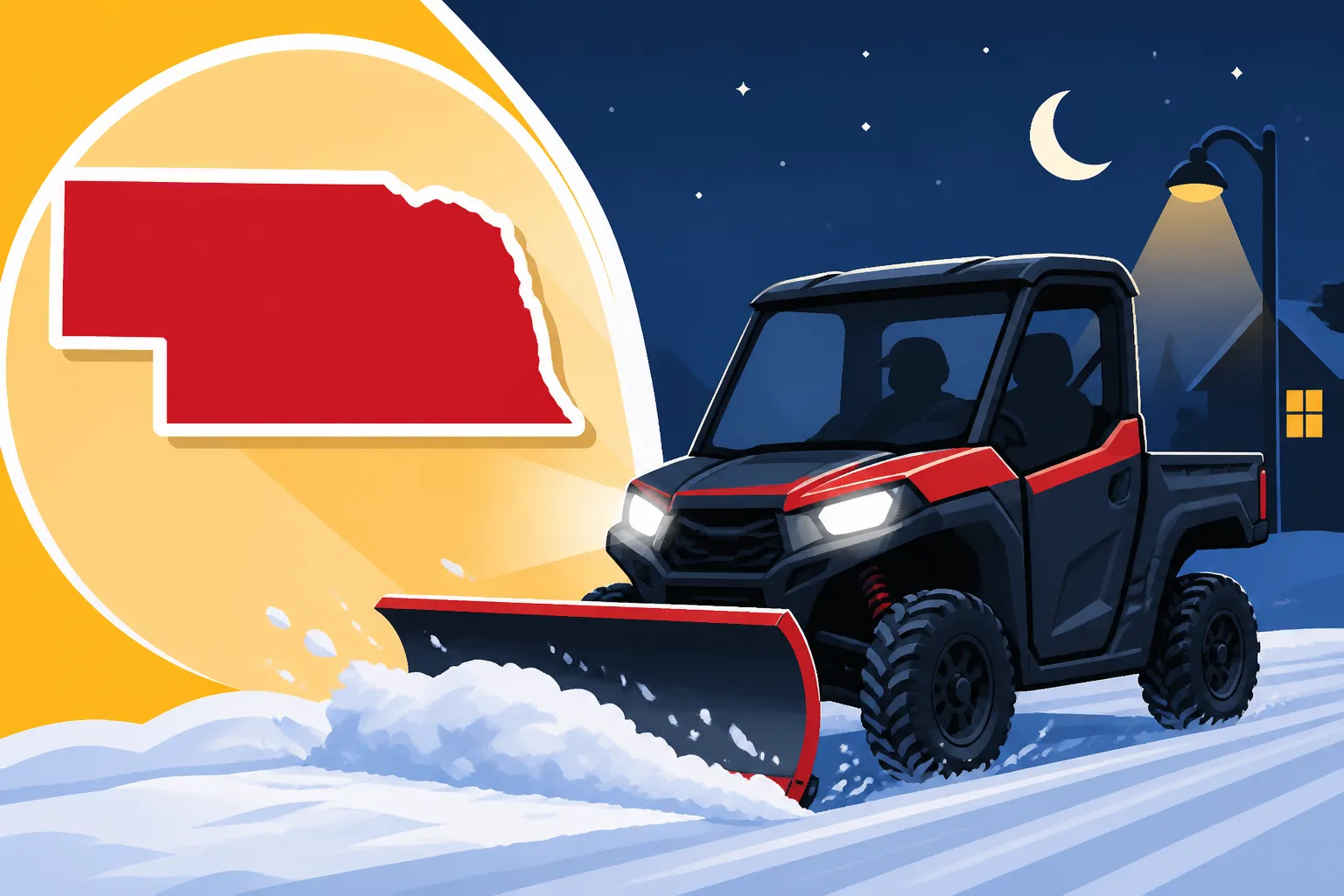
Winter in Nebraska means dealing with snow, and for many of us with long driveways, private roads, or even just needing to clear paths for neighbors, the thought of shoveling or firing up a big tractor can be daunting. ATVs and UTVs have become absolute workhorses for snow removal, making what used to be a back-breaking chore much more manageable. But what happens when the snow flies thick and fast, and you need to keep working after the sun has dipped below the horizon? Thankfully, Nebraska law provides a specific exception for just this scenario, allowing you to legally use your off-road machine for snow removal even after dark. This guide will walk you through the ins and outs of this crucial exception, ensuring you're clearing snow safely and legally when the streetlights are your only companions.
Understanding Nebraska's General ATV Road Rules: The Baseline
Before we dive into the specific exception for snow removal, it's really important to get a clear picture of what the rules normally are for ATVs and UTVs on public roads in Nebraska. Most folks understand that these machines aren't just like cars or trucks that can cruise down any highway, but the nuances can sometimes trip people up. Knowing the standard regulations helps us truly appreciate the flexibility that the snow removal exception offers.
Why ATVs Are Generally Restricted on Public Roads
In general, ATVs and UTVs are designed and intended for off-road use. They're built for trails, pastures, and rough terrain, not paved asphalt. Because of their design – things like tire type, suspension, lack of certain safety features common in cars, and how they handle at higher speeds – Nebraska law generally restricts their use on public roads. The main concern, and rightly so, is safety for both the ATV/UTV operator and other motorists. When you look at your ATV's title, you'll often see a specific notation that reads something like [Why an ATV Title Says Not To Be Registered]. This isn't an oversight; it's a deliberate legal designation reinforcing that the machine isn't meant for registration as a street-legal vehicle like a car or motorcycle.
The legislative intent behind these general prohibitions is pretty straightforward: it's about minimizing the risk of accidents. An ATV traveling at 30 mph on a paved road, especially one with higher speed limits, interacts very differently with traffic than it would on a gravel path or a dirt trail. These machines lack the visibility, crash protection, and signaling systems that road-going vehicles have, making them particularly vulnerable in mixed traffic situations. It’s a protective measure, albeit one that sometimes feels restrictive when you just need to get from point A to point B.
Daytime-Only Riding as the Standard
Compounding the general restriction is the typical requirement that if an ATV or UTV is allowed on a public road for specific, limited purposes (like agricultural use, for instance), that use is usually confined to daylight hours. The common phrase you'll hear is [Sunrise to Sunset Only]. This rule is firmly rooted in common sense and safety. During the day, with ample natural light, ATVs and UTVs are much more visible to other drivers, reducing the chances of a collision. Even with standard headlights and taillights, the overall profile and size of an ATV can make it harder to spot in dim light or darkness.
This "daytime only" standard can present some real practical challenges, especially for those of us who rely on our machines for work that might not adhere to a strict 9-to-5 schedule. Imagine you're out checking fence lines on the ranch, and the job runs a little longer than expected, or you're moving equipment from one field to another as dusk settles. Suddenly, what was a legal trip becomes dicey. This is precisely why specific exceptions, like the one for snow removal, are so valuable and necessary for folks in rural and even some suburban areas of Nebraska.
The Snow Removal Night Exception: What It Means
Now for the good news! Nebraska law recognizes that snow doesn't always fall during convenient daylight hours, and the need to clear it often extends into the night. That's why there's a specific, crucial exception carved out for using your ATV or UTV for snow removal after dark. This isn't just a minor detail; it's a game-changer for anyone who depends on these machines to keep driveways, roads, and paths clear during our long, cold winters.
The Specifics of the Exemption
At its core, the snow removal night exception allows you to operate your ATV or UTV on public roads, including county roads and city streets where local ordinances permit, for the express purpose of removing snow, even during periods of darkness. This means you aren't confined to the typical "sunrise to sunset" rule that applies to most other legal road uses for ATVs. It's a pragmatic acknowledgment that snowstorms don't wait for morning and that efficient, timely clearing is essential for public safety and access. [Nebraska Rules for Plowing Snow at Night] clearly outlines that you can be out there when it's dark, battling the white stuff.
This is a specific carve-out from the general restrictions, and it's vital to remember its focus. It's not a blanket allowance to just ride your ATV around at night. It's directly tied to the task of snow removal. Whether you're plowing your own lengthy driveway, helping a neighbor clear their access road, or even assisting in your small town with local streets, this exception provides the legal framework to do so when visibility is low due to time of day, not just the weather itself. It's a testament to understanding the real-world needs of Nebraskans during winter.
Who Can Use This Exception and Where
The key to this exception is the purpose of your ride: snow removal. This definition generally encompasses plowing, blowing, clearing, and even applying sand or salt to clear snow and ice from public access points. It's about maintaining traversable surfaces. This means if you're out there with a plow on the front of your UTV or a snowblower attachment on your ATV, you're likely operating within the spirit and letter of this exception.
As for where you can use this exception, it primarily applies to county roads and city streets. For city streets, it's always a smart move to double-check if your specific municipality has any additional rules or permits regarding ATV/UTV use for snow removal. While the state law allows the night exception, cities often have their own ordinances that might regulate speed, specific routes, or require local registration even for this type of work. Always consult your local city or village office for their specific rules before you head out. This isn't a free pass for joyriding under the moon; it's a focused allowance for essential winter work.
Essential Requirements for Nighttime Snow Removal
Operating an ATV or UTV at night, especially during a snow event, introduces a whole new layer of safety considerations. Because the primary goal of the night exception is to facilitate essential work, it naturally comes with specific requirements aimed at keeping you, and everyone else on the road, as safe as possible. These aren't just suggestions; they are crucial components of operating legally and responsibly after dark.
Lighting and Visibility Requirements
When you're out plowing snow in the dark, being seen isn't just important—it's absolutely critical. Even though the snow removal exception allows you to ride after sunset, your machine must still be properly lit. This means your standard headlights and taillights need to be fully functional, clean, and free of snow and ice accumulation. Beyond the basic requirements, it's highly, highly recommended to significantly enhance your lighting setup. Think about adding auxiliary lighting, such as LED light bars, especially if you have a plow attached. The plow itself can often block the machine's standard headlights, casting shadows right where you need to see. Brands like SuperATV offer a fantastic range of light bars and pods that can illuminate the path ahead and to the sides, giving you a much clearer view of where you're going and what obstacles might be lurking under the snow.
The [Nebraska Lighting Statute 60-6,357] outlines the minimum requirements, but for snow removal at night, minimums often aren't enough. Consider amber warning lights or strobes, especially on the rear of your machine or the top of your cab if you have a UTV. These flashing lights grab the attention of approaching vehicles from both directions, significantly increasing your visibility in low-light conditions and falling snow. Remember, other drivers might not expect an ATV or UTV to be on the road after dark, so anything you can do to make yourself more noticeable is a wise investment in your safety.
Other Safety Gear and Equipment Considerations
Beyond lighting, there are other pieces of safety gear and equipment that are non-negotiable for nighttime snow removal. A five-foot safety flag, though it might be less visible in the dark than during the day, is still a good idea for any time you're on a public road where visibility can be an issue. It provides an elevated visual marker that can be caught by distant headlights. [Nebraska Safety Flag Dimensions] are specific, so make sure yours complies. More importantly, consider adding reflective tape to your ATV or UTV, especially on the sides and rear, and certainly on the plow blade itself. This tape will catch the light from other vehicles, creating a distinct outline of your machine even if your own lights get obscured by snow.
From a personal safety standpoint, always dress in layers to combat the cold. Hypothermia is a real risk when you're exposed for extended periods. Wear bright, reflective outer clothing. A helmet, while not strictly mandated by state law for ATVs in all situations, is always a good idea when operating any vehicle, especially in hazardous conditions like icy roads and low visibility. Having a winch, perhaps a reliable one from SuperATV, can also be a lifesaver if you get stuck in a deep drift or slide off the road. These machines are robust, but winter conditions can be unforgiving.
Local Ordinances and Their Impact
While the state law provides the overarching night exception for snow removal, it's absolutely crucial to remember that local municipalities — cities, villages, and even counties — often have their own specific rules. These local ordinances can add layers of regulation on top of the state laws. For instance, a city might allow ATVs for snow removal but restrict them to certain streets, impose a lower speed limit than the state's 30 mph guideline, or require a specific city registration or permit. [Nebraska Cities That Adopt ATV Ordinances] details how this can vary significantly from one town to the next.
Before you fire up your machine for a nighttime plowing session on a city street, take the time to contact your local city hall or check their official website for any specific ordinances related to ATV/UTV use, particularly for snow removal. A quick phone call or search can save you a potential headache, or even a ticket, later on. While the spirit of the state law is to enable snow removal, local communities retain the right to manage their own roads and traffic flow, so always verify local rules to ensure full compliance.
Practical Tips for Safe Nighttime Snow Plowing
Plowing snow with your ATV or UTV can be incredibly satisfying, turning a monstrous task into a manageable one. But when you're doing it under the cover of darkness, especially in the midst of a snowstorm, it demands an elevated level of attention and preparation. It's not just about having the right equipment; it's about adopting the right mindset and practices to ensure you stay safe and effective.
Pre-Plow Preparation and Machine Checks
Before you even think about heading out into the dark and cold, a thorough pre-operation check of your machine is non-negotiable. Start by checking all your fluid levels: engine oil, coolant, and brake fluid. Cold weather can be hard on engines, and you want everything topped off. Inspect your tires for proper inflation and any damage; traction is paramount in snow and ice. Most importantly, test all your lights—headlights, taillights, brake lights, and any auxiliary lights you've added. Make sure they're all working and clean. It’s a good idea to bring a small brush or rag to wipe them clear of snow frequently while you’re working.
Give your plow attachment a once-over too. Ensure all pins are secure, the blade angle is correct for the conditions, and the lift mechanism is operating smoothly. Cold can affect hydraulics and electrical systems, so confirm everything is functioning before you’re out in the elements. Finally, make sure your battery is strong. Plowing, especially with extra lights and potentially a winch, puts a heavy load on the electrical system, and you don’t want to be stranded in the dark with a dead battery. It’s also wise to carry a fully charged phone, a small toolkit, and a shovel, just in case.
Navigating in Low Visibility and Cold
When plowing at night, especially with falling snow or blowing drifts, visibility can quickly become minimal. The single most important rule is to slow down. Don't rush the job. Driving too fast can easily lead to sliding, hitting hidden objects, or losing control. Be acutely aware of your surroundings: curbs, mailboxes, fire hydrants, decorative rocks, and other obstacles that might be completely buried or obscured by snow. Take your time, make wide turns, and if possible, do a reconnaissance run during daylight hours after the snow starts to gauge the area.
Dressing properly for the cold is crucial. Layering is key, with moisture-wicking base layers, insulating mid-layers, and a waterproof, windproof outer shell. Protect your extremities with warm gloves, a hat, and insulated boots. Frostbite can set in quickly in Nebraska's winter winds. Take frequent breaks to warm up, especially if you're feeling fatigued. Plowing snow is physically demanding, and fatigue can lead to mistakes. Remember, you're out there to get a job done safely, not to set any land speed records.
Interacting with Other Drivers
Even with all your lights blazing, assume that other drivers might not see you, especially late at night or during heavy snowfall. Drive defensively. If you see an approaching vehicle, dim your high beams (if you have them) and be prepared to yield. Give them plenty of space, and don't make sudden movements. If you're plowing in a residential area, be extra cautious around driveways and intersections, as cars might be backing out or turning without expecting an ATV or UTV to be actively working.
Focus on the task at hand – clearing the snow. While you might want to wave to a passing neighbor, keep your hands on the controls as much as possible, especially on the plow or steering. Use your signals if you're making turns, and if your machine has them, be sure your brake lights are bright and clearly visible. The goal is to be predictable and conspicuous. Your primary responsibility is to clear the path safely, not just for yourself, but for everyone who will use it later.
Common Misconceptions and Legal Nuances
Despite the clarity of the snow removal night exception, there are still some common misunderstandings that can lead to problems. It's important to differentiate between legitimate snow removal and other uses, and to understand that even under this exception, other standard road rules like insurance and licensing still apply. Knowing these nuances will help ensure you're always on the right side of the law.
Not a Free Pass for All Night Riding
One of the biggest misconceptions is that the snow removal exception somehow opens the door for general ATV or UTV riding after dark. This is simply not true. The exception is very specific: it's for snow removal only. If you're out cruising around town or taking a leisurely ride through the fields at night without an active snow removal purpose, you are likely in violation of the law. [Nebraska Rules for Riding After Dark] reiterates that general recreational riding after sunset is typically prohibited.
Law enforcement officers understand that people need to clear snow, but they also know the difference between someone actively plowing and someone simply using the excuse of "checking for snow" to go for a joyride. Misusing this exception could lead to fines, a citation, and potentially even impoundment of your machine. [Nebraska Penalties for Illegal Road Riding] can be significant. So, stick to the task at hand, and once the snow is cleared, head home. This specific legal allowance is a privilege granted for essential work, not a loophole for general recreation.
Insurance and Licensing Considerations
Even when operating your ATV or UTV for the specific purpose of snow removal on a public road, you are still subject to other crucial legal requirements that apply to vehicles on those roads. Chief among these is insurance. Nebraska law requires that any motor vehicle operating on a public roadway must carry liability insurance. Your ATV or UTV, when engaged in snow removal on a public street or county road, falls under this requirement. [Nebraska Requires Liability Insurance on Roads] is a non-negotiable rule. Ensure your policy specifically covers ATV/UTV use on public roads, even for work purposes. Don't assume your homeowner's or auto policy will automatically cover it. Check with your insurance provider to make sure you have adequate coverage, especially when operating after dark in hazardous conditions. [Nebraska Insurance Minimums Today] outlines the minimum coverage levels.
In addition to insurance, the operator must hold a valid driver's license (Class O) or a farm permit, if applicable, to operate the machine on a public road. Just because you're clearing snow doesn't mean you can forgo the basic requirement of being a licensed driver. [Nebraska Requires a Class O License or Farm Permit] for these situations. While a farm permit has specific limitations tied to agricultural purposes, for many rural Nebraskans, it might cover the transit portion of getting to a snow-clearing job. Always carry proof of insurance and your license with you when operating on public roads, day or night. [Three Ways ATVs Can Legally Use Nebraska Roads] provides further context on permitted uses.
Accessories and Upgrades for Winter Work
If you're serious about using your ATV or UTV for snow removal, especially at night, thinking beyond the stock machine is essential. Winter work demands specific accessories and upgrades that enhance performance, safety, and rider comfort. These aren't just luxuries; they're investments that make the job easier, more efficient, and much safer when you're battling the elements in the dark.
Enhancing Your Machine for Snow Removal
The most obvious upgrade for snow removal is a quality plow system. You'll find both front-mount and mid-mount plows, each with their pros and cons. Front-mount plows are generally easier to attach and detach, while mid-mounts distribute the weight more evenly across the machine. Look for plows with durable blades, efficient lift mechanisms (often electric or hydraulic), and adjustable angles. Some plows even have "trip" springs that allow the blade to fold back if you hit a hidden obstacle, protecting both the plow and your machine.
Beyond the plow, a robust winch is almost a necessity for winter work. Even the most capable ATV or UTV can get stuck in a deep snowdrift or slide into a ditch, especially in the dark. A powerful winch, like those offered by SuperATV, can provide that critical self-recovery capability when you're far from help. Consider aggressive tires designed for snow and mud, or even tire chains, for maximum traction on icy or packed snow surfaces. And for rider comfort, heated grips and thumb warmers are game-changers, keeping your hands functional and warm on long, cold nights, preventing fatigue and maintaining dexterity.
Essential Lighting Upgrades
As discussed earlier, enhanced lighting is paramount for nighttime snow removal. Your stock headlights might be fine for recreational trail riding during the day, but they are often inadequate for seeing clearly in a snowstorm after dark, especially with a plow blocking some of the light. Installing LED light bars is one of the best investments you can make. These lights are incredibly bright, draw less power than traditional halogen lights, and offer a wide flood or spot beam pattern that can illuminate a large area. SuperATV, for example, offers various sizes and configurations of LED light bars that can be mounted on your front bumper, roof, or even directly on the plow frame, giving you excellent visibility of the working area.
In addition to forward-facing lights, consider amber warning lights or strobe lights. Mounting these on the highest point of your UTV's roll cage or the rear rack of your ATV significantly increases your visibility to other drivers, making you stand out against the dark snowy backdrop. Backup lights are also incredibly useful, especially if your UTV has a cab or if your plow setup makes rear visibility challenging. They illuminate the area behind you, making it safer to reverse and maneuver in tight spaces, which is often required when clearing snow around corners or between parked vehicles.
| Feature | General ATV Road Use (Daytime) | Snow Removal Night Exception |
|---|---|---|
| Time of Day | Sunrise to Sunset Only | Any time, including after dark |
| Purpose | Specific agricultural/emergency/local use | Solely for snow removal |
| Lighting | Headlights & Taillights required | Headlights & Taillights required, auxiliary lights highly recommended |
| Safety Flag | 5-foot flag required | 5-foot flag still required for visibility |
| Speed Limit | 30 mph max | 30 mph max, but slower is advised |
| License/Permit | Class O or Farm Permit required | Class O or Farm Permit required |
| Insurance | Liability insurance required | Liability insurance required |
| Local Ordinances | May impose additional rules or prohibitions | May impose additional rules or prohibitions, check first |
Disclaimer
This article is for general informational purposes only and does not constitute professional advice. Laws, prices and regulations vary by location and change over time. Consult a qualified professional for guidance on your specific situation.