Nebraska Lighting Statute 60-6,357
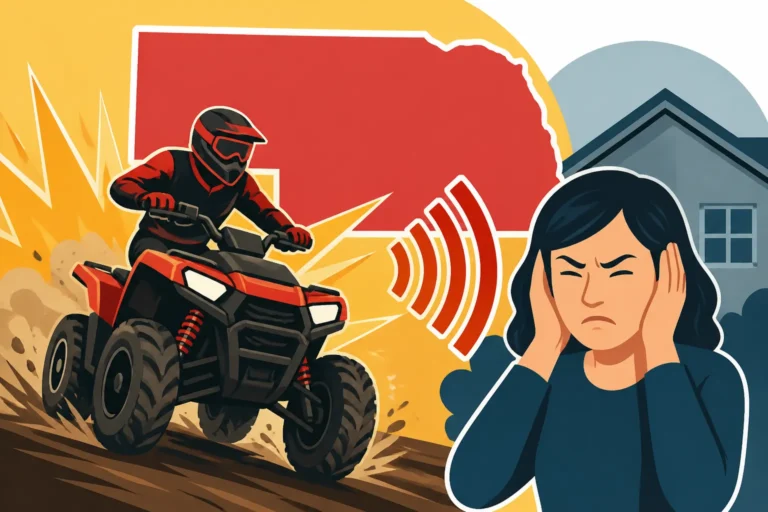
Riding an ATV or UTV in Nebraska can be a fantastic experience, whether you're working on the farm, hitting the trails, or just moving machines around the property. But when it comes to taking these off-road vehicles onto public roads, things can get confusing fast. One of the biggest areas of misunderstanding and, frankly, frustration, revolves around lighting requirements. It’s not just about having some lights; it’s about having the right lights, in the right places, and using them at the right times, all governed by specific state statutes. This guide will walk you through Nebraska Statute 60-6,357, clarifying exactly what's expected of you and your machine when you venture onto public roads, ensuring you stay legal and, most importantly, safe.
Understanding Nebraska Statute 60-6,357: The Core Requirements
Nebraska Statute 60-6,357 is the legal bedrock that governs the lighting requirements for ATVs and UTVs when they are operated on public roads within the state. It's a critical piece of legislation that every rider needs to understand thoroughly, because simply put, ignorance of the law is never an excuse. This statute isn't some abstract rule; it's designed with your safety and the safety of other motorists in mind, aiming to make sure your machine is visible and identifiable whenever it shares space with cars, trucks, and other road users.
What the Statute Covers for ATVs and UTVs
At its heart, Nebraska Statute 60-6,357 mandates that any all-terrain vehicle (ATV) or utility-type vehicle (UTV) operated on public roads must be equipped with specific lighting apparatus. This isn't just about having a working headlight; it's a comprehensive list of requirements. Generally, your machine needs to have at least one headlight that emits a white light visible from a certain distance, and at least one taillight that emits a red light visible from a similar distance. These aren't just for show; they're about ensuring you can see what's ahead, and that others can see you from behind. Think about those early morning farm runs or late evening returns from a fishing spot – the visibility provided by these lights is paramount. The statute makes it clear: if you're on a public road, these lights are non-negotiable, unless a very specific exception applies.
The "Daylight Only" Exception and Its Nuances
Now, here's where it can get a little tricky and where many riders find themselves scratching their heads. The general rule is that you need lights. However, the statute does allow for an exception often referred to as the "daylight only" rule. If you are operating your ATV or UTV solely between sunrise and sunset, and you are using it for an agricultural purpose, such as moving equipment between fields or checking on livestock, you might operate it without certain lighting components that would otherwise be mandatory for night operation.
This isn't a free pass, though. Even in daylight, certain visibility requirements might still apply, especially if you're crossing a state highway or operating in an area with heavy traffic. And critically, your headlight must still be on. This is a common misunderstanding: many assume "daylight only" means no lights at all. Nope, if you're on a public road during the day, your headlight still needs to be illuminated. It's about making your machine as conspicuous as possible to oncoming traffic, even when the sun is shining brightly. So, while you might not need a full suite of night-time driving lights during the day for agricultural use, you absolutely need your main headlight on and working. This distinction is crucial for staying compliant and avoiding a ticket. You can find more details on this in [Nebraska Daylight Riding Rule] and [Why Your Headlight Must Be On in Daylight].
Key Differences from Motorcycle Lighting
It's easy to assume that because ATVs and UTVs share some road space with motorcycles, the lighting rules would be identical. However, Nebraska law makes distinct categorizations, and this leads to some important differences. While both require headlights and taillights, the specifics for ATVs and UTVs are tailored to their unique design and typical use. For instance, motorcycles often have more stringent requirements for turn signals, brake light intensity, and even modulated headlights.
For ATVs and UTVs, the emphasis is heavily on basic visibility rather than mirroring a full street-legal vehicle like a car or motorcycle. While some UTVs might come equipped with turn signals and mirrors from the factory, and riders often choose to add them for enhanced safety, they aren't universally mandated by the state for all road use scenarios in the same way they are for motorcycles. Understanding these differences helps prevent over-equipping your machine unnecessarily for state law compliance, while also highlighting areas where personal safety upgrades make sense. Just remember that while you might be on the same road, your off-road machine isn't treated exactly like a motorcycle or a passenger car under the lighting statutes.
Essential Lighting Components for Road Use
When it comes to safely and legally operating your ATV or UTV on Nebraska's public roads, understanding the specific lighting components required by law is paramount. It’s not just about having a light; it’s about having a compliant light. These components ensure that you can both see where you're going and, crucially, be seen by others, especially when sharing the road with larger, faster vehicles. Let's break down the individual elements you'll need.
Headlights: Visibility and Beam Requirements
The headlight on your ATV or UTV is your primary tool for illuminating the path ahead, but it also serves a vital role in making you visible to oncoming traffic. Under Nebraska Statute 60-6,357, your machine must be equipped with at least one white headlight, capable of emitting light visible from a significant distance. While the statute primarily focuses on visibility, it's generally understood that the headlight should provide sufficient illumination to safely operate the vehicle. This means a dim, flickering light isn't going to cut it, especially if you find yourself needing to operate after sunset for permitted activities like snow removal.
For day-to-day operation on a public road, even during daylight hours, your headlight must be on. This might seem counterintuitive, but it dramatically increases your visibility to other drivers, making you much less likely to be overlooked. Consider those moments when the sun is low, or you're transitioning from a shaded area to bright sunlight; having your headlight on makes you stand out. Many aftermarket solutions, like those offered by SuperATV, provide brighter, more robust LED headlights that not only meet but often exceed factory specifications, enhancing both your ability to see and be seen. Investing in a good quality headlight is a critical safety measure, not just a legal formality.
Taillights and Brake Lights: Ensuring You're Seen from Behind
Just as important as seeing what's in front of you is ensuring that drivers behind you can see your machine. This is where taillights and brake lights come into play. Nebraska law requires that your ATV or UTV be equipped with at least one red taillight, visible from a specific distance to the rear. This light should be continuously illuminated when your machine is in operation on a public road, making your presence known to following traffic. For more on this, check out [Taillight Rules for ATVs on Public Roads].
In addition to the basic taillight, most modern ATVs and UTVs come standard with, or can be easily upgraded to include, a brake light. A brake light is a crucial safety feature that illuminates more brightly when you apply the brakes, signaling to drivers behind you that you are slowing down or stopping. While some specific scenarios or local ordinances might have slightly varied requirements, having a functioning brake light is a strong recommendation for any road use, as it significantly reduces the risk of rear-end collisions. When considering upgrades, looking for integrated LED taillight/brake light assemblies can be a smart move, offering better visibility and often drawing less power than traditional incandescent bulbs.
Reflectors: Passive Safety Measures
Beyond active lighting, reflectors play a critical, albeit passive, role in your ATV or UTV's visibility, especially in low-light conditions or if your active lights somehow fail. Nebraska Statute 60-6,357 specifies that certain machines may also need to be equipped with reflectors, typically red at the rear and amber or white at the front and sides, visible from a certain distance when illuminated by another vehicle's headlights.
Think of reflectors as your backup visibility system. They don't require power, so even if your battery dies or a fuse blows, they can still catch the light from an approaching vehicle, providing a crucial warning to other drivers. This is particularly important for machines that are frequently used in agricultural settings, which might spend time on roads during dawn or dusk, or in situations where full active lighting might not always be perfectly maintained. Ensuring your reflectors are clean, intact, and correctly positioned is a simple yet effective way to add an extra layer of safety to your road-going ATV or UTV.
Optional but Recommended: Turn Signals and Hazard Lights
While Nebraska state law doesn't universally mandate turn signals or hazard lights for all ATV and UTV road operations, these components are highly recommended for any machine that regularly ventures onto public roads. Think about it: hand signals are often difficult to see on an ATV or UTV, especially from a distance or during adverse weather. Clear, bright turn signals, visible from both front and rear, make your intentions explicit to other drivers. This is a huge advantage when making turns or changing lanes on a county road.
Many aftermarket kits, including full street-legal kits from companies like SuperATV, include turn signals, hazard lights, and even a horn, effectively transforming your off-road machine into one that communicates its movements much like a car. Hazard lights are particularly useful if your machine breaks down on the side of the road, offering a clear warning to approaching traffic. While not strictly required by all aspects of the state statute, adding these features significantly enhances your safety and peace of mind, making your road interactions much clearer and safer for everyone involved.
When and Where These Rules Apply
Understanding what lighting is required is only half the battle; knowing when and where those requirements kick in is equally crucial. Nebraska's rules for ATVs and UTVs on public roads aren't a blanket statement; they have specific applications depending on the type of road, the time of day, and even the purpose of your trip. Navigating these nuances correctly can mean the difference between a smooth ride and a costly citation.
City Streets and County Roads: Local Ordinances and State Law
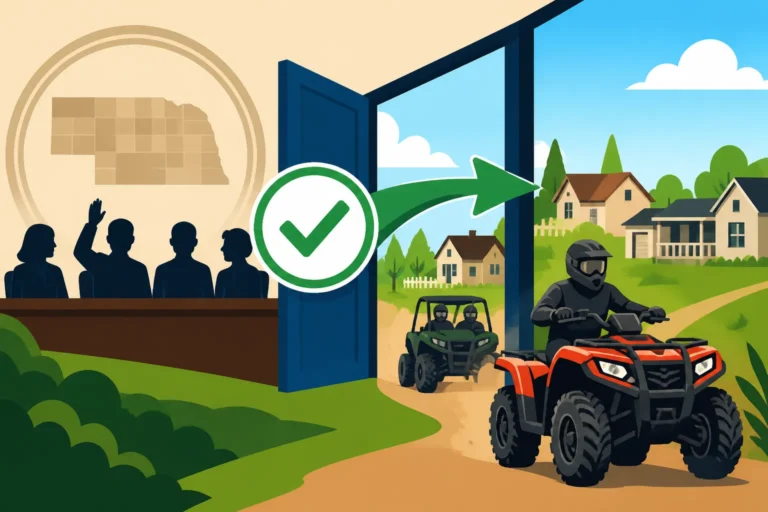
This is where things can get particularly complex. While Nebraska state law, including Statute 60-6,357, sets the baseline for ATV and UTV operation on public roads, individual cities and counties have the authority to enact their own ordinances. This means that while the state might permit agricultural use on county roads with specific lighting, a city's ordinance might open its streets to ATVs and UTVs for general travel, but with much stricter lighting requirements, often mimicking those of a car or motorcycle.
For instance, a rural county road might permit an ATV for farm use with just a headlight and taillight, but if you drive that same ATV into an incorporated village that has an ordinance allowing ATVs on its streets, that ordinance might demand turn signals, brake lights, mirrors, and even a license plate. It's not uncommon for city ordinances to require a full suite of street-legal accessories for any ATV or UTV operating within their limits, regardless of the time of day. This patchwork of regulations means you absolutely must check local laws. Before you plan a ride through a town or village, always consult their city hall or municipal website to understand their specific ATV/UTV ordinances and what lighting they require. You can read more about this in [Nebraska City Ordinances That Open Streets] and [Nebraska County Board Resolutions for Villages].
Agricultural Use: Special Considerations for Farm Work
Nebraska has long recognized the vital role ATVs and UTVs play in its agricultural economy. Because of this, the state's laws often include specific provisions and exceptions for machines used in farm work. As mentioned earlier, the "daylight only" agricultural exception can affect lighting requirements. For example, if you're using your ATV to move from one field to another, check fence lines, or haul small tools across a county road during daylight hours, the requirements might be less stringent than if you were simply joyriding.
However, even with these exceptions, the fundamental rule of visibility still applies. Your headlight must be on during the day for agricultural use on public roads. If your farm work extends into the hours of darkness, or if you're clearing snow after dark (which is a recognized exception in the statute), then all the full night-time lighting requirements come into play. This includes functional headlights and taillights visible from mandated distances. The agricultural exemption is designed to facilitate necessary work, not to provide a loophole for unsafe operation. Always prioritize being seen, especially when sharing the road with other agricultural machinery or passenger vehicles. [Nebraska Farm Trips Outside City Limits] goes into greater detail on this topic.
Crossing Highways: Specific Lighting During Brief Road Trips
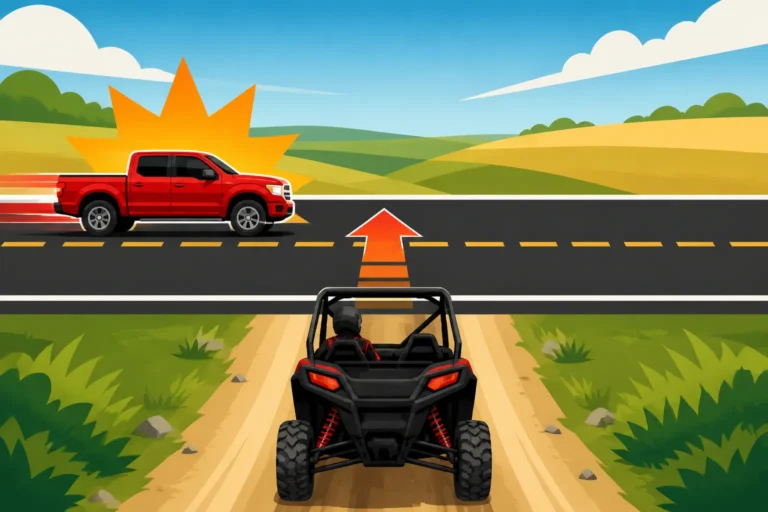
While Nebraska generally prohibits ATVs and UTVs from operating on state highways, there are specific, limited exceptions for crossing them. When you encounter a situation where you need to cross a state highway, perhaps to access land on the other side, the lighting rules become absolutely critical, even if the crossing is brief. Because state highways typically have higher speed limits and greater traffic volumes, your machine's visibility is paramount during these crossings.
Even if it's broad daylight, your headlight and taillight must be fully operational and illuminated when crossing a highway. The sudden appearance of an ATV or UTV can be startling to drivers moving at highway speeds, so maximum visibility is required. This isn't the time to rely on vague interpretations of "daylight only." Furthermore, these crossings must typically be done at a ninety-degree angle, and you must yield to all traffic, making your intentions and presence as clear as possible with proper lighting. The brief nature of the trip doesn't lessen the need for full compliance; it amplifies it due to the increased risk involved.
Upgrading Your ATV/UTV Lighting
Many riders find that the stock lighting on their ATVs and UTVs, while compliant for basic off-road use, leaves something to be desired when it comes to road-worthiness. Whether it's for enhanced safety, improved visibility, or simply adhering to stricter local ordinances, upgrading your lighting is a common and often sensible decision. However, it's not just about slapping on the brightest lights you can find; it’s about making smart, compliant choices.
Aftermarket Options for Enhanced Visibility
The aftermarket is brimming with options to improve your ATV or UTV's lighting. One of the most popular upgrades is switching from incandescent bulbs to LED (Light Emitting Diode) systems. LEDs offer several advantages: they are significantly brighter, draw less power from your machine's electrical system, and typically last much longer. You can find everything from brighter LED replacement bulbs for your existing headlight housings to full LED light bars for additional off-road illumination (though these often need to be covered when on public roads).
Beyond just brightness, consider adding components that improve all-around visibility. This includes brighter LED taillight/brake light assemblies, and even integrated turn signal kits. Many companies, including SuperATV, offer comprehensive "street legal kits" that bundle all these components – headlights, taillights, brake lights, turn signals, mirrors, and even horns – into one convenient package. These kits are designed to bring your off-road machine closer to meeting the requirements of local ordinances that permit street use, providing a significant boost in safety and peace of mind when operating near other traffic.
Ensuring Your Upgrades Comply with the Law
While aftermarket upgrades can dramatically improve your machine's lighting, it’s crucial to ensure these modifications still comply with Nebraska Statute 60-6,357 and any relevant local ordinances. "Brighter" doesn't always equal "legal" or "safe." For example, some incredibly bright LED light bars are designed for off-road use only and can blind oncoming drivers if used on public roads. Always check if a light is D.O.T. (Department of Transportation) compliant if you intend to use it as a primary road light.
When installing turn signals, ensure they are amber in color and clearly visible from both the front and rear, as required for signaling devices. If you add additional lights, be aware of where they are mounted and whether they interfere with the visibility of your mandated headlights and taillights. The goal of upgrades should always be to enhance safety within the bounds of the law, not to create a new set of problems. A little research into the specific requirements for different light types will go a long way in making sure your investment is both effective and legal.
Common Mistakes and How to Avoid Them
Even with the best intentions, riders can sometimes make mistakes when upgrading their lighting. One common error is installing a light bar and using it on public roads. While impressive off-road, these lights are too intense for on-road use and can lead to tickets and dangerous situations. Always ensure light bars are turned off and, ideally, covered when you're on a public road.
Another mistake is neglecting proper wiring. Aftermarket lights, especially multiple accessories, can put a strain on your ATV or UTV's electrical system. Poorly wired connections can lead to blown fuses, dim lights, or even electrical fires. If you're not comfortable with electrical work, it's always best to have a professional install complex lighting systems. Finally, remember that simply having the lights isn't enough; they must be functional. Regularly check your bulbs, fuses, and wiring to ensure all your lights are working as intended before every road trip. A quick walk-around check can prevent a lot of headaches down the road.
Consequences of Non-Compliance and Staying Safe
Understanding Nebraska Statute 60-6,357 isn't just an academic exercise; it has real-world implications, particularly when it comes to the legal and safety aspects of operating your ATV or UTV on public roads. Ignoring these lighting requirements can lead to serious consequences, from financial penalties to tragic accidents. Your responsibility as a rider extends beyond just knowing the law—it's about actively practicing safe and compliant operation every time you hit the pavement.
Penalties for Illegal Road Riding and Improper Lighting
Operating an ATV or UTV on a public road without the required lighting is not just an oversight; it's a violation of Nebraska law. The penalties for such infractions can vary, but generally, they involve fines and potentially court costs. A deputy or state patrol officer can issue a citation, and repeated offenses could lead to more severe consequences. It's not just about missing a taillight; it could be about not having your headlight on during the day when required, or operating after dark without adequate illumination.
Beyond the direct monetary cost of a ticket, there's the inconvenience and time commitment of dealing with the legal system. You might have to appear in county court, which means taking time off work and navigating legal procedures. Furthermore, an ATV or UTV operating illegally on a road could potentially be impounded in certain situations, creating an even larger headache and financial burden. It’s far simpler and less expensive to ensure your machine is properly equipped and your lights are working before you ever pull onto a public road. You can learn more about general penalties in [Nebraska Penalties for Illegal Road Riding].
Accident Prevention Through Proper Lighting
The most significant consequence of improper lighting isn't a ticket; it's the increased risk of an accident. ATVs and UTVs are smaller than most cars and trucks, making them inherently less visible on the road. Without adequate lighting, this problem is compounded exponentially, especially during dawn, dusk, or in adverse weather conditions. Imagine a driver coming over a hill or around a bend, expecting only cars, and suddenly encountering a dimly lit ATV. The reaction time can be critically short.
Proper headlights illuminate obstacles and potential hazards on the road ahead, giving you precious seconds to react. Functioning taillights and brake lights, meanwhile, communicate your presence and intentions to drivers behind you, significantly reducing the chance of a rear-end collision. Reflectors add another layer of passive safety. Essentially, every light and reflector on your machine acts as a communication device, shouting "I'm here!" to other road users. Investing in good lighting and ensuring it's always operational is one of the most effective accident prevention strategies a rider can employ.
Pre-Ride Checks and Maintenance
Staying compliant and safe with your ATV or UTV's lighting is an ongoing responsibility, not a one-time fix. Before every ride that involves public roads, make it a habit to perform a quick pre-ride check of all your lighting components. This literally takes less than a minute but can save you a world of trouble.
Here’s a simple checklist:
- Headlight: Turn on your machine and ensure your headlight (and any auxiliary road-legal lights) illuminate brightly. Check for any flickering or dimness.
- Taillight: Walk behind your machine to confirm the taillight is on and clearly visible.
- Brake Light: Squeeze the brake lever or press the brake pedal and ensure the brake light illuminates more brightly.
- Turn Signals (if installed): Test both left and right turn signals, checking both front and rear indicators.
- Reflectors: Quickly visually inspect that all required reflectors are clean and intact.
- Wiring: Briefly check for any loose, frayed, or exposed wiring that could cause a short or malfunction.
Regular maintenance, such as cleaning muddy lenses, replacing burnt-out bulbs promptly, and ensuring electrical connections are secure, will keep your lighting system in top working order. Don't wait until you get pulled over or, worse, involved in an accident, to realize your lights weren't up to par. Proactive checks and diligent maintenance are cornerstones of responsible ATV and UTV ownership, particularly when you're sharing the road.
| Lighting Component | State Requirement (Statute 60-6,357) | Agricultural "Daylight Only" Exception | Recommended Upgrade Considerations |
|---|---|---|---|
| Headlight | At least one white, visible from specific distance (always on for road use) | Must still be ON for visibility | Brighter LED headlights, D.O.T. compliant options |
| Taillight | At least one red, visible from specific distance to rear | Required for dusk/night, highly recommended for day | Brighter LED taillights for increased visibility |
| Brake Light | Generally included with taillight, brighter on application | Required for dusk/night, highly recommended for day | Integrated LED taillight/brake light assemblies |
| Reflectors | Red at rear, amber/white front/side (passive visibility) | Essential for passive visibility | Clean, intact, properly positioned |
| Turn Signals | Not universally mandated by state law | Not universally mandated by state law | Aftermarket LED kits, integrated into mirrors (e.g., from SuperATV) |
| Hazard Lights | Not universally mandated by state law | Not universally mandated by state law | Aftermarket kits for roadside emergencies |
Disclaimer
This article is for general informational purposes only and does not constitute professional advice. Laws, prices and regulations vary by location and change over time. Consult a qualified professional for guidance on your specific situation.