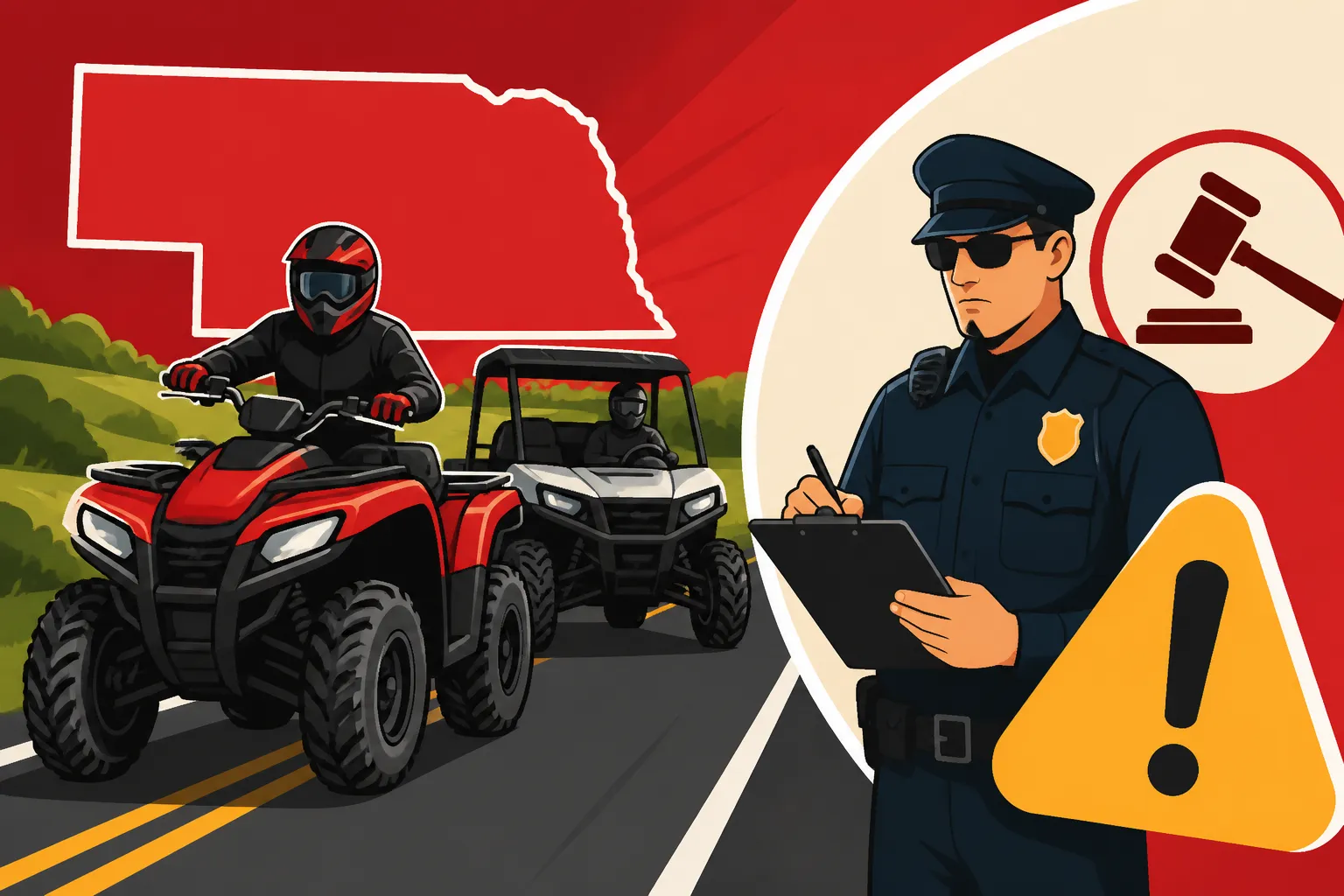
Nebraska Penalties for Illegal Road Riding
It's a frustrating reality for many ATV and UTV enthusiasts in Nebraska: the open road looks inviting, but for most off-highway vehicles, it's a legal minefield. Trying to navigate the patchwork of state laws and local ordinances can feel like a riddle, and making the wrong assumption can quickly lead to unexpected and costly penalties. This guide will walk you through the serious repercussions of illegal road riding, help you understand the rules, and show you how to avoid those unwelcome surprises.
What Constitutes Illegal Road Riding in Nebraska?
Let's be blunt: for the most part, driving your ATV or UTV on public roads in Nebraska is simply not allowed. This isn't just about avoiding major interstates or bustling city streets; it extends to county roads, township roads, and even the shoulders of highways in many areas. The core issue is that ATVs and UTVs are primarily designed and legislated as off-highway vehicles, not street-legal conveyances. When you see a deputy pull someone over on a quad, it’s often because they’re operating outside these very strict guidelines.
The General Prohibition on Public Roads
The default rule in Nebraska is a hard "no" for ATVs and UTVs on public roads. This blanket prohibition is in place because these machines lack many of the safety features, like sealed cabs, crumple zones, and specific lighting requirements, that are mandated for vehicles built for public roadways. It's not about how safe you feel on your machine; it's about how the law views the inherent risks these vehicles pose when mixing with regular traffic. Imagine a large pickup truck coming around a bend on a gravel road and suddenly encountering an ATV; the size and speed disparity can be catastrophic. Lawmakers weighed these risks when defining what can and cannot operate on the state’s thoroughfares.
Many riders, especially those new to the state or to the hobby, often assume that if a road is unpaved or rural, it might be fair game. This is a dangerous misconception. A county gravel road, for example, is still a public road, and the general prohibition applies there just as much as it does on a paved street in Lincoln or Omaha. The rules are pretty clear: unless a specific exception applies or a local ordinance explicitly states otherwise, keep your wheels off the asphalt and gravel of Nebraska’s public road system. For a comprehensive overview, you might want to read [Nebraska ATV Road Rules Under 60-6,356].
Where the Lines Are Drawn: State vs. Local
Adding another layer of complexity, the rules aren't always uniform from one part of Nebraska to another. While the state statute generally prohibits ATVs and UTVs on public roads, it does grant specific allowances for local jurisdictions—cities and county boards—to create their own ordinances or resolutions that may permit limited road use within their boundaries. This is where a lot of the confusion and, consequently, illegal riding can stem from.
For instance, a small, unincorporated village in the Sandhills might have a county board resolution allowing ATVs on its streets, while a larger city just 20 miles away might strictly enforce a ban with no exceptions. You can’t just assume that because your buddy rides his UTV to the corner store in his town, you can do the same in yours. Always check the specific rules for the area you're in. This means a quick call to city hall or the county clerk's office can save you a lot of headache and potential legal trouble. Relying on hearsay or what "everyone else does" is a surefire way to find yourself explaining things to a deputy, and it can become especially confusing when trying to understand [Nebraska Rules for Riding a City Street] versus a rural [Nebraska Rules for Riding a County Road].
Common Penalties You Might Face
Getting caught riding an ATV or UTV illegally on a public road in Nebraska isn't just a slap on the wrist. The penalties can range from fines and court costs to more severe consequences like impoundment of your machine or even criminal charges, depending on the circumstances and how seriously the law enforcement officer views the infraction. It's a situation no one wants to find themselves in, especially when you're just trying to enjoy your machine.
Fines and Court Costs
The most immediate and common consequence of illegal road riding is a traffic citation, which carries fines and associated court costs. While the exact amount can vary widely depending on the specific statute violated, the discretion of the issuing officer, and the county or municipality, you can expect these to easily run into the hundreds of dollars. This isn't like a minor parking ticket that you can just forget about. These are moving violations, and they come with real financial implications.
For example, if you're cited for operating an unregistered or unauthorized vehicle on a public roadway, the base fine might be one figure, but then the court tacks on administrative fees, state surcharges, and other assessments. Before you know it, a simple misstep could be a $200, $300, or even more expensive lesson. And remember, paying the fine is often an admission of guilt, which can have other downstream effects we'll discuss shortly. You'll want to review [Nebraska Ticket Costs for Road Riding] to get a sense of the financial hit.
Machine Impoundment and Towing Fees
One of the most disruptive and financially draining penalties is the impoundment of your ATV or UTV. If law enforcement determines you are operating the machine illegally on a public road, especially if you're deemed a safety risk, they have the authority to have it towed and impounded. This means your machine will be taken to an impound lot, and retrieving it becomes an immediate and often expensive ordeal.
First, there are the towing fees, which can be significant, especially if you're in a rural area and the nearest impound lot is some distance away. Then, the impound lot will charge daily storage fees. These can quickly add up, often exceeding the cost of the initial fine itself. You'll also need to prove ownership, pay all outstanding fees (fine, tow, storage), and arrange for legal transport of your machine off the public roads – usually by trailer – before you can get it back. It’s a huge headache and a significant dent in your wallet, making that impromptu road ride suddenly feel like a very bad decision.
Potential for Criminal Charges
While many illegal road riding infractions result in civil citations, there are scenarios where the situation can escalate to criminal charges. This typically occurs when other offenses are involved, such as reckless driving, driving under the influence (DUI), or attempting to elude law enforcement. If you're involved in an accident while riding illegally, especially if there are injuries or significant property damage, the legal consequences become far more severe.
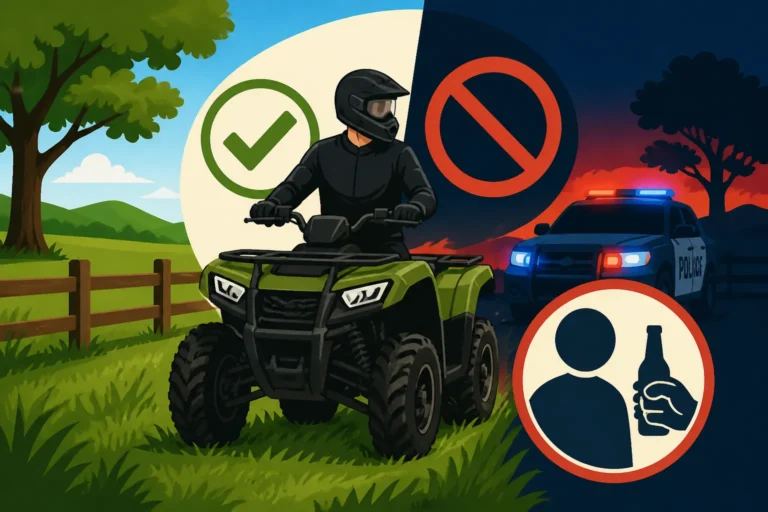
For instance, driving an ATV under the influence carries the same serious penalties as driving a car under the influence, including hefty fines, loss of driving privileges for any vehicle, potential jail time, and a criminal record. Even without alcohol, aggressive or dangerous riding that endangers others can lead to charges like reckless endangerment. The key takeaway here is that an ATV is still a motor vehicle in the eyes of the law, and operating it irresponsibly, particularly where it's not supposed to be, can have life-altering criminal consequences. This is why understanding the rules and adhering to them is paramount, even for what might seem like a quick trip down a quiet street.
Beyond the Ticket: Indirect Costs and Consequences
The immediate sting of fines and towing fees is painful enough, but the repercussions of illegal road riding can extend much further, impacting your finances, your driving record, and even your ability to get insurance. These indirect costs are often overlooked by riders who think they're just taking a "quick spin" or "no one will notice."
Insurance Implications and Higher Premiums
One of the most significant indirect costs comes from your insurance. Most standard ATV or UTV insurance policies are designed for off-road use and often explicitly exclude coverage for incidents that occur on public roads where the vehicle is not legally permitted. This means if you have an accident while riding illegally on a street or highway, your insurance company might deny your claim, leaving you personally responsible for all damages, medical bills, and legal defense costs. Imagine totaling your machine and being told your insurance won't pay because you were breaking the law!
Furthermore, even if your policy does offer some limited road coverage or if the incident is recorded as a traffic violation, it can lead to dramatically increased premiums for your ATV, UTV, or even your automobile insurance. Insurance companies view such violations as indicators of higher risk. A citation for illegal operation, especially if it's a moving violation, can stay on your record for years, affecting your rates for a long time to come. This is why having proper coverage, or at least knowing its limits, is essential. For more details on what's required, see [Nebraska Insurance Required Only on Roads].
Driving Record Points and License Suspension
Many traffic violations, including those issued for illegal ATV/UTV road use, can result in points being added to your Nebraska driving record. Accumulating too many points within a certain timeframe can lead to the suspension or revocation of your standard driver's license – the one you use to drive your car or truck. This is a crucial point many ATV riders miss: a violation on your quad can jeopardize your ability to drive any vehicle.
A license suspension can throw your entire life into disarray. Suddenly, commuting to work, picking up groceries, or taking your kids to school becomes a massive challenge. The time and expense involved in getting your license reinstated – including potential fees, defensive driving courses, and waiting periods – can be substantial. It's a stark reminder that operating any motorized vehicle, even an off-road one, comes with the responsibility of upholding your driving privileges.
Negative Public Perception and Future Regulations
Every instance of illegal or irresponsible ATV/UTV road riding contributes to a negative public perception of the entire riding community. When residents see ATVs tearing down streets, riding unsafely, or making excessive noise, it fuels complaints to local authorities and can lead to calls for stricter regulations. This isn't just about a few bad apples; it impacts everyone who enjoys the sport responsibly.
This negative perception can manifest in concrete ways. It can influence city councils or county boards to enact more restrictive ordinances, close existing riding areas, or reject proposals for new trails and legal access points. Lawmakers are constantly evaluating public safety and quality of life, and repeated incidents of illegal road riding only strengthen the arguments of those who advocate for tighter controls on off-highway vehicles. So, a few minutes of ill-advised road riding by one individual could potentially limit legal riding opportunities for thousands of riders across the state for years to come. Understanding things like [Lawmakers Proposed Registering Every ATV Statewide] shows this is a recurring conversation.
Understanding Nebraska's Legal Road Use Exceptions
Despite the general prohibition, there are indeed specific, limited circumstances where ATVs and UTVs can legally operate on Nebraska's public roads. These aren't blanket permissions, but rather narrowly defined exceptions designed to accommodate specific needs, primarily agricultural or localized access. Knowing these exceptions is key to staying on the right side of the law and avoiding those hefty penalties we just talked about.
Agricultural Use Exceptions
Nebraska, with its vast agricultural landscape, recognizes the integral role ATVs and UTVs play in farming and ranching operations. Therefore, the state statute includes specific exemptions that allow these machines to be used on public roads for agricultural purposes. This is probably the most common legal road use you'll see in rural Nebraska. The core idea behind [Why the ATV Road Law Was Written Around Farming] is to ensure farmers can efficiently move between fields, check livestock, or transport small equipment without having to load their machine onto a trailer for every short trip.
However, "agricultural use" isn't a free pass for joyriding. The law generally specifies that the machine must be used for actual farming or ranching activities, and often, it must be operated by a person directly involved in those operations. This isn't for leisure; it's a tool for work. There are also stipulations regarding the speed limit – typically 30 mph or less – and specific lighting and flag requirements to ensure visibility, especially on busy county roads. Always remember to carry your title copy when engaging in these activities, as a deputy may ask [What Paperwork a Deputy Can Ask to See].
City and County Ordinances
Beyond the statewide agricultural exceptions, individual cities and county boards have the authority to create their own ordinances or resolutions that permit limited ATV/UTV use on public roads within their specific jurisdictions. This is where the local "patchwork" of rules comes into play, and it's absolutely critical to confirm what applies in your exact location.
Some towns, particularly smaller ones, have passed ordinances that allow ATVs and UTVs on certain streets or within the entire city limits, often with specific restrictions such as speed limits, daylight-only operation, or mandatory safety equipment like a [Nebraska's 5-Foot Safety Flag Rule]. Similarly, a county board might pass a resolution opening the roads in an unincorporated village to off-highway vehicles. These local rules usually require riders to adhere to basic traffic laws, possess a valid driver's license (like a Class O License), and carry liability insurance. Before you even think about riding on city or village streets, you must check with the local city clerk or county office to see if such an ordinance exists and what its precise terms are. Never assume; always verify.
Safety Equipment and Operational Requirements
Even when legal exceptions do apply for road use, there are almost always strict requirements for safety equipment and how the ATV or UTV must be operated. These requirements are in place to mitigate the inherent risks of mixing these machines with traditional road traffic. Ignoring them, even if you're otherwise riding legally, can still lead to a citation.
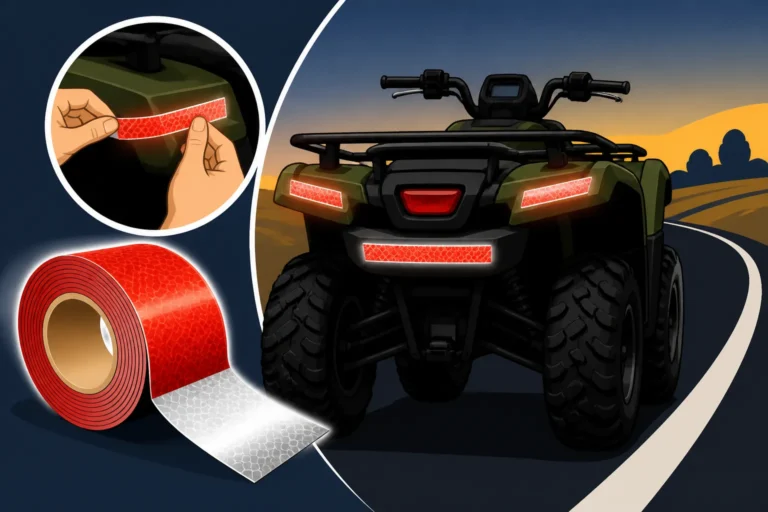
Common requirements include having working headlights and taillights, especially for operation during dawn, dusk, or nighttime (though many exceptions only allow daylight riding). A prominent safety flag, often 5 feet tall and brightly colored (like day-glow orange), is usually mandatory to increase visibility for other motorists. Some areas might also require rearview mirrors. Additionally, riders must generally hold a valid driver's license (a Class O License is common for this type of vehicle), and liability insurance is almost always a prerequisite for legal road operation. It's not just about having the right machine; it's about equipping it properly and operating it responsibly under the specific terms of the law. You'll also want to look into things like [Nebraska's 30 mph Road Limit] and [Nebraska's 5-Foot Safety Flag Rule] to make sure your machine and your habits are compliant. If you need accessories for safety like flags or mirrors, many riders turn to robust aftermarket options from companies like SuperATV.
Protecting Yourself: Best Practices for Nebraska Riders
Navigating the complexities of Nebraska's ATV and UTV road laws can feel overwhelming, but with a proactive approach, you can significantly reduce your risk of facing penalties. It's all about being informed, prepared, and responsible. Taking the extra steps upfront will save you headaches, and potentially hundreds or thousands of dollars, down the road.
Always Verify Local Ordinances
As we've discussed, Nebraska's laws for ATV and UTV road use are a patchwork. The single most important thing you can do to protect yourself is to never assume what's legal in one area is legal in another. If you plan to ride your ATV or UTV on any public road, even for a short distance in a small town or rural area, you absolutely must verify the local ordinances or county resolutions.
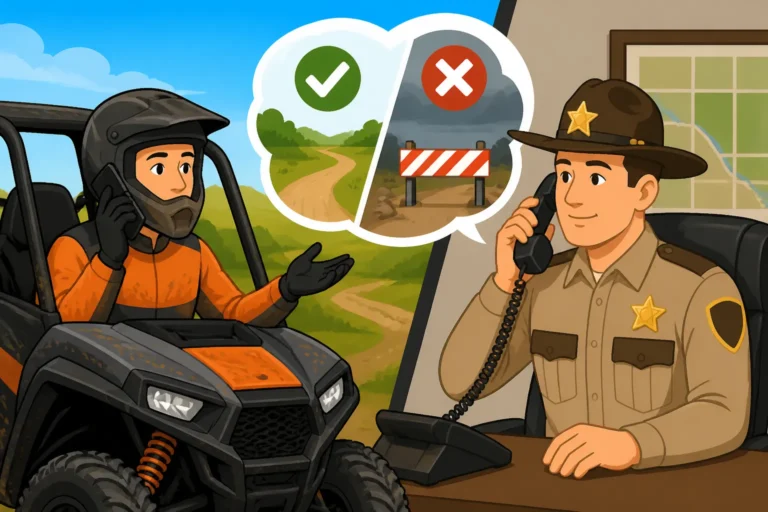
This means a call or visit to the city clerk's office for municipal streets or the county clerk's office for county roads. Ask specific questions: "Are ATVs allowed on any public roads within [City/County Name]? If so, under what conditions? Are there specific streets, times of day, or safety equipment requirements?" Get the information directly from the source. Don't rely on what a friend told you, what you saw someone else doing, or an outdated online forum post. This simple step can literally be the difference between a pleasant ride and a costly citation. Many cities, such as Yutan, have their own specific rules for [Nebraska City Registration Fees for a UTV].
Equip Your Machine Properly for Any Legal Road Use
If you are operating your ATV or UTV under one of Nebraska's legal road use exceptions, ensure your machine is fully equipped to meet all state and local requirements. This often includes specific lighting, mirrors, and safety flags. Don't cut corners here; these are not suggestions, they are mandates designed for your safety and the safety of others.
For example, a tall, day-glow orange safety flag (typically 5 feet above the ground with at least 30 square inches of surface area) is commonly required to make your low-profile machine more visible to other motorists, especially over hills or around curves. Headlights and taillights are crucial, particularly if the exception allows for operation near dawn, dusk, or in limited visibility conditions. If you need to upgrade your lighting or add a flag, aftermarket specialists like SuperATV offer a range of products designed for durability and visibility. Always double-check the exact specifications in the relevant statute or ordinance to ensure your equipment is compliant.
Ride Responsibly and Know Your Limits
Even when legally on the road, operating an ATV or UTV requires an elevated level of caution and responsibility. These machines handle differently than cars or trucks, have a higher center of gravity, and offer less protection in a collision. Ride defensively, always be aware of your surroundings, and anticipate potential hazards from other vehicles, pedestrians, or unexpected road conditions.
Adhere strictly to posted speed limits, and if no limit is posted, maintain a speed that is reasonable and prudent for the conditions, typically staying well below the maximum allowed (often 30 mph for ATVs). Avoid aggressive maneuvers, excessive noise, or any behavior that could be perceived as reckless or disrespectful to other road users and residents. Remember, every time you're on a public road, you're not just representing yourself, but the entire ATV/UTV community. Responsible riding helps maintain any existing legal access and can prevent further restrictions. Your actions impact public perception, and a negative incident can fuel arguments against legal road use, even in areas where it's currently permitted.
Keep Necessary Documentation Handy
Should you be stopped by law enforcement, having your paperwork in order can make a significant difference. Always carry your driver's license, proof of insurance (if required for road use), and a copy of your ATV or UTV's title. While Nebraska titles ATVs, they are not registered, so there's no state registration card. However, a title proves ownership. For more on this, you can check [Nebraska Titles ATVs but Does Not Register Them].
If you are operating under a specific city ordinance or county resolution, it can also be incredibly helpful to have a printout or digital copy of that ordinance with you. Law enforcement officers, especially those who might not regularly patrol your specific area, may not be intimately familiar with every local rule. Having the documentation ready can quickly clarify your legal right to be on the road and potentially prevent a misunderstanding that leads to a citation. Being prepared shows responsibility and can help you navigate any unexpected roadside stops smoothly.
Table: Summary of Nebraska ATV/UTV Road Rules & Penalties
To help you keep track of the most important aspects of Nebraska's ATV and UTV road laws and the consequences of violating them, here's a quick reference table. Please remember, this is a general overview, and specific details can vary. Always verify local rules.
| Aspect | General Rule in Nebraska | Exceptions/Conditions | Potential Penalties for Non-Compliance |
|---|---|---|---|
| Road Use | Generally prohibited on public roads (state, county, city). | 1. Agricultural use (farm/ranch work only, specific speed/lighting/flag rules). 2. Specific city ordinances or county resolutions (vary by location, strict conditions apply). |
Fines, court costs, machine impoundment, criminal charges (e.g., DUI). |
| Speed Limit | Not applicable to illegal use. | Typically 30 mph or less for legal exceptions. | Reckless driving charges, fines. |
| Licensing | Not applicable to illegal use. | Valid Class O driver's license (or farm permit) required for legal exceptions. | Operating without a valid license, fines, license suspension. |
| Insurance | Not applicable to illegal use. | Liability insurance required for legal exceptions. | Driving uninsured, fines, personal liability for damages, policy denial. |
| Safety Equipment | Not applicable to illegal use. | Headlights, taillights, 5-foot safety flag (day-glow orange, 30 sq. inches) often required for legal exceptions. | Equipment violation fines. |
| Local Variations | Rules are not uniform. | Crucially, check specific city/county ordinances or resolutions before riding. | Unawareness is not an excuse; penalties still apply. |
| Public Perception | Illegal riding harms the entire community's image. | Responsible riding supports access and reduces calls for stricter laws. | Leads to tighter regulations, loss of riding access. |
Staying informed and riding within the confines of the law isn't just about avoiding penalties; it's about ensuring your safety, protecting your investment, and preserving the future of off-highway vehicle recreation in Nebraska for everyone. Enjoy your machine, but always remember to do it legally and responsibly.
Disclaimer
This article is for general informational purposes only and does not constitute professional advice. Laws, prices and regulations vary by location and change over time. Consult a qualified professional for guidance on your specific situation.