Nebraska Rules for a Visiting Iowa Rider
You've just loaded up your quad or side-by-side, packed the cooler, and crossed the mighty Missouri River from Iowa into the Cornhusker State. The open plains, sandhills, and river bottom trails of Nebraska are calling your name, but before you hit the gas, it's natural to wonder: do Nebraska's ATV rules mirror Iowa's? The truth is, while many states share similar safety principles, Nebraska has some distinct differences, especially concerning titling, registration (or lack thereof), and road use, that can easily trip up even the most seasoned out-of-state rider. This guide is here to walk you through the essential rules, paperwork, and etiquette you need to know to ensure your Nebraska ATV adventure is safe, legal, and stress-free.
Navigating Nebraska's Unique ATV Landscape as an Iowa Visitor
When you're used to Iowa's system, where ATVs are registered and a state sticker might be common, Nebraska's approach can feel a little… different. The most crucial thing to understand right off the bat is that Nebraska doesn't have a statewide ATV registration system. You won't be paying an annual fee for a state sticker or plate to ride public trails or private land here, unlike what you might encounter in some other states.
Nebraska's Titling vs. Registration Distinction
Instead of registration, Nebraska focuses on titling. Since 2004, all new ATVs sold in Nebraska have been required to have a title. This title, handled by the county treasurer's office, serves as proof of ownership, much like a car title. However, and this is where it gets interesting, that title will explicitly state "NOT TO BE REGISTERED." This notation isn't an oversight; it's a deliberate part of Nebraska law, signifying that these machines aren't intended for general road use and therefore aren't part of a typical vehicle registration system. For an Iowa visitor, this means you likely won't need to worry about titling your machine in Nebraska unless you're moving here permanently and bringing your ATV with you, but it’s a critical piece of information to understand the local framework.
If you happen to be bringing a machine that has never been titled in any state, or an older machine that might predate titling laws in Iowa, you might wonder if Nebraska's rules apply. For a short visit, the focus is more on operational rules rather than ownership paperwork. However, knowing that [Nebraska Titles ATVs but Does Not Register Them] is key to understanding the state's philosophy.
What an Iowa Registration Means in Nebraska
So, if you have an Iowa registration or a title from Iowa, how does that play out here? Essentially, Nebraska does not reciprocate or recognize other states' ATV registrations in the sense of transferring them. Since Nebraska doesn't have its own registration system, there's nothing for it to directly "match" or "honor." Your Iowa title, however, remains your proof of ownership, and that's generally what officials would be interested in if there were ever a question about who owns your machine. When riding in Nebraska, the focus shifts entirely to complying with Nebraska's specific operational rules for road use and where you can legally ride off-road, rather than your home state's registration status. Think of it this way: your Iowa paperwork proves it's your ATV, but Nebraska's rules dictate how and where you can operate it within its borders. [Nebraska Has No OHV Permit or Sticker] means you won't be asked for one on public lands.
Understanding Road Riding Rules in Nebraska for Out-of-State Machines
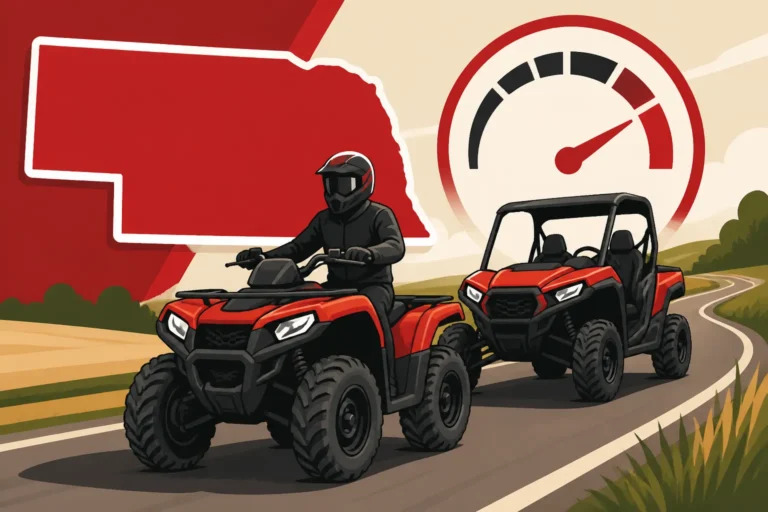
This is often where visiting riders get into the most trouble. Nebraska's rules for ATVs and UTVs on public roads are quite restrictive, and they definitely differ from what you might be used to in Iowa. The general rule is simple: ATVs and UTVs are not permitted on state highways or county roads, period. However, like many things in life, there are exceptions, and these exceptions are absolutely critical for out-of-state riders to understand.
The Agricultural Road Exception
Nebraska law has a significant exception for agricultural purposes. If you are operating an ATV or UTV for agricultural purposes, such as checking fences, moving livestock, or transporting supplies directly related to farming or ranching operations, you can often use county roads (but not state highways) outside of city limits. This is a very specific carve-out and it's not a blanket permission to drive to the local diner or ride recreationally on public roads.
To qualify for this exception, your trip must be directly tied to agricultural work. For instance, if you're visiting a relative's farm near a town like Broken Bow or Alliance, and you're using your side-by-side to haul feed out to the pasture, that would generally fall under the agricultural exception. If you're heading into town to pick up groceries, that's not agricultural. [Nebraska's Agricultural Road Exception] is a lifeline for many rural Nebraskans, but it's often misunderstood by those not engaged in active farming or ranching.
When utilizing this exception, several safety requirements kick in:
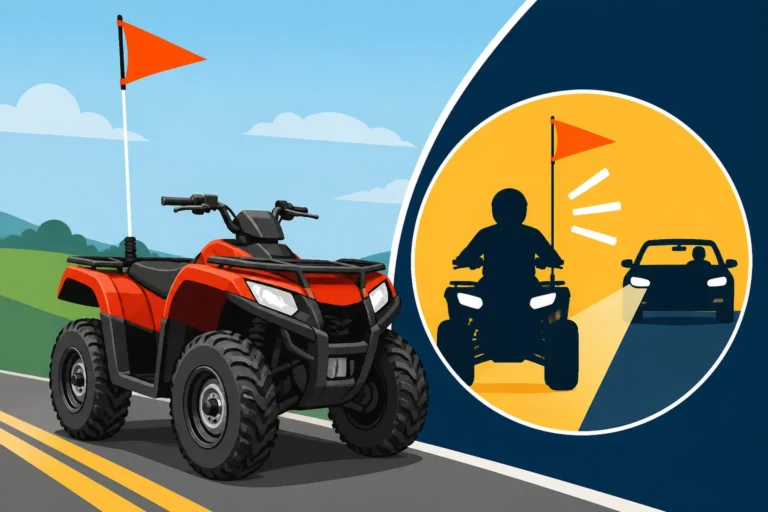
- Lights: Your machine must have a working headlight and taillight, which must be on during operation, even in daylight. [Nebraska Lighting Statute 60-6,357] outlines these requirements.
- Speed Limit: You must not exceed 30 mph.
- Safety Flag: A triangular safety flag, at least 5 feet above the ground, with a day-glow orange color and at least 30 square inches of surface area, is required. This makes you much more visible to other traffic. Many riders find durable flags from brands like SuperATV to be excellent for meeting this requirement and holding up to Nebraska winds.
- Insurance: You must carry liability insurance. [Nebraska Insurance Minimums Today] covers the required amounts, which are slated to increase in 2027, so always check the most current figures.
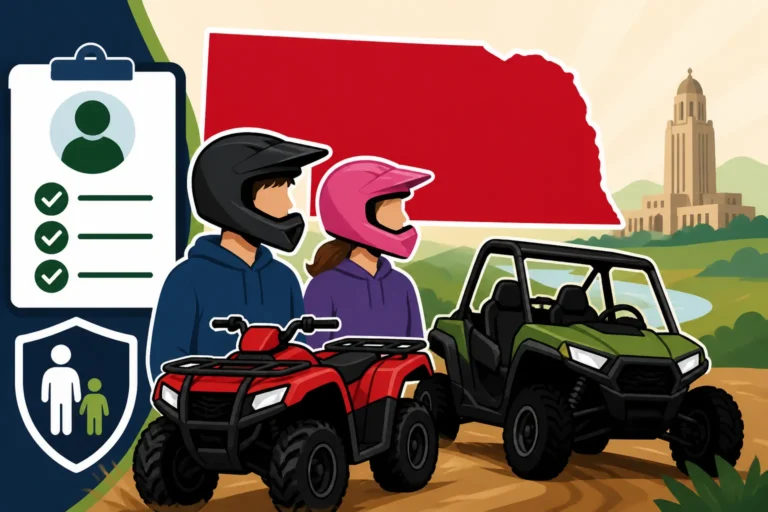
- Driver's License: The operator must hold a Class O operator's license (standard driver's license) or a farm permit.
- Crossing Highways: You can cross a state highway at a 90-degree angle after coming to a complete stop and yielding to all traffic, but you cannot ride on the highway itself. This rule is crucial; don't just pull out onto a busy state road.
City and Village Ordinances
This is another area of nuance. While state law restricts ATVs on roads, individual cities and unincorporated villages in Nebraska have the power to pass their own ordinances allowing ATVs and UTVs on their specific streets and alleys. This means you might find that some smaller towns allow street riding, while neighboring towns or the county outside their limits do not.
If you plan to ride your ATV or UTV on streets within a Nebraska city or village, you absolutely must check that specific municipality's ordinance beforehand. These ordinances will outline what's permitted, often including requirements for local registration (separate from any state registration, which doesn't exist), age limits, helmet rules (even though state law doesn't generally require helmets for ATVs, cities can), and specific hours of operation. You'll also likely need proof of insurance. For example, some cities near recreational areas, like perhaps near Halsey, might have rules allowing street access to trailheads, but this is never a given. [How a Town Ordinance Opens Its Streets to ATVs] can vary widely, so a quick call to city hall or a check of their website is a smart move.
Here's a quick comparison of general rules for road use:
| Feature | Nebraska General Rule (Outside City/Ag Use) | Nebraska Agricultural Road Use Exception | Nebraska City/Village Ordinance (Varies) |
|---|---|---|---|
| Statewide Registration | No | No | No (But local city registration possible) |
| Roads Permitted | No (Generally) | County roads (outside city limits), not state highways | City streets/alleys (as specified by ordinance) |
| Speed Limit | N/A | 30 mph maximum | Varies by ordinance, often 30 mph |
| Head/Tail Lights | Required if on road | Required, must be on | Required, must be on |
| Safety Flag | Required if on road | Required (5 ft, day-glow orange, 30 sq. in.) | Varies by ordinance, often required |
| Liability Insurance | Required if on road | Required | Required |
| Driver's License | Required if on road | Class O or Farm Permit | Varies by ordinance, often Class O |
| Helmet Requirement | No (State law for ATVs) | No (State law for ATVs) | Varies by ordinance (cities can require) |
| Crossing Highways | Yes, at 90 degrees, stop, yield (not for general travel) | Yes, at 90 degrees, stop, yield | Varies by ordinance |
Where Iowa Riders Can Legally Adventure Off-Road in Nebraska
Now for the fun part! Once you understand the road rules, you'll be eager to find places to ride off-road. Nebraska offers some fantastic opportunities, especially for those seeking unique terrain.
Public Land Riding Opportunities
Nebraska has some incredible public lands that welcome ATVs and UTVs, offering vastly different experiences.
- Bessey OHV Trails at Halsey: Located in the Nebraska National Forest near Halsey, this area is a gem for off-road enthusiasts. It's the world's largest hand-planted forest, and within it, the Bessey Ranger District has designated trails for OHVs. You'll find miles of sandy trails through the unique Sandhills landscape. There's a daily parking fee, or you can buy an annual pass if you plan to visit often. This is a must-see for anyone who loves sandy terrain and a bit of a challenge. Always check the current conditions and any fire restrictions before you go, especially in dry seasons. [Bessey OHV Trails at Halsey in Nebraska] are well-known and a popular destination.
- Cedar Run ATV Trail: Near Harlan County Lake, this trail offers a different kind of riding experience. Managed by multiple agencies, it provides a scenic nine miles of trail on 470 acres. You'll find a mix of wooded areas and open spaces, with amenities like a staging area, picnic shelters, and accessible restrooms. It's a great spot for a day trip or a longer stay with camping nearby. [Cedar Run ATV Trail in Nebraska] is a fantastic option for families or those looking for less intense riding than the Sandhills.
- Wildlife Management Areas (WMAs): Generally, ATVs are restricted to designated roadways within Nebraska WMAs, if allowed at all. These areas are primarily for wildlife and hunting access. However, there's a unique exception: during winter, when lakes are frozen solid, some WMAs might allow ATVs on the ice for ice fishing or other purposes, but only on designated frozen areas. Always check local signs and Game and Parks regulations carefully before venturing onto frozen water; conditions can change quickly and be extremely dangerous. [Nebraska WMA Riding Rules] are usually quite strict about off-road travel.
Private Land Riding: The Key to Nebraska Access
For many, the vast majority of Nebraska's off-road riding opportunities lie on private land. Nebraska is a state with a strong tradition of private property rights, and access is almost always contingent on obtaining explicit permission from the landowner. This is crucial for Iowa riders used to possibly more informal access in some areas back home.
If you have friends or family with acreage, a farm, or a ranch, getting their permission in advance is your golden ticket. It's always a good idea to get [Getting Written Permission From a Ranch Landowner] if possible, even a simple text or email can serve as proof. Remember to respect their property: stay on designated trails or areas, close gates behind you, pack out what you pack in, and be mindful of livestock or crops. Many working farms and ranches rely on ATVs and UTVs for daily operations, and a brand like SuperATV offers many accessories like cargo boxes or winches that can enhance utility and make farm work easier and safer.
Riding without permission is considered trespassing and can lead to serious legal consequences, not to mention damaging relationships with landowners. Always err on the side of caution and ask first.
Key Documents and Practical Advice for Your Nebraska ATV Trip
Being prepared means more than just packing your riding gear. Having the right documents and understanding a few local nuances can make all the difference.
What to Carry With You
While Nebraska doesn't have a state registration, you should still have some essential documents on hand when riding, especially if you're venturing onto roads or public lands where officials might check:
- Proof of Ownership: Your Iowa title or registration document serves as proof that the ATV belongs to you. Keep a copy, not the original, in a waterproof bag on your machine.
- Driver's License: If you plan to ride on any public roads (under the agricultural exception or within a city/village ordinance), your valid driver's license is required.
- Proof of Insurance: Again, mandatory for any road use, even under an exception.
- Landowner Permission: If riding on private land, carry your written (or readily available digital) permission.
- Trail Maps: Especially for areas like Bessey, cell service can be spotty. A physical map or a downloaded offline map on your device is invaluable.
Pre-Ride Checks and Safety Tips
Before you hit the Nebraska trails or roads, a few checks can prevent headaches:
- Machine Condition: Ensure your ATV or UTV is in good working order. Check tires, brakes, lights, and fluid levels. A breakdown far from home is no fun.
- Safety Gear: Helmets are always a smart choice, even if not state-mandated for ATVs. Eye protection, gloves, and sturdy boots are essential.
- Navigation: While you might be able to use your phone, a dedicated GPS unit or a downloaded offline map is highly recommended, especially in remote areas like the Sandhills where cell service can be nonexistent.
- Emergency Kit: Pack a basic first-aid kit, a tool kit for minor repairs, water, snacks, and a way to signal for help. Consider a winch from a reputable brand like SuperATV if you plan on tackling challenging terrain, especially sand or mud, as getting stuck far from help can be a serious issue.
- Weather Awareness: Nebraska weather can change quickly. Be prepared for sudden thunderstorms, high winds, and extreme temperatures, whether hot or cold.
By understanding Nebraska's unique approach to ATV titling and road use, and respecting both public land regulations and private property rights, your trip from Iowa can be an incredibly rewarding experience. Whether you're navigating the challenging sandy trails of the National Forest or helping out on a sprawling ranch, a little preparation goes a long way in ensuring a safe and memorable adventure.
Disclaimer
This article is for general informational purposes only and does not constitute professional advice. Laws, prices and regulations vary by location and change over time. Consult a qualified professional for guidance on your specific situation.