Why Road-Legal ATVs Need a 5-Foot Safety Flag
Riding an ATV on public roads in Nebraska can feel a bit like being a small fish in a big pond, especially when you're surrounded by towering trucks and SUVs. One of the biggest worries many riders have, and rightly so, is simply being seen by other drivers. This guide dives deep into why Nebraska mandates a 5-foot safety flag for road-legal ATVs and how this seemingly small detail can be a game-changer for your safety.
The Unseen Dangers of Road Riding for ATVs
Let's be honest, ATVs were primarily designed for off-road adventures, for kicking up dirt and navigating rugged terrain, not cruising down Highway 2. While Nebraska does allow for specific, limited road use under certain conditions, it introduces a whole new set of challenges that off-road riding simply doesn't prepare you for. The dynamics of a four-wheeler on pavement are different, and more critically, how other road users perceive you changes dramatically.
Limited Visibility of ATVs on Paved Roads
One of the most significant dangers for ATV riders on Nebraska roads is their inherently low profile. When you're sitting on a quad, you're not much higher than the hood of a typical sedan, and you're dwarfed by pickups, semi-trucks, and even many larger SUVs. This isn't just an aesthetic observation; it's a critical safety issue. In a sea of larger vehicles, an ATV can easily disappear from view, especially in blind spots, around curves, or over hills.
Imagine you're driving your pick-up on a rural county road. You're probably looking out for other cars, maybe a tractor, or even deer. You're not necessarily scanning the road for something as small and low to the ground as an ATV. This lack of visual prominence means other drivers might not register your presence until it's too late, leading to potential close calls or, worse, accidents. This is particularly true in situations where sunlight creates glare, or in conditions with reduced visibility like fog or heavy rain, making an ATV even harder to spot against the backdrop of the road and surrounding landscape.
The Surprise Factor for Other Drivers
Beyond just being physically small, ATVs on public roads are still a relatively uncommon sight for many drivers, especially outside of specific agricultural contexts or small towns with local ordinances. This "surprise factor" plays a huge role in safety. When a driver encounters an unexpected object on the road, their reaction time can be significantly delayed as their brain struggles to process and identify what they're seeing. It's not like seeing another car, which is an expected part of the driving environment.
Think about a driver who's commuting home, perhaps on autopilot, focused on their routine. Suddenly, an ATV appears. Their brain has to shift gears, identify the machine, and then quickly assess its speed, direction, and intentions, all while simultaneously managing their own vehicle. This split-second hesitation can be the difference between a safe pass and a dangerous maneuver. The surprise factor isn't just about visibility; it's about expectation and how human psychology processes unexpected elements in a familiar environment. When something is out of place, it demands more cognitive effort to process, and that takes time – time that you, as the ATV rider, might not have.
Nebraska's Legislative Response: The 5-Foot Safety Flag Mandate
Recognizing these inherent visibility challenges and the "surprise factor," Nebraska lawmakers have implemented specific regulations to enhance ATV safety on public roads. It's not just about allowing ATVs on roads; it's about doing so in a way that minimizes risk for everyone. The 5-foot safety flag mandate is a direct legislative response to ensure ATVs stand out, literally and figuratively, in the flow of traffic. These rules are detailed under Nebraska Revised Statute 60-6,356, which clearly outlines the requirements for ATVs and UTVs operated on public roads and highways.
What the Law Says About Flag Height and Placement
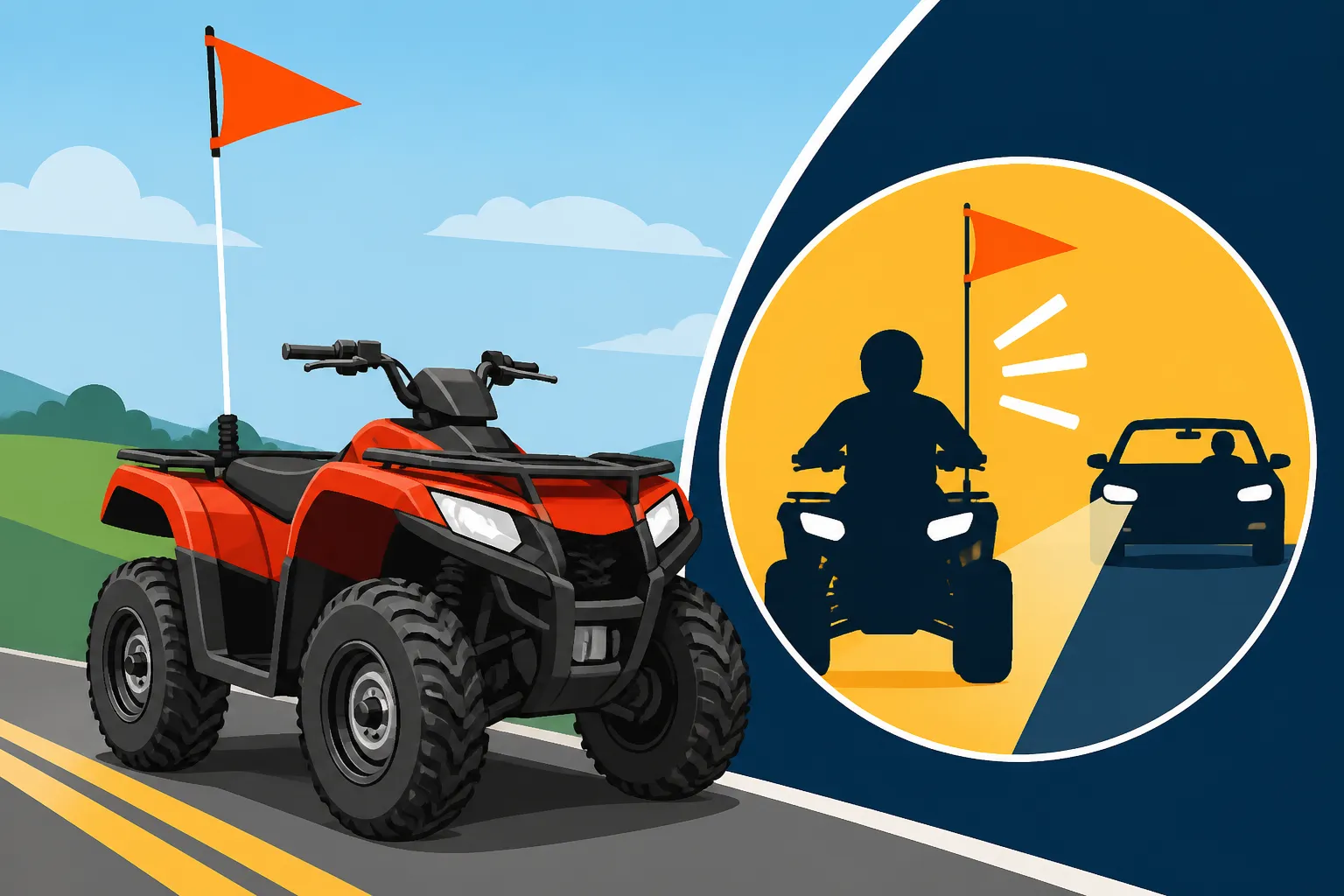
Nebraska law is quite specific when it comes to the safety flag. It mandates that when an ATV is operated on a road or highway, it must display a safety flag that extends at least five feet above the ground level of the machine. This isn't an arbitrary number; it's calculated to ensure the flag clears the roofs of most passenger cars and even many SUVs, allowing it to be seen over and around traffic. The "5 Feet Above the Ground" rule means that regardless of the height of your ATV, the top of the flag must reach that minimum.
The placement of the flag is also crucial. It needs to be securely mounted, typically at the rear of the ATV, so it's not obstructed by the rider or any cargo. The idea is for the flag to be an unobstructed beacon, visible from a significant distance both ahead of and behind the ATV. This requirement is non-negotiable for legal road operation, and deputies are well within their rights to stop you if your flag doesn't meet the specified height or isn't properly displayed. Ensuring your flag is correctly installed and meets this height requirement is your first step toward legal and safe road riding. You can learn more about this by reading Why Road-Legal ATVs Need a 5-Foot Safety Flag.
Beyond the Height: Flag Material and Color Requirements
It's not just about how tall the flag is; its visual characteristics are equally important for maximum effectiveness. Nebraska law specifies that the safety flag must be a "day-glow orange color." This isn't just any orange; day-glow, or fluorescent, colors are specially formulated to appear brighter and more vivid than standard colors, particularly in daylight conditions. They reflect a higher percentage of light, making them pop against natural backgrounds and catch the eye more readily. The flag also needs to be triangular in shape and at least 30 square inches in size.
The reasoning behind the "Day-Glow Orange and the 30-Square-Inch Flag Rule" is simple: contrast and conspicuity. A bright, vivid orange flag provides a stark contrast against the typically muted colors of roads, vehicles, and landscapes. This high contrast, combined with the reflective properties of day-glow material, ensures the flag stands out, even at a distance or in varying light conditions. The triangular shape is also easily recognizable as a warning or safety marker, further aiding in quick identification by other drivers. Choosing a flag that meets these color, material, and size requirements isn't just about avoiding a ticket; it's about maximizing your presence and visibility to every driver on the road.
How a Safety Flag Dramatically Increases Visibility
The strategic implementation of a 5-foot safety flag isn't just about adhering to a regulation; it's a highly effective safety measure designed to overcome the inherent visibility challenges of ATVs on public roads. This simple piece of equipment acts as a beacon, announcing your presence in a way your machine's low profile cannot. It's a proactive step that literally elevates your visibility above the fray of everyday traffic.
Standing Tall Above Traffic
Imagine you're driving a sedan on a two-lane county road. In front of you, an ATV is making its way down the pavement. Without a flag, you might only see the top of the rider's helmet or perhaps the handlebars peeking over the car ahead. But with a 5-foot safety flag, that bright day-glow orange banner is waving high above the rooflines of most passenger vehicles. It’s like putting a periscope on your ATV.
This elevation is critical for visibility. The flag effectively "breaks the sightline" of other vehicles. It means that drivers aren't just looking for an ATV; they're seeing a bright, moving object that stands out against the horizon or the sky, long before they can even make out the machine itself. This is particularly beneficial on winding roads, over crests, or in areas with tall crops or fences that might otherwise obscure a low-riding vehicle. A simple flag can turn an invisible machine into a noticeable presence, giving drivers more time to react and adjust their driving. Whether you're navigating a busy intersection or traversing a quiet stretch of farmland road, that flag ensures you're accounted for visually.
Early Warning for Oncoming and Following Traffic
The enhanced visibility provided by the safety flag translates directly into an early warning system for both oncoming and following traffic. Consider a situation where a driver is approaching a slight curve in the road. If an ATV is just around that bend, without a flag, the driver might not see it until they are almost upon it. However, the 5-foot flag, extending high, could be visible over the curve's obstruction, providing a critical extra few seconds of awareness. This seemingly small window of time allows the driver to register the presence of the ATV, understand its position, and prepare to reduce speed or adjust their lane position long before they are face-to-face with the machine.
For traffic following behind, the flag serves a similar purpose. Instead of merely seeing the ATV's taillights (which can sometimes blend into other vehicle lights or be obscured), drivers get a clear, high-mounted visual cue. This is especially helpful if the following driver is momentarily distracted or if their line of sight is blocked by another vehicle. The flag acts as a constant, conspicuous reminder that there's a smaller, slower-moving vehicle ahead. This advanced warning isn't just a courtesy; it's a vital safety mechanism that reduces the likelihood of rear-end collisions and ensures all road users have adequate time to react to your presence. Remember, ensuring your machine is seen is the first rule of defensive driving, and the safety flag is your best ally in that effort on Nebraska roads.
Practical Considerations for Flag Installation and Maintenance
Complying with Nebraska's safety flag requirements is more than just sticking any orange flag on your ATV. It involves careful selection of the right equipment and diligent maintenance to ensure it remains effective and legal. A poorly chosen or maintained flag can be just as dangerous as no flag at all, giving a false sense of security while failing to meet the visibility standards intended by the law.
Choosing the Right Flag and Mounting System
When selecting a safety flag, you'll want to ensure it meets the legal specifications for color, size, and material – specifically "Day-Glow Orange and the 30-Square-Inch Flag Rule." Look for flags made from durable, weather-resistant materials that won't fray or fade quickly under Nebraska's varied weather conditions. Many riders find that a fiberglass pole, often segmented for easy transport and storage, provides the necessary flexibility and height while remaining lightweight.
The mounting system is equally important. It needs to be robust enough to withstand the vibrations, wind, and bumps of road travel without coming loose or breaking. Common mounting options include bolt-on brackets, quick-release clamps, or even hitch-mounted systems. Some riders opt for heavy-duty spring mounts, which allow the flag to flex and absorb impacts, reducing the chance of breakage. Reputable brands like SuperATV offer a range of sturdy flag poles and mounting brackets designed for off-road vehicles that can easily be adapted for road use, ensuring both compliance and durability. Before you make a purchase, consider where on your ATV the flag will be most visible and least prone to entanglement with branches or other obstacles if you also use it off-road.
Regular Checks and Replacements
Once you've installed your safety flag, your responsibility doesn't end there. Regular inspection and maintenance are crucial for ensuring its continued effectiveness and legality. Wind, sun exposure, and vibrations from riding can take a toll on both the flag material and the pole itself. Over time, the day-glow orange fabric can fade, reducing its crucial high-visibility properties. The material might also tear or fray, diminishing its size and making it less conspicuous.
The flag pole and its mounting hardware also require attention. Check the pole for any cracks or signs of fatigue, especially if it's a fiberglass or plastic model. Ensure all mounting bolts and clamps are tightened and secure; a loose flag can be a distraction and a hazard. If you notice any significant fading, tearing, or damage to the pole or flag, it's time for a replacement. Think of your safety flag as a wear item, much like your tires or brake pads. Making it a habit to check your flag before every road ride will ensure you're always in compliance with [Nebraska Safety Flag Requirements] and, more importantly, that you're maximizing your visibility for every journey.
Beyond Legal Compliance: The Broader Safety Benefits
While the primary motivation for displaying a 5-foot safety flag on your road-legal ATV in Nebraska might be to avoid a citation, its benefits extend far beyond mere legal compliance. This small investment in safety equipment plays a crucial role in creating a safer environment for everyone on the road, fostering a culture of responsible off-road vehicle use, and ultimately, protecting you and your passengers.
Protecting Yourself and Your Passengers
At its core, the safety flag is about personal protection. When you ride an ATV on public roads, you are undeniably more vulnerable than someone enclosed in a car or truck. The physical exposure means that in the event of a collision, the consequences can be severe. The 5-foot safety flag acts as your silent, brightly colored advocate, constantly working to make you seen and understood by other drivers. This significantly reduces the risk of being overlooked or misjudged by traffic, which is a common cause of accidents involving smaller vehicles.
By ensuring other drivers have ample time to see you, recognize your presence, and react appropriately, the flag reduces the chances of them encroaching on your space, making sudden turns in front of you, or failing to yield. It provides a crucial margin of error that can prevent a close call from escalating into a dangerous incident. For riders carrying passengers, especially younger ones, this added layer of visibility provides an extra measure of peace of mind, knowing that you've taken every possible step to protect everyone on board. It’s a proactive step in defensive riding that directly contributes to your well-being and that of anyone riding with you.
Promoting Responsible ATV Use on Public Roads
The widespread use of safety flags also contributes to a broader culture of responsible ATV operation on public roads. When every road-legal ATV proudly displays its flag, it reinforces the idea that these machines, while fun and versatile, are to be operated with caution and respect for other road users. This visual consistency helps to normalize the presence of ATVs on specific roads where they are permitted, reducing the "surprise factor" for drivers over time as they become accustomed to seeing the flags.
This collective adherence to safety regulations, like those for [Nebraska's 5-Foot Safety Flag Rule], helps to build trust and positive perception of the ATV community. It shows that riders are not just enjoying their machines but are also committed to sharing the road safely and responsibly. This positive image can even influence future legislative decisions, demonstrating to lawmakers and the public that ATV enthusiasts are proactive in addressing safety concerns. Ultimately, the safety flag isn't just about protecting individual riders; it's about safeguarding the privilege of road access for all Nebraska ATV and UTV owners by demonstrating a commitment to shared safety.
Here's a quick look at why those safety flag rules matter:
| Feature | Nebraska Requirement | Why It Matters |
|---|---|---|
| Height | At least 5 feet above ground | Ensures visibility over most vehicles, breaking sightlines. |
| Color | Day-glow orange | High contrast and brightness, even in challenging light. |
| Shape/Size | Triangular, minimum 30 sq. inches | Easily recognizable as a safety marker, maximizes visual footprint. |
| Mounting | Secure, unobstructed | Prevents flag from becoming loose, ensures continuous visibility. |
| Condition | Unfaded, untorn, intact pole | Maintains visibility effectiveness; broken flags are useless. |
Conclusion
Riding your ATV or UTV on Nebraska roads can be a fantastic way to get around, whether you're heading to the back forty or just cruising through an unincorporated village. But the importance of being seen cannot be overstated. Nebraska's requirement for a 5-foot, day-glow orange safety flag isn't just another rule to follow; it's a vital safety measure designed to protect you, your passengers, and every other driver on the road. By understanding and diligently adhering to [Nebraska Safety Flag Dimensions], you're not just complying with the law, you're investing in your own well-being and contributing to a safer, more responsible riding community. So, before you hit the pavement, make sure your flag is flying high and bright – it's your best advertisement for safety.
Disclaimer
This article is for general informational purposes only and does not constitute professional advice. Laws, prices and regulations vary by location and change over time. Consult a qualified professional for guidance on your specific situation.