Nebraska Rules for Riding a Grain Bin Road
Riding an ATV or UTV can be a fantastic way to navigate the sprawling agricultural landscapes of Nebraska, especially when you're working around those towering grain bins. However, the seemingly simple act of zipping down a "grain bin road" can be a legal tightrope walk, fraught with unspoken rules and local nuances that can quickly turn a convenient trip into a costly citation. This guide is here to untangle the complexities, offering clear, actionable advice on how to understand and abide by Nebraska's regulations when your off-road machine meets these unique stretches of rural roadway.
The Unique Nature of Grain Bin Roads in Nebraska
Grain bin roads are those often-unpaved, sometimes gravel, sometimes just dirt paths that lead directly to agricultural facilities like grain elevators, storage bins, and processing plants. They're a critical part of Nebraska's agricultural backbone, used constantly by farmers, truckers, and other workers moving equipment and crops. But for ATV and UTV riders, these roads present a unique set of circumstances that blurs the lines between private property, farm access, and public thoroughfare.
What Defines a Grain Bin Road?
Understanding what defines a grain bin road is the first step to knowing how you can legally traverse it on your ATV or UTV. Many people assume that because a road leads to private agricultural infrastructure, it must inherently be private property. This isn't always the case. Some grain bin roads are indeed entirely private, belonging to a single farm or a cooperative, and their use is restricted to those with explicit permission. However, others might be publicly maintained county roads, even if they appear to primarily serve agricultural operations. Still others could be a mix – a short private driveway that connects to a public county road, or an access road that technically serves multiple properties but feels very isolated. The key distinction often boils down to who owns and maintains the right-of-way, and whether public funds are used for its upkeep.
Common Misconceptions About Their Status
One of the biggest pitfalls riders face is assuming the status of these roads based on their appearance or primary function. It's easy to look at a dusty track winding through fields to a cluster of grain bins and think, "This must be private, so no one cares if I ride my quad here." This is a dangerous assumption. Many county roads in Nebraska are unpaved and serve agricultural purposes, but they are absolutely public roads governed by the same laws as a paved highway, albeit with different speed limits and conditions. Conversely, some private roads are heavily used by the public out of habit or convenience, creating a grey area where owners might tolerate use but still retain the right to restrict it. The absence of a "No Trespassing" sign doesn't automatically grant permission, nor does the lack of a "Public Road" sign mean it's private. [Nebraska Rules for Riding a Section Line] might also be confused with these access roads, but they have their own specific definitions.
Why ATV Use is So Appealing on These Roads
For many in Nebraska's agricultural communities, ATVs and UTVs are not just recreational vehicles; they are indispensable tools. On grain bin roads, these machines offer unparalleled utility and convenience. They're perfect for quickly checking fields, transporting small equipment or supplies, moving between farm sites, or simply getting to and from the grain bins themselves, especially during busy harvest seasons. The ability to navigate rough terrain, handle light loads, and get into tight spaces makes them far more practical than a pickup truck for many tasks. This practicality often leads to a natural inclination to use them on any road connecting to farm operations, including those leading to grain bins, which then brings us back to the question of legality.
Navigating Nebraska's Legal Landscape for ATV/UTV Road Use
Nebraska has a somewhat unique approach to ATV and UTV regulation, especially concerning road use. Unlike many other states, Nebraska does not have a statewide registration system for off-highway vehicles that would grant them general access to public roads. This means that while you might own a titled ATV, that title alone doesn't give you permission to ride it on public streets. Understanding the specific exceptions and local rules is crucial, particularly when it comes to grain bin roads.
The Baseline: No Statewide ATV Road Registration
Let's start with the fundamental truth for Nebraska ATV and UTV riders: there is no statewide registration or plating system that makes your machine street legal across the board. If you've been searching for a way to get a license plate for your quad, you've likely come up empty-handed. This contrasts sharply with cars and trucks, which are registered and plated for road use. For ATVs, the state's stance is that they are primarily off-road vehicles. This baseline rule is why simply assuming you can ride on any road, including many grain bin roads, can get you into trouble. The Nebraska Department of Motor Vehicles does not handle ATV registrations; rather, county treasurers handle titles. You can find more details on this in articles like [Why the County Treasurer, Not the DMV, Titles ATVs]. This lack of statewide registration means most public roads are off-limits by default.
Agricultural Exception: When Farm Work Makes it Legal
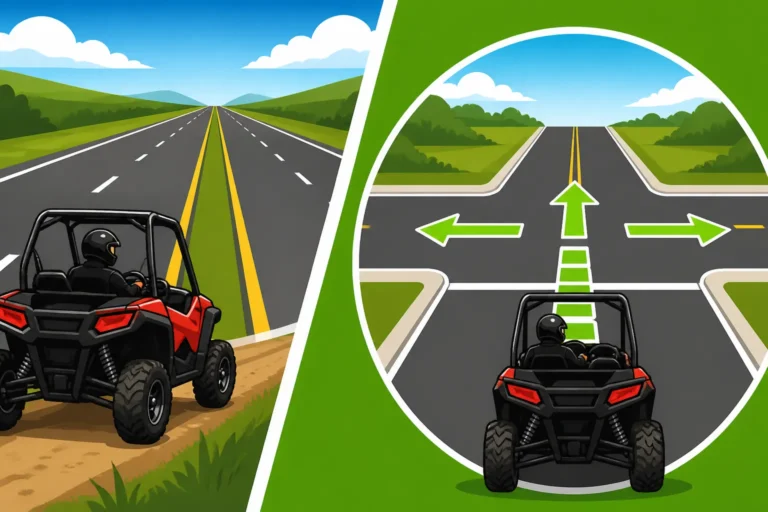
Here's where the waters get a bit clearer for grain bin roads. Nebraska law provides a specific agricultural exception that allows ATVs and UTVs to operate on public roads under certain conditions. This exception is codified in [Nebraska ATV Road Rules Under 60-6,356] and is a lifeline for farmers and agricultural workers. Essentially, if you are actively engaged in agricultural operations, you may use your ATV or UTV on public roads within the state, outside city limits. This includes checking crops, moving between fields, working livestock, and yes, accessing grain bins or other farm facilities.
However, this exception isn't a blank check. There are specific requirements:
- Purpose: Your ride must be for an agricultural purpose. A Sunday joyride, even if it passes a grain bin, won't qualify. Checking cattle or hauling tools to a grain bin absolutely would.
- Road Type: Generally applies to county roads and highways outside of incorporated city or village limits.
- Lighting: Your machine must have working headlights and taillights, especially if operating from sunrise to sunset, or when visibility is poor. [Nebraska Requires Head and Tail Lights] provides more context.
- Safety Flag: A fluorescent orange-red flag, at least five feet above the ground, is often required for visibility. [Nebraska Safety Flag Dimensions] outlines this in detail.
- Speed: A 30 mph speed limit often applies to these machines on public roads. [Nebraska's 30 mph Road Limit] further explains.
- License & Insurance: You need a valid driver's license (Class O) or a farm permit, and liability insurance is required if you're on a public road. Consult [Nebraska Requires a Class O License or Farm Permit] and [Nebraska Requires Liability Insurance on Roads] for full details.
So, if a grain bin road is a public county road, and you're using your machine for a legitimate agricultural purpose, then you likely fall under this exception. This is often the case when you're moving your UTV, perhaps equipped with a SuperATV cargo box filled with tools, from one field to a grain bin for crop storage.
Local Ordinances: The Patchwork of Rules
Beyond the state's agricultural exception, local rules can add another layer of complexity. While the state generally prohibits ATVs on roads, it grants cities and counties the authority to create their own ordinances to allow or restrict ATV and UTV use on public roads within their specific jurisdictions.
- Cities and Villages: Many Nebraska cities and villages have adopted their own ordinances that permit ATVs and UTVs on certain streets, often with strict rules regarding speed, hours of operation, safety equipment, and sometimes even local registration fees. If a grain bin is located within the limits of an incorporated city or village, you'll need to check that specific municipality's rules. [Nebraska Cities That Adopt ATV Ordinances] is a great resource. This is particularly important because the state's agricultural exception generally does not apply within city limits.
- Unincorporated Areas: For grain bins in unincorporated areas, a county board might pass a resolution to open certain village roads or county roads. [Nebraska Unincorporated Villages and County Boards] clarifies how this process works. In these cases, even if you're not on a farm for "agricultural purposes," the local rule could permit your ride.
Always, always check with the local city hall or county clerk's office for the most current and specific ordinances for the area where you intend to ride. What's legal in one small town might be strictly prohibited just a few miles down the road.
Practical Steps and Best Practices for Grain Bin Road Riding
Navigating the rules for grain bin roads can feel like a maze, but a proactive approach and adherence to best practices can keep you safe and legal. It's not just about avoiding a ticket; it's about being a responsible rider and neighbor in Nebraska's agricultural communities.
Verifying Ownership and Public Access Status
This is, hands down, the most critical step. Never assume. Before you ever put rubber to gravel on a grain bin road, take the time to determine its legal status.
- County Assessor's Office: Your county assessor's office can provide maps and ownership information for specific parcels of land. They can often tell you if a road is a publicly maintained right-of-way or if it's private property.
- Local County Roads Department: The county roads department can confirm which roads are on their maintenance schedule and are considered public.
- Direct Contact: If the road leads to a specific farm or grain elevator, the simplest approach might be to ask the landowner or facility manager directly. They'll know the history and legal status of their access roads. If it's private, always seek explicit permission before riding. Many landowners are happy to grant permission for legitimate uses, especially if you're respectful of their property. [Nebraska Landowner Permission Rules] highlights the importance of this.
- Check for Posted Signs: While not foolproof, look for signs indicating "Private Drive," "No Trespassing," or "Public Road." These can offer clues, but remember they aren't always definitive.
Once you know the road's status, you can then apply the appropriate state agricultural exceptions or local ordinances. This due diligence saves a lot of headaches later.
Equipping Your Machine for Any Eventuality
Even if a grain bin road is technically legal for ATV/UTV use, it doesn't mean it's safe without proper preparation. These roads can be dusty, rutted, and often shared with heavy farm equipment. Equipping your machine correctly isn't just about legality; it's about safety and utility.
Here's a checklist:
- Lights: As mentioned, working headlights and taillights are crucial, especially if you might be operating near dusk, dawn, or during adverse weather. Consider adding auxiliary LED lights for better visibility, especially if you're sharing the road with large tractors or combines. A reputable brand like SuperATV offers a wide array of lighting solutions, from light bars to replacement headlights, designed for durability in tough conditions.
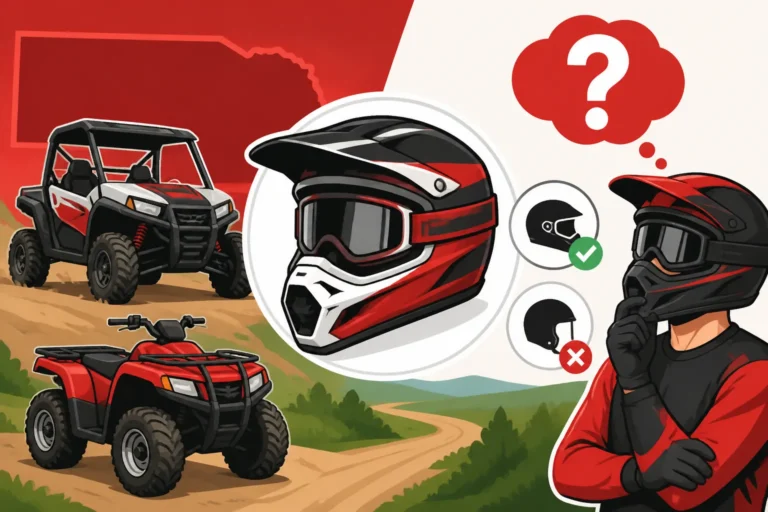
- Safety Flag: If required by law, make sure your flag is securely mounted, meeting height and dimension requirements. This simple piece of equipment can make a huge difference in being seen by larger vehicles on dusty or winding roads.
- Tires: Ensure your tires are in good condition and suitable for the mixed terrain. Grain bin roads can be gravel, dirt, or even have patches of mud, especially after rain. Good traction is essential.
- Fenders/Mudguards: Riding on unpaved roads inevitably kicks up dust and debris. Fenders help protect both you and your machine.
- Horn/Warning Device: A working horn is important for signaling other vehicles, especially when approaching blind curves or crests.
- Mirrors: Side mirrors are incredibly useful for situational awareness, particularly if you're hauling a small trailer or have a passenger.
- Basic Tool Kit: Always carry a basic tool kit for minor repairs, a tire patch kit, and a small air compressor. Getting a flat far from help on a remote grain bin road is not ideal.
- Winch: For heavy-duty utility UTVs, a winch can be an invaluable asset, not just for getting yourself unstuck, but also for assisting with farm tasks like pulling fence posts or moving obstacles. Many SuperATV UTVs come with integrated winches or have easy-to-install aftermarket options.
Respecting the Land, the Law, and Your Neighbors
Being a responsible rider extends beyond legal compliance. In rural Nebraska, community respect goes a long way.
- Dust Control: Unpaved roads generate a lot of dust. Slow down when passing homes, livestock, or other vehicles to minimize dust clouds.
- Noise: Be mindful of engine noise, especially early in the morning or late in the evening. Modify your exhaust system only with street-legal mufflers.
- Yield to Farm Equipment: Always yield to tractors, combines, and other large farm machinery. These vehicles are slower, less maneuverable, and often wider than ATVs, and they have the right-of-way on agricultural roads.
- Stay on the Road: Do not venture off the established grain bin road onto private fields or pastures without explicit permission. This is trespassing and can lead to serious consequences. [Nebraska Rules for Riding Farm Ground] are clear on this.
- Leave No Trace: Pack out everything you pack in. Do not litter. Keep gates the way you found them – open if they were open, closed if they were closed.
By demonstrating respect for the land, the rules, and the people who live and work there, you help ensure that ATV and UTV access to these vital agricultural arteries remains possible.
Avoiding Common Pitfalls and Legal Trouble
Even with good intentions, it's easy to make mistakes when navigating the intricate rules surrounding ATV and UTV use on grain bin roads. Understanding the common pitfalls can help you steer clear of legal trouble and ensure your agricultural runs remain smooth.
The Risk of Assuming 'Farm Use' or 'Private'
As we discussed earlier, one of the biggest dangers is making assumptions. Just because a road leads to agricultural infrastructure doesn't automatically make it private property where you can ride freely, nor does every trip to a farm facility qualify as "agricultural use" in the eyes of the law.
- Defining Agricultural Use: A quick trip to pick up a forgotten lunch from the farmhouse on your ATV, even if the farmhouse is next to the grain bins, might not be considered "agricultural use." Be honest with yourself about the purpose of your trip. If you're carrying tools, inspecting a crop, or moving between working areas, that's a clear agricultural purpose. If you're simply using the ATV as a convenient car replacement for a non-farm errand, you're likely outside the exception.
- Public vs. Private: Reiterate the need to verify whether the road is public or private. If it's public, all the agricultural exception rules (lights, flag, speed, license, insurance) apply. If it's private, you still need the landowner's permission. A public gravel road used primarily by farmers is still a public road. A private drive that happens to lead to a grain bin is still private. The distinction is paramount.
When in doubt, err on the side of caution. If you're unsure if your activity qualifies as "farm use" or if the road is truly private, it's better to transport your ATV/UTV on a trailer or choose an alternative route.
Consequences of Illegal Road Use
Ignoring Nebraska's ATV/UTV road rules, whether on a grain bin road or elsewhere, can lead to a host of unpleasant consequences. These aren't just minor inconveniences; they can be costly and impact your ability to ride in the future.
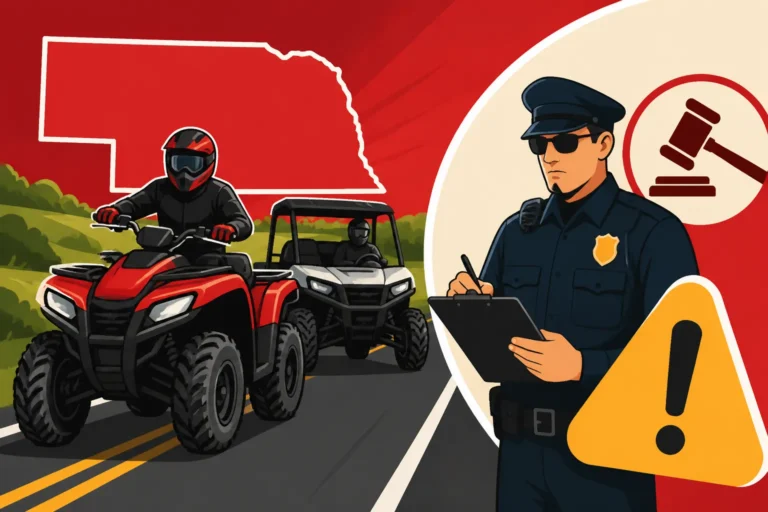
- Tickets and Fines: Law enforcement officers can issue citations for everything from illegal road operation to lack of proper lighting, insurance, or a safety flag. These fines can quickly add up.
- Machine Impoundment: In some cases, especially for repeat offenses or egregious violations, an officer might have your ATV or UTV impounded. Retrieving it involves towing fees, storage fees, and often proof of corrected violations, which can be an expensive ordeal. [Nebraska Penalties for Illegal Road Riding] details these consequences.
- Legal Fees: Contesting a citation can mean hiring an attorney, adding another layer of financial burden.
- Insurance Ramifications: An incident involving illegal road use could impact your insurance rates, or even lead to your policy being canceled, especially if a claim is filed.
- Loss of Public Trust: Widespread illegal riding can lead to stricter local ordinances, potentially limiting access for everyone, including those with legitimate agricultural needs.
Always remember that deputies and other law enforcement officials patrol rural roads, including those leading to grain bins. They are familiar with local agricultural activities but are also tasked with enforcing traffic and vehicle laws.
Insuring Your Ride for Peace of Mind
While Nebraska only requires liability insurance if you're operating your ATV or UTV on public roads, even under the agricultural exception, purchasing comprehensive coverage is a wise investment for any rider.
- Liability Coverage: This protects you financially if you're at fault in an accident that causes injury to another person or damage to their property. If you're using a grain bin road that is a public county road, this is non-negotiable. [Nebraska Requires Liability Insurance on Roads] outlines the minimums.
- Collision Coverage: This pays for damage to your own ATV or UTV if it's involved in a collision, regardless of who is at fault. Grain bin roads can be rough, and accidents can happen, even to experienced riders.
- Comprehensive Coverage: This covers damage to your machine from non-collision events, such as theft, vandalism, fire, or even hitting an animal. Given the value of modern ATVs and UTVs, this coverage can be a lifesaver.
- Uninsured/Underinsured Motorist Coverage: This protects you if you're involved in an accident with another driver who either doesn't have insurance or doesn't have enough to cover your damages.
Even if you primarily ride on private land, where insurance isn't legally mandated, having a policy can provide invaluable peace of mind. A new set of tires from SuperATV can be expensive to replace out-of-pocket after an incident. Talk to your insurance agent about specific policies for off-road vehicles and ensure your coverage extends to any situations where you might legally use your ATV on public roads, including those vital grain bin roads. Knowing you're covered financially means one less worry as you go about your work.
Disclaimer
This article is for general informational purposes only and does not constitute professional advice. Laws, prices and regulations vary by location and change over time. Consult a qualified professional for guidance on your specific situation.