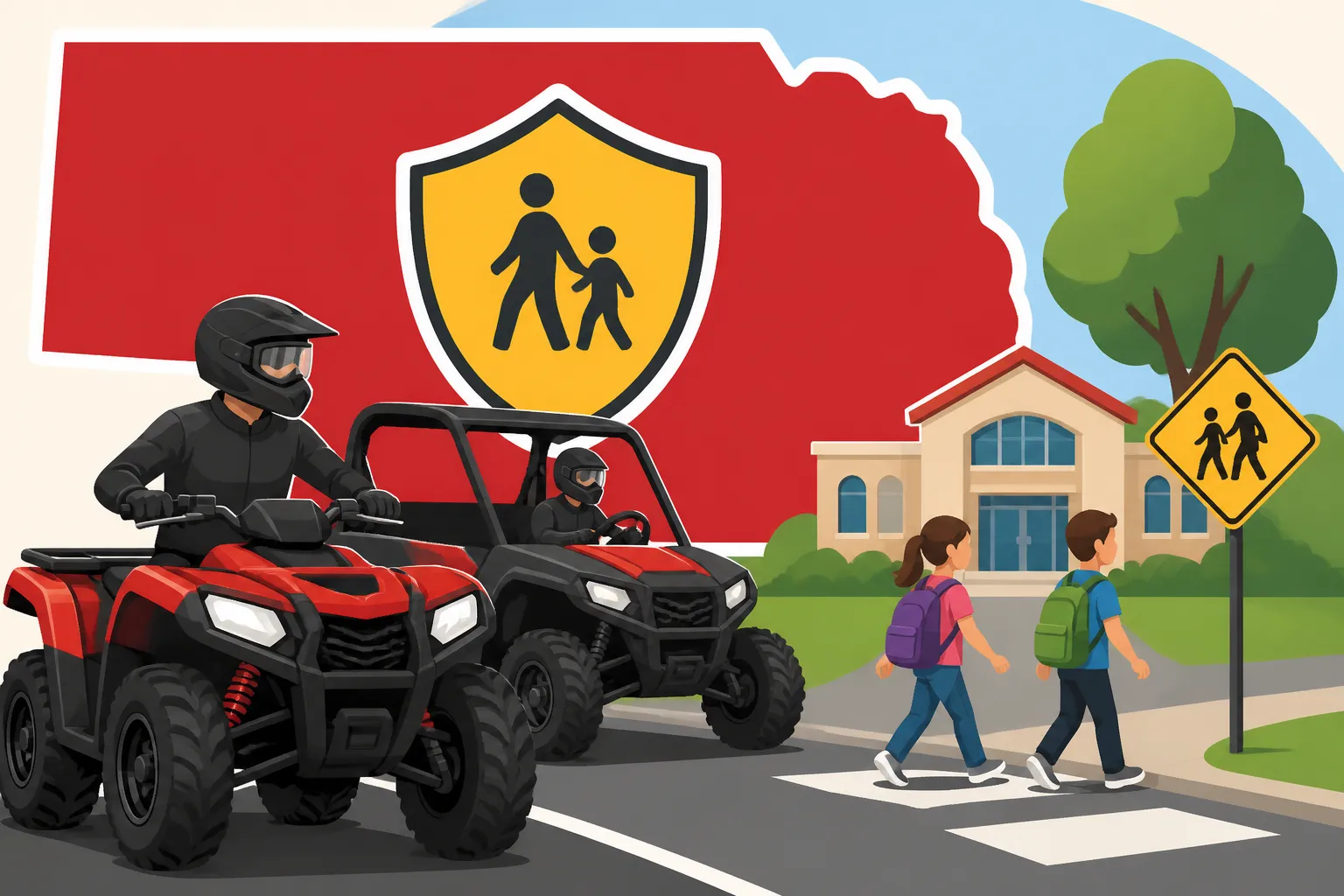
Nebraska Rules for Riding Near a School
Riding an ATV or UTV is a fantastic way to experience the great outdoors here in Nebraska, but navigating the rules, especially when you're near places like schools, can feel like trying to untangle a fishing line after a big catch. It's a common concern, and the last thing any of us want is to accidentally create a safety hazard or run afoul of the law, particularly in areas where kids gather. This guide is here to clarify the specific regulations and best practices for riding your off-road machine in the vicinity of schools, helping you stay safe and legal.
The General Rule: Schools and Public Roads in Nebraska
Let's be real, the thought of an ATV buzzing past a school bus stop or a playground can make any parent's heart skip a beat, and for good reason. The laws around ATVs and UTVs on public roads in Nebraska are already quite strict, and when you add the sensitive environment of a school zone, those rules become even more critical. It's not just about what's legal, but about what's safe and responsible.
Why Schools Present a Unique Challenge
Schools, whether they're in a bustling town or out on a quiet county road, are magnets for pedestrian traffic. Children, especially younger ones, can be unpredictable. They might dart out from behind a parked car, be engrossed in conversation with friends, or simply not be paying attention to their surroundings. This inherent unpredictability, combined with the often higher speed and less visible profile of an ATV or UTV compared to a car, creates a significant safety risk. Beyond the physical dangers, there are also the noise considerations and the general concern for maintaining a safe and orderly environment for students and faculty. It's about respecting the space where our kids learn and play, ensuring we're not adding unnecessary risks or distractions.
Understanding Nebraska's General Road Rules for ATVs
Before we dive specifically into school zones, it's crucial to remember the baseline. In Nebraska, ATVs and UTVs are generally not permitted on public roads. This isn't just a suggestion; it's a fundamental aspect of [Nebraska ATV Road Rules Under 60-6,356]. There are very specific, limited exceptions, primarily for agricultural purposes or if a city or county has passed a special ordinance. For instance, you won't see a state-issued license plate for your ATV, and the title itself often bears a notation stating "Not To Be Registered" for road use. This statewide restriction is the starting point for all other considerations, and it heavily influences how we must think about riding near schools. The default is "no," and any deviation requires explicit legal permission and extreme caution.
Specific Scenarios: When Riding Near a School Might Come Up
Even with the strict general rules, situations can arise where your path on an ATV or UTV might bring you close to a school. Perhaps you're on your own property that borders school grounds, or you're utilizing one of the rare legal exceptions for road use. It's in these specific instances that understanding the nuances becomes absolutely vital.
Agricultural Exemption and School Routes
Nebraska's primary exception for ATV/UTV road use revolves around agricultural activities. If you're using your machine for farm or ranch work, like checking fence lines, moving equipment between fields, or tending to livestock, you might find yourself on a county road that happens to pass a rural school. This is a legitimate use under [Nebraska's Agricultural Road Exception]. However, even when operating legally, the presence of a school demands heightened awareness.
Imagine you're driving a utility-focused UTV, perhaps a Polaris Ranger or a Can-Am Defender, across a two-lane county road that runs directly in front of a small, one-room schoolhouse in a remote area. While your trip is for checking on a pivot irrigation system, the school bell rings, and suddenly, a dozen kids are spilling out onto the gravel shoulders. In this scenario, your agricultural exemption doesn't grant you a pass on common sense and extreme caution. You need to slow down, be prepared to stop instantly, and yield to all pedestrians. Remember, the spirit of the agricultural exception is to facilitate farming, not to endanger children. Always assume children will not see you, and ride defensively.
City Ordinances and School Zones
Some forward-thinking cities and villages in Nebraska have passed their own local ordinances to allow ATVs and UTVs on certain designated streets. This can be a real convenience for residents within those specific boundaries. However, these ordinances almost always come with their own set of restrictions, and school zones are often at the top of the list for areas with tighter controls.
For example, a city might have an ordinance that permits UTVs on streets with a speed limit of 35 mph or less. But even within that city, there will likely be special clauses prohibiting ATV/UTV use within a certain radius of a school during school hours, or even at all times. They might also impose specific age requirements for riders, as detailed in [Nebraska City Age Requirements], which are especially important to heed near schools. You might be legally riding your side-by-side down Main Street, but if you approach an elementary school and the ordinance dictates no ATV traffic within 500 feet, you'll need to know your route and plan accordingly to avoid that area entirely. It's not enough to know your city allows it; you must know the specific restrictions, especially those related to schools. Checking with your local city hall about their specific [Nebraska Cities That Adopt ATV Ordinances] is crucial before you even think about riding near a school.
Private Property Adjacent to a School
What if you own property that directly borders a school's playground or athletic fields? You might think, "It's my land, I can ride here." And while that's generally true, the proximity to a school adds a layer of responsibility that can't be ignored. While you don't need a permit to ride on your own land, the noise, dust, and visual presence of an ATV can still be a major disruption, and potentially a safety concern, for the school.
Consider a situation where your pastureland shares a fence line with a high school football field. During a Friday night game, the roar of your sport quad, even on your own property, could be seen as disruptive. More importantly, if the school's property isn't clearly marked, or if children from the school might wander onto your land, you're opening yourself up to significant liability. Even if you've done everything right by securing [Getting Written Permission From a Ranch Landowner] for your own riding, you must be extremely mindful of the school's operations. The best practice here is often to ride on parts of your property furthest from the school during school hours or events, or to ensure clear, robust fencing separates your property from theirs.
Safety and Legal Considerations Around School Zones
When it comes to riding your ATV or UTV anywhere near a school, the stakes are significantly higher. It’s not just about avoiding a ticket; it’s about ensuring the safety of children and maintaining a good relationship with your community. Ignoring these considerations can lead to severe consequences, both legal and personal.
Increased Penalties and Public Scrutiny
Riding an ATV or UTV illegally or recklessly near a school is likely to draw immediate attention and could lead to much harsher penalties than in other areas. Law enforcement, school officials, and parents are understandably protective of school environments. If you’re caught violating traffic laws or local ordinances in a school zone, you could face significant fines, points on your driving record (if applicable), and even have your machine impounded. These potential consequences are outlined generally under [Nebraska Penalties for Illegal Road Riding], but you can expect the courts and local authorities to take a particularly dim view of infractions near schools.
Beyond the legal ramifications, there's also the court of public opinion. A single incident of perceived unsafe riding near a school can quickly tarnish the reputation of all ATV/UTV riders in a community. It can lead to increased calls for stricter regulations, even impacting those who ride responsibly. It's a situation where one person's poor judgment can affect everyone, creating a real frustration for the vast majority of riders who are always careful.
Equipment and Visibility Near Schools
Visibility is paramount when you're operating an ATV or UTV near any pedestrian traffic, and especially so around schools. While [Nebraska Requires Head and Tail Lights] for road use exceptions, and [Nebraska's 5-Foot Safety Flag Rule] mandates a flag for visibility, these become non-negotiable necessities in a school zone. Imagine a small child trying to see a quad over parked cars. A safety flag, brightly colored and reaching a minimum of 5 feet above the ground, drastically improves your chances of being seen.
Consider adding extra reflective tape to your machine, especially if you're riding a utility UTV that might blend in with farm equipment. Utilizing bright LED lights, even during the day, can also help you stand out. Products from brands like SuperATV, known for their durable accessories, often include enhanced lighting options, whip flags, and mirrors that can significantly boost your visibility. It's an investment in safety that pays dividends, particularly when navigating areas where children might be present. Always err on the side of being overly visible, even if the letter of the law doesn't explicitly demand more than the minimum.
Communication and Due Diligence
The best defense against accidental rule-breaking and unintended safety hazards is clear communication and thorough research. Don't assume anything. If you live or ride in an area where your path might intersect with a school zone, take the proactive step of understanding every relevant regulation.
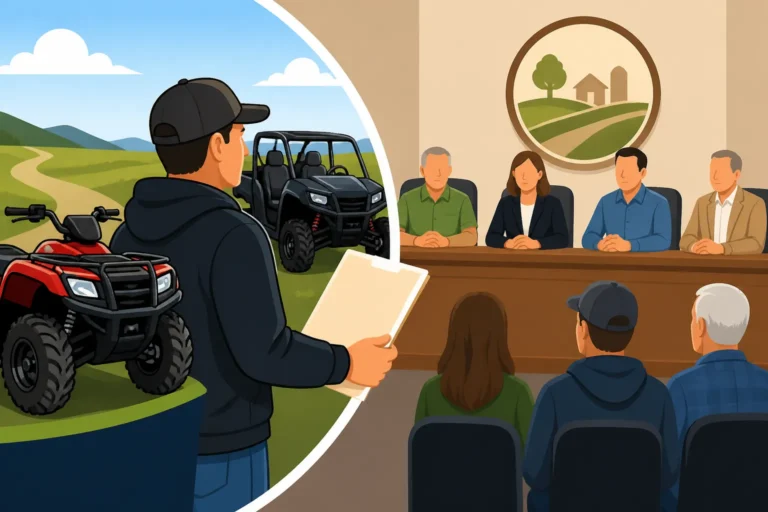
Start by contacting your county treasurer's office with [Questions Worth Asking a County Treasurer] about road use in your area. Then, if you're in a city or village that has an ATV/UTV ordinance, make a call or visit city hall. Ask direct questions about designated streets, hours of operation, and, most importantly, any specific restrictions around school properties. This is a crucial step for finding out [What to Ask City Hall Before Riding Streets]. You might even consider reaching out to the school district administration directly to understand their specific concerns or internal policies regarding vehicles near their grounds. Being informed, rather than just guessing, protects you, your machine, and most importantly, the children in your community.
| Consideration | General Road Use (Exceptions) | Near a School Zone (Heightened Caution) |
|---|---|---|
| Legality of Riding | Generally prohibited, limited agricultural/local ordinance exceptions. | Generally prohibited, very few/no exceptions during school hours. |
| Speed Limit | Up to 30 mph on authorized roads. | Must be extremely reduced; often 15-20 mph posted limit. |
| Visibility Equipment | Headlights, taillights, 5-foot safety flag required for road use. | Absolutely mandatory; consider additional reflective tape, extra lighting. |
| Pedestrian Traffic | Varying, often less dense on rural roads. | High, unpredictable children; assume blind spots and sudden movements. |
| Noise Levels | Generally tolerated on rural roads. | Best to minimize; can be disruptive to learning environment. |
| Public Perception | Generally neutral if legal. | Highly sensitive; illegal/reckless riding draws scrutiny. |
| Penalties | Fines, potential impoundment for illegal road use. | Often increased fines, immediate impoundment, severe legal consequences. |
| Communication | Check state statutes and county rules. | Consult city hall, county treasurer, and school district. |
In the end, while we all love the freedom and utility our ATVs and UTVs provide, that freedom comes with a significant responsibility, especially when we're near the places where our children learn and grow. It's about being a good neighbor and a safe rider.
Disclaimer
This article is for general informational purposes only and does not constitute professional advice. Laws, prices and regulations vary by location and change over time. Consult a qualified professional for guidance on your specific situation.