Ice Riding on a Management Area
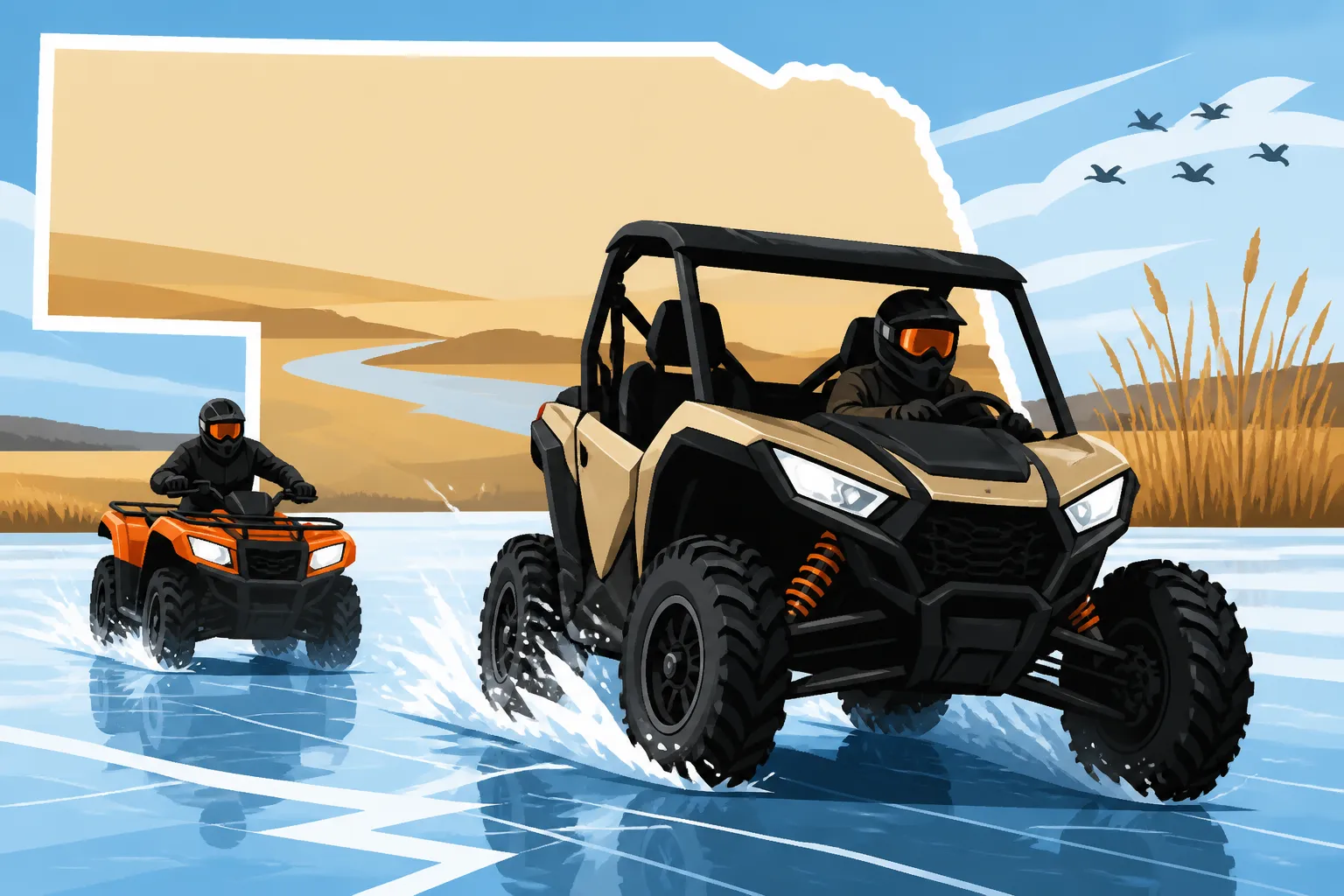
A frozen lake can look solid, open, and inviting, yet still be closed to motorized riding—or unsafe for a machine. Nebraska’s wildlife management areas have specific access rules, and the frozen-water exception is not blanket permission to ride anywhere. This guide explains what to check before taking an ATV or UTV onto WMA ice, how to plan cautiously, and when to turn back.
Understand the frozen-water exception
A WMA is not automatically open to ATV and UTV traffic
Nebraska wildlife management areas are managed for wildlife and public recreation, not as unrestricted off-road parks. Vehicle access may be limited to designated roads and parking areas, and rules can differ from one property to another. A frozen lake does not automatically cancel those restrictions or turn every part of a management area into a riding area.
Nebraska’s frozen-water exception is best understood as a narrow allowance that may apply when the area’s rules and posted signs permit it. It is not permission to ride over shorelines, wetlands, closed land, or any ice surface simply because it is frozen. Start with the applicable [Nebraska WMA Vehicle Rules] and look specifically for the [Nebraska WMA Frozen Lake Exception].
The distinction matters when a route crosses a WMA road, a lake, and a shoreline in the same outing. Permission to use a designated road does not necessarily mean you can ride off it, and permission to ride on an approved frozen surface does not automatically open the surrounding land. Treat each part of your intended route as a separate access question.
Read signs and check area-specific closures
Signs at an entrance, parking lot, or access point can tell you whether an area is open, where vehicles may travel, and whether a frozen surface is closed. Read all posted information before unloading. If a sign says a lake or section is closed, do not treat old tire tracks, other riders’ presence, or a map boundary as permission to go in.
Closures may change with conditions or management needs. A familiar WMA that was open on a previous visit may have different restrictions later, so check current notices from the managing agency as well as signs on site. If the rules are unclear, contact the appropriate office before traveling. It is much easier to change plans at home than to discover an access restriction after towing to a remote entrance.
Pay particular attention to the [Reading the Signs That Close a Frozen Lake] guidance. A sign may apply to only one launch point or section, or it may close the entire frozen area. Do not assume a closure ends at the point where the sign is easiest to see. When you cannot confidently tell what is open, choose a different location or stay off the ice.
Keep roadway access separate from ice access
On a WMA, roads and parking areas have their own rules. The fact that you can drive to a lake does not necessarily mean you can ride onto it. Likewise, an exception for frozen water does not mean you can cut across vegetation or drive along a shoreline to reach a preferred spot. Follow [Nebraska WMA Designated Roadways Only] and use only an access point the area allows.
This is also where a map can be helpful—but only as a planning aid. onX Offroad can help you orient yourself and review mapped access boundaries before a trip. It should not be treated as the final authority on a closure, a current gate, or whether a particular stretch of ice is open. Compare your route with official information and posted signs before unloading.
Check ice and machine conditions conservatively
Ice appearance is not a reliable safety test
Ice can vary dramatically across a single lake. Wind, snow cover, changing temperatures, springs, inlets, outlets, currents, and underwater structure can create weaker spots beside ice that looks firm. A track made earlier in the day—or even earlier that morning—does not prove that the route is safe for your machine now.
Do not use a casual visual check, a neighboring rider’s confidence, or a general rule of thumb as a guarantee. An ATV or UTV adds weight and can be difficult to recover if it breaks through. Snow can hide cracks and open water, while pressure ridges and changing ice conditions can make a route difficult to judge. If you do not have reliable local information and the proper knowledge and equipment to assess conditions, do not ride onto the ice.
Also consider the consequences of a mistake. A machine can sink quickly, and cold water can turn a manageable mechanical problem into an emergency. If conditions are uncertain, riding on a legal land trail or postponing the outing is the safer choice. The [Frozen Water as an Exception] is about access rules; it should never be mistaken for an assurance that the ice is safe.
Prepare for a breakdown or emergency before you leave
Tell someone where you plan to ride, which access point you expect to use, and when you intend to return. Bring a charged phone, but do not assume you will have service across a remote WMA. A paper map or downloaded map area can help you orient yourself if reception disappears. onX Offroad may be useful for pre-trip route planning, but check that your planned route matches the agency’s allowed access and have a backup way to navigate.
Pack for the possibility of being delayed in cold weather, not just for the ride itself. Appropriate layers, gloves, eye protection, a first-aid kit, a light, and basic recovery equipment are sensible starting points. If you ride with others, agree on a meeting point and a simple plan for what happens if someone stops or loses contact. Keep recovery equipment accessible rather than buried under cargo.
A riding companion is especially important on ice, but a group does not make unsafe conditions safe. Stay together, avoid spreading out across a lake, and do not let one rider pressure another into following a questionable route. If a rider becomes separated, stop in a safe, permitted place and communicate rather than continuing farther across uncertain ice.
Be realistic about the machine and the load
A UTV, a loaded ATV, and a lightly equipped solo quad do not present the same recovery challenges. Passenger weight, tools, fuel, cargo, and any trailer add to the load. Avoid carrying more than you need, and do not assume that a machine’s ability to travel over snow or rough ground means it is suitable for every frozen surface.
Do not improvise a route around open water, thin-looking sections, or shorelines. Turning around early is a sound decision, not a failed ride. If the route becomes unsafe or access is unclear, return the way you came only if that path remains safe and open. Otherwise, stop and seek help rather than attempting a risky shortcut.
| Before the ride | What to verify | Why it matters |
|---|---|---|
| WMA access | Whether motorized use is allowed in the area | WMA rules are not the same as unrestricted off-road access |
| Frozen surface | Whether the specific lake or section is open | A frozen-water exception does not open every lake |
| Signs and notices | Whether closures or seasonal restrictions apply | Access can vary by location and conditions |
| Ice conditions | Whether you have reliable, current information and the right expertise | Ice can change across a short distance |
| Route and parking | Where vehicles may travel and where trailers may be left | Road access does not automatically include lake access |
| Emergency plan | Who knows your route, what gear you have, and how you will communicate | Remote areas may have limited phone service |
Plan your WMA trip from the entrance to the return
Choose legal access and parking before towing
Before setting out, identify the correct entrance, the permitted parking area, and the route from the lot to any approved riding surface. Do not block a gate, narrow roadway, or access route while unloading. A trailer parked outside the designated area can create problems for other visitors and may interfere with management or emergency access. Review [Nebraska WMA Parking Area Rules] before you go.
A map app can make a route appear straightforward even when the terrain includes a closed road, a private boundary, or an area where motorized access is restricted. Use onX Offroad as one planning reference, then confirm the route against official WMA information and signs on the ground. If a mapped line and a posted restriction disagree, follow the posted restriction and get clarification from the managing agency.
Take a moment at the entrance to review signs again before riding away from your truck. Confirm where the designated road ends, whether the ice area is open, and whether there are restrictions on parking or travel. If those details cannot be confirmed, do not guess. A short drive to another lawful riding area is preferable to a citation, an unsafe crossing, or damage to sensitive habitat.
Keep documents and emergency details accessible
Carry proof of ownership or other paperwork that may be relevant to your machine, and keep it protected from snow and moisture. The items you need can depend on your circumstances, so check [Nebraska Proof of Ownership on the Trail] and [What Paperwork a Deputy Can Ask to See] before heading out. Do not leave important documents loose where they can be lost during unloading.
Keep your emergency plan simple enough that everyone in the group remembers it. Set a return time, share the access point with someone who is not riding, and agree on what to do if a machine becomes disabled. In a remote area, a clear plan can be more useful than relying on a phone call that may not go through.
If you are visiting a WMA for the first time, consider scouting the entrance and parking arrangements before bringing the whole group. A quick check can reveal whether the access road is suitable for your truck and trailer and whether there is room to turn around. When the road is muddy, snow-covered, or difficult to judge, avoid getting a loaded trailer into a position where it cannot safely exit.
Protect wildlife, other visitors, and the riding area
Stay on allowed routes and avoid shoreline damage
Even when an ice surface is open to riding, the area around it may not be. Keep tires off vegetation, wet ground, and shoreline areas where a shortcut could damage habitat. Do not widen an informal track or ride around a closure marker. If the access route is blocked by snow, water, or a gate, do not create a new route through the surrounding land.
Wildlife management areas may also be used by walkers, anglers, hunters, and other visitors. Slow down near parking areas and access points, give people plenty of room, and avoid startling wildlife. Be alert for people who may be difficult to see against snow or winter vegetation. A quiet, controlled approach is safer and more considerate than accelerating across a shared access area.
Pack out trash, including small items that are easy to drop while wearing gloves. If your machine leaks fuel or oil, stop riding and address the problem rather than continuing across the area. A disabled machine should be recovered in a way that does not drag through vegetation or disturb closed ground. When safe recovery is not possible, get help instead of causing more damage.
Know when to cancel or turn around
Cancel the ride if the area is closed, signs are unclear, weather makes travel hazardous, or you cannot establish that the planned route is allowed. Turn back if ice conditions change, visibility drops, someone in the group is uncomfortable, or you encounter a route that requires crossing a restricted area. Pressure from friends is not a good reason to continue onto uncertain ice.
Before you tow, check the [Nebraska Trail Conditions Before You Tow] and confirm any current area-specific notices directly with the managing agency. A route that was accessible during a previous visit may not be suitable after a warm spell, snowfall, or change in management. Keep a backup plan that does not depend on riding the ice. If the frozen surface is not clearly open and conditions are not well understood, choose that backup.
A good ice-riding day begins with permission, not just a machine and a cold forecast. Confirm the WMA rules, read signs, use only allowed access, and make a conservative decision about ice. When any part of that plan is uncertain, staying off the frozen surface is the responsible call.
Disclaimer
This article is for general informational purposes only and does not constitute professional advice. Laws, prices and regulations vary by location and change over time. Consult a qualified professional for guidance on your specific situation.