What Tires Work Best in Deep Loose Sand
Deep loose sand can make an ATV or UTV feel sluggish, wander from side to side, and bury its tires before you have time to react. The right tire setup helps a machine float and steer more predictably, but there is no single best choice for every rider. This guide explains which tire styles work in sand, how to choose them, and what to check before riding in Nebraska.
How sand changes the way your tires work
Why ordinary trail tires can struggle
In firm dirt, a tire’s tread lugs bite into the ground and push against it to move the machine forward. Loose sand behaves differently: it shifts under the tire instead of offering a firm surface to grip. A narrow tire with aggressive, widely spaced lugs can dig down quickly, increasing drag and making the machine feel as though it is plowing.
That does not mean ordinary all-terrain tires are useless in sand. Many riders use them successfully, especially on routes that alternate between sand, packed ground, gravel, and other surfaces. But in deeper, softer sections, a tire designed to spread the machine’s weight and move across the surface can feel easier to manage.
Sand also magnifies small setup differences. A tire that feels fine on a packed access road may suddenly feel nervous when the surface gets soft. A heavy machine, a passenger, cargo, or a trailer can add to the tendency to sink. Tire choice matters, but so do load, speed, riding technique, and the specific ground conditions.
What riders mean by a sand tire
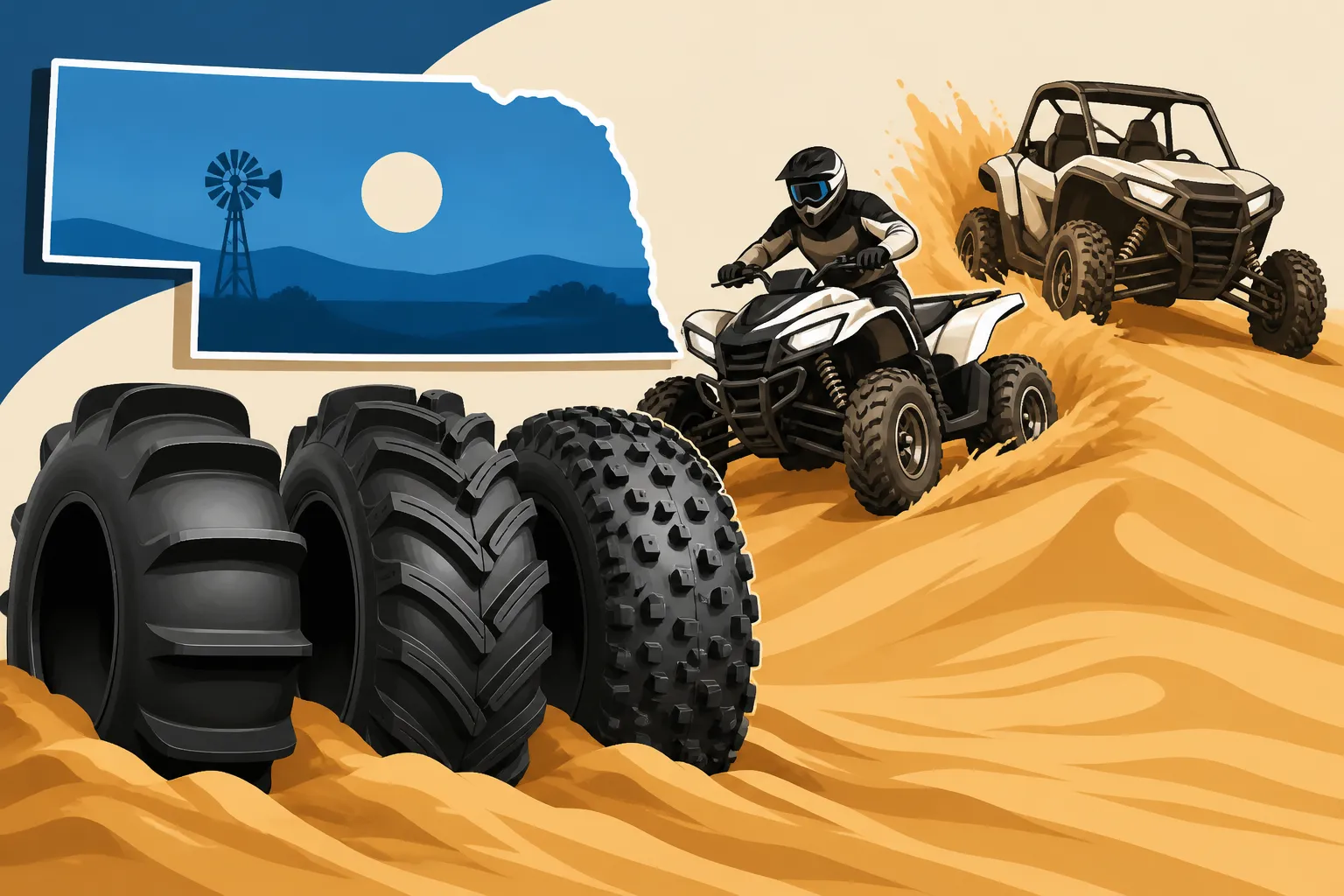
A sand-specific tire is generally designed to keep the machine moving over loose ground rather than dig aggressively into it. For ATVs, the familiar setup is often a rear paddle tire paired with a front tire designed to steer in sand. Rear paddles provide forward drive, while the front tires help the rider guide the machine without creating excessive drag.
Paddle designs vary. Some have pronounced scoops intended to move a lot of sand; others are less aggressive for riders who want a more manageable feel or expect occasional firm sections. A very aggressive paddle can be effective in soft sand but may feel abrupt, noisy, or less suitable on mixed terrain. It is not automatically the best choice just because a route has some sand.
UTVs have different considerations. Their extra weight, wider stance, and possible passenger or cargo load can affect how they float and turn. Sand-specific UTV tires may use a tread pattern intended to reduce digging, but the right selection depends on the machine’s tire size, weight, drivetrain, and intended use. Confirm that a tire is compatible with your model rather than choosing by appearance alone.
The tread pattern matters, but so does the whole setup
A useful sand setup is a balance: enough drive to keep moving, enough front-end control to steer, and enough flotation to avoid digging in. Rear grip alone is not enough if the front end pushes straight ahead when you try to turn. Similarly, a tire that floats well but does not match the machine’s fitment or load requirements can create handling or safety problems.
Before changing tires, check your owner’s manual and tire manufacturer’s fitment guidance. Pay attention to the approved tire size, load capacity, and whether the manufacturer recommends a particular style for your machine. If you are uncertain about a front-and-rear combination, ask a knowledgeable ATV or UTV tire dealer to help match the set to your machine and the ground you expect to ride.
Choosing tires for your machine and riding style
ATV tire choices for loose sand
For an ATV used mostly in soft sand, riders commonly consider a rear paddle tire and a sand-oriented front tire. The paddles help the rear tires move the machine forward without relying on deep, widely spaced trail lugs. The front tires are important for steering: a front tire intended for sand may roll across the surface more smoothly than an aggressive knobby that tends to bite and dig.
A less specialized option is to keep a versatile all-terrain set. That can make sense if your ride includes only short sandy stretches or if you also use the ATV on hard-packed trails, farm ground, or gravel. The tradeoff is that you may work harder to maintain momentum and steer in deep, soft patches than you would with a purpose-built sand setup.
If you are comparing a paddle set with your current tires, think through the whole ride rather than just the softest section. Ask yourself:
- Is most of the route deep, loose sand, or are sandy areas occasional?
- Will you need to ride over packed ground, gravel, or rocky sections too?
- Do you need the machine to remain versatile for work or other trail use?
- Are the tires approved for your ATV’s size and load requirements?
- Can you safely transport and store a second set if you switch seasonally?
For terrain-specific riding, browsing Where You Can Legally Ride Nebraska Sand can help you plan around the places you are actually permitted to ride. Conditions differ from one riding area to another, so do not assume that every sandy route calls for the same tire.
UTV tire choices for added weight and passengers
A UTV’s weight changes how it behaves in loose sand. Add passengers, cargo, or equipment, and the tires have more weight to support. A tire that works well for a lightly loaded machine may feel less composed with a full cab and gear. Check the tire’s load rating and the machine manufacturer’s fitment guidance before buying.
UTV owners often favor sand-specific tires when they ride soft sand regularly, but the best tread still depends on how mixed the route is. A tire with a more versatile pattern may be a better fit if the machine also travels on hard-packed paths or is used for ranch work. A specialized sand tire can be a poor everyday choice if the machine spends most of its time on firm surfaces.
Four-wheel drive can help a UTV maintain forward progress, but it does not cancel out poor tire choice or rough technique. If the machine starts to dig in, adding throttle without changing direction or approach can make the problem worse. A gradual line, steady momentum, and a route that avoids unnecessarily soft or disturbed ground are often more helpful than trying to power through every patch.
| Tire option | Often a good fit for | Main tradeoff |
|---|---|---|
| ATV rear paddle with sand-oriented fronts | Frequent riding in deep, loose sand | Less versatile on mixed or firm terrain |
| Sand-specific UTV tires | UTVs that regularly carry passengers or cargo in soft sand | Must match the machine’s fitment and load needs |
| All-terrain tires | Routes with a mix of sand, packed ground, and gravel | May dig or feel less controlled in deep sand |
| Aggressive trail knobbies | Firm ground where lug bite is useful | Can dig in and increase resistance in loose sand |
When a second tire set is worth considering
A dedicated sand set may make sense when you ride loose sand often enough to notice the limitations of your regular tires. Swapping sets can preserve the versatility of your all-terrain tires for other riding and give you a more purpose-built setup for sand days. It also means planning for storage, transport, and the cost of another set.
For occasional sandy sections, a separate set may not be worthwhile. A rider who visits a mixed-terrain area now and then may prefer a dependable all-terrain tire and careful technique. The decision is less about having the most specialized tire and more about matching equipment to how often, where, and with whom you ride.
Pressure, fitment, and handling in deep sand
Start with the manufacturer’s guidance
It is tempting to treat lower tire pressure as a universal sand fix. Lower pressure can increase a tire’s footprint in some situations, but too little pressure can also raise the chance of tire damage, bead separation, or unstable handling. The safe range depends on the tire, wheel, machine, load, and riding conditions.
Start with the owner’s manual and the tire manufacturer’s recommendations. Do not copy another rider’s pressure without knowing whether their machine, tire size, load, and wheels match yours. If you are considering a pressure change, make it cautiously and stay within approved guidance. Riders using beadlock wheels should still follow the wheel and tire manufacturers’ instructions; a beadlock does not make every pressure safe.
Carry a reliable gauge and check pressure before the ride, rather than relying on how the tire looks. Recheck after a change in conditions or a long ride, and avoid making pressure adjustments casually on the trail. If you are unsure what is appropriate for your setup, get advice from a qualified tire professional who can account for your specific machine.
Choose lines that help the tires work
Even well-chosen tires can struggle if the machine approaches soft sand abruptly or stops in a difficult spot. When it is safe and permitted, look ahead for a line that avoids deep churned-up patches and sudden changes in surface. Smooth, steady throttle is usually easier to manage than rapid acceleration followed by braking or sharp steering.
If the machine begins to slow, avoid burying the tires with a sudden surge of throttle. Ease off, keep your steering controlled, and assess whether you can move onto firmer ground or take a safer route. A spinning tire can dig a hole quickly, leaving you with more work and potentially damaging the trail surface.
Avoid tight, abrupt turns in deep sand unless the route and conditions call for them and you can do so safely. Let the machine follow a smooth arc, and give yourself room to adjust. Riders who are new to sand often find it helps to practice on an appropriate, permitted area before attempting a longer or more challenging route.
Reassess after changing tires or pressure
A new tire setup can change how quickly a machine accelerates, how it responds to steering, and how it behaves when the surface firms up. Start slowly in a safe area and get a feel for the machine before carrying passengers or heading into a long ride. Pay particular attention to steering response and stability during transitions between soft and firm ground.
If the front end pushes wide, the rear tires spin too easily, or the machine feels unstable, stop and reassess. The issue may be tire choice, pressure, loading, or technique; adding more throttle is not always the answer. For help thinking through pressure adjustments, see How Far to Air Down Tires in Deep Sand and keep the manufacturer’s recommendations as your boundary.
Plan your Nebraska ride before changing your tires
Match the setup to the place you plan to ride
Nebraska riding areas are not interchangeable. A route near Halsey may offer different ground and trail conditions from another riding area, and conditions can shift with weather, traffic, and maintenance. Before buying specialized tires, check where you intend to ride and whether the sandy sections are deep and frequent enough to justify a dedicated setup.
For example, riders considering the Bessey area can read about Bessey’s Dismal Area in Nebraska and Bessey’s Hill Climb Area in Nebraska as part of deciding what kind of terrain to expect. Those descriptions can help you ask better questions about your route, but conditions on the ground may change. Check applicable trail information before you haul your machine.
A mapping tool such as onX Offroad can help you review routes and orient yourself while planning, but do not treat a map as permission to ride. Confirm access, closures, and riding rules with the land manager or other responsible authority. For a longer outing, Nebraska Trail Conditions Before You Tow is another useful planning topic to review before loading the machine.
Do a pre-ride tire and load check
Before leaving home, look over each tire for cuts, embedded debris, visible damage, or unusual wear. Check that the tire size and load rating are appropriate for the machine, and that your pressures match the guidance for your setup. If you have installed sand tires, confirm that they are mounted in the correct direction if the manufacturer specifies one.
Think about the weight you are carrying. Tools, coolers, extra fuel, and passengers all affect how a machine behaves in soft ground. Secure cargo so it cannot shift during a turn, and avoid loading the vehicle beyond its stated limits. If you are carrying recovery gear, make sure it is accessible rather than buried under everything else.
It can also help to use onX Offroad during trip planning to review your intended route and avoid relying on memory alone. Still, bring any required or recommended offline navigation materials, and follow posted signs and closures. A route that appears straightforward on a screen may feel very different when you encounter soft sand, traffic, or a closed section.
Adjust expectations, not just equipment
The right tire can make sand riding more manageable, but it cannot guarantee that a machine will never bog down. Deep sand asks more of both the rider and the machine. A passenger, a heavy load, hot conditions, or a long stretch of loose terrain can make an otherwise suitable setup feel taxing. Plan breaks, carry water, and avoid turning a short tire test into an exhausting ride.
Sand can also increase fatigue because riders spend more effort steering and maintaining control. Take a break when your hands, shoulders, or attention start to tire. If you are riding with others, agree on a pace and a regrouping point so no one feels pressured to push beyond their comfort level. Why Riders Burn Faster on Open Sand offers more on why these rides can feel harder than expected.
Finally, choose tires based on the terrain you actually ride, not just the most dramatic photo or a friend’s preferred setup. For frequent deep-sand riding, sand-specific tires may be worth considering. For mixed Nebraska routes, a capable all-terrain tire may be the more practical choice. Check fitment, follow manufacturer guidance, and confirm that your destination allows the kind of riding you have planned. onX Offroad can support route planning, but local rules and land-manager information should guide the final decision.
Disclaimer
This article is for general informational purposes only and does not constitute professional advice. Laws, prices and regulations vary by location and change over time. Consult a qualified professional for guidance on your specific situation.