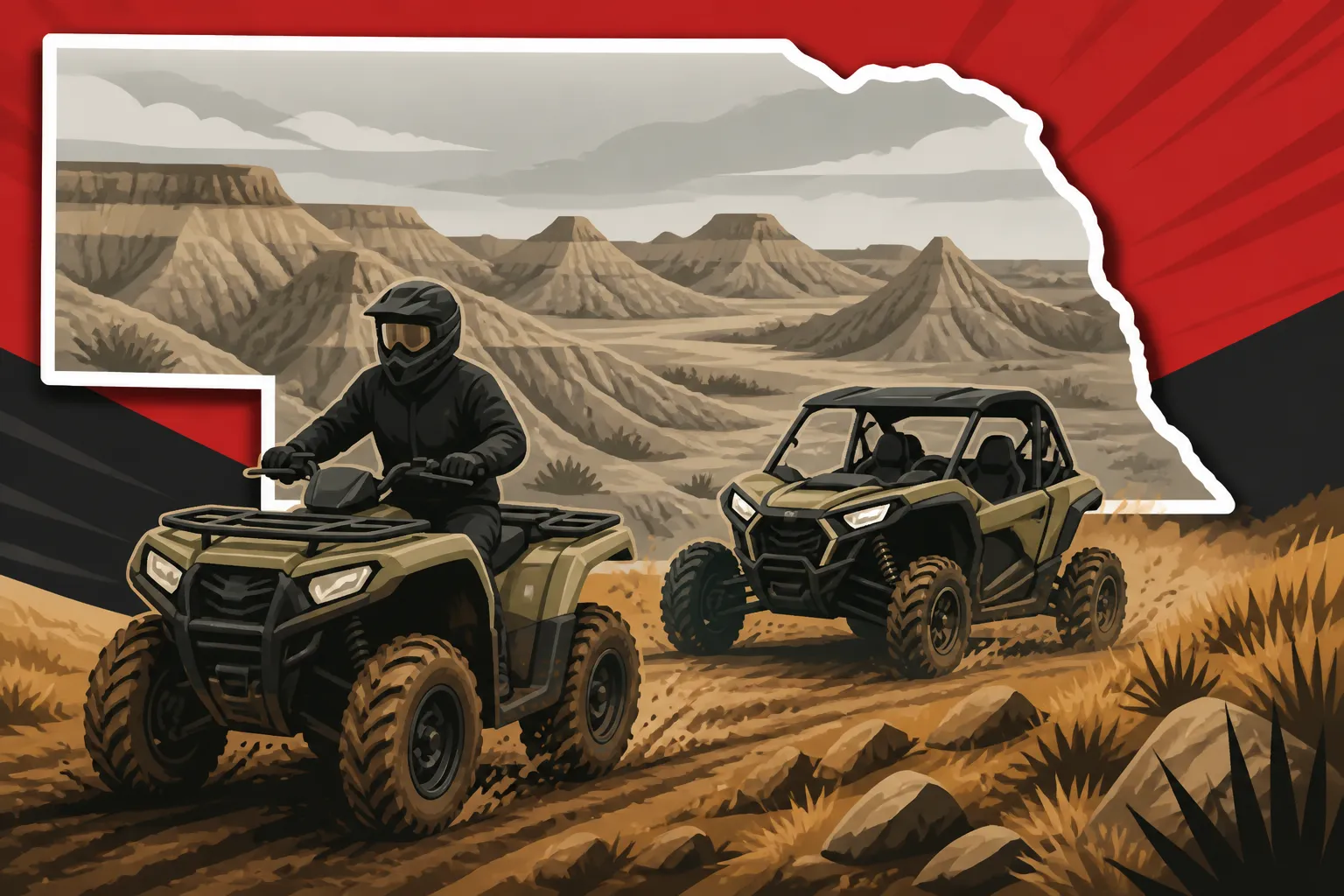
Bessey’s Dismal Area in Nebraska
Bessey’s Dismal Area can sound like a simple place to unload and ride, but first-time visitors often wonder where the riding is allowed, what the terrain is like, and whether a route they found online is open. This guide explains how to plan a ride at Bessey Recreation Complex near Halsey, what to check before towing, and how to make the day safer and less stressful.
Understanding Bessey’s Dismal Area
Where the Dismal Area fits into Bessey Recreation Complex
Bessey Recreation Complex is part of Nebraska National Forest near Halsey, in the Sandhills region. Riders often talk about its trail system, hill-climb area, and Dismal open area as though they are all the same riding experience. They are related places within the broader recreation complex, but they may offer different kinds of riding. Before you unload, make sure you know which area you are heading to and what access applies there.
The Dismal Area is generally associated with more open riding than a marked forest trail. That can appeal to riders who want room to explore, but “open” does not mean every patch of ground is automatically available to ride. Boundaries, signs, seasonal restrictions, and current land-management directions matter. If a map, social post, or old trip report conflicts with a sign on the ground, follow the sign and check with the responsible office.
For a wider look at nearby riding options, see [Bessey's 36 Miles in Nebraska] and [Bessey's Hill Climb Area in Nebraska]. Those areas can help you think through whether your group would rather spend the day following a trail, trying a more concentrated riding area, or exploring the Dismal Area.
What makes the Dismal Area different from a trail ride
A marked trail gives riders a defined route to follow. An open riding area can feel less structured, which is part of the appeal, but it also asks more of you as a navigator. You’ll need to pay attention to where you are, where you entered, and whether the ground ahead remains within the permitted riding area. It’s easy to get turned around when a group spreads out or everyone focuses on finding the next feature.
That difference matters for mixed-experience groups. A confident rider may be comfortable choosing a line across open terrain, while a newer rider may prefer a clearly defined route and predictable pace. Before the group starts, agree on a meeting point, a turnaround time, and a plan if someone loses sight of the others. Keep the ride together enough that a less experienced person can ask for help without feeling pressured to keep up.
If you are still comparing the area with other local rides, [Nebraska Trails That Allow Side-by-Sides] and [Nebraska Trail Difficulty Ratings] are useful related topics. Use them as planning prompts, then confirm the specific access and conditions for Bessey before you travel.
Planning the Ride Before You Tow
Confirm access, boundaries, and current conditions
A long drive can make it tempting to trust a saved map and head straight for the unload area. It’s worth taking a few minutes to check for current access information first. Road conditions, closures, weather, fire restrictions, and management directions can affect where you can go. A route shown in an older post may not reflect today’s conditions, and a digital map does not replace posted signs or official instructions.
Check the current information for Bessey Recreation Complex and the relevant ranger district before setting out. If you are unsure whether the Dismal Area is open to your type of machine, or where the permitted boundary lies, ask directly rather than guessing at the trailhead. A useful reference is [Nebraska Trail Conditions Before You Tow]. For questions that are specific to the area, [Bessey Ranger District Office Hours and Phone] can help you identify the right contact details to check.
Weather deserves the same attention as access. Recent rain can make some surfaces difficult or vulnerable to damage, while hot, dry conditions bring different concerns, including dust, heat, and limited shade. Do not assume a route is suitable just because your machine can physically get through it. Consider how your tires, ground clearance, cooling system, and experience match the conditions, and be willing to change plans if the area is wet or unsafe.
Make a navigation plan that works without a signal
Cell coverage can be unreliable in forest and rural areas, so plan as if your phone may not be able to load a map when you need it. Before leaving home, download or save the information you intend to use, charge your phone, and bring a backup power source. A paper map can also be valuable if your phone battery fails, the screen becomes hard to read in bright sun, or you lose access to a navigation app.
A mapping tool such as onX Offroad can help you review your route and organize a trip before you leave. Use it as a planning aid, not as permission to ride anywhere the screen appears to show an open path. Compare what you see with official information and signs at the site. In particular, avoid treating a colored line or broad land boundary as proof that a specific route is open to your machine.
Agree on a simple group protocol before anyone starts riding: who leads, who rides last, where the group regathers, and what to do if someone takes a wrong turn. If you are riding with children or newer riders, keep the plan especially clear. The point is not to make a fun day feel like a field exercise; it is to prevent a small navigation mistake from turning into a stressful search when everyone is tired and dusty.
| Planning question | What to check before leaving | Why it matters |
|---|---|---|
| Is the area open? | Current notices and on-site signs | Access can change, and old trip reports may be outdated |
| Is my machine appropriate? | Local directions and any machine restrictions | Access rules may differ by area or route |
| Can I navigate offline? | Saved maps, charged devices, and a paper backup | Cell service may be limited |
| Is the weather suitable? | Recent rain, heat, wind, and fire information | Conditions affect traction, visibility, comfort, and safety |
| Where will we regroup? | A clear meeting point and turnaround plan | Helps keep a group together if riders become separated |
Matching the Ride to Your Machine and Group
Choose a pace and route everyone can manage
A satisfying ride is not necessarily the longest ride or the one that reaches the most challenging feature. In an open area, riders can be tempted to keep exploring because there is no obvious endpoint. That can leave the newest rider exhausted, the group scattered, or the most confident rider waiting impatiently. Decide what a good day looks like for the whole group before anyone starts: a relaxed first outing, a few hours of exploration, or a more ambitious ride with planned breaks.
For a group with different skill levels, set a pace that the least experienced rider can maintain comfortably. Let that person choose whether to take a break or turn back without making it feel like they are holding everyone up. If the group divides, do so only when everyone understands the route, meeting place, and time to regroup. A rider who is technically capable but unfamiliar with the area may still need extra time to interpret terrain and navigation.
Think about the machine as well as the rider. A large side-by-side, a youth quad, and a smaller utility ATV do not handle every route in the same way. Turning room, ground clearance, tire choice, and passenger comfort can all affect whether a line is a sensible option. If the path narrows or the surface changes, stop and assess rather than assuming the vehicle can follow simply because it reached that point.
Ride with respect for other visitors and the land
Open areas can make it harder to anticipate where other riders are coming from. Keep a controlled speed, leave enough room to react, and slow down when visibility is reduced by dust or terrain. If you cannot see clearly beyond a rise or around a bend, ease off rather than accelerating into an unknown approach. A machine can disappear into dust more quickly than many riders expect.
Be considerate around other visitors, campsites, roads, and shared access points. Avoid creating unnecessary dust near people who are stopped, walking, or setting up camp. Stay on permitted riding surfaces and do not cut across vegetation just to avoid a rough patch. A shortcut can damage ground that takes a long time to recover, and it may lead you outside the allowed riding area without the group realizing it.
Good trail manners also make the area more enjoyable for the next group. Leave gates, signs, and facilities as you found them, pack out trash, and avoid loud or aggressive riding near places where people are resting. For more on shared-use expectations, read [Nebraska Trail Etiquette Locals Expect]. If you are unsure whether the route or surface can handle current conditions, [Nebraska Trail Closures After Rain] is another useful topic to review.
Preparing for a Safer, More Comfortable Day
Pack for heat, dust, and changing conditions
Even a ride that feels short on the map can be tiring when the weather is warm, the air is dry, or the group stops often to sort out navigation. Bring enough drinking water for the whole outing and keep it accessible, not buried beneath gear. Plan breaks before anyone feels overheated or unusually tired. If a rider becomes dizzy, confused, nauseated, or weak, stop riding and address the situation instead of encouraging them to push through.
Dust can irritate eyes and airways, especially when riders follow one another closely. Leave enough space to avoid riding directly into another machine’s dust cloud, and use suitable protective gear. Sunglasses alone may not keep dust out; a properly fitted helmet and eye protection make a difference. Pack a way to clean lenses, since a dusty visor can quickly make it harder to see changes in the ground.
Conditions can shift during the day, so bring a light layer even when the forecast looks warm. A compact first-aid kit, basic tools suited to your machine, a tire repair option, and a charged phone can help with common problems. [What to Pack for a Hot Dry Riding Day] offers more detail for planning around heat and exposed conditions. Keep food, water, and essentials secure so they do not bounce loose over rough ground.
Check machines and personal gear before unloading
A quick inspection before leaving home can spare you a frustrating breakdown far from the trailer. Check tire condition and pressure, brakes, steering, lights, fuel, and visible leaks. Look for loose straps, damaged cables, or anything that may have shifted during transport. If your machine has been sitting through winter, a short test close to home is a better place to discover a weak battery or a brake problem than the trailhead.
At the staging area, confirm that each rider has the right helmet and protective gear, and that everyone knows how to operate the machine they are using. New riders should understand how to stop, turn, and respond if the machine stalls. For side-by-sides, check seat belts and make sure passengers know to keep their hands and feet inside the vehicle. A quick group check is much easier than realizing halfway through the ride that someone’s gear was left in the truck.
Do not overlook the trailer and tow vehicle. Confirm that machines are secured, lights and tires are in good condition, and the load is balanced before starting the drive. At the recreation area, unload without blocking other visitors or access roads. Decide where the group will park and keep enough room for other trailers to maneuver. A calm, organized unload sets a better tone for the whole day.
Making the Most of a Visit to Bessey
Build a flexible itinerary instead of chasing mileage
A useful plan gives the group structure without making the day feel rigid. Decide when you want to start riding, when you will take a water break, and when you need to turn back to meet your travel schedule. Leave room for a slower pace if the terrain is unfamiliar or someone needs extra time. If you finish early, you can consider another permitted area only after confirming that access and conditions are appropriate.
For a first visit, focus on learning the layout rather than trying to cover as much ground as possible. Notice where you entered, how the surface changes, and which landmarks help you stay oriented. Stop at a safe place to check your map instead of trying to navigate while moving. If you are using onX Offroad or another mapping tool, save your intended area and meeting points ahead of time, then compare those details with what you see on the ground.
It can also help to plan a non-riding backup activity in case weather or access changes your plans. That might mean a shorter ride, a visit to another permitted recreation feature, or simply postponing the outing rather than forcing it. Keep the distinction clear between places within the broader complex: a trail, a hill-climb area, and the Dismal Area may not share identical conditions or directions.
Know what to verify before the next trip
After the ride, note what you learned while it is still fresh. Record where you parked, how long the group rode, which map details were useful, and what gear you wished you had brought. If you encountered a closure, difficult surface, or confusing junction, check the official information before sharing a route with friends. A photo or description without context can lead someone else to believe an area is open when it is not.
Before each return visit, check access and conditions again rather than relying on last trip’s notes. Ask about any current restrictions that could affect the type of machine you plan to bring. Also confirm whether a parking or use fee applies and where payment is handled. [Where to Pay the Fee at Bessey Recreation Complex] is a helpful related topic, but confirm the details directly before you travel.
When you are comparing Bessey with another destination or planning a longer weekend, keep logistics in view as much as the riding itself. Think about trailer parking, fuel, weather, daylight, and whether the group has enough supplies for delays. A little preparation can make the Dismal Area feel less intimidating for a first-time visitor and more enjoyable for experienced riders who want to return.
Disclaimer
This article is for general informational purposes only and does not constitute professional advice. Laws, prices and regulations vary by location and change over time. Consult a qualified professional for guidance on your specific situation.