Nebraska Riding in Fall
Fall can be one of the most rewarding times to ride an ATV or UTV in Nebraska, but cooler weather does not guarantee easy trail conditions. Dry stretches can leave dust hanging in the air; rain can turn a route slick, and hunting activity may affect where you can ride. This guide helps you plan a safer, less frustrating fall outing.
Plan your Nebraska fall ride around conditions
Check trail status before you load the trailer
A trail that was open and easy to ride last weekend may feel very different after rain, wind, or a stretch of warm, dry weather. Fall conditions can change quickly: a damp section may become muddy, while a dry route may be dusty enough to reduce visibility behind another machine. Before heading out, check the riding area’s current notices and confirm that your intended route is open to your type of machine.
It is worth checking more than the weather forecast. Look for closures, maintenance notices, seasonal restrictions, parking changes, and any rules about vehicle width or permitted trail types. A map can help you understand the general layout, but it should not be treated as proof that a trail is open. If an area is managed by more than one organization, check the rules that apply to the specific trailhead or parcel you plan to use.
This is especially helpful when you are hauling from a distance. Before leaving Omaha, Lincoln, Grand Island, or North Platte, confirm that the area you chose is still a practical destination for the day. [Nebraska Trail Conditions Before You Tow] and [Nebraska Trail Closures After Rain] are useful next reads when you are deciding whether to go, postpone, or choose another route.
Mapping apps can make it easier to prepare, but use them as planning aids rather than final authorities. For example, onX Offroad may help you review mapped routes and orient yourself before a trip. Compare what you see in the app with the riding area’s posted information and on-site signs. If those sources disagree, follow the official closure or restriction.
Choose an area that matches your ride
Nebraska offers several kinds of riding experiences, from wooded trails to sand and more open terrain. Bessey Recreation Complex near Halsey, Cedar Run ATV Trail near Republican City, and Flat Rock Riders OHV Park are names riders may encounter while researching destinations. Each area has its own layout, management, conditions, and access rules, so avoid assuming that a familiar trail format or rule applies everywhere.
Think about the experience your group wants. A first-time rider may feel more comfortable somewhere with routes suited to a cautious pace and a clear staging area. A group with mixed machines may need to confirm that every trail allows the largest vehicle in the group. If one rider is bringing a side-by-side, check width restrictions instead of relying on an ATV rider’s previous experience at the same location.
A mapping app such as onX Offroad can help you compare possible routes and identify the general area before you leave home. Still, route lines and labels are not a substitute for checking access. Search for the area’s rules, look at recent notices when available, and confirm trailhead directions and parking arrangements. For downloadable planning resources, see [Nebraska ATV Trail Map Downloads] and [Nebraska Trail Difficulty Ratings].
| What you are planning | What to check before leaving | Why it matters in fall |
|---|---|---|
| A trail ride after recent rain | Closure notices, surface conditions, and any route restrictions | Mud, standing water, and damaged trail sections can make a route difficult or unavailable |
| A ride with ATVs and UTVs | Vehicle-width rules and trail designations | A route that suits a quad may not accommodate a wider side-by-side |
| A full-day outing | Parking, fuel, food, daylight, and the route back to the trailer | Shorter days leave less room for delays |
| A ride near hunting activity | Land access, seasonal notices, and posted signs | Public access can vary by location, and private land requires permission |
| An unfamiliar destination | Trailhead location, access rules, and map coverage | A pin on a map does not confirm that a route is open to motorized riding |
Match the route to the group, not the other way around
It is tempting to plan a long loop because the map makes it look straightforward. In real life, a group rides at the pace of its least experienced rider, and fall conditions can add time for muddy sections, visibility breaks, or a mechanical issue. Set a turnaround point before starting, and let everyone know that changing the plan is sensible—not a failure.
For a family outing, decide in advance how you will handle stops and regrouping. A lead rider can set a manageable pace while another adult or experienced rider stays toward the back. On a narrow trail, leave enough space that dust or a sudden stop does not catch the next rider by surprise. These small choices matter more when leaves, shadows, and low-angle sunlight make it harder to read the terrain.
Before choosing a route, compare the skill levels, machine types, and comfort of everyone in your group. A familiar ride near Halsey may be a better choice than pushing into a new area late in the day. If the trailhead is unfamiliar, check [Nebraska Trailheads With Trailer Parking] before you set out so you know where you can unload without blocking other visitors.
Prepare for fall weather, hunting activity, and shorter days
Pack for changing temperatures and visibility
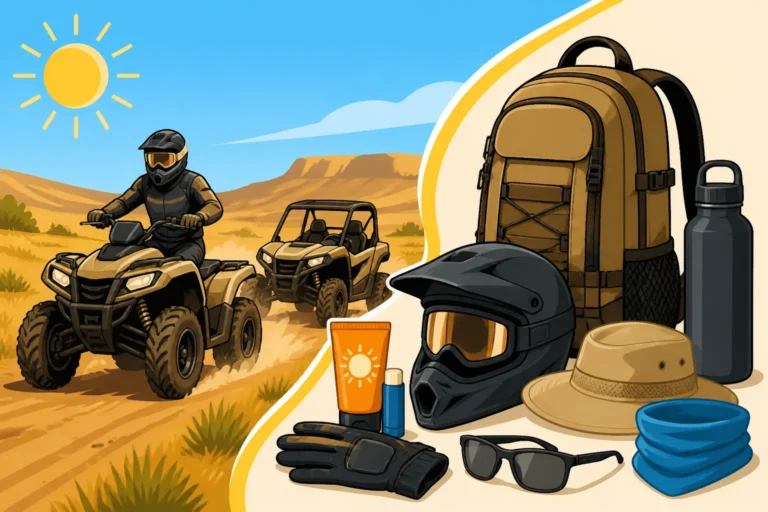
A chilly morning can turn into a pleasant afternoon, then feel cold again once the sun drops. Dress in layers that are comfortable under riding gear, and bring an outer layer that blocks wind. Gloves that feel fine at the truck may become uncomfortable after hours of riding, especially if your hands get damp or exposed to wind.
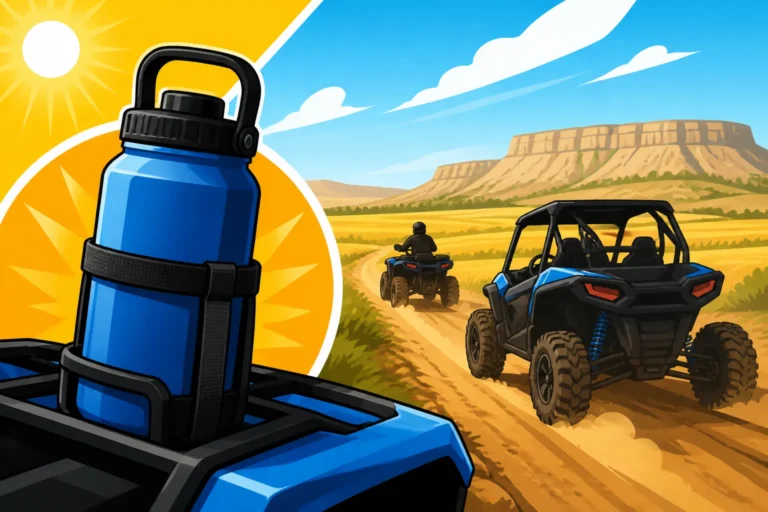
Carry drinking water even when the air feels cool. Riders may not notice thirst as readily in autumn, and time outdoors can stretch longer than planned. Bring food, basic first-aid supplies, a charged phone, and any tools or repair items appropriate for your machine. If your route includes areas with limited cell service, share your plan and expected return time with someone who is not riding with you.
Fall light can be deceptive. The sun sits lower in the sky, shadows stretch across ruts, and a bright patch ahead can make a dip or loose surface hard to see. Use the machine’s required lighting where applicable, keep a speed that lets you react to what is visible, and avoid treating dusk as extra riding time. Plan to return to the trailer before the light becomes a problem.
Dust is still possible during dry weather, even late in the season. Leave space between machines, use eye protection, and slow down when visibility drops. If you are following a group, do not ride so close that you are forced to guess where the trail turns. [Nebraska Riding Winter Wind] offers related planning ideas for conditions that can make a long ride feel colder and more tiring.
Check land access during hunting season
Fall brings increased outdoor activity across Nebraska, including hunting. That does not mean every area is closed to ATV or UTV use, but it does mean access and safety deserve extra attention. Rules vary by property and land manager. A route shown on a map does not automatically grant permission to cross private ground or enter land that is closed to motorized use.
Before riding near hunting areas, check the specific property’s rules and seasonal notices. Respect posted signs, gates, and closures. Do not assume that a field edge, ranch road, or access track is open simply because it looks established. If your route crosses private land, get permission from the landowner before riding there and follow any conditions they give you.
Wear conspicuous clothing when you are off the machine or moving around a trailhead, and keep your group together when visibility is poor. Be considerate of hunters, hikers, campers, and other users. Avoid unnecessary noise near camps or occupied areas, and do not ride off designated routes to get around a muddy or crowded section.
For a closer look at seasonal access considerations, read [Nebraska Hunting Season and Land Access]. The broader principle is simple: know who manages the land, understand the rules for that property, and treat signs and closures as decisive. onX Offroad can help with orientation during trip planning, but it cannot replace landowner permission or posted instructions.
Keep the day realistic as daylight shrinks
A fall ride can lose time in ordinary ways: someone needs a glove adjustment, a machine gets stuck, or a group stops to help another rider. Build those delays into your schedule. Estimate the ride based on the slowest comfortable pace in the group, not the distance a more experienced rider could cover alone.
Set a clear return time and tell the group what to do if someone becomes separated. Agree on a meeting point that is easy to identify, such as the staging area or a major trail junction. Make sure everyone knows how to contact the group and what to do if a phone has no signal. If a rider has a mechanical problem, stay together rather than leaving someone alone to wait.
Before departure, confirm that each machine has enough fuel for the planned route and that helmets and other protective equipment fit correctly. Check tires, brakes, lights, and controls. A quick inspection can catch a loose strap or low tire before it becomes a bigger headache several miles from the truck. For additional group-planning tips, see [Nebraska Trail Etiquette Locals Expect].
Make the ride easier from the driveway to the trail
Sort out access, parking, and permits
The word “trail” can describe very different places: public routes, private riding parks, forest trails, or designated areas with separate parking requirements. Confirm what applies at your chosen destination. Ask whether you need an entry permit, a parking payment, a reservation, a waiver, or a specific form of payment. Do not assume that a fee or permit for one recreation area covers another.
Nebraska does not have a statewide ATV registration sticker or OHV permit, but that does not mean every riding area is free of access rules or charges. The rules at a particular site may come from its manager, a private operator, or another relevant authority. Review the information for the exact location, and check whether any required permit belongs on the machine, the truck, or somewhere else.
If you plan to camp, verify that camping is allowed where you intend to stay and that your campsite is actually connected to the riding area you plan to use. Some places may have separate camping and trail access arrangements. [Nebraska Trails With Camping] can help you explore that part of planning, while [Nebraska State Parks Ban ATVs] is a useful reminder not to assume that a state park is an ATV trail destination.
onX Offroad can be handy for organizing a route and keeping potential trail areas in view, especially if you are comparing destinations before a weekend. Check the app’s map details against the trail manager’s directions, restrictions, and current notices. Then save or download what you need before you leave, so you are not relying on a strong mobile signal at the trailhead.
Use a simple pre-trip checklist
A short checklist helps prevent the frustrating situation of arriving at a trailhead and realizing that something important is back in the garage. Before loading, check the machine, trailer, route, and people in your group. If you are riding with someone who has not visited the area before, share the plan and explain what the trail day may involve.
Use this list as a starting point:
- Confirm that the riding area is open and accepts your type of machine.
- Check trail, parking, camping, and permit requirements for that exact location.
- Review weather and recent rain, then adjust the plan if conditions are poor.
- Confirm trailer parking and unloading arrangements.
- Inspect fuel, tires, brakes, lights, controls, and tie-downs.
- Pack water, food, layers, eye protection, first-aid supplies, and basic tools.
- Save the route information you need and share your expected return time.
- Set a turnaround time that leaves enough daylight to get back.
Leave room to change course. If the access road is closed, the trail is too muddy, or the group is uncomfortable with the conditions, choose another permitted route or call it a day. A fall ride is more enjoyable when the plan has enough flexibility to handle Nebraska weather, varied terrain, and the unexpected stop.
Keep respect and safety at the center of the ride
Good trail habits protect both people and future access. Stay on designated routes, control speed, give other users room, and avoid spinning tires or creating unnecessary damage. If you meet a rider coming the other way on a narrow section, slow down and pass carefully where there is room. Do not cut switchbacks or create a new track around a wet spot.
At the staging area, unload without blocking access for other trailers or emergency vehicles. Keep loose gear secured, supervise children closely, and review basic hand signals or regrouping rules before the group starts. If someone is new to riding, make sure they can operate the machine confidently and understand how to stop safely.
The best fall plan is not necessarily the longest loop or the most ambitious destination. It is the one that fits the group, respects the land, and leaves enough time to get home comfortably. Check conditions, follow local rules, and be willing to adjust when the day does not match the map.
Disclaimer
This article is for general informational purposes only and does not constitute professional advice. Laws, prices and regulations vary by location and change over time. Consult a qualified professional for guidance on your specific situation.