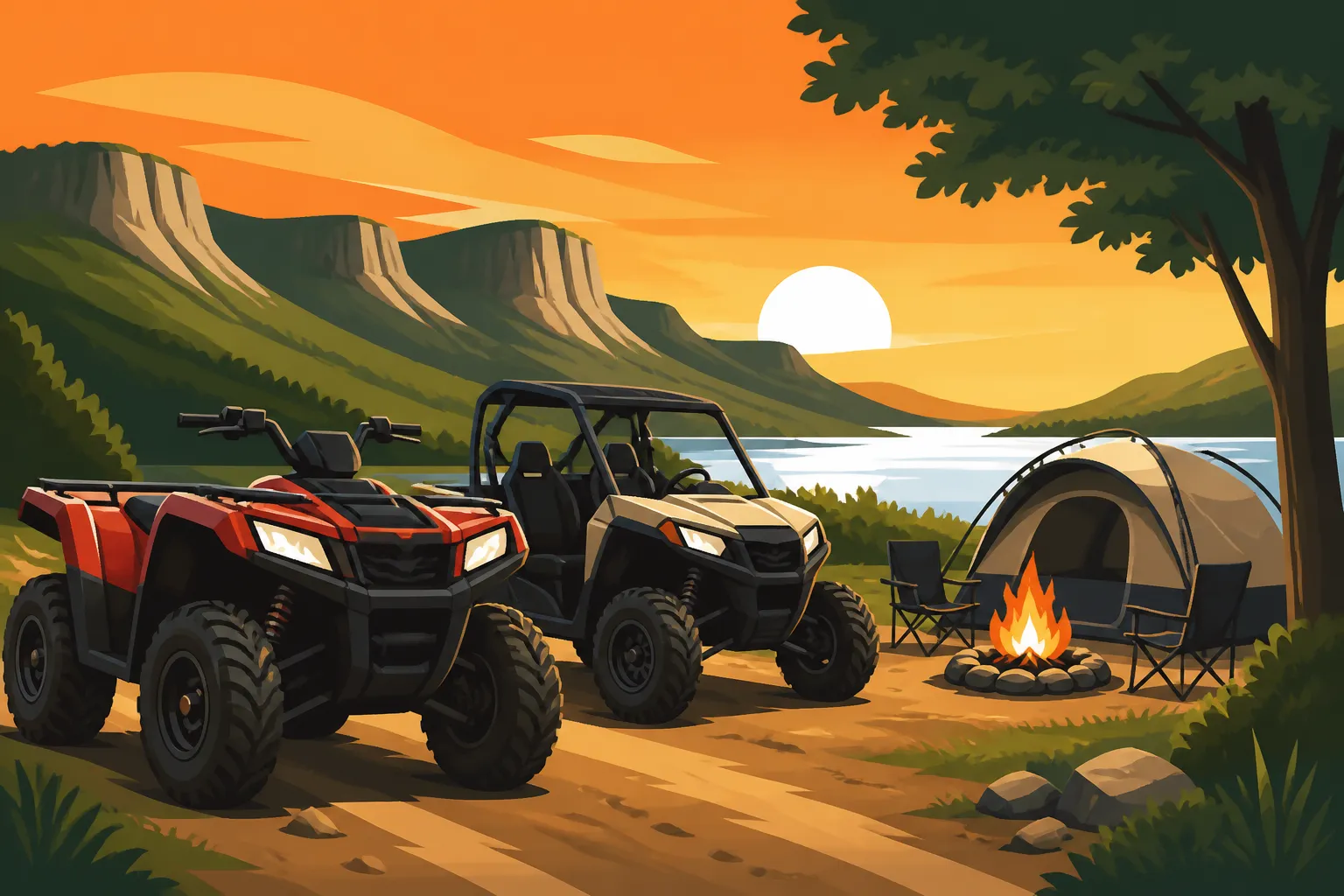
Camping at a Main Campground in Nebraska
A camping trip built around Nebraska riding can go sideways when the campground is farther from the trailhead than expected, the site cannot accommodate your trailer, or you arrive without a plan for water and power. This guide explains how to plan a stay at a main campground near riding areas, with practical notes for the Bessey Recreation Complex near Halsey and other Nebraska destinations.
Choosing a Main Campground for an ATV Weekend
Know what “main campground” means for your trip
A main campground can be the central, established campground serving a recreation area rather than a small trailhead or dispersed site. For riders heading to the Bessey Recreation Complex near Halsey, that usually means planning your stay around the campground and the recreation area’s riding access as separate parts of the trip. Before you book or tow out, confirm the campground’s location, its current facilities, and how riders are expected to reach the trails.
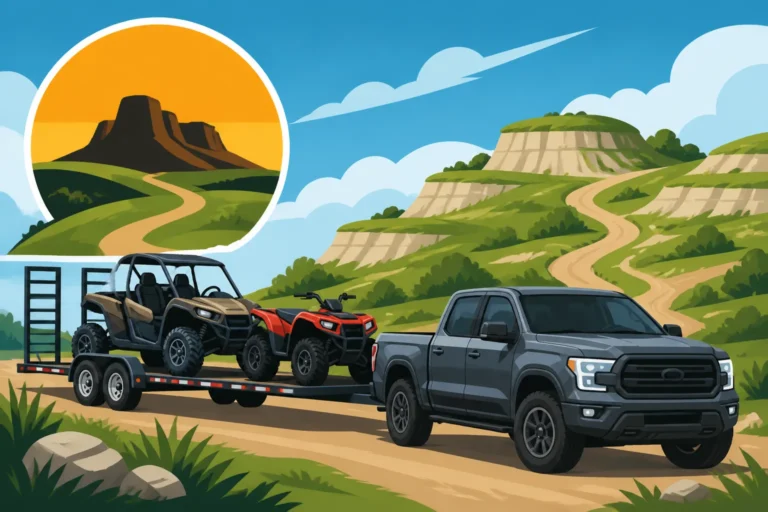
That distinction matters more than it sounds. A campground may be close to a riding area without every campsite having direct trail access. You might need to load the machines onto a trailer for a short transfer, use a designated route, or stage at a separate trailhead. Don’t assume that a machine can be driven from your campsite to the trail simply because both places are part of the same recreation complex.
If you’re still comparing destinations, start with [Nebraska ATV Trails: Where to Ride] and [Nebraska National Forest Riding]. They can help you decide whether a particular area matches your group’s riding style and travel plans. Then confirm the current camping and access details with the land manager before making the campground the centerpiece of the weekend.
Compare campgrounds by access, not just scenery
A peaceful campsite under trees may be a welcome break after a dusty ride, but convenience should be part of the decision. Think about how many times you’ll move the machines, whether the campground has enough room for your truck and trailer, and how far you’ll need to travel between camp and the trailhead. For a group with children or multiple machines, easy staging may be more valuable than a secluded site.
The right campground also depends on the kind of trip you want. Some riders prefer an established campground with shared facilities and a predictable base. Others may want a simpler camping experience and spend most of the day away from camp. If your group has different needs, compare the practical trade-offs before you reserve: access to restrooms, the possibility of a longer walk to facilities, vehicle space, and how you’ll handle food and water.
| Camping choice | Best fit | What to confirm before you go |
|---|---|---|
| Main campground | Groups who want an established base near a recreation area | Site size, vehicle and trailer space, facilities, and trail access |
| Campground near a specific trailhead | Riders who want to minimize loading and driving | Whether machines may use the connecting route and where to park |
| More remote or basic site | Campers comfortable bringing extra supplies | Water, toilets, access roads, and any restrictions on equipment |
| Campground away from the riding area | Mixed-purpose trips or travelers exploring several places | Driving time, trailer parking, and where riding is permitted |
A campground that works well for a tent may not work for a long truck-and-trailer combination. If you’re bringing a large trailer or travelling with several machines, ask about turning space and parking before you leave home. A tight site can turn arrival into a stressful backing exercise, especially if other campers are already settling in.
Planning Your Stay at Bessey Recreation Complex
Make a trailhead and campground plan before you tow
Bessey Recreation Complex near Halsey is a well-known Nebraska destination for riders planning a forest-area trip. It’s still wise to treat the campground, parking areas, and riding routes as separate points on your plan. Map the campground entrance, the place you expect to unload, and the trail access point. If those locations aren’t the same, decide in advance how the machines will get from one to the other.
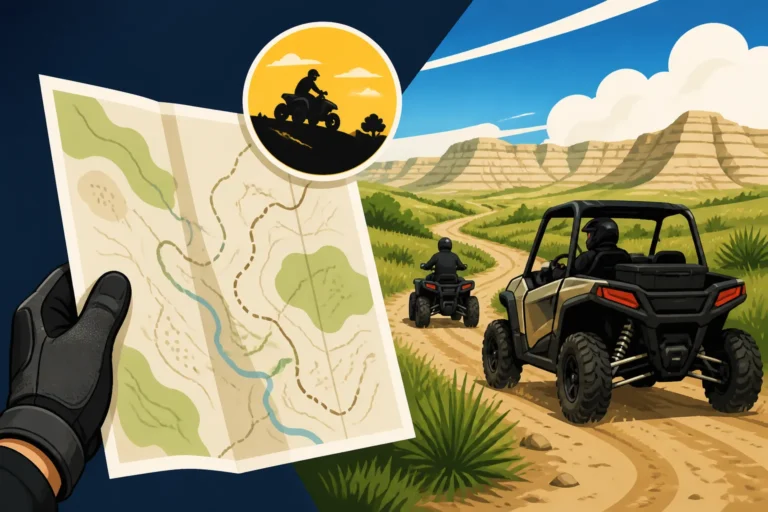
A route-planning app such as onX Offroad can help you organize a trip map and keep key locations together. Mark your campsite, trailhead, fuel stop, and any meeting point your group might use. Use the app as a planning aid, not as permission to ride: a mapped line doesn’t prove that a route is open or that a machine is allowed there. Confirm access rules and closures with the land manager before riding.
It’s also useful to build a backup plan. If a trail is closed, weather changes the conditions, or your group arrives later than expected, know which other activity is available and where you can safely park. For details about the riding area itself, see [Bessey OHV Trails at Halsey in Nebraska] and [Bessey's 36 Miles of Forest Trail at Halsey]. Checking the riding options first helps you decide whether the campground is a practical base for the trip you have in mind.
Verify facilities and rules directly
Campground amenities can vary, and the label “main campground” doesn’t tell you what services will be available during your visit. Check whether the site offers the facilities your group needs, whether reservations are accepted, and what the rules say about vehicles, generators, pets, campfires, and quiet hours. Bring a backup plan for essential needs rather than assuming a particular service will be available on arrival.
Ask specific questions when you contact the campground or land manager. Can your truck and trailer remain at the site? Is there a separate parking area for trailers? Are machines allowed on the route between the campground and trail access? Are there seasonal closures or fire restrictions? Clear answers to those questions can prevent a last-minute change of plans after a long drive.
Don’t assume that rules at one Nebraska campground apply to another. Some riding areas are managed by different agencies or have different access arrangements. For instance, Nebraska state parks have restrictions that make them a poor choice as an ATV trail base; check [Nebraska State Parks Ban ATVs] before planning a ride from a state park campsite. Likewise, review [Nebraska Trail Conditions Before You Tow] for a reminder to check trail status before making the drive.
Getting Camp, Trailer, and Machines Ready
Set up your site with room to work
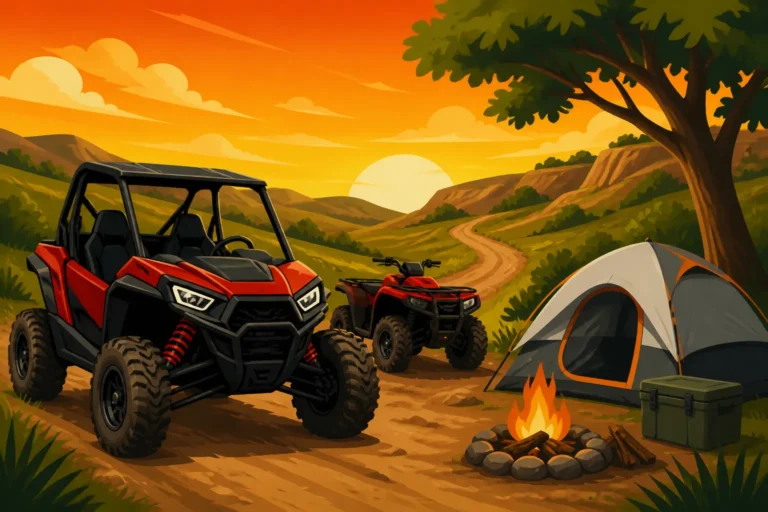
Arriving with a clear setup plan can make the first hour of a camping weekend much easier. Before departure, decide where the truck, trailer, machines, tent, and cooking area will go. Leave a path for people to move around safely and avoid blocking neighboring sites or campground roads. If you’re travelling with friends, agree on who handles the trailer and who directs the driver while backing in.
Think about the order you’ll need things. If you expect to unload right after arrival, keep helmets and riding gear where you can reach them without unpacking the whole truck. If camp setup comes first, secure fuel, tools, and tie-downs so they don’t spill into the space where you’re pitching a tent or preparing food. A few minutes of sorting at home can spare you from digging through dusty gear in a crowded campsite.
Space is a common source of frustration when people bring more equipment than the site can comfortably handle. A long trailer, extra machine, portable shelter, and several coolers may all fit in theory but leave little room to use the campsite. Call ahead about site dimensions and vehicle limits, and bring only what your group can safely store and manage.
Pack for basic needs and changing conditions
Nebraska weather can change the feel of a ride quickly, especially in open or forested areas where wind, dust, rain, or temperature shifts affect comfort. Pack layers, rain protection, sturdy footwear, and enough water for the day. Keep drinking water separate from water intended for washing equipment or camp cleanup, and make a plan for replenishing supplies if the campground does not provide what you need.
For a riding weekend, prepare a basic repair and safety kit. Consider bringing a first-aid kit, tire repair supplies appropriate for your machines, a flashlight, spare straps, and the tools you know how to use. Check the machines before leaving home: tires, brakes, lights, fluids, battery condition, and tie-down points. Discovering a loose strap or a dead battery at the trailhead is frustrating; catching it in the driveway is manageable.
If your group expects limited cell service, agree on a meeting point and a check-in plan before anyone heads out. Save campground and trailhead locations for offline use where possible. onX Offroad may help you organize offline map information, but don’t rely on a phone as your only navigation or emergency tool. Carry a paper map when available, keep devices charged, and tell someone outside the riding group where you’ll be and when you expect to return.
Riding Responsibly From a Campground Base
Keep camping access separate from riding permission
A campsite reservation does not automatically authorize riding everywhere nearby. Stay on routes and trails that are open to your type of machine, and follow posted signs even if a route appears on a map or has visible tire tracks. When in doubt, ask the managing office rather than treating uncertainty as permission.
This is especially important around public land. Riding rules can differ among national forest areas, state recreation sites, wildlife management areas, private parks, and county or city roads. Review [Nebraska Has No OHV Permit or Sticker] for the distinction between a statewide OHV sticker and other site-specific requirements. Also read [Nebraska WMA Vehicle Rules] if your route or camping plans involve a wildlife management area.
A little courtesy goes a long way at a shared campground. Keep machines at a respectful speed, avoid unnecessary engine noise near occupied sites, and use designated parking and unloading areas. If the route from camp to a trailhead isn’t clearly permitted, trailer the machines instead of assuming a short ride is harmless. That small extra step can prevent a conflict with campground staff, other visitors, or land managers.
Protect trails and avoid preventable problems
Stay on designated trails and avoid riding when conditions are likely to cause damage. A muddy shortcut can widen a trail, churn up soil, and make the route harder for everyone to use. If the trail is wet or a closure is posted, choose another activity rather than trying to decide whether your machine can “probably make it through.”
Dust, noise, and shared use also deserve attention. Slow down when approaching hikers, campers, or other vehicles, and give them room. On narrow routes, follow posted signs and use common sense when meeting other riders. For general trail etiquette and practical expectations, see [Nebraska Trail Etiquette Locals Expect].
Before heading out, inspect the machine and secure anything that could come loose. At camp, check your machines for damage, leaks, or debris before packing up. A small issue found early is often easier to handle than a breakdown on the way back to the campground. Be prepared to turn around if weather, visibility, fatigue, or trail conditions make continuing a poor choice.
Building a Smooth Camping and Riding Itinerary
Use a simple schedule that leaves room for delays
A useful itinerary doesn’t need to account for every minute. Give your group a clear arrival plan, a realistic riding window, and enough time to eat, rest, and secure the machines before dark. Build in extra time for unloading, checking trail conditions, and helping newer riders get comfortable with the area.
For example, a group arriving on Friday afternoon might focus on setting up camp, checking the machines, and confirming the next day’s access rather than squeezing in a rushed ride. On Saturday, set a meeting time, identify a turnaround point, and agree on what to do if someone gets separated. Sunday can be a shorter ride or a relaxed pack-up, depending on the drive home. The key is to avoid planning every day as if nothing will take longer than expected.
If you’re exploring more than one riding area, compare the drive between campgrounds and trailheads before committing. onX Offroad can help you keep the planned stops and route in one place, while the land manager remains the source to confirm access and closures. Check [Nebraska OHV Camping With Trail Access] if you want to compare the general idea of camping close to a riding area with other options.
Use a pre-departure checklist
A checklist is especially helpful when more than one household is sharing a campsite or trailer. It prevents the familiar last-minute scramble for a helmet, registration or ownership paperwork, charging cable, or food. Give each person a task and confirm that safety-critical gear is packed before the vehicles leave.
Before departure, check the campground’s arrival instructions and the route for your truck and trailer. Make sure the machines are secured, the fuel plan is settled, and any medication or personal necessities are packed. Tell someone your itinerary and expected return time, especially if your group will be riding where mobile coverage may be limited.
Use this quick checklist as a starting point:
- Confirm campground access, site details, and current rules.
- Verify which trails are open to your machine and how to reach them legally.
- Check weather, closures, and any fire restrictions.
- Inspect machines, trailer tires, lights, brakes, and tie-downs.
- Pack riding gear, water, food, first aid, tools, and navigation backups.
- Share the plan, meeting point, and return time with your group.
- Leave the campsite and riding area clean, and secure equipment before departure.
A main campground can make a Nebraska riding weekend feel more comfortable and organized, but a smooth trip depends on confirming the details that aren’t obvious from a map: what’s open, where you can park, and how you’re allowed to get from camp to the trail. Planning those pieces before towing out gives you more time to enjoy the ride and less time sorting out surprises at the campground.
Disclaimer
This article is for general informational purposes only and does not constitute professional advice. Laws, prices and regulations vary by location and change over time. Consult a qualified professional for guidance on your specific situation.