Planning a Long Trailer Haul to the Bessey Trails
A long tow to Bessey can turn stressful before you reach the trail: a loose strap, an unexpected closure, or a forgotten tool can spoil a weekend quickly. This guide helps you plan the haul to the Bessey trails near Halsey, Nebraska, prepare your ATV or UTV and trailer, and arrive ready to unload safely and ride within the area’s rules.
Plan the haul before you leave home
Confirm the riding area and trail access
Bessey Recreation Complex sits in the Nebraska National Forest near Halsey. The area is known for its forest riding trails and open riding spaces, but a long drive is a poor time to discover that a route, trailhead, or riding area is unavailable. Before you hitch up, check the latest information from the managing office for access, closures, allowed vehicle types, and any seasonal restrictions.
It also helps to be specific about where you plan to ride. The Bessey area includes distinct trail and open-area experiences, so check what’s suitable for your machine and the people in your group. If your plans include the Hill Climb or Dismal open area, confirm current access and riding expectations rather than assuming every part of the complex works the same way. Bessey’s 36 Miles of Forest Trail at Halsey offers useful context for thinking about the trail network, while What to Expect at the Hill Climb Open Area can help you plan for a different style of riding.
Don’t build your day around an old screenshot or a route someone remembers from a previous visit. Forest roads, trail access, and parking arrangements can change. Review the current area information shortly before departure, then check again if weather has been unsettled. The same preparation applies to trails generally: Nebraska Trail Closures After Rain is a useful reminder that conditions can affect access even when a destination is normally open.
Plan the drive and arrival time
A trailer changes the pace of a trip. You may need more time for fuel stops, bathroom breaks, and slower travel through construction or rough approaches. Plan your arrival with enough daylight to find the correct staging area, inspect your load, and unload without feeling rushed. Aiming to roll in just before dark is especially frustrating if you need to back into a tight spot or sort out a missing tie-down.
Choose a route that works for the whole rig, not just the tow vehicle. Check for road restrictions, construction, fuel stops with room for a trailer, and places where you can safely pull over. Navigation apps can be useful for general routing, but a suggested shortcut may not be comfortable with a long trailer. If you use onX Offroad to help orient yourself near the riding area, treat it as a planning aid, not a replacement for current road signs or information from the land manager.
Before leaving, share your intended route and approximate arrival time with someone who isn’t riding with you. That’s a simple backup if your group gets delayed or loses cell service. Keep your phone charged, but don’t plan as if it will work everywhere; Planning for No Cell Service on a Forest Ride covers why a little offline preparation matters.
Prepare the ATV, UTV, and trailer
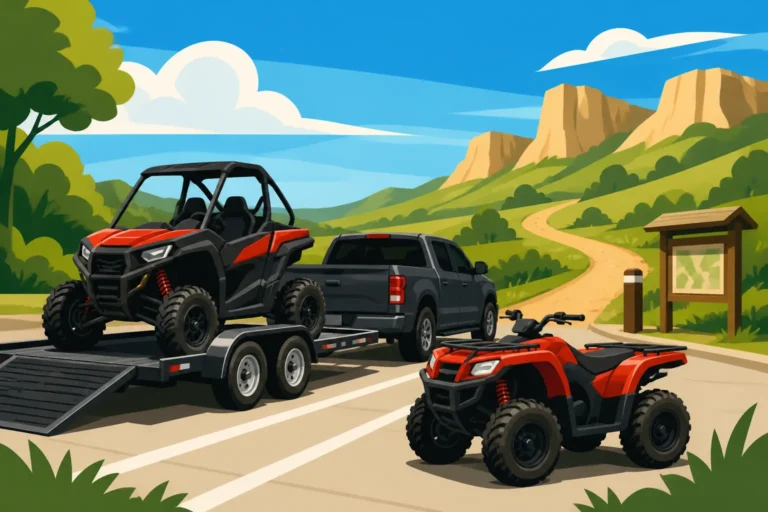
Inspect the trailer and secure every machine
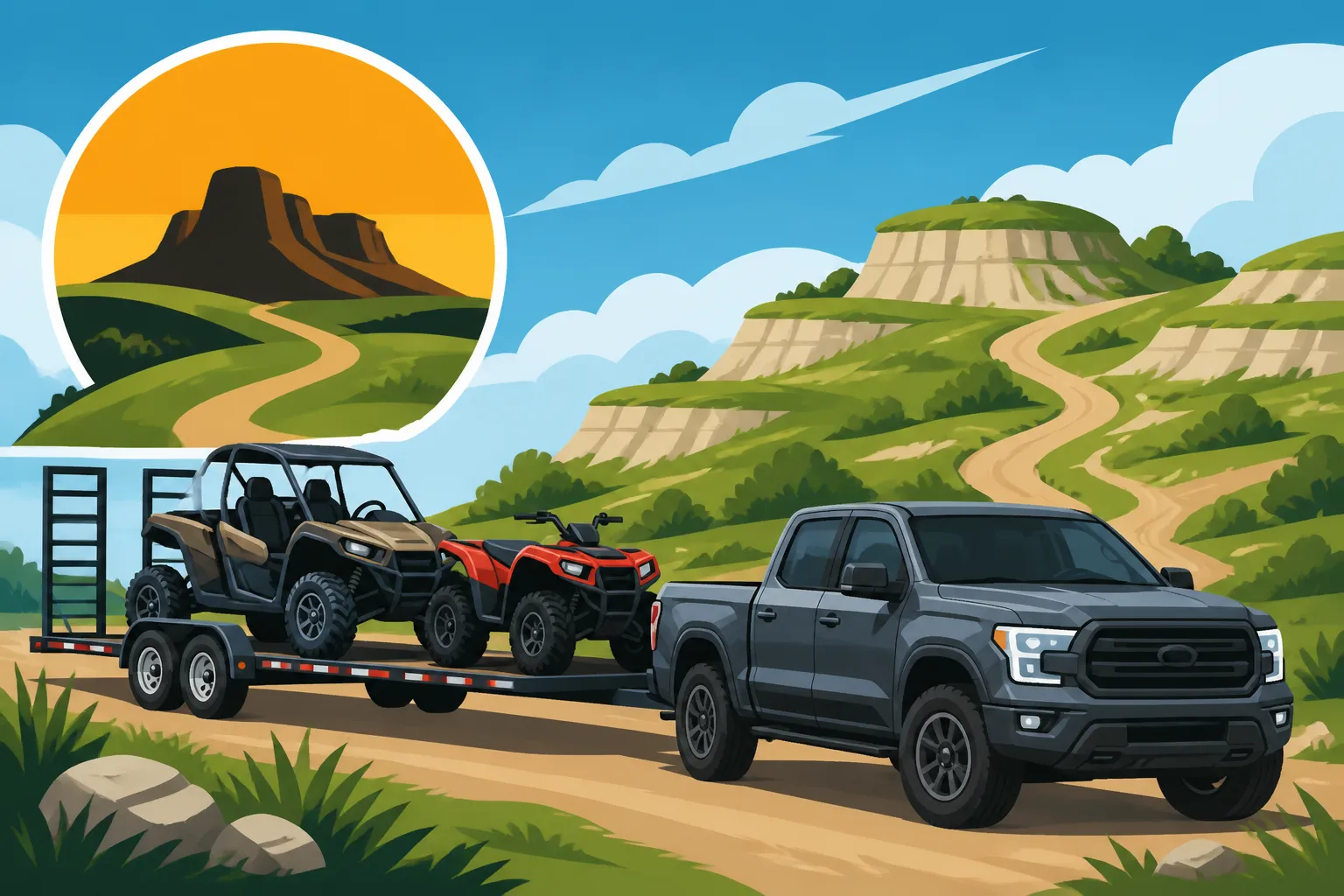
A machine that feels firmly tied down in the driveway can shift after miles of vibration. Before loading, check the trailer tires, lights, hitch connection, safety chains, and loading ramps. Make sure the trailer’s load rating is appropriate for the combined weight of the machines and gear. If you’re unsure about the load, consult the trailer or vehicle documentation instead of guessing based on appearance.
Load machines so weight is distributed appropriately for the trailer and tow vehicle. Follow the trailer manufacturer’s guidance, and avoid placing all the heavy cargo at one end. Once each ATV or UTV is positioned, secure it using suitable tie-down points and straps in good condition. Compress the suspension as appropriate without over-tightening or attaching straps where they could damage plastic, brake lines, or other components.
After driving a short distance, stop somewhere safe and check the load. Look for loosened straps, shifted machines, rubbing tires, or lights that have stopped working. Check again at fuel stops. A quick recheck can feel like one more chore when you’re eager to arrive, but it’s much better than finding a problem after a strap has worked loose on the highway.
Pack for breakdowns, weather, and trail conditions
Bring basic tools that match your machines, along with a tire repair kit, a suitable air pump, spare tie-downs, gloves, and a first-aid kit. Add any machine-specific items you already know you may need, such as a belt, fuses, or a tow strap. Keep frequently needed items accessible instead of buried beneath coolers and riding bags.
Pack for the actual forecast and terrain, not just the weather at home. Open, dry riding can mean more sun and dust than people expect, while shaded forest sections may feel cooler. Carry drinking water for the drive and ride, and bring more than you think the group will use if the day is hot. What to Pack for a Hot Dry Riding Day has a useful checklist mindset for a day when shade and water stops may be limited.
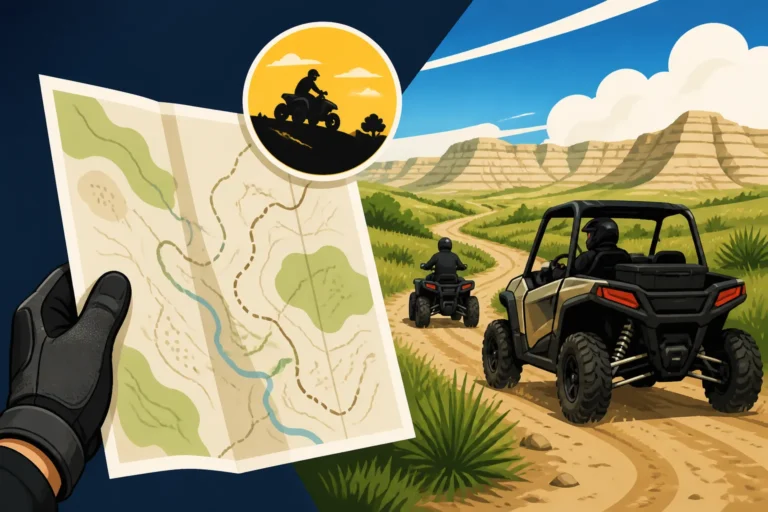
A mapping app such as onX Offroad can help you review your planned riding area and save map information for offline use before you leave reliable service. Check the map settings and coverage while you still have a connection, and don’t assume a digital track automatically means a route is open to motorized riding. Keep a paper map or another offline reference as a backup; Why You Still Carry a Paper Trail Map explains why a dead phone battery shouldn’t leave your group guessing.
| Before departure | What to check | Why it matters |
|---|---|---|
| Tow vehicle and trailer | Tires, lights, hitch, chains, load capacity | Helps catch problems before the highway |
| Machines | Fluids, brakes, tires, fuel, basic controls | Reduces the chance of an avoidable trailhead repair |
| Tie-downs | Strap condition, attachment points, tension | Helps prevent shifting during the haul |
| Riding plan | Current access, closures, allowed machine types | Avoids arriving with an unusable plan |
| Navigation | Offline maps, paper backup, saved destination | Provides options if service drops |
| Group supplies | Water, first aid, tools, food, weather gear | Makes delays and changing conditions easier to handle |
Arrive, stage, and unload without rushing
Know where to park and what fees may apply
Don’t assume every Bessey trailhead has identical parking arrangements. Confirm where you’re supposed to park and whether a fee applies to your chosen access point. Which Bessey District Trailheads Charge You to Park and Where to Pay the Fee at Bessey Recreation Complex are useful starting points, but check current instructions before your trip because payment procedures and access details can change.
When you arrive, take a moment to read posted signs before unloading. Look for directions about parking, trail access, fees, and closed areas. If the lot is busy, don’t block the entrance, another trailer, or the space someone needs to maneuver. A few minutes of patience can prevent a tense exchange and keep the staging area usable for everyone.
If you’re traveling with a group, agree on one staging plan before people start backing in. Have one person guide the tow vehicle while another watches the trailer’s clearance, but make sure the driver can see and hear the spotter. Keep children and bystanders away from the path of a moving vehicle. For more on considerate unloading, see How to Unload and Stage Without Blocking Anyone.
Do a final machine check before the first ride
After unloading, look over each machine before starting the ride. Check that tie-downs are removed, tires look sound, and nothing has shifted or been damaged during transport. Confirm that everyone has the riding gear they need, and agree on where the group will meet if riders become separated. A short conversation at the trailer is much easier than trying to organize people after the group has split up.
Give your group a realistic plan for the day. Set a turnaround time, identify a regrouping point, and make sure everyone understands which trails or areas are part of the plan. Keep navigation available offline, but stay alert to signs and on-the-ground instructions. If you use onX Offroad to follow your planned route, compare it with the area’s current information and stop to reassess if the route appears closed or unclear.
Forest riding can mean sharing roads or nearby areas with other users and, in some places, livestock. Slow down when visibility is limited, give other users room, and leave gates as you found them if you encounter them on an authorized route. Sharing a Forest Road With Cattle offers a practical reminder that riding responsibly includes paying attention to what—and who—may be ahead.
Make the trip easier on the way home
Reset the trailer and machines before towing back
At the end of the ride, take time to clean and inspect each machine before loading. Remove loose gear, check for damage, and look for mud or debris that could shift during the drive. If the area is dusty or muddy, avoid spreading debris into the tow vehicle or trailer where it can make straps harder to inspect and secure.
Load with the same care you used at home. Check that ramps are stowed, machines are secured, and loose items are tied down or placed in the tow vehicle. Walk around the full rig before leaving the parking area. Then stop after the first stretch of driving to recheck the straps and trailer. This is particularly worthwhile after a bumpy access road or a long day when everyone is tired and ready to head home.
Keep a simple list of anything that needs attention later, such as a tire losing air or a strap that should be replaced. It’s easy to forget those details once the machines are back in the shed. Handling them before the next trip makes the next haul safer and less stressful.
Leave room for the unexpected
The best long-haul plans aren’t packed so tightly that one delay ruins the day. Leave room for a slow fuel stop, a weather change, a closed access point, or an extra break. If the forecast or trail conditions make the original plan unsuitable, be willing to adjust rather than trying to force the trip to match your schedule.
For your next visit, keep a short record of what worked: where you parked, which supplies you used, how long the drive took, and what you would pack differently. Don’t rely on memory alone. A small trip checklist can make a big difference when you’re loading after a busy week and trying to remember helmets, tools, straps, water, and the one item everyone assumes someone else packed.
A long trailer haul takes effort, but careful planning makes the drive and the first hour at Bessey much smoother. Confirm access, secure the load, prepare for limited connectivity, and give yourself enough time to unload safely. That way, your group can spend less of the day troubleshooting and more of it focused on a responsible ride near Halsey.
Disclaimer
This article is for general informational purposes only and does not constitute professional advice. Laws, prices and regulations vary by location and change over time. Consult a qualified professional for guidance on your specific situation.