What to Expect at the Hill Climb Open Area
The Hill Climb Open Area at Bessey can look inviting from the staging area, but loose ground, steep grades, and changing trail conditions can make a first run feel very different from watching someone else ride it. This guide explains what to expect, how to prepare your machine and group, and how to make sensible choices once you arrive.
What the Hill Climb Open Area Is Like
Expect open riding with uneven, changing terrain
The Hill Climb Open Area is part of the Bessey Recreation Complex near Halsey, within Nebraska’s Bessey Ranger District. It offers a different kind of ride from a marked forest trail: rather than following one narrow route from start to finish, riders use a designated open area where the terrain itself shapes the experience.
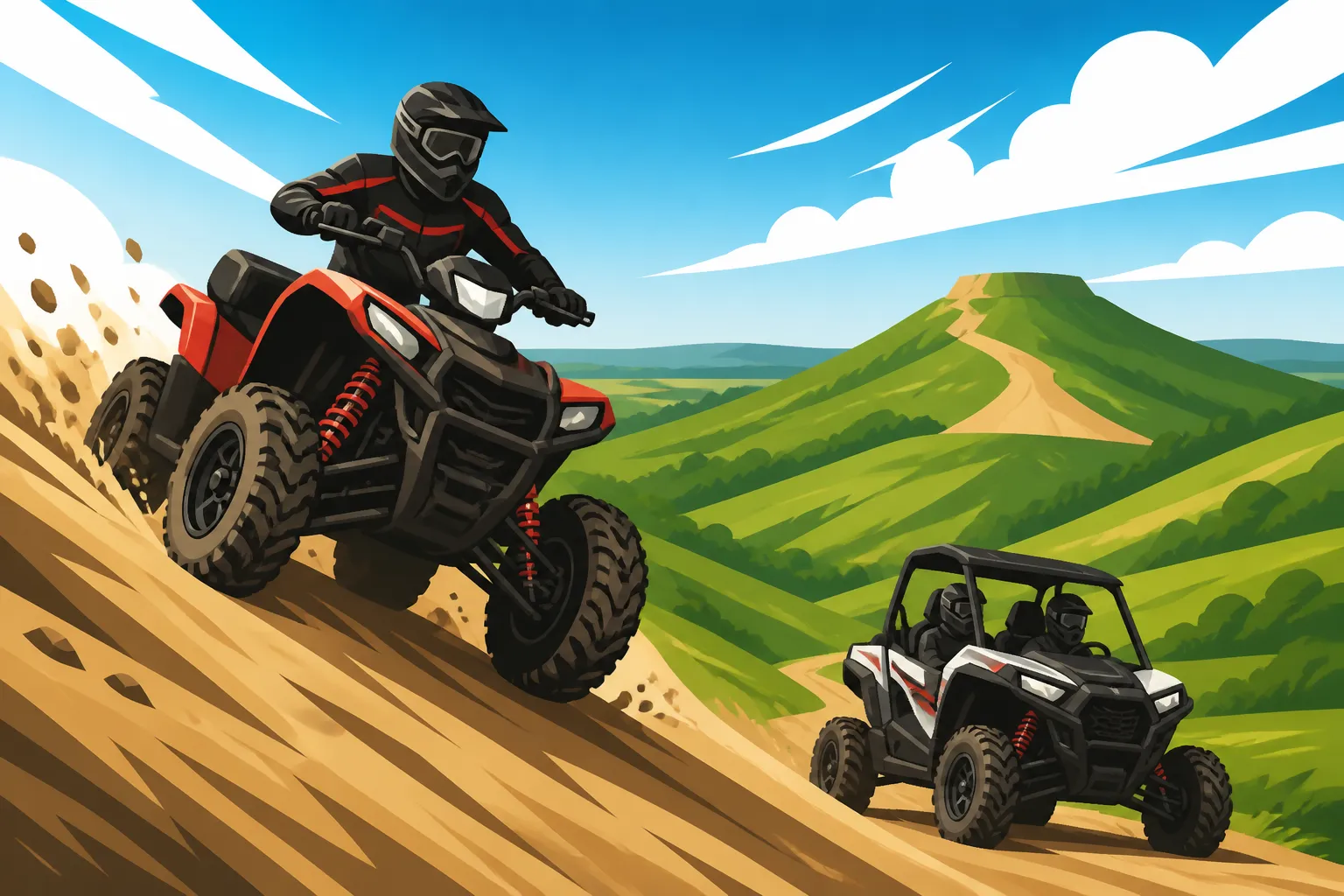
“Hill climb” may bring to mind one smooth, obvious slope. In practice, the ground can vary from one section to another. A climb may include loose soil, ruts, uneven approaches, or patches that have been disturbed by previous riders. Conditions can also change after rain, wind, or a busy riding day. A line that looked straightforward from the bottom might feel much steeper once you are on it.
That variety is part of the appeal, but it is also why a slow first look is worthwhile. If you are new to the area, take time to watch how the ground changes before choosing a route. You do not have to climb every slope, and turning around is a normal decision—not a failure. For a broader picture of the riding opportunities in the district, see Bessey's 36 Miles in Nebraska.
It is not the same experience as a marked trail loop
A marked trail generally gives you a defined route and a clearer sense of where the ride is going. An open area offers more freedom to choose your line, but that freedom comes with more responsibility. You need to pay attention to who is approaching, where other riders are climbing or descending, and whether a line has a clear exit.
If you are riding with someone who prefers a steady trail loop, the hill climb area may feel more exposed or demanding than expected. It can help to plan a mixed day: use the open area for a measured practice session, then ride a more established route if conditions and your group’s comfort level make that a better fit. The Bessey's Dismal Area in Nebraska offers another part of the Bessey riding experience to research before you travel.
Do not assume that every visible track is an official route or that every slope is appropriate for every machine. Stay within the area designated for riding, follow posted restrictions, and avoid creating new tracks across vegetation or into closed ground. If signs, barriers, or current agency directions indicate a closure, treat them as the boundary—even if another tire track seems to continue beyond it.
Choosing a Line and Riding Within Your Limits
Look before you climb
Before making a climb, pause somewhere safe and look at the full route you intend to use. Check the approach, the slope, the surface, and the place where you would stop or turn around. Consider what happens if the machine loses traction partway up. If you cannot identify a safe way to stop, back out, or get help, choose a different line.
A common mistake is to focus on the steepest part and ignore the approach. A machine that reaches a hill at an awkward angle or with poor traction may be harder to control than one that takes a more gradual line. Avoid rushing into a climb just because another rider has gone first. Their machine, experience, tires, and chosen line may differ from yours.
If you are uncertain, watch from a safe location and give other riders room. Do not stand below a climbing machine or in its likely path if it slides or turns around. Riders at the top should also be alert for someone coming up behind them; a blind crest can leave little time to react. The goal is not to prove how steep a slope is. It is to make a controlled choice that leaves room to respond when the surface surprises you.
Match the terrain to your machine and experience
A sport quad, utility ATV, and side-by-side do not handle exactly alike. Their weight, wheelbase, tires, ground clearance, and turning characteristics affect how they feel on a slope. A passenger, cargo, or trailer can change handling too. Read your owner’s manual for guidance on operating your particular machine on hills, and do not attempt a line that is outside your experience simply because the vehicle has four-wheel drive or a powerful engine.
Start with modest terrain and build confidence gradually. If you are a new rider, consider practicing basic control on flatter ground first: smooth throttle input, controlled braking, looking where you want to travel, and stopping without abrupt movements. Riders who are comfortable on trails may still need time to adjust to the open area’s steeper or looser sections.
The Nebraska Trail Difficulty Ratings can help you think about how to match a ride with your group, but a rating or description cannot account for every day’s conditions. A surface can become more difficult after weather or repeated traffic. If your group includes children, newer riders, or machines with different capabilities, agree in advance that anyone can opt out of a climb without being pressured. A good group ride gives people room to choose a safer route.
| Before you choose a climb | What to check |
|---|---|
| Approach | Is the route clear, and can you enter without a sharp or unstable turn? |
| Surface | Is it loose, rutted, damp, or visibly disturbed? |
| Exit | Is there a safe place to stop, turn around, or continue beyond the crest? |
| Other riders | Can you see approaching machines, and will you avoid crossing their line? |
| Your machine | Are its tires, brakes, controls, and load suitable for the terrain? |
| Your comfort | Can you explain your plan and respond calmly if traction changes? |
Planning the Trip to Bessey
Check access, conditions, and fees before towing
A long drive with a trailer makes it especially frustrating to arrive and discover that access, conditions, or facilities differ from what you expected. Before leaving, check current information from the responsible land manager about open areas, closures, seasonal conditions, and any applicable parking or access requirements. Conditions can change, so old trip reports and saved maps are useful background—not a guarantee that a route is open today.
For parking details, review Nebraska Parking Fees at a Forest Lot, then confirm the applicable rules with the district before you go. Do not assume a fee, pass, or parking arrangement at one recreation site applies everywhere. The Bessey Ranger District Office Hours and Phone page can help you plan how to contact the district with a specific question, such as whether the area is open or whether a recent closure affects your intended ride.
Use mapping tools as planning aids, not as permission to ride. For example, onX Offroad can help you review mapped routes and orient yourself before a trip. Compare what you see in the app with official information and signs on the ground; map layers may not reflect a recent closure or a temporary change. onX Offroad can be useful for discussing a route with your group ahead of time, but the posted rules and land manager’s directions take priority.
Pack for a day that may take longer than planned
Bring the basics you would want for any remote or extended ride: water, food, weather-appropriate clothing, a first-aid kit, and the tools and recovery items suited to your machine and group. Check tire condition, controls, brakes, lights, and fuel before leaving home. If you use a trailer, check its tie-downs and make sure your machine is secured for the haul.
Cell coverage can be limited in forested and rural areas, so do not rely on a phone as your only way to navigate or contact help. Download information in advance where possible, let someone know where you plan to ride, and agree on a meeting point if the group gets separated. [Planning for No Cell Service on a Forest Ride] has more ideas for preparing when your phone may not be dependable. A paper map can also be helpful if a device battery runs down or an app cannot load.
onX Offroad can help you prepare by letting you examine mapped riding areas before you leave, but save what you need ahead of time and carry a backup plan. Even with a downloaded map, watch for signs, barriers, and changes on the ground. A map is a planning tool; it does not replace sound judgment or current instructions from the land manager.
Riding Considerately and Finishing the Day Safely
Give other riders room and protect the riding area
Open terrain can bring riders together in a relatively small space, so courteous habits matter. Wait until a climbing rider has completed the line before crossing it or starting nearby. Avoid stopping where you block an approach or an exit. If you need to talk, take a break in a safe place away from active riding lines.
Keep to designated riding ground. Cutting a new route around a rut or taking a shortcut beyond the open area can damage vegetation and create tracks that other visitors may mistake for approved routes. Follow posted speed and access rules, and do not assume that an unmarked patch of land is available for riding. Nebraska Trail Etiquette Locals Expect offers useful reminders for sharing riding areas respectfully.
If you are visiting another part of Bessey or planning a longer weekend, research that location separately. Rules and conditions can vary between riding areas, and a route that is appropriate for one machine or site may not be suitable at another. The Nebraska Trail Conditions Before You Tow guide can help you build a pre-trip check into your plans.
Make the ride enjoyable without turning every climb into a test
It is easy to get caught up in the challenge of making it to the top, particularly when other riders are watching or friends are encouraging you. Give yourself permission to stop. If the slope feels wrong, the surface is loose, or you are no longer confident in your plan, backing away is a smart outcome. You can still enjoy the area without tackling the most demanding line.
For a first visit, consider treating the hill climb open area as a place to observe and learn before pushing your limits. Ride with someone whose judgment you trust, agree on simple communication signals, and talk through what the group will do if a machine gets stuck or someone needs help. Keep bystanders well away from active climbs and never try to recover a vehicle from an unsafe position.
The best day is not necessarily the one with the biggest climb. It may be the day your group rides within its abilities, avoids a preventable breakdown, and gets home with everyone comfortable enough to come back. If you are deciding whether the area suits your experience, compare it with Best Nebraska ATV Trails for Beginners and review [Nebraska Trail Map Downloads] as part of your planning. Use maps to prepare, verify the details before travel, and let the conditions you find on arrival guide your choices.
Disclaimer
This article is for general informational purposes only and does not constitute professional advice. Laws, prices and regulations vary by location and change over time. Consult a qualified professional for guidance on your specific situation.