Bessey’s 36 Miles of Forest Trail at Halsey
Bessey’s trail system near Halsey offers a chance to ride through Nebraska National Forest, but the distance can be misleading if you arrive without checking access, machine rules, weather, and staging arrangements. This guide explains what to expect from the 36 miles of forest trail, how to plan your trip, and what to confirm before you tow your ATV or UTV.
What to know about Bessey’s 36 miles of trail
Where the trails are and what the mileage means
Bessey’s riding area is near Halsey in central Nebraska, within the Nebraska National Forest. The setting is very different from a rocky mountain trail system: expect a landscape shaped by Sandhills, forest plantings, open areas, and shifting sandy ground. The familiar “36 miles” figure describes the trail system, but it should not be read as a promise that every mile will be open, suitable for every machine, or connected in a simple loop.
Before leaving home, check the current information for the Bessey Recreation Complex and the trailheads you plan to use. Routes, access points, and conditions can affect how much riding you can comfortably fit into a day. Start with [Bessey OHV Trails at Halsey in Nebraska] and [Nebraska Trail Conditions Before You Tow] to build a more realistic picture of the trip.
It also helps to separate the trail system from the area’s other riding features. Riders sometimes plan a whole day around forest trails and then discover that an open riding area or hill-climb feature has different access or use details. If those areas are part of your plan, look into [Bessey's Hill Climb Area in Nebraska] and [Riding the Dismal Open Area at Bessey] before you arrive.
How to think about the riding experience
A mileage figure is useful for comparing destinations, but it does not tell you how a ride will feel. Sandy terrain can demand more effort from both the machine and rider than a hard-packed route, particularly if you are unfamiliar with the area. A route that looks short on a map may take longer when you stop to regroup, check junctions, or adjust your pace for changing ground.
Plan around the least experienced rider in your group, not the most confident one. A family group with a new rider may prefer a cautious first outing, frequent check-ins, and a turnaround point everyone understands. A group of experienced riders may cover ground more quickly, but should still agree on where to regroup and what to do if someone misses a turn.
| Planning question | Why it matters | What to do before you go |
|---|---|---|
| Is the route open? | Access and conditions can change. | Check current trail information close to departure. |
| Is the route appropriate for your machine? | Width, terrain, and posted rules can differ by area. | Confirm allowed vehicle types and any restrictions. |
| How much daylight will you have? | Stops and navigation can make a ride take longer than expected. | Set a conservative turnaround time. |
| Will your group have reliable navigation? | Junctions and weak cell service can complicate regrouping. | Save maps and agree on a meeting point. |
| Where will you unload and park? | Crowded or poorly planned staging can block other visitors. | Identify the designated staging area before arrival. |
For a closer look at trail ratings and how to match them to your group, see [Nebraska Trail Difficulty Ratings]. Ratings are only one planning tool; your comfort with sand, your machine’s setup, and the day’s conditions all matter.
Plan the trip before you tow
Check access, conditions, and vehicle suitability
A good Bessey trip starts with a few checks that are easy to skip when everyone is excited to get riding. Confirm that your chosen riding area is open, that your ATV or UTV is allowed on the intended routes, and that your planned route makes sense for the riders coming along. Do not assume that a trail shown in an app, older map, or online discussion is open today.
Machine fit matters, especially for UTV owners. A route that works for a quad may not be suitable for a wider side-by-side. Check any posted restrictions and use official local information when there is a question about access. If you use onX Offroad or another mapping app to preview route options, treat the map as a planning aid rather than confirmation that a route is open or approved for your vehicle.
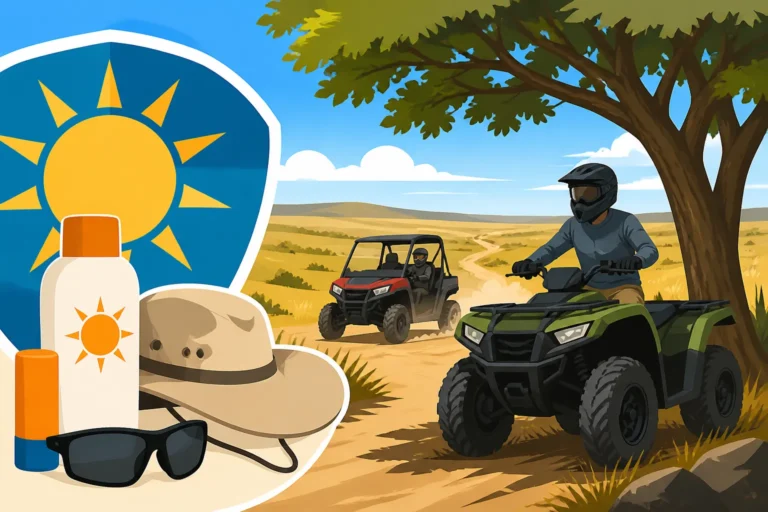
Weather deserves its own check. Rain, wind, heat, and dry conditions can affect comfort and ground conditions, while a forecast can change between the time you plan and the day you ride. Pack for the conditions you may encounter, not just the weather at your house. Bring water, basic tools, and clothing that can handle dust and temperature changes.
Plan the haul, parking, and first hour
The trip can feel rushed if you arrive without a plan for the trailer. Before setting out, confirm where you can park and unload, and make sure your trailer, tie-downs, and machine are ready for a bumpy drive. If you are organizing a longer drive from Omaha, Lincoln, or farther away, [Planning a Long Trailer Haul to the Bessey Trails] can help you think through the logistics before departure.
Once you reach the area, use the designated staging arrangements and avoid blocking access lanes, other vehicles, or trail entrances. Unload in a way that leaves room for other visitors to maneuver. A busy trailhead is not the place to spread gear across the road while deciding who rides with whom. Review [How to Unload and Stage Without Blocking Anyone] if your group is bringing multiple machines or trailers.
Build a little slack into the first hour. Find the trailhead, sort out helmets and gear, check the map, and make sure everyone understands the first route segment before starting. A calm start is especially helpful when riders are unfamiliar with the area or when children are in the group.
Check fees and bring the right information
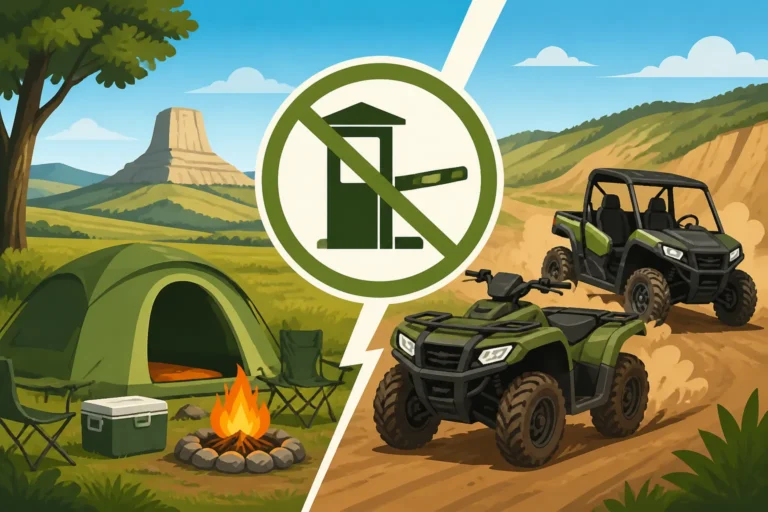
Do not assume that parking, trail access, and other recreation-area requirements are all the same thing. Find out where any required fee is handled and what it covers before you arrive. [Where to Pay the Fee at Bessey Recreation Complex] and [What the Bessey Parking Fee Covers] are useful planning reads, but confirm current details with the managing office before the trip.
Keep essential information accessible. That may include your route plan, contact details for your group, and any relevant permits or payment confirmation. A phone is useful, but relying on it as your only source of directions can be frustrating if coverage drops or the battery gets low. If you are using onX Offroad, download or save the map information you intend to rely on while you still have a dependable connection.
Ride with a practical navigation and safety plan
Prepare for limited cell service
Cell coverage can be inconsistent in outdoor areas, so plan as if you may not be able to call or load a map at every turn. Agree on a regrouping point before leaving the staging area. If riders become separated, a clear plan is more useful than a vague instruction to “meet back at the truck.”
A simple group procedure can prevent a minor navigation mistake from becoming a long search. Decide who rides at the front and who stays at the back. If the lead rider reaches a junction, they should wait until the group is together before choosing a direction. If someone has a mechanical problem, the group should know whether one person stays with them while another returns for help.
Use more than one navigation method. A saved digital map can be helpful, and onX Offroad may be useful for reviewing a planned route before leaving. Carry a paper map or written notes as a backup, and learn how to use them before you need them. [Planning for No Cell Service on a Forest Ride] and [Why You Still Carry a Paper Trail Map] cover practical ways to prepare for a ride when your phone may not be dependable.
Share narrow trails and stay within your ability
On a narrow two-way route, slow down before blind corners and keep enough room to respond if another rider approaches. Do not assume the trail is one-way unless signs or official information say so. When you meet another group, communicate clearly and give one another room to pass safely. For more detail, read [Who Yields on a Narrow Two-Way Trail].
Keep your pace comfortable, especially in loose sand or unfamiliar sections. Sudden turns, hard acceleration, and late braking can make a machine harder to control. New riders often do better with short loops and frequent breaks than with an ambitious route they feel pressured to finish. If someone in the group is tired, overheated, or uneasy, adjust the plan rather than insisting on the original mileage.
Riders should also respect posted closures and stay on designated routes. Taking a shortcut around a muddy or difficult section can damage the area and may lead you somewhere you did not intend to go. The trail is part of a managed landscape, not an invitation to explore every open-looking patch.
Carry essentials and leave the area as you found it
Pack water for each rider, a basic first-aid kit, and tools suited to your machine. For a longer outing, bring a tire repair option, a way to contact your group, and a plan for a disabled machine. Keep food and small items secured so they do not bounce out on rough ground. A compact kit that is easy to reach is more useful than a large collection of gear buried under luggage.
Before starting, make sure every rider knows the route plan, expected return time, and what to do if the group separates. For younger or inexperienced riders, explain the plan in plain language and check that they know who to follow. These small conversations can prevent confusion once engines are running and riders are spread out.
At the end of the ride, take all trash with you and check the machines before loading. Look for loose straps, damaged tires, or sand and debris that need attention before the drive home. A careful pack-up protects your equipment and helps keep the trailhead usable for the next group.
A simple Bessey trip checklist
Use this checklist the day before departure, then run through it again at the trailhead:
- Confirm current access, closures, and vehicle restrictions for the area you plan to ride.
- Check the forecast and adjust clothing, water, and ride length accordingly.
- Identify your staging and parking plan, including where to unload.
- Save your route information and carry a backup map or written plan.
- Set a turnaround time and choose a regrouping point.
- Tell every rider who leads, who follows at the back, and what to do if the group separates.
- Bring water, basic first aid, machine-appropriate tools, and secure tie-downs.
- Leave the trailhead and riding area clean, and stay on routes that are open to your machine.
Bessey’s 36 miles give riders plenty to consider, but a satisfying day depends less on trying to cover every mile than on choosing an appropriate route and being ready for the conditions. Check access, plan for navigation gaps, and keep your group’s pace realistic. That preparation makes it easier to enjoy the forest trails without turning a simple outing into a stressful one.
Disclaimer
This article is for general informational purposes only and does not constitute professional advice. Laws, prices and regulations vary by location and change over time. Consult a qualified professional for guidance on your specific situation.