Boots That Keep Sand Out on a Long Ride
A long ride through Nebraska sand can turn a comfortable day into an irritating one fast: grit works down into your socks, rubs your ankles raw, and makes every stop feel like a chance to empty your boots. The right footwear keeps sand out without trapping too much heat, and a few simple adjustments can make sandy trail days much more comfortable.
Why sand gets into riding boots
The usual entry points
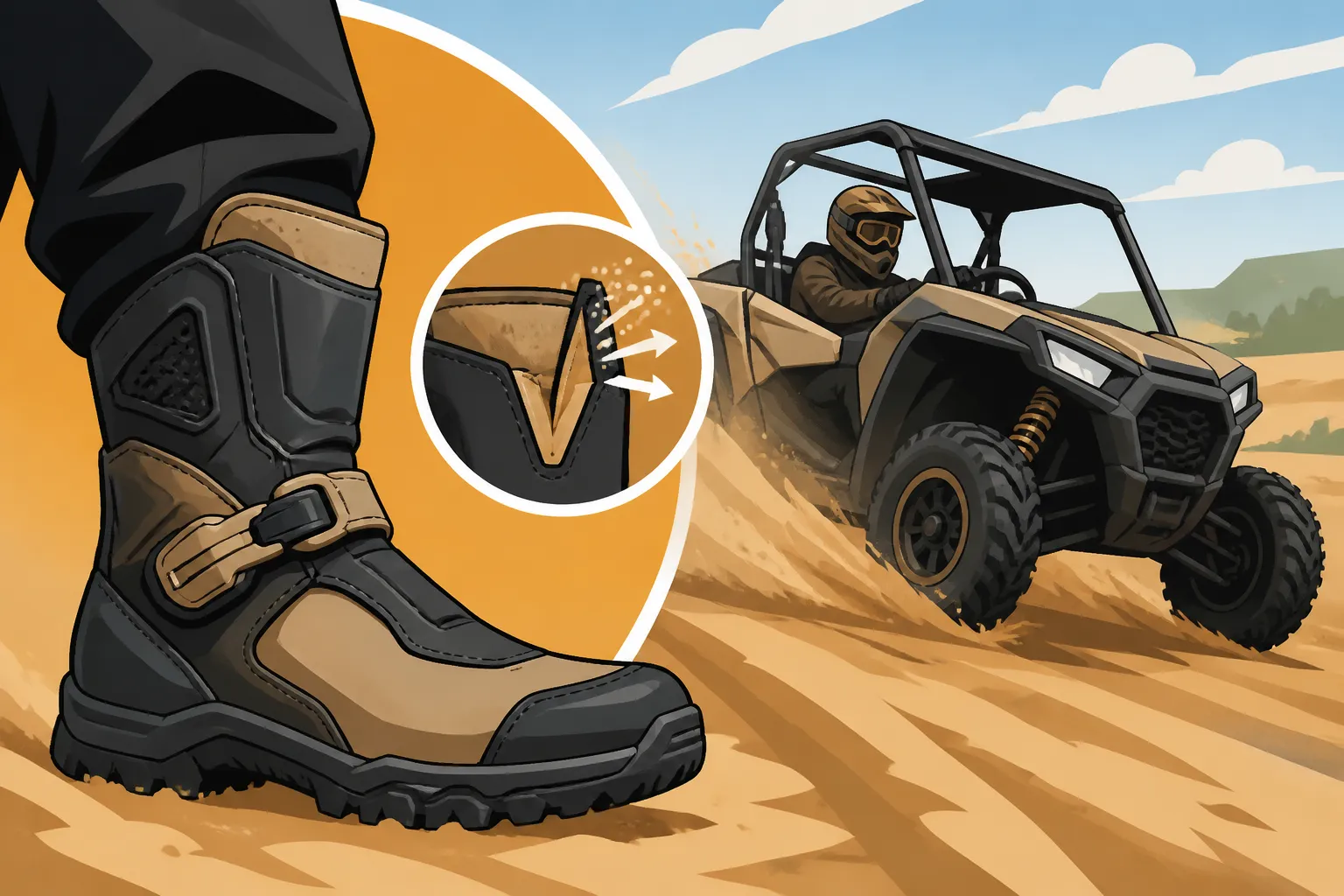
Sand rarely comes in through just one spot. It can sift through a loose boot opening when you’re seated, standing, or shifting your weight. It can also sneak in around the tongue, through gaps between the boot and your pants, or over the top when you put a foot down in loose terrain. Even a boot that feels snug at home can leave a gap once you bend your ankle into a riding position.
The problem is especially noticeable when sand is dry and fine. It settles inside the boot and moves around with every step, creating friction against your skin. A little grit may not seem like much at the trailhead, but after hours of riding, repeated rubbing can leave your ankles sore or your socks bunched up.
The shape of the boot opening matters as much as the material. A wide, low opening is easy to get into, but it also gives sand a straightforward route inside. A taller shaft that closes securely around your lower leg can help, though it still needs to work comfortably with your pants and riding posture.
Nebraska riding conditions can change what feels comfortable
A sandy trail can be warm and dry, but your feet may also be dealing with dust, uneven ground, stops, and long stretches in the sun. A heavily insulated or completely sealed boot might keep grit out, yet feel unpleasant once your feet start sweating. On the other hand, a low-cut shoe may breathe well but leave a big opening for sand.
Before choosing footwear for a particular outing, consider the terrain and the day’s conditions. Nebraska trail options vary, and conditions can change with weather and use. Check Nebraska Trail Conditions Before You Tow and consider the terrain notes in Nebraska Trails With Sand before packing. If you’re planning a sandy route, Where You Can Legally Ride Nebraska Sand can help you think through where the ride is allowed as well as what equipment to bring.
A mapping tool such as onX Offroad can also help you review a planned route and its surroundings before you leave. That context can make it easier to decide whether you’re packing for a short ride with frequent breaks or a longer stretch where you’ll want to keep your boots comfortable without taking them off.
What to look for in boots that keep sand out
A tall, close-fitting shaft
For keeping sand out, start with the opening at the top of the boot. A taller shaft gives you more material to overlap with your riding pants or gaiters. Look for a closure that can be adjusted securely without cutting into your calf. Depending on the boot design, that may mean buckles, straps, laces, or a combination.
The fit should be close enough to limit gaps, but not so tight that it restricts circulation or becomes uncomfortable when you bend your ankle. Try the boots with the socks and riding pants you expect to wear. Sit in a riding position, flex your ankles, and check whether the top of the boot still meets your pant leg. A gap that appears only when you crouch or lean forward can become a steady stream of grit on the trail.
If your pants ride up when you move, a tall boot alone may not solve the problem. A gaiter or a secure overlap between the pant cuff and boot can help close that gap. Pay attention to where the layers meet: a loose pant cuff that flaps around can funnel sand down toward the boot opening.
Protective structure without unnecessary bulk
An ATV boot needs to do more than keep sand out. It should feel stable on the footrests and protect your feet and ankles from the bumps and contact that come with off-road riding. A reinforced toe and supportive sides can help, while a sole with a secure grip is useful when you need to step off on loose ground.
More protection is not automatically more comfortable. Very stiff boots can feel awkward if you’re not used to them, especially during a long ride that includes walking around a staging area or campsite. Try moving around in them before the trip. Pay attention to pressure points at the toes, heel, and ankle, and make sure you can operate the machine’s controls comfortably.
If you’re comparing footwear, use the table below as a starting point rather than assuming one style works for every rider.
| Footwear choice | Sand control | Comfort considerations | Best fit for |
|---|---|---|---|
| Tall off-road boots | Strong when the shaft closes securely | Can feel stiff or warm; break them in before a long ride | Riders who want more coverage and structure |
| Mid-height riding boots | Moderate; depends on pant overlap and closure | Often easier to walk in, but may leave more room at the opening | Shorter rides or riders who prioritize mobility |
| Riding boots with gaiters | Strong when the gaiter seals the pant-to-boot gap | Adds a layer that can feel warm if poorly fitted | Riders who want extra protection from grit |
| Hiking boots | Varies; many have openings that are easy for sand to enter | May be comfortable for walking but may not offer the protection or support you want for riding | Casual use only when appropriate for the machine and conditions |
Breathability and socks matter too
A tight seal is useful, but it shouldn’t leave your feet damp and overheated. Look for a balance of protection and ventilation that suits the weather and your riding pace. A very breathable boot may admit more fine grit through its openings or panels, while a less breathable boot may feel uncomfortable during a hot day. Try to judge the whole setup, not just the boot material.
Socks are part of that setup. A comfortable, properly fitted riding sock can reduce rubbing and help manage moisture. Avoid socks that bunch at the ankle or create a thick fold under the boot edge. If you’re testing a new pair of boots, wear the socks you’ll actually use on the ride. A boot that fits well with a thin everyday sock may feel tight with a thicker riding sock.
For a hot, exposed ride, plan footwear alongside the rest of your comfort gear. Nebraska Riding in Summer Heat and What to Pack for a Hot Dry Riding Day offer useful reminders about managing a long day outdoors. If a route crosses open sand, it’s also worth considering how exposed stretches may affect your feet and your break schedule.
How to reduce sand getting inside during a ride
Set up the pant-to-boot overlap before you leave
Before loading up, pull your pants down over the boot shaft and check that the fabric covers the opening in your normal riding position. Then sit on the machine and move through the positions you use on the trail. If your pant leg slips up when you stand on the footrests or bend your knees, adjust it before the ride rather than waiting until grit starts getting in.
A gaiter can help close the gap between pants and boots, particularly if your pant cuffs are short or tend to move. It should fit securely and stay in place as you walk and ride. Avoid arrangements that create a loose flap or bunch of fabric around the ankle; those can rub, catch, or leave a new opening for sand.
You can also do a quick check after the first stretch of riding. If one boot is collecting more sand than the other, look for a difference in fit, pant position, or the way you hold your feet. The fix might be as simple as pulling a cuff down or tightening a closure slightly.
Choose the setup for the length of the ride
For a brief ride near a staging area, a comfortable boot with a well-covered opening may be enough. For a longer outing, a more secure shaft or gaiter can be worthwhile because you may not want to stop repeatedly to shake out sand. Think about how far you’ll be from your vehicle and how easy it will be to take a break.
Route planning helps here too. onX Offroad can be useful for reviewing the route you intend to ride and identifying where you might pause or turn back if conditions feel tougher than expected. Use it as one planning aid, alongside local trail information and signs. A route that looks manageable on a screen can still feel tiring when the ground is loose and the day is hot.
Before heading to a specific area, check the rules and practical details for the location rather than assuming all riding areas have the same access or conditions. For example, if you’re looking at Bessey’s Dismal Area in Nebraska, confirm the current information for the area and prepare for the terrain you expect to encounter.
Pack a small cleanup kit
Even a good boot-and-gaiter setup may not keep every grain out. A small brush, a spare pair of socks, and a clean bag for dusty gear can make a mid-ride stop more comfortable. If you do find sand inside, take a moment to remove it before it works against your skin for another hour.
At a safe stopping place, loosen the boot and tip out loose grit. Brush away sand around the sock and boot opening rather than rubbing it deeper into your skin. If your sock is damp, changing into a dry pair can reduce irritation. Don’t ignore a hot spot: a small rub can become painful if you keep riding without adjusting the fit.
When you get home, clean and dry your boots according to their materials and care instructions. Sand can collect around closures, seams, and the tread. Washing Sand Out of an ATV After a Ride focuses on the machine, but the same basic habit applies to your gear: remove abrasive grit before storing it, and let damp items dry fully.
Make a practical boot choice for your next sandy ride
Use a short fit test before committing to a long day
Try the boots indoors first, then walk and bend in them. Check for pressure at the toes, rubbing at the heel, and gaps at the shaft. Next, put on your riding pants and sit in a riding position. If possible, spend a little time using the boots on a shorter outing before relying on them for a long day.
A quick fit check can catch problems that are easy to miss when you’re standing still. Ask yourself: Can I move my ankles comfortably? Does the top stay covered when I bend? Can I fasten the boot without pinching my leg? Do the socks stay smooth? If any answer is no, make an adjustment or try a different combination before heading farther from your vehicle.
Keep the terrain in mind when planning your test. A rider preparing for a route with loose sand may need a closer-fitting shaft than someone mostly riding firm ground. For more general preparation, Nebraska Trail Difficulty Ratings can help you think about the kind of demands a route may place on your gear. onX Offroad may also help you review the route, but always use posted signs and the riding area’s own guidance to confirm access and conditions.
Let comfort guide the final decision
There isn’t one boot design that works perfectly for every foot, machine, and riding style. A tall boot that seals well may feel too stiff for one rider; another may prefer the extra coverage. If you ride in warm weather, ventilation and moisture management may matter more. If sand repeatedly enters around your pant cuff, a gaiter may solve the problem more effectively than buying a different boot.
The best setup is the one that stays comfortable after the first hour, not just the one that feels protective in a store. Give yourself time to break in new boots, check your fit with your actual riding clothes, and carry a backup pair of socks on longer outings. Those simple steps can turn a day of stopping to empty your boots into a much easier ride.
When choosing where to ride, consider the route, the expected conditions, and your own experience together. onX Offroad can support route preparation, while trail information and local rules help you make the final call. Once you’ve got a boot that fits securely and a plan that matches the day, you can spend less time dealing with grit and more time enjoying the ride.
Disclaimer
This article is for general informational purposes only and does not constitute professional advice. Laws, prices and regulations vary by location and change over time. Consult a qualified professional for guidance on your specific situation.