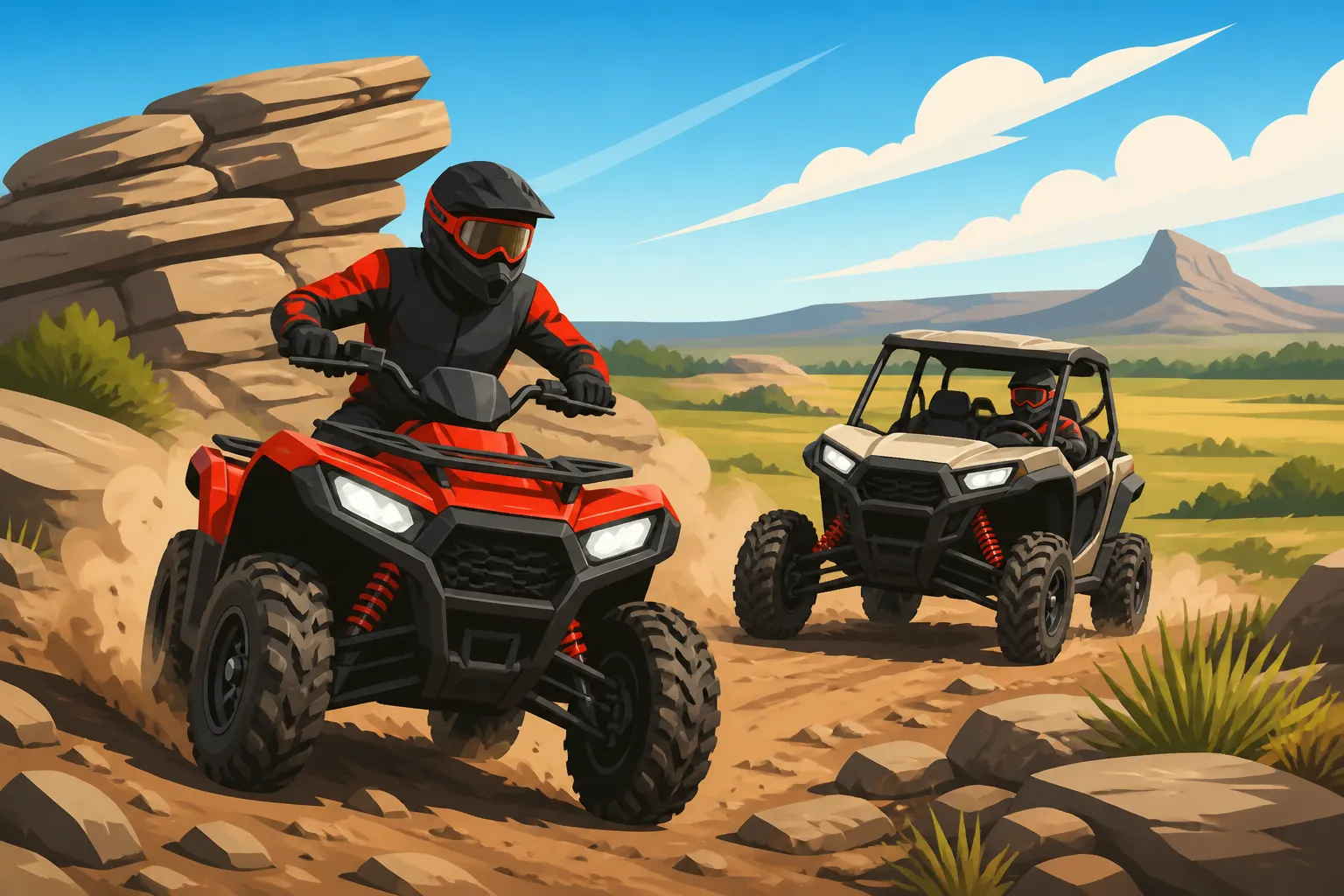
Flat Rock Riders OHV Park in Nebraska
Flat Rock Riders OHV Park is a compact place to ride in Nebraska, but a small riding area still takes planning. Knowing what kind of terrain to expect, whether your machine suits the facility, and what to confirm before hauling can save you a wasted trip. This guide covers the park’s layout, preparation, riding etiquette, family considerations, and practical ways to check trip details.
Getting to know Flat Rock Riders OHV Park
A compact destination with a focused riding experience
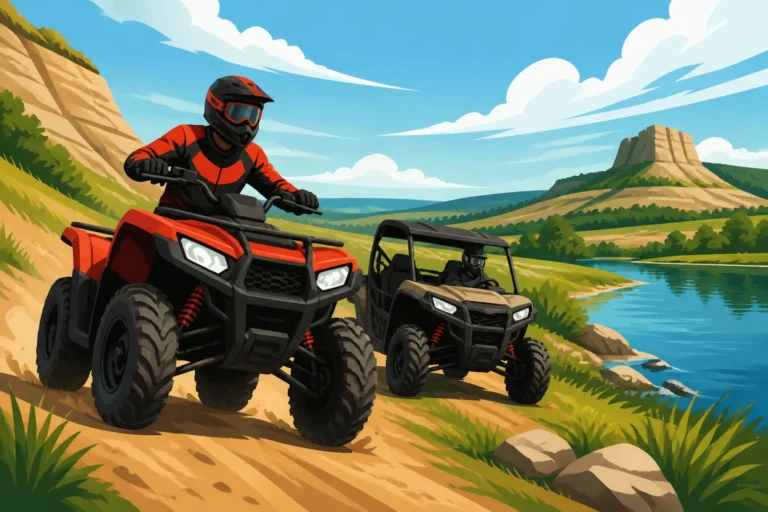
Flat Rock Riders OHV Park is known as a small Nebraska OHV riding area, with about 15 acres associated with its riding space. That scale is useful to keep in mind when you picture the outing: it is not a sprawling forest trail system where you can spend the day covering miles in one direction. It is better to approach it as a compact venue for focused riding, practice, and repeat laps.
A smaller footprint does not automatically mean a ride is dull. Riders can spend time working on handling, choosing lines, and getting comfortable with a machine without committing to a long backcountry route. That can be appealing if you are learning a new ATV, want a short local outing, or are introducing a younger rider to off-highway riding in a more contained setting.
The trade-off is that a compact park has less room for everyone to spread out. A group may encounter the same sections repeatedly, and riders moving at different speeds can meet one another more often than they would on a long trail network. Arriving with realistic expectations—and a willingness to take breaks, wait for clear space, and share the riding area—helps the day feel relaxed rather than crowded.
What the park’s layout suggests
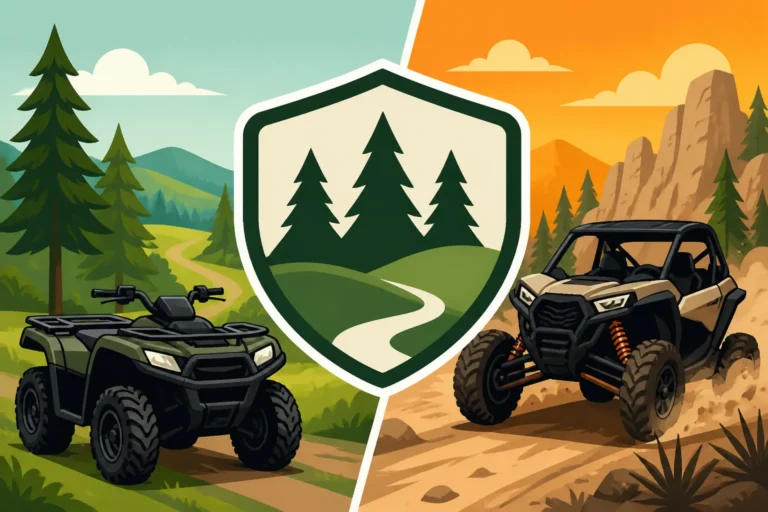
Flat Rock is associated with separate motocross and quad riding areas. That distinction matters because a motocross-oriented section may have a different character from an area intended for quad riding. A feature that looks manageable on one machine can feel very different on another, depending on the vehicle’s width, wheelbase, suspension, tires, and the rider’s experience.
Do not assume that every part of a small OHV facility is open to every type of machine. Before unloading, look for posted signs and ask the operator which sections are currently suitable for your vehicle. The park’s layout can change, and conditions, maintenance, or events may affect where riders are allowed to go. The overview of [Separate Motocross and Quad Trails] is a useful companion when you are thinking about how those riding areas differ.
For a more specific overview of the park’s scale, see [Flat Rock's 15 Acres in Nebraska] and [15 Acres With Two Tracks]. Those descriptions can help you picture the basic scope, but they should not replace checking the park’s present-day rules and access information before making the drive.
Where it fits into a Nebraska riding plan
Flat Rock is associated with the Sutherland area, making it worth considering for riders planning an outing in western Nebraska. If you are coming from farther away, think of the park as one part of a trip rather than assuming it provides a large, multi-day trail network on its own. Pairing a ride with nearby lodging, food, fuel, or another planned stop can make a longer haul feel more worthwhile.
Its compact size may suit a rider who wants a focused outing, but it may not match the expectations of someone looking for long-distance trail miles, extensive public-land riding, or a large variety of landscapes in one visit. Deciding what you want from the day before leaving home helps prevent disappointment. A few hours of practice and repeat laps can be a good day if that is what you planned for; it can feel limited if you expected an all-day cross-country route.
If you are comparing destinations across the state, use a broader guide such as [Nebraska ATV Trails: Where to Ride] to understand how Flat Rock fits alongside other Nebraska riding options. Different parks and public-land areas may have very different terrain, access rules, facilities, and machine restrictions, so avoid assuming that a rule at one location applies everywhere.
Choosing a machine and setting expectations
ATVs, side-by-sides, and dirt bikes
A machine’s basic size and purpose can shape how comfortable it feels at a compact OHV park. An ATV can be nimble in tighter riding areas, while a side-by-side is wider and may need more room to turn, pass, or approach features. A dirt bike has a different handling profile again. Before towing, confirm which vehicle types are permitted and which parts of the park are intended for them.
Side-by-side owners should be especially careful not to treat “OHV park” as a blanket promise that every route is wide enough. Trail width, turning space, and obstacles can all limit access even when a machine is allowed at the facility. Ask about vehicle width limits and any section-specific restrictions rather than relying on a photo or a general park description. For broader context, [Nebraska Trails That Allow Side-by-Sides] can help you think through the questions to ask at different riding destinations.
| Machine type | What to consider at a compact park | Before you unload |
|---|---|---|
| ATV | Maneuverability, rider experience, and whether the quad area suits your skill level | Confirm which sections are open to ATVs and whether any features are closed |
| Side-by-side | Width, turning room, passenger safety, and whether the intended route allows UTVs | Ask about vehicle dimensions, access restrictions, and suitable riding areas |
| Dirt bike | Speed differences, motocross features, protective equipment, and rider skill | Confirm which track or riding section is designated for dirt bikes |
| Youth machine | Size, throttle control, supervision, and the child’s ability to stop safely | Ask about youth access, age guidance, and any separate riding area |
No chart can make the choice for you. The right machine is the one that fits both the facility’s rules and the rider’s ability. A powerful vehicle can be harder to manage in a tight space, while an unfamiliar machine may feel demanding even on terrain that looks simple from the parking area.
Match the terrain to your experience
A rider who is comfortable on familiar flat ground may still need time to adjust to a track, berm, jump, or uneven surface. New features can change how a machine reacts under acceleration, braking, and cornering. If you have not ridden this style of terrain before, begin slowly, observe the layout, and build confidence rather than trying to keep pace with more experienced riders.
Experienced riders benefit from the same reset. A new park can have unfamiliar approaches, surface changes, or sight lines. Spend a few minutes looking over the riding area and asking about current conditions before taking a faster line. The fact that a feature is physically possible does not mean it is the right choice for your skill level, vehicle, or the conditions that day.
Use conservative judgment when riding with a mixed group. A confident adult on a sport quad, a beginner on a utility ATV, and a teen on a youth machine may not be ready for the same pace or feature. Agree on a meeting point and a simple plan before splitting into different sections. If riders are at different skill levels, take turns or use designated areas where they can ride without being pressured to follow one another.
Keep the park’s scale in mind
At a small facility, repeat laps are part of the experience. They give riders a chance to notice how a surface changes, practice a turn, or improve control in a particular section. They also mean that fatigue and concentration matter. Repeating a familiar loop can make a rider feel comfortable, but that is not a reason to stop paying attention to other people, changing conditions, or developing ruts.
Plan your visit around the kind of riding that a compact venue can offer. If your group mainly enjoys quick sessions, practice, or a close-to-home outing, a small park can be a good fit. If the group expects long routes and varied scenery, consider whether another destination may better fit that goal, or plan Flat Rock as one stop in a wider riding weekend.
A realistic plan also leaves room for downtime. On a short course, riders can get tired from concentrating, repeating turns, and handling uneven terrain even if they have not covered many miles. Build in water breaks, check the machines, and let newer riders stop before they feel overwhelmed. That approach is safer and often makes the next session more enjoyable.
Planning the trip before you tow
Confirm access, operating details, and current rules
Before leaving, confirm directly with the park or its operator that the facility is open to riders on your intended day. Ask about access arrangements, hours, reservations if applicable, events, closures, and any rules that affect your machine or group. These details can change, and a general online description may not reflect a temporary closure or a private event.
Ask specific questions rather than relying on a broad “Are you open?” A useful call or message might include: “Can I bring a side-by-side?” “Are the quad and motocross areas both open?” “Is there a separate process for minors?” and “Are there any vehicle or noise restrictions I should know about?” If you are bringing several machines, tell the operator how many and what types so you can get an answer that fits the group.
Check whether the park has its own trail map, posted rules, or instructions for parking and unloading. Do not assume that a downloaded map, a social post, or a prior visitor’s account is current. A planning tool such as onX Offroad can help you organize a route to the area and keep track of nearby roads, but it should not be treated as the authority on a park’s permission, boundaries, or live access status.
Check the route and the weather
A trip to a riding area starts well before the first lap. Look at your driving route, estimate how long the haul will take, and identify sensible fuel or rest stops. If you are towing from another part of Nebraska, a delay, road closure, or weather change can affect when you arrive and how much riding time remains. Leave enough margin that you are not rushing through unloading or safety checks.
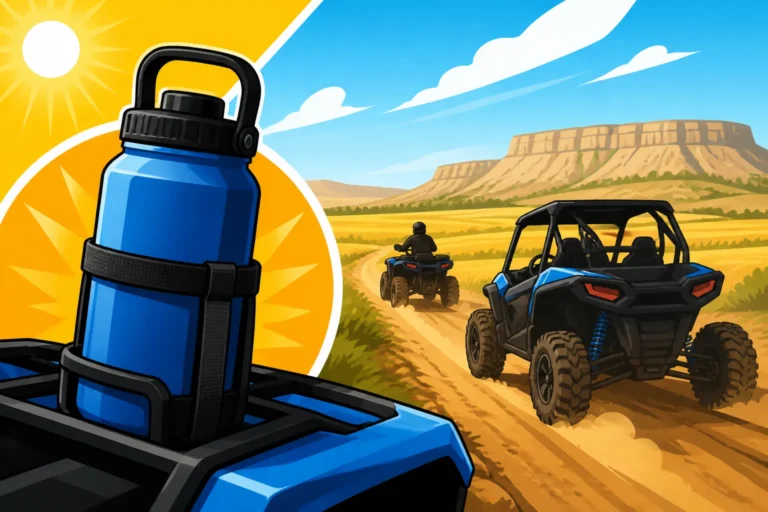
Weather deserves special attention because it can affect both the drive and the riding surface. Rain may make an area slick or lead the operator to close sections. Wind, heat, and dust can turn a pleasant ride into a tiring one, particularly for children or anyone wearing full protective gear. Check the forecast close to departure, and contact the park if conditions look questionable. [Nebraska Trail Conditions Before You Tow] offers additional trip-planning context.
The map can help you understand the drive, but it cannot tell you whether a particular feature is rideable today. onX Offroad may be useful for saving your route or keeping a record of where you planned to go, especially when your group is meeting at a location unfamiliar to some members. For the final decision about facility access, current closures, and the correct entrance, use information from the park itself.
Prepare the tow vehicle and trailer
Before loading, check that the trailer is suitable for the number and size of machines you are carrying. Confirm that ramps are secure, tie-down points are sound, and straps are in good condition. Distribute the load carefully and make sure machines cannot shift into one another during the drive. If you are not used to hauling, do a short walk-around after loading and again after your first few miles.
Bring basic equipment for unloading and minor problems: gloves, a tire gauge, a small tool kit, a flashlight, and a means of securing loose items. Keep fuel containers, helmets, and other gear arranged so they are easy to reach without climbing over loaded machines. A poorly organized trailer can turn a simple stop into a frustrating scramble, particularly when several riders are trying to get ready at once.
For a first visit, allow extra time to park and unload without blocking other visitors or access points. If you need more room to maneuver, ask where the operator wants trailers positioned. Guidance on [Nebraska Trailheads With Trailer Parking] can help you think through parking and staging questions to ask at riding destinations, but the park’s own directions should take precedence.
Riding safely and sharing a compact area
Start with a slow familiarization lap
When you arrive, take time to understand the site before riding. Read posted signs, identify the allowed areas, and locate a safe place to stop. If the park has an orientation or requires riders to check in, follow that process before starting the engine. Never assume a section is open just because another vehicle is using it; ask the operator if the status is unclear.
Begin at a controlled pace. A slow first lap lets you learn where the surface changes, where sight lines are limited, and where other riders may enter or exit. Keep enough space from the vehicle ahead that you can respond if it slows or stops unexpectedly. If you cannot see what is around the next rise or turn, do not accelerate as though the path is clear.
Use the first lap to decide whether the terrain fits your group. A beginner may be ready for one section but not another. A side-by-side may need more room than a quad, and a child may need a quieter area to practice basic control. It is perfectly reasonable to spend the first part of the visit observing, asking questions, and building a plan rather than immediately riding every feature.
Respect different speeds and skill levels
The most comfortable ride is one where people can share space without feeling chased or crowded. Faster riders should give slower riders room, avoid tailgating, and pass only where it is permitted and clearly safe. Slower riders should stay alert, avoid stopping in blind areas, and use a safe pull-off if they need to regroup or adjust equipment.
On a small track or riding area, people may encounter one another repeatedly. Establish simple group habits before riding: decide where to meet, make sure each rider knows how to stop safely, and agree that nobody needs to attempt a feature just because someone else did. A brief conversation at the trailer can prevent a lot of confusion once engines are running.
Follow the park’s posted direction of travel and any separation between riding areas. If the facility assigns motocross and quad sections separately, keep to the area designated for your vehicle. Avoid cutting across a track or crossing a riding line without permission. For broader guidance on sharing a riding area, see [Nebraska Trail Etiquette Locals Expect].
Protect people, machines, and the riding surface
Wear protective equipment appropriate to the machine and conditions. A properly fitted helmet is a basic part of riding preparation, and eye protection, gloves, sturdy footwear, and clothing that covers exposed skin can help reduce common injuries. A helmet that shifts, pinches, or obstructs vision is not doing its job well; adjust it before riding rather than hoping it will feel better once you start.
Before a session, check controls, brakes, tires, throttle return, lights if relevant, and any visible damage. Pay attention to leaks, loose fasteners, worn tires, or a control that feels different from usual. Stop if a machine behaves unexpectedly. Continuing to ride a vehicle that is difficult to control can put the rider and everyone nearby at risk.
Stay on the designated riding surface and follow the operator’s instructions about maintenance, closures, and prohibited areas. Avoid creating new lines around a feature or entering soft ground simply because it looks passable. A compact park can be especially vulnerable to concentrated wear. Ask before moving obstacles, digging, or making changes, and leave the area as you found it.
Bringing children and newer riders
Choose an appropriate first experience
A small riding venue may feel less intimidating than a long trail, but it still requires thoughtful supervision. Match a young rider’s machine to their size, experience, and ability to operate the controls. The rider should be able to sit comfortably, reach the controls, understand how to stop, and follow basic instructions before entering an active riding area.
Talk with the operator about the park’s age guidance, youth areas, supervision rules, and any waiver or check-in process. Requirements can vary by facility, so do not rely on another park’s rules or assume that an adult’s permission is enough. If you are exploring other family-oriented options, [Nebraska Kids' Riding Areas] can help you compare the questions worth asking.
A first visit does not have to involve a full session on the machine. A child may benefit from watching the riding area, practicing controls while stationary, or beginning in a quieter designated space if one is available. Give them time to become comfortable with engine noise, dust, and the movement of other vehicles. If they are frightened or tired, stopping early is a sensible decision, not a failed outing.
Make supervision practical, not just well-intended
An adult should be close enough to respond, not simply present somewhere in the parking area. Agree on clear boundaries before the child rides: where they may go, where they must stop, and what to do if they lose sight of the supervising adult. Keep instructions short and concrete, especially when engines and other activity make conversation difficult.
Avoid placing a child in the middle of a mixed-speed group if they are still learning. Give them room to practice without pressure from faster riders. If the park does not have a separate youth area or the operator advises against riding at that time, listen. A crowded or unfamiliar setting can be too demanding for a beginner even if the machine is appropriately sized.
Plan for basic needs as carefully as riding needs. Bring water, snacks, sunscreen, and clothing for the weather. Children can become tired or overheated before they recognize what is happening, and helmets and protective gear can make heat more noticeable. Take breaks in a safe area and check in with them throughout the outing rather than waiting for them to ask to stop.
Set expectations for the group
Before unloading, explain that everyone may not ride the same amount. Some family members may want to ride repeatedly, while others may prefer to watch or take breaks. A simple schedule—ride, pause, check gear, then decide whether to continue—can help keep the outing enjoyable and prevent a child from feeling pushed to keep up.
Discuss what to do if a machine stalls or a rider falls. Children should know not to walk into an active riding line to retrieve something and not to approach a stopped machine until an adult says it is safe. Make a meeting point obvious, and ensure each rider knows which adult to contact if the group becomes separated.
For families who ride at several venues, keep a short checklist of each park’s age policies, protective-equipment requirements, and supervision expectations. Rules at a private riding park may differ from public-land rules or from those at another private facility. Confirm Flat Rock’s requirements directly each time they matter rather than assuming last season’s details still apply.
Gear, maintenance, and a useful day plan
Pack for riding and for the trip home
A practical packing list should cover the ride, the weather, and small mechanical problems. Bring helmets and protective gear for every rider, water, snacks, sunscreen, and clothing suited to the forecast. A spare pair of gloves or a clean layer can make a dusty or sweaty day more comfortable, while a small first-aid kit is useful for minor scrapes.
Pack tools and supplies that fit your machines. A tire gauge, basic hand tools, a flashlight, a few spare fasteners, and a way to clean up small spills can be helpful. Bring only what you can secure safely; loose gear can shift in a trailer or become a hazard in the riding area. Keep important items accessible without unloading the entire trailer.
Think ahead to the drive home. Allow time to inspect machines, secure tie-downs, and check the trailer before leaving. If machines are muddy or dusty, bring materials to keep the trailer and tow vehicle manageable. Clean up after your group, remove trash, and make sure nothing is left behind in a parking or staging area.
Use maps as planning aids, not permission
A digital map can help you route to the general area, coordinate a meeting point, and save a record of the trip. onX Offroad can be part of that planning, particularly if your group wants to keep location information in one place. Still, a mapped line does not prove that a road is open to the public, that a parcel is accessible, or that an off-highway vehicle is allowed on a particular route.
Confirm the entrance and access instructions with the park. Use its current directions rather than following an old saved route that may lead to a service road, private driveway, or closed entrance. If cell service is uncertain along the drive, download or save the information you need ahead of time, and carry the address or written directions as a backup.
Do not treat a map layer as a substitute for posted signs or staff guidance. Boundaries can be difficult to interpret, and small facilities may have areas that are closed temporarily or reserved for specific uses. If a route or gate is unclear, stop and ask. A few minutes of confirmation is better than accidentally riding where you are not permitted.
Build a flexible schedule
A good day plan leaves space for delays and changing conditions. Set a departure time that gives you a comfortable arrival window, then allow time for check-in, unloading, equipment checks, and a familiarization lap. If you are bringing children or first-time riders, avoid packing the schedule so tightly that every delay feels stressful.
Plan breaks before anyone is exhausted. Dust, noise, heat, and concentration can make a session feel more demanding than the number of miles suggests. Use a pause to drink water, inspect tires and straps, and talk about whether the group wants to continue. A flexible plan makes it easier to stop when conditions or energy levels are not right.
If a planned visit cannot go ahead because of weather, access, or a closure, have a backup plan that does not depend on riding somewhere without permission. You might reschedule, make a non-riding stop nearby, or choose another facility after checking its rules and status. The point is to keep the trip safe and lawful rather than improvising access at the last minute.
Fees, access, and questions to ask
Verify costs and access arrangements directly
Do not budget around a fee remembered from an old visit or copied from an old post. Ask the park about any current riding, parking, admission, membership, or other charges that may apply to your group. Also ask how payment works and whether the facility requires advance arrangements. Costs and procedures can change, so checking directly is the practical way to avoid a surprise at arrival.
Clarify what any charge covers. A riding fee, parking charge, event fee, or membership arrangement may apply differently depending on how the venue is operating that day. If you are bringing several machines or riders, ask whether each person or vehicle is counted separately. The general guide [Nebraska Trail Fees Worth Checking] can help you remember that fees at Nebraska riding destinations are not necessarily structured the same way.
Access is separate from payment. Paying a fee does not automatically authorize entry to every section, bypass posted restrictions, or allow use of nearby roads or land. Stay within the permitted facility and follow instructions from the operator. If you plan to ride anywhere beyond the park, verify that area’s rules independently.
Ask about the details that affect your group
Before you make the drive, ask whether the park expects reservations or advance notice, whether any track or riding area is closed, and what vehicle types are currently accepted. If you are bringing a youth rider, ask about age guidance and supervision. If someone in your group needs additional time or space to mount, dismount, or prepare equipment, ask what arrangements are practical.
It is also worth asking about parking and unloading, noise expectations, protective gear, passenger rules, and what to do if a machine breaks down. These questions are not excessive; they help you show up ready to follow the venue’s expectations. If the operator cannot answer one immediately, ask where the most reliable update will be posted.
For a first visit, write down the address, contact information, entrance instructions, and any required check-in steps. Share those details with the people meeting you there. A clear plan is particularly helpful when the group is arriving in separate vehicles or when some riders have never visited the area.
Keep the park separate from nearby riding options
Flat Rock should be treated as its own destination, with its own rules and access arrangements. Do not assume that riding permission at the park extends onto nearby roads, private land, public land, or other recreation areas. Similarly, a rule from another Nebraska OHV location does not necessarily apply at Flat Rock.
If you are combining destinations, check every location individually. Confirm the machine types allowed, any permit or access requirement, and whether the area is open to riding on your intended day. Keep routes between destinations on roads where your tow vehicle and trailer are legally allowed, and do not ride an ATV or UTV from one site to another unless that route is expressly open to that use.
A well-planned Flat Rock visit is built around modest expectations, clear access information, suitable machines, and respectful riding. With those pieces in place, a compact venue can provide a satisfying opportunity to practice, ride with family, or spend time with a group without pretending it offers the same experience as a long trail network.
Disclaimer
This article is for general informational purposes only and does not constitute professional advice. Laws, prices and regulations vary by location and change over time. Consult a qualified professional for guidance on your specific situation.