Nebraska Cost of Ownership Year One
Buying an ATV or UTV is only the first part of the expense. In Nebraska, the first-year total can also include sales tax, title work, insurance, hauling, maintenance, riding access and storage. The challenge is that some costs depend on where you live and how you ride. A useful budget separates one-time purchase costs from recurring expenses and checks each before you commit.
Start with the full first-year cost
The advertised price is not the amount you should budget. Your first-year cost includes the machine, transaction expenses and the practical costs of getting it home, maintaining it and using it where riding is allowed. Some expenses are unavoidable; others depend on your plans.
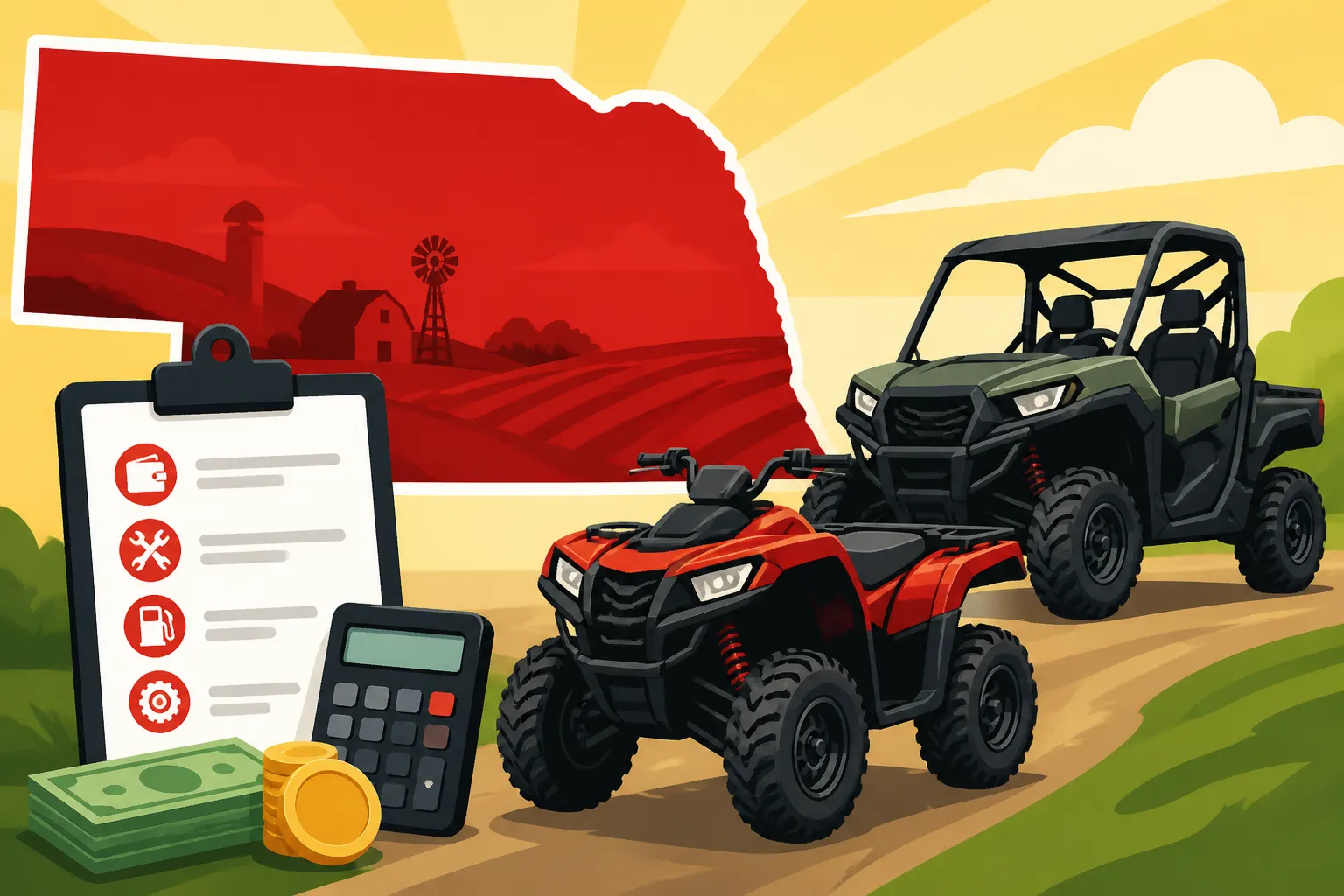
A simple way to organize the budget is to sort expenses into three groups:
| Cost group | Examples | What makes it vary |
|---|---|---|
| Buying and paperwork | Purchase price, sales tax, dealer charges, title work | New or used purchase, sale price, location and transaction details |
| Owning and operating | Insurance, fuel, maintenance, storage, repairs | Machine type, condition, use, coverage and storage arrangements |
| Getting to riding areas | Trailer, truck, parking or access permits, riding gear | Distance, vehicle capacity, location and riding frequency |
Create a first-year worksheet before you shop. Add a line for every likely expense, then mark each as known, needs a quote, or needs confirmation. This helps prevent a common budgeting mistake: treating uncertain costs as zero.
For instance, you might not yet know whether your current truck can safely tow a side-by-side, whether your insurer will cover the machine under an existing policy, or whether a particular riding area allows the vehicle you want. Those are not minor details. Each can change your actual cost or limit where you can ride.
It also helps to separate cash due at purchase from costs that arrive later. Sales tax and title expenses may be due during the titling process, while insurance, maintenance, fuel and storage can be spread across the year. If you finance, your loan payment is a cash-flow expense, but the purchase price and interest are different parts of the overall cost. Keep both visible in the worksheet rather than hiding the financing expense inside a single monthly figure.
A practical worksheet can use these lines:
- Machine price after any negotiated adjustment
- Dealer charges, if applicable
- Sales tax and any applicable local tax
- Title and paperwork costs
- Insurance
- Loan interest and related financing costs
- Trailer or other hauling changes
- Safety gear and basic supplies
- Fuel
- Routine maintenance and likely repairs
- Storage and security
- Riding-area permits, parking or local registration, when applicable
If you are comparing a quad with a side-by-side, use the same worksheet for both. A lower purchase price does not automatically mean lower ownership cost. A larger machine may need a different trailer, more storage space, more fuel or more expensive replacement parts. A smaller one may be less practical for passengers or work tasks, which could lead you to upgrade sooner.
For an overview of the purchase-side expenses, see Buying an ATV in Nebraska: Taxes and Fees. The key is to calculate the cost of the machine you will actually own and use—not just the number on the listing.
Purchase price, sales tax and dealer charges
Work out the tax before you sign
Nebraska buyers should include sales or use tax in the first-year budget. The state sales tax rate is 5.5%, with local sales tax potentially added based on the applicable location. Rates and tax treatment can change, so confirm the current details with the county treasurer or other official source handling your transaction.
For many buyers, the practical point is that tax is dealt with during titling rather than simply being assumed to have been settled at the dealership. Nebraska county treasurers collect tax at titling, and the amount may depend on where the owner lives and the details of the purchase. Do not assume that a dealer in another town or state has handled the Nebraska tax obligation. The process is explained in Nebraska Sales Tax Paid at Titling.
A private sale still needs a tax plan. Paying a seller directly does not mean the purchase is tax-free, and a handwritten receipt does not substitute for confirming how the county will calculate and collect any tax due. Before paying, agree on a clear sale price and keep documents that show the transaction details.
If you are trading in another machine, ask how the trade-in is reflected on the required tax paperwork. Do not assume that a verbal trade-in agreement will automatically reduce the taxable amount. It needs to be properly documented and itemized where required. Buyers considering a trade can review Nebraska Trade-In Credit on a Machine and confirm the current treatment with the office processing the title.
A rebate can affect the amount used in the tax calculation, but its treatment depends on how the transaction is structured and documented. Ask the dealer to show the rebate, trade-in and taxable amount clearly on the paperwork. Then check that the same figures appear on the documents you will use when titling the machine.
Out-of-state purchases deserve extra attention. A seller may collect tax under the rules of the sale location, but Nebraska may still have a tax obligation when you bring the machine home and apply for a Nebraska title. Ask the county treasurer what proof of prior payment is needed and whether any additional tax is due. For a private purchase across a state line, settle the paperwork questions before the handover, not after the seller has left.
Separate machine costs from dealer charges
A dealer quote may combine the machine price with freight, setup, documentation, accessories or other charges. Ask for an itemized, written out-the-door quote. “Out the door” should mean the complete amount the dealer expects you to pay at delivery, with each charge identified—not a vague estimate that leaves tax, paperwork or optional products to be added later.
Dealer charges are not the same as government title or tax charges. Ask which items are required to complete the sale, which are optional, and which are paid to a government office later. If the dealer offers to handle titling, ask what the service covers and what you will still need to pay or provide.
For a private seller, the paperwork may be simpler, but the buyer still needs to budget for titling, tax and any other required steps. Do not compare a dealer’s full quote with a private seller’s price as if the two figures cover the same things. Add likely paperwork and preparation expenses to the private-sale amount before deciding which is the better value.
Title, registration and access costs in Nebraska
A Nebraska ATV or UTV budget needs to distinguish a title from a registration, plate or trail permit. Nebraska titles these machines, but title paperwork does not automatically give a machine permission to ride everywhere or make it road legal. Nebraska does not have a general state ATV trail sticker or statewide registration system for ordinary off-highway riding. Local rules and access requirements can still apply.
Budget for title work
Include the title cost and any related paperwork charges in your purchase budget. The amount can depend on the transaction and applicable rules, so check with the county treasurer rather than relying on an old estimate from a listing, online discussion or previous purchase. Nebraska ATV Title Cost explains the title expense, while Nebraska Title Processing Time can help you plan around the paperwork timeline.
In Nebraska, county treasurers handle ATV titles. Requirements can differ depending on whether the machine is new, used, bought from a private seller, brought in from another state or missing documents. Ask the county office what to bring before making a trip. A sale document, existing title or manufacturer paperwork may be relevant, but the exact needs depend on the machine and transaction.
Set aside time as well as money. If paperwork is incomplete, a second trip or a delay can interfere with a planned ride, particularly if you are buying just before a trip or season. Make sure the seller completes the title transfer correctly and that the identifying number on the paperwork matches the machine.
Do not treat a title as a trail pass
A title establishes ownership. It does not by itself grant trail access. Riding locations can have their own requirements, closures, vehicle restrictions and fees. Some public riding areas may require a park permit for the tow vehicle or charge for parking, while a private riding park sets its own access rules. Check the requirements for the places you expect to ride before you build them into your annual routine.
For public recreation areas, include any relevant permit or parking expenses in your budget. The details vary by location and type of access. See Nebraska Park Permits in Your Budget and Nebraska Forest Parking in Your Budget for costs to check before a trip. These are access costs, not machine registration fees, and should be kept on a separate line in your worksheet.
Local road use is another separate issue. Some Nebraska cities may have ordinances that allow certain ATV or UTV use on local streets and may require local registration or impose additional conditions. Do not assume that a title, an out-of-state registration or a trail permit makes road use legal in your town. Confirm the current ordinance with the city before counting on a road route. [Nebraska City Registration in Your Budget] covers how a local requirement can affect the cost.
If you intend to ride only on private land, ask the landowner about permission, boundaries and any site-specific conditions. Private-land access can reduce some trip or facility expenses, but it does not erase ownership costs such as insurance, maintenance, safe storage or required title work.
Insurance and financing
Treat insurance as a use-dependent expense
Insurance cost depends on the machine, coverage, riders, location, use and insurer. Get a quote for the specific ATV or UTV you are considering rather than using a general estimate from another owner. Ask what the policy covers and what it excludes. Liability coverage, collision coverage, comprehensive protection and coverage for accessories are different things; a policy that addresses one risk may not cover another.
Nebraska requires liability insurance for certain ATV or UTV road use. If you plan to use public roads where that use is permitted, confirm the applicable requirements and coverage with your insurer and the relevant local authority. A machine used only off-road may have a different legal insurance situation, but it can still be exposed to theft, fire, rollover damage or injury claims. Nebraska ATV Insurance Costs is a useful starting point for comparing the kinds of expenses involved.
When you request a quote, explain how the machine will be used. Mention whether it will be kept at home, used on a ranch, hauled to riding areas, shared with family members or driven on permitted roads. Ask about:
- Liability coverage and who is covered while riding
- Damage to the machine from a collision or rollover
- Theft or fire while the machine is stored
- Coverage for accessories such as a winch or plow
- Deductibles and how they apply to different claims
- Whether a youth rider or occasional operator needs to be listed
- Any limits on road use, competition, commercial use or rental use
A low premium can come with a higher deductible or narrower coverage. Compare the terms, not just the payment amount. If you could not comfortably pay the deductible after a damaged machine, that coverage choice may not suit your budget.
Do not assume that a homeowners or auto policy automatically covers an ATV or UTV. Ask the insurer directly and get the answer in writing. If the machine is financed, the lender may also require particular coverage. Check the loan agreement before choosing a policy, and confirm that the coverage remains in force for the whole loan term.
Add financing costs separately
A monthly payment can make a machine appear affordable while obscuring the total amount paid over time. Compare the cash price, down payment, amount financed, interest, length of the loan and any required add-ons. The interest cost is part of ownership, even if it does not appear in the initial purchase quote.
Ask whether the financing offer depends on a specific term, down payment, credit approval or optional product. Compare the dealer’s offer with financing from a bank or credit union using the same loan amount and term. Do not compare only monthly payments: a longer term may lower the payment while increasing the total interest paid.
Check for costs that may be tied to the loan, such as lender requirements for physical-damage coverage or a particular deductible. If the machine is totaled or stolen while a loan balance remains, standard insurance may not necessarily cover the entire amount owed. Ask the insurer and lender how that situation would be handled before deciding whether any additional protection is worthwhile.
If you are not financing, keep the money you might otherwise spend on a payment available for maintenance, repairs and safe hauling. Paying cash avoids interest, but it does not make the machine inexpensive to own. The best comparison is between the total first-year cost and the amount you can comfortably spend without sacrificing essential safety or repair needs.
Maintenance, fuel and repairs
Routine upkeep is easy to underestimate because the expenses arrive in small, uneven amounts. A new machine may have an initial service schedule, while a used one may need attention soon after purchase. The owner’s manual and service history should guide the maintenance plan, not a generic calendar alone.
For a first-year estimate, list the tasks that apply to the machine and check the recommended intervals. Depending on the model and use, the budget may need to include engine oil and filters, air-filter cleaning or replacement, drivetrain inspection, brake checks, tire repair or replacement, battery care and belt inspection on a belt-driven machine. Dust, sand, mud, water, heavy loads and frequent short trips can change how quickly components need attention.
A machine used for ranch work may accumulate hours differently from one used on recreational trails. An hour meter, service records and inspection notes can be more useful than odometer mileage alone when assessing wear. Ask a seller what maintenance has been done and request receipts where available. If the history is uncertain, arrange an inspection before the sale or set aside a repair reserve. Nebraska Annual Maintenance Costs offers a framework for thinking through this recurring expense.
Build a maintenance reserve
Instead of assuming every repair will happen, budget for predictable service plus a separate reserve for unexpected repairs. This is especially important for an older or heavily used machine. A pre-purchase inspection cannot guarantee that nothing will fail, but it can uncover visible wear, leaks, damaged parts or signs of poor maintenance.
For a used ATV or UTV, check:
- Cold starting and engine operation
- Visible leaks or unusual smoke
- Tire condition and signs of uneven wear
- Brake operation and steering response
- Suspension movement and damaged components
- Drivetrain or belt condition, where applicable
- Electrical equipment and lights
- Frame, guards and underbody for impact damage
- Serial or identification markings and ownership paperwork
Have a qualified mechanic inspect anything you cannot assess confidently. A machine that looks clean can still have mechanical problems, and cosmetic accessories do not prove that it was maintained well. Avoid spending your entire budget on the purchase and leaving no reserve for baseline service.
Estimate fuel realistically
Fuel use varies by machine, load, terrain, riding style, maintenance and distance. Avoid relying on a single number from a different model or owner. For a practical estimate, use the expected length and frequency of your trips, then check the manufacturer’s information and ask owners with the same model how their actual use compares. Treat any estimate as a planning range rather than a guarantee.
Riding access affects fuel cost in two ways: fuel used by the ATV or UTV and fuel used to haul it. A nearby riding area can make frequent trips less expensive than a farther location, even if the machine itself consumes the same amount. Include the tow vehicle’s fuel in a trip budget instead of counting only the off-road machine’s fuel.
Do not assume that a fuel accessory or modification will reduce operating costs. A change can affect maintenance, reliability or warranty coverage. Check compatibility and follow the manufacturer’s recommendations before installing equipment.
Hauling, storage, gear and access
Check the hauling setup before buying
Many owners need a truck or trailer to reach legal riding areas. If you already have a trailer, verify its capacity, deck dimensions, tie-down points and condition. A quad may fit a trailer that cannot safely accommodate a side-by-side. The machine’s width and weight, along with the trailer’s rating and tow vehicle’s capacity, all matter.
If you need a trailer, include more than its purchase price. Consider registration or other applicable requirements, tires, lights, tie-downs, maintenance and secure storage. A used trailer may be cheaper initially but could need repairs or replacement tires before it is ready for a long haul. For a detailed budget, see Nebraska Trailer Costs for Hauling.
Before choosing a machine, measure the available trailer and storage area. Confirm the model’s actual dimensions, including accessories such as mirrors, plows or protective equipment. A machine that technically fits may leave too little room to secure it safely or load it without damage.
Safe hauling also requires rated straps and suitable attachment points. Do not rely on a single strap or an improvised tie-down plan. Keep enough room to secure all wheels or designated points as appropriate to the machine and trailer. Check the straps and load during travel, especially after the first few miles.
Plan for secure storage
Storage costs depend on whether you have a suitable garage, shed or other secure space. If you do, there may still be costs for a cover, locks, battery maintenance or protection from moisture and pests. If you rent storage, ask about access, security, insurance requirements and whether the space allows fuel-powered equipment.
An ATV or UTV left outdoors can be exposed to weather and theft. A cover helps with weather but does not replace a secure location or theft protection. Consider how the machine will be stored during winter or between riding seasons. A storage plan should include fuel handling and battery care consistent with the manufacturer’s guidance.
A useful storage budget is not limited to rent. It can include a lock, anchoring point, cover, ventilation or maintenance supplies. If you store the machine away from home, account for the time and fuel needed to retrieve it when you want to ride.
Buy gear for the riding you actually do
Basic safety equipment and practical supplies belong in the first-year budget. The right items depend on whether you ride alone, with passengers, on dusty trails, in sand or for work. Consider a properly fitting helmet where appropriate, eye protection, gloves, sturdy footwear, weather layers, first-aid supplies and communication or navigation tools suited to the places you ride.
For longer trips, also plan for water, a small tool kit, tire-repair supplies and a way to recover or signal for help. Public land may have limited cell service, so do not rely on a phone as your only navigation or emergency plan. Check the specific riding area’s equipment rules before departure.
When buying accessories and consumables, compare fit, durability and return terms rather than selecting the cheapest item by default. Retailers such as Amazon can be convenient for common supplies, but confirm that a strap, cover or part is rated and sized for your machine and intended use. A product listing is not a substitute for the manufacturer’s compatibility information.
Do not buy every accessory before your first ride. Start with essentials, learn what your usual riding conditions require, and add specialized equipment only when it solves a real problem. This keeps the initial budget focused and reduces the chance of buying incompatible parts.
Build a realistic first-year budget
A useful estimate is specific enough to guide a purchase but flexible enough to handle unknowns. Use actual quotes for the machine, taxes, insurance and hauling whenever possible. For maintenance, fuel and storage, estimate based on your planned use and then include a reserve for surprises.
A step-by-step method works well:
- Choose a realistic machine. Compare the models that meet your needs, including passenger capacity, work use, dimensions, condition and service support.
- Get an itemized purchase quote. Separate machine price, dealer charges, optional products, tax and title expenses.
- Confirm tax and title requirements. Ask the county treasurer what applies to your purchase and what documents to bring.
- Get insurance quotes. Describe the actual riders, storage and use you expect.
- Check transport. Verify the tow vehicle and trailer can safely handle the machine. Price any required changes before purchase.
- Identify riding costs. Check access rules, local ordinances, permits and parking charges for the places you plan to use.
- Estimate routine expenses. Use the owner’s manual, maintenance records and anticipated riding schedule for service and fuel.
- Set aside a repair reserve. Keep it separate from money allocated to the purchase.
- Add a contingency. Use a buffer appropriate to your financial situation rather than assuming every estimate will land at the low end.
A comparison table can help you avoid choosing on sticker price alone:
| Budget question | ATV or quad | UTV or side-by-side |
|---|---|---|
| Does it meet the main purpose? | Consider solo riding, smaller loads or a compact machine | Consider passengers, cargo or work needs |
| Will it fit your current trailer? | Confirm deck space, weight and tie-down access | Check width, weight and loading clearance carefully |
| Can you store it securely? | Measure the machine and access route | Check overall width, height and turning space |
| What insurance is needed? | Quote the specific model and intended use | Quote the specific model and intended use |
| What routine service is expected? | Check the manual and service history | Check the manual and service history |
| Where can you use it? | Confirm trail and local rules | Confirm trail width, local rules and access limits |
There is no single first-year total that fits every Nebraska owner. A new recreational machine used on occasional weekend trips has a different budget from a used ranch machine that works regularly, or a side-by-side hauled to distant trails. Rather than relying on a generic estimate, enter your actual purchase price and quotes into a worksheet. Nebraska Cost of a First Year can help you organize the full picture.
Compare purchases on equal terms
When comparing two machines, make a side-by-side list of what each quote includes. One may include freight or setup while another does not. One seller may offer service records and a warranty, while a private seller may have a lower price but no comparable protection. A used machine’s condition can outweigh a modest difference in asking price if it needs immediate repairs.
Ask the dealer or seller questions before you commit. For example:
- What charges are included in the written price?
- Which accessories or protection products are optional?
- What paperwork will be provided at delivery?
- Who is responsible for title submission and tax steps?
- What service has been completed, and what is due next?
- Is there a warranty, and what does it exclude?
- Can the machine be inspected before the sale?
- What is the machine’s actual width and weight?
- What maintenance parts are specific to this model?
A checklist of questions is available in Questions to Ask a Dealer Before You Sign. Get important answers in writing, especially when they affect the out-the-door price, title paperwork or warranty.
Look for savings that do not create new risks
There are sensible ways to trim the first-year cost. Buy a machine that fits your actual needs instead of paying for unused capacity. Compare insurance coverage rather than dropping protections without understanding the risk. Use a trailer you already own only after confirming its condition and capacity. Maintain the machine according to its manual to reduce avoidable wear.
Other apparent savings can be costly. A machine with missing paperwork may create ownership and titling problems. A price that excludes required dealer charges is not a true comparison. Skipping an inspection on a used machine can leave you with a repair bill that erases the initial discount. Riding in a location without confirming access can waste travel expenses or lead to penalties.
Be realistic about how often you will ride. If you expect only a few outings, include hauling and access expenses for each trip. If you expect frequent use, a trailer, gear and routine maintenance may be better viewed as ongoing annual costs. Your planned riding frequency should influence the machine, insurance and transport decisions before you purchase.
Frequently Asked Questions
Does a Nebraska ATV title let me ride on public trails?
No. A title documents ownership; it does not automatically provide trail access or road-use permission. Check the rules and access requirements for each riding area and local jurisdiction.
Will a dealer collect all the Nebraska tax?
Do not assume so. Nebraska sales or use tax is handled during titling, and local tax may apply. Confirm what has been paid and what remains due with the county treasurer.
Do I need to budget for a state ATV registration sticker?
Nebraska does not have a general statewide ATV trail sticker or ordinary statewide registration system for off-highway use. Local road-use rules and individual riding locations can still have requirements or charges.
What is the most commonly missed first-year expense?
Hauling is easy to overlook. The machine may require a different trailer or tow setup, and each trip can add fuel and access costs. Check transport before choosing a model.
Should I budget differently for a used ATV or UTV?
Yes. In addition to purchase, tax and title expenses, allow for an inspection, baseline maintenance and a repair reserve. Service history and condition can make the first-year cost vary significantly.
Disclaimer
This article is for general informational purposes only and does not constitute professional advice. Laws, prices and regulations vary by location and change over time. Consult a qualified professional for guidance on your specific situation.