Nebraska Trade-In Credit on a Machine
A trade-in can lower the amount of sales tax due when you buy an ATV or UTV in Nebraska, but the allowance has to be handled correctly. The key is understanding what counts as a trade-in, how the paperwork records it, and when the tax is figured. These details can help you compare offers without mistaking a larger trade value for a better overall deal.
How Nebraska trade-in credit works
A trade-in credit is generally a tax calculation, not a separate payment from the state. When an eligible machine is traded as part of a purchase, its agreed trade-in allowance may reduce the purchase amount used to calculate sales tax. You still pay for the replacement machine; the trade allowance changes the taxable amount rather than making the new machine tax-free.
The basic idea is straightforward:
- The buyer and seller agree on the replacement machine’s selling price.
- The seller accepts the old ATV or UTV as a trade-in and assigns it an agreed value.
- The trade-in amount is recorded separately in the transaction paperwork.
- The applicable tax is calculated using the amount remaining after any eligible trade-in credit.
For example, suppose a replacement machine costs $12,000 and the seller allows $5,000 for your trade. If that trade is eligible and correctly documented, the taxable amount may be based on the $7,000 difference rather than the full $12,000. This example explains the math only; it does not provide a tax quote or confirm that a particular transaction qualifies. Local tax, other transaction details, and current county instructions can affect what you owe.
That distinction matters when you compare offers. A seller might advertise a strong trade-in allowance but also quote a higher price for the replacement machine. The tax benefit is tied to the eligible allowance and the transaction’s taxable amount, not to a headline number in an advertisement. Compare the complete deal: the replacement machine’s price, the trade value, any other charges, and the tax due when you title the machine.
Nebraska buyers typically deal with sales tax as part of titling rather than assuming the tax has been settled at the dealership. The county treasurer’s office handles ATV titles, and the buyer’s sales tax paperwork is part of the process. For background on the form used in many ATV transactions, see Nebraska Form 6ATV Explained for Buyers. The trade-in amount should be recorded in the appropriate place on the applicable tax statement, not left as an informal verbal promise.
A trade allowance can be financially useful, but it does not guarantee the total transaction is cheaper. A private sale could bring in more money, while a dealer trade may be simpler and may provide a tax benefit if the transaction qualifies. The right comparison is the final amount you spend after accounting for all the moving parts.
What qualifies as a trade-in
The central issue is whether the old machine is actually part of the purchase transaction. A trade-in is not simply any ATV or UTV you sell around the same time that you buy another one. The seller must accept the machine as a trade, and the paperwork needs to reflect that arrangement.
A dealer transaction is often easier to document because the selling business can include the trade allowance in its purchase paperwork. A private seller may also accept a machine as part of a deal, but the buyer and seller need clear records that show both the replacement machine’s price and the agreed value of the trade. In either situation, do not assume that an unrelated sale, a promised future sale, or a cash payment from a separate buyer will be treated as a trade-in for tax purposes.
The old machine does not necessarily have to be the same type as the one you are buying for the trade to make sense commercially. For example, a buyer might trade a quad toward a side-by-side. Whether the tax treatment applies depends on the transaction and the current rules, so confirm the specifics with the county treasurer before relying on a credit. A dealer’s willingness to take a machine is not, by itself, a final ruling on how the county will calculate the tax.
A trade-in should also be distinguishable from a cash down payment. If you bring money to the deal, that reduces the amount you finance, but it is not the same thing as trading property. A down payment may affect the loan balance without reducing the taxable purchase amount. The trade allowance is the value assigned to the machine being transferred as part of the transaction.
There are several situations that deserve extra care:
- The trade is owned jointly. Confirm that all owners who need to sign have done so and that the ownership record matches the transfer paperwork.
- A lender has a lien. The trade value may first have to address the loan balance. Ask how the payoff is handled and what amount, if any, will be shown as the trade allowance.
- The machine has no title or incomplete paperwork. A seller may decline it or assign a different value if ownership cannot be transferred cleanly. The tax treatment should not be assumed until the county confirms what documentation is acceptable.
- The trade is worth less than the amount owed. A remaining loan balance can affect the cash or financing needed to complete the deal. Do not confuse the loan payoff with the trade-in allowance.
- The trade is offered after the sale is complete. A later sale or credit may not be treated like a trade included in the original purchase.
If the transaction involves a machine bought from a private seller, compare the paperwork requirements with Nebraska Sales Tax on a Private ATV Sale. If the machine has a lien, Nebraska Title and Lien Records can help you understand why ownership and payoff records matter. Keep the distinction clear: the tax credit depends on a qualifying trade-in transaction, while title transfer and lien release establish who can legally transfer the machine.
Before agreeing, ask the seller to describe in writing how the trade will appear on the sales and tax documents. If the answer is vague, pause before signing. A well-documented transaction is easier for the county treasurer to review and easier for you to verify later.
How the trade-in amount affects tax
The trade-in allowance affects the taxable amount only if the trade qualifies under the applicable rules and is recorded correctly. To understand the practical effect, separate the purchase price from the trade value and from other amounts in the deal.
Imagine the replacement machine has an agreed selling price of $12,000. The seller offers $5,000 for the old machine. The difference is $7,000 before any other items that may affect the tax calculation. The trade-in does not mean you receive $5,000 in cash from the state. It means the allowance may reduce the amount on which tax is calculated.
That is different from financing. If you put down $2,000 in cash, the amount you borrow may fall, but that cash payment is not automatically a trade-in credit. It is also different from a rebate, a promotional discount, or a separate accessory purchase. Each item may be treated differently on the transaction documents. For the role of rebates, see How a Rebate Is Deducted Before Tax. For trade documentation, see Where the Trade-In Goes on the Tax Form.
The deal can include multiple values that are easy to mix up:
| Item in the transaction | What it represents | What to verify |
|---|---|---|
| Replacement machine price | The agreed selling price before applicable adjustments | Whether the quoted price is complete and itemized |
| Trade-in allowance | The value the seller assigns to the machine you transfer | That it is shown separately and accurately |
| Cash down payment | Money you pay toward the purchase | Whether it affects financing only or has another tax treatment |
| Loan payoff | Amount needed to satisfy a lien on the traded machine | Who pays it and how any remaining balance is handled |
| Rebate or discount | A price adjustment offered under the transaction | How it is displayed on the sales and tax documents |
| Tax | The amount calculated under the rules that apply to the transaction | The local rate, taxable base, and payment instructions |
The total tax reduction is usually smaller than the trade allowance itself. If an eligible trade reduces the taxable amount by $5,000, the tax saved is the tax that would otherwise have applied to that $5,000—not $5,000 in cash. Because Nebraska’s state and local tax components can vary, do not estimate the savings from a trade value alone. Ask for the calculation using the tax rate that applies to your situation and confirm it with the county treasurer.
The way the deal is presented also matters. A seller might raise the replacement machine price while offering more for the trade, or lower the trade allowance while discounting the replacement machine. A bigger trade number is not automatically the better outcome. Compare the net amount you are paying before tax, then check the tax calculation and other charges.
Use a written itemization rather than relying on a salesperson’s summary. Make sure you can identify the machine’s selling price, trade allowance, any rebate or discount, and the amount being used to calculate tax. If the transaction includes accessories or a trailer, ask whether those items are included in the same purchase or require separate paperwork. A trailer may have its own tax form; see Nebraska Trailer Tax on a Separate Form.
Paperwork to review before signing
Clear paperwork helps show that the machine was accepted as a trade and that the agreed allowance was included in the transaction. Before signing, read the purchase documents closely and compare them with the figures you discussed.
Look for these details:
- A clear description of the replacement machine, including identifying information where available.
- The agreed selling price of the replacement machine.
- A separate line for the trade-in, with a description of the machine being transferred and its assigned value.
- Any loan payoff or lien information, kept distinct from the trade allowance.
- Any rebate, discount, accessory, delivery, or setup charge shown separately.
- The amount used to calculate sales tax, or enough information to check how that amount was reached.
- Signatures from the people required to transfer the old machine and complete the purchase.
The exact forms can depend on how the sale is arranged. In Nebraska, buyers should be prepared for the title and tax steps at the county treasurer’s office. The county may require the relevant tax statement and supporting transaction documents. If you are buying from a dealer, ask which documents the dealer will provide and which you must take to the treasurer. If you are buying privately, agree in advance on who will prepare each document and what proof of the transaction you will receive.
Do not leave a trade-in value blank for someone else to fill in later. Do not sign paperwork that lists a different trade value from the amount you agreed to, even if someone says the number is only for the lender or “just paperwork.” If the seller’s figures change, ask for a revised document and compare it with the earlier quote.
A verbal promise can be difficult to reconcile with a signed sales document. Keep copies of the purchase agreement, the trade-in description, title transfer documents, any lien payoff information, and the tax statement. Save them together with your title and bill of sale records. If the deal changes during negotiation, keep the final version and make sure it matches what you are actually paying and transferring.
If the transaction is not a standard dealer purchase—such as an auction buy, an inherited machine, or an arrangement involving multiple owners—ask the county treasurer what supporting records are needed before you make assumptions about the trade credit. Relevant background may include Nebraska Title for an Auction Buy or Nebraska Title With Two Owners. The trade-in tax question and the title-transfer question are related, but they are not the same: a machine can have title problems even when the parties agree on a trade value.
Where and when tax is handled
Nebraska ATV buyers should plan for the county titling process rather than assuming that a dealer has completed every tax step. The county treasurer handles ATV titles, and sales tax is generally addressed as part of the titling paperwork. That means the buyer should know what the dealer or private seller has recorded and what documents the county will need.
A dealer may prepare the sale documents, but buyers should confirm who is responsible for submitting the title application and tax statement. Some dealers may help with paperwork, while the buyer may still need to verify the tax calculation and pay amounts due through the required process. If you are told that everything has been filed, ask for a copy of the completed documents and clear instructions about what remains.
For a private sale, the buyer usually has more of the paperwork to coordinate. The bill of sale should accurately record the purchase and any trade-in included in the transaction. The tax statement should match the signed agreement. If the buyer and seller have separately arranged a sale of the old machine, do not combine that with the replacement purchase on your own and assume a trade-in credit applies. Ask the county treasurer how the arrangement should be documented.
Timing matters because title applications have a deadline. Do not wait until the last day to find out that a form is missing or that the trade amount needs clarification. Review Nebraska’s 30-Day Titling Deadline and What Happens If You Miss the 30-Day Title Deadline for the title timing issue. These links address titling deadlines, not the tax eligibility of a trade-in.
Before your trip to the office, assemble the signed transaction documents, the old machine’s ownership documents, the replacement machine’s required title paperwork, and any lien release or payoff records. Check the county’s current instructions for acceptable payment methods and required forms. What to Bring to the County Treasurer’s Window can help you plan the visit, and Nebraska Title Processing Time can help set expectations about processing.
If the tax figure is not clear, ask the county treasurer to explain which amount is being taxed and why. The office can tell you what it needs to process the title and tax paperwork, but it is best to ask before signing if the underlying transaction is still being negotiated. Once all parties have signed, correcting an inaccurate trade amount can require extra documents and cooperation from the seller.
Comparing a trade with a private sale
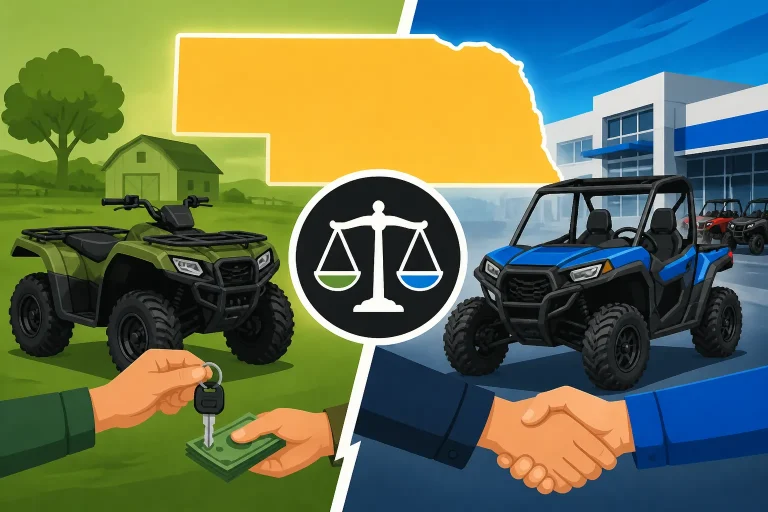
Trading the old machine is convenient: one seller handles the replacement purchase and the transfer of the old machine in the same transaction. The trade may also reduce the taxable amount if the transaction qualifies. But convenience is not the same as the best financial result, so compare the trade offer with a realistic private-sale value.
Start by comparing net outcomes rather than just the advertised trade number. A dealer may offer a lower trade value than you expect, but the process can save time and may provide a tax benefit. A private sale might bring a higher price, but it takes effort and does not automatically count as a trade-in for the replacement purchase. If the private sale happens separately, do not assume the proceeds reduce the replacement machine’s taxable amount.
A practical comparison has four parts:
- Replacement machine price. Compare the actual selling price, not only the advertised payment or monthly financing figure.
- Trade allowance or likely private-sale proceeds. Use a realistic amount after considering condition, repairs, paperwork, and the time needed to find a buyer.
- Tax calculation. Ask how the trade is treated and what amount will be used for tax. Do not treat the full trade allowance as tax savings.
- Other transaction costs. Include financing, delivery, setup, title, and other charges that apply to your deal.
The private-sale route may make sense if the likely sale proceeds are meaningfully higher and you are comfortable managing the transfer. It may be less attractive if the machine needs work, has a lien, lacks documents, or could take a long time to sell. A trade may be preferable when simplicity and timing matter, even if the trade value is lower.
The trade offer should also be evaluated in light of what the seller will do with the machine. A business may discount its offer to account for inspection, repairs, transport, or resale risk. That does not mean the offer is unfair, but it is a reason to ask how the number was determined. If the old machine is in good condition, you can use comparable listings as a reference without treating asking prices as completed sale prices.
Do not compare a private-sale price with a trade allowance without also comparing the tax treatment. The tax saved through an eligible trade is only one part of the difference. For example, a higher private-sale price may still leave you ahead after tax, while a smaller price gap may not justify the extra work. Use actual written figures where possible, and ask the county treasurer how the tax would be handled before relying on an assumed credit.
To understand the other purchase costs that can affect the decision, see Buying an ATV in Nebraska: Taxes and Fees and Nebraska Private Sale vs Dealer Purchase. For a wider budget, Nebraska Cost of Ownership Year One covers costs beyond the purchase transaction.
Common mistakes and a simple check before you buy
The most common mistake is treating the trade allowance as though it were a dollar-for-dollar tax reduction. It is not. The allowance may lower the taxable amount, and the savings depend on the tax that would have applied to the credited amount. A second mistake is believing that any sale of an old machine qualifies. A qualifying trade normally needs to be part of the purchase transaction and documented as such.
Other errors are avoidable with a short review:
- Looking only at the trade number. Compare the replacement machine price and all charges as well.
- Mixing the trade with a down payment. Ask the seller to show each item separately.
- Ignoring a loan payoff. Confirm how the lien will be cleared and whether the payoff changes the amount you receive or owe.
- Using a verbal estimate. Get the trade value and tax calculation in writing.
- Assuming the dealer has handled every step. Confirm who files the title application and who pays the tax.
- Waiting to ask the county. Check requirements before the transaction is final, especially if the deal is unusual.
- Forgetting local tax. The amount due can depend on the applicable local rate; confirm the current calculation rather than using a remembered figure.
- Failing to keep copies. Save signed purchase documents, trade records, and tax forms.
Before committing, ask the seller and county treasurer these questions:
- Is the old machine being recorded as a trade-in in this transaction?
- What exact value will appear on the paperwork?
- Is any loan payoff shown separately from the trade allowance?
- What amount will be used to calculate tax, and how was it reached?
- Which forms will the seller provide, and what must I submit?
- Does the county require additional proof of ownership or lien release?
- Are any accessories or a trailer handled separately?
- What is the deadline for completing the title and tax paperwork?
If the answers do not match the written documents, ask for clarification before signing. If a seller says the trade qualifies but cannot explain how it will be itemized, contact the county treasurer with the proposed transaction details. That is especially sensible when the trade involves a private seller, a lien, multiple owners, or missing ownership papers.
A little preparation can prevent a frustrating surprise at the counter. Confirm the trade value, the tax basis, and who is responsible for filing. Then compare the final numbers with the alternative of selling the machine separately. That approach gives you a more useful picture than focusing on the trade-in allowance alone.
Frequently Asked Questions
Does a trade-in always reduce Nebraska sales tax?
No. The transaction must qualify, and the trade must be documented correctly. Confirm the treatment with the county treasurer before relying on a credit.
Does my cash down payment count as a trade-in?
No. A cash down payment and a trade-in are different items. Ask the seller to list them separately on the paperwork.
Can I sell my ATV privately and still claim a trade-in credit?
A separate private sale should not automatically be treated as a trade-in. The old machine generally needs to be accepted as part of the replacement purchase. Confirm your specific arrangement with the county treasurer.
Who handles the tax paperwork for an ATV in Nebraska?
The county treasurer handles ATV titles and the related tax process. A seller may prepare documents, but confirm who submits them and what you must provide.
Disclaimer
This article is for general informational purposes only and does not constitute professional advice. Laws, prices and regulations vary by location and change over time. Consult a qualified professional for guidance on your specific situation.