Packing a First Aid Kit for a Long Loop
A small first aid kit can feel like wasted space right up until someone gets sliced by a sharp control lever, takes a hard spill, or develops a blister miles from the trailer. For a long Nebraska ATV or UTV loop, pack for common injuries, heat, dust, and delayed help—and make sure your group can find and use the supplies without unloading everything.
Build a first aid kit for the ride you are actually taking
Cover the common injuries first
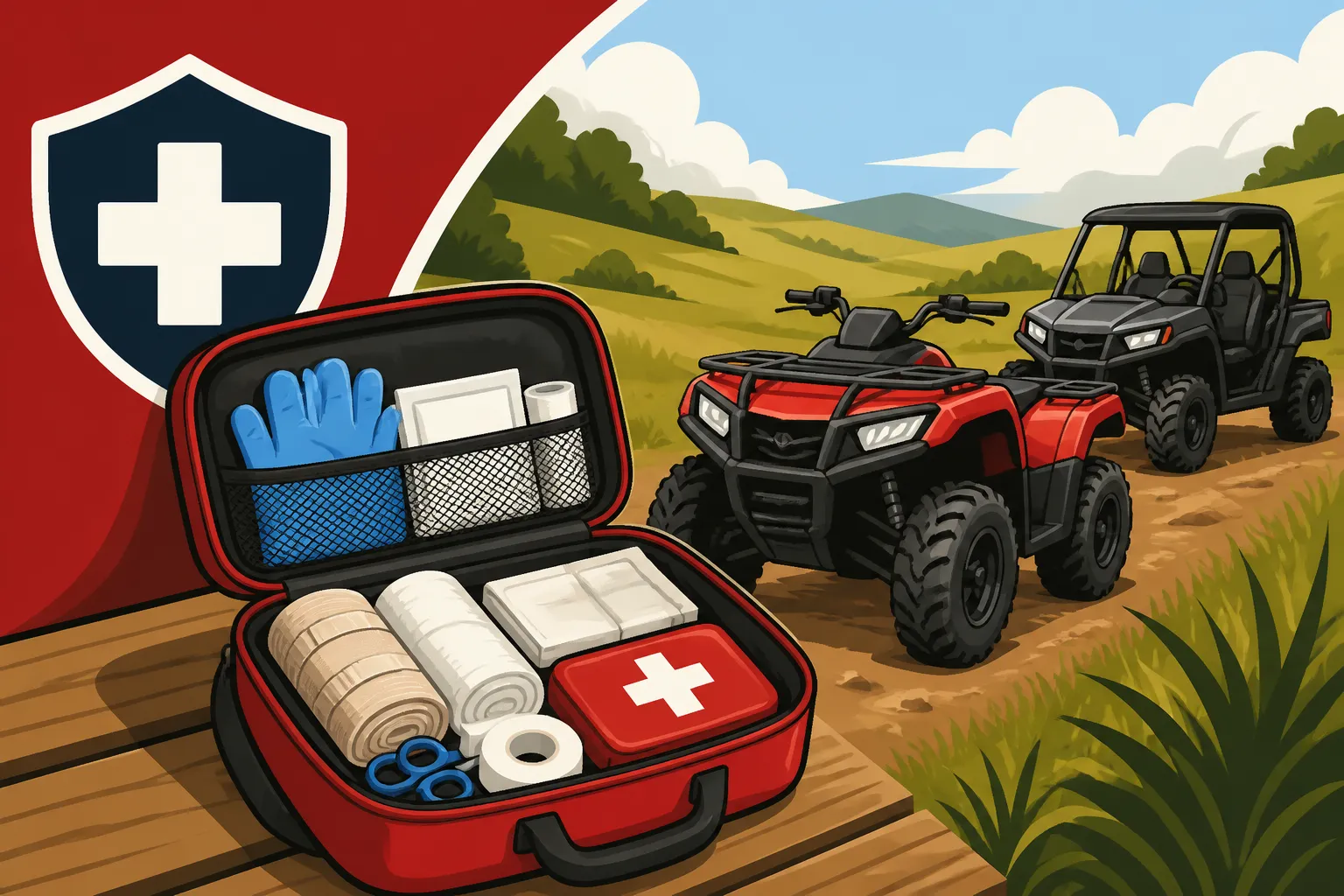
Start with supplies for bleeding, scrapes, blisters, and minor sprains. A practical kit might include assorted adhesive bandages, sterile gauze pads, medical tape, antiseptic wipes, a small roll of gauze, blister dressings, and a triangular bandage. Add a pair of nitrile gloves so the person helping can protect both themselves and the injured rider.
Think about what your group is likely to encounter. A blister from a boot seam is a different problem from a deep cut, but both can turn a pleasant loop into a miserable trip if you have nothing useful on hand. A few blister dressings, for example, take little room and can help keep a sore spot from rubbing during the ride back. A triangular bandage can be useful for supporting an arm while you wait for help, but it is not a substitute for medical assessment after a serious injury.
Bring small, blunt-tipped scissors or trauma shears if you have room. They can make it easier to cut tape, gauze, or clothing around an injury. Keep sharp tools secured so they cannot poke through a pouch when the machine bounces over rough ground. If you include tweezers, use them for obvious surface-level splinters or debris—not for digging into a wound.
Add items for Nebraska weather and trail conditions
Long rides in Nebraska can mean open, exposed stretches where shade is limited, as well as dusty sections that leave riders uncomfortable and thirsty. Pack sunscreen and lip balm for protection, and consider eye-wash solution or sterile saline for rinsing dust from the eyes. Do not rely on a quick rinse to solve persistent pain, blurred vision, or an eye injury; those call for prompt medical help.
Heat illness deserves a place in your planning even if your first aid pouch is small. Carry enough drinking water for the group, and consider an oral rehydration product if someone in your party may need it and can safely take it. Water is not just a first aid item, though: it is part of the ride plan. For more planning detail, see How Much Water to Carry on a Summer Ride and What to Pack for a Hot Dry Riding Day.
Cold wind, rain, and long stops can also make riders uncomfortable or chilled. A compact emergency blanket can help retain warmth while you wait, especially if someone is wet, injured, or unable to keep moving. Put the blanket where it can be reached quickly rather than buried under recovery gear. If your route includes exposed terrain or a long drive between trail sections, think through what the group would need if a minor injury forced you to stop for an hour.
| Situation | Useful supplies to consider | Important reminder |
|---|---|---|
| Cuts and scrapes | Gloves, gauze, tape, bandages, antiseptic wipes | Serious bleeding needs urgent help |
| Blisters and boot rub | Blister dressings, moleskin, small scissors | Address hot spots before they become open sores |
| Dust in the eyes | Sterile saline or eye-wash solution | Persistent pain or vision changes need medical care |
| Heat and dehydration | Drinking water, shade plan, oral rehydration product if appropriate | Confusion, collapse, or worsening symptoms are emergencies |
| Cold or a long stop | Emergency blanket, dry layer stored separately | Protect the person from wind and ground exposure |
| Sprain or painful impact | Triangular bandage, cold pack if practical | Do not encourage a rider to continue through a serious injury |
Pack supplies so they stay clean and easy to reach
Choose a container that works on a moving machine
A first aid kit for an ATV or UTV needs to survive vibration, dust, and occasional wet weather. Use a durable, closable pouch or hard case, and put the most important supplies in sealed inner bags. Dust can work its way into loose packages, while moisture can ruin dressings and paper instructions. A waterproof outer case helps, but it is still sensible to inspect the contents after a muddy or wet ride.
Keep the kit in a place that a passenger or another rider can reach without unloading cargo. On a UTV, that might be a clearly marked storage compartment. On a quad, it may fit in a secured rear bag. Avoid fastening it where it blocks a light, interferes with controls, or could come loose if the machine tips. Tell at least one other person exactly where it is before you leave the staging area.
A kit that is packed so tightly nobody can find anything is not much help. Put gloves, gauze, and the most frequently used items near the top. Store instructions, less-used supplies, and personal medications in a separate inner pocket. If you ride with children or less experienced guests, show them the kit and explain which items they can hand to an adult without trying to treat an injury themselves.
Make a personal kit for each rider’s needs
A group kit can cover shared supplies, but it cannot replace personal medications and health information. Riders who use prescribed medication should carry it in its original packaging when practical and follow their clinician’s guidance about storage and use. Keep medication dry and within reach, not in a bag that stays on the trailer at the parking area.
If someone has a known severe allergy or another condition that could become urgent, make a specific plan before the ride. The rider should carry any prescribed emergency medication and ensure a companion knows where it is and how to respond according to the instructions provided by a medical professional. Do not assume that a first aid kit’s general supplies can handle a serious allergic reaction or other medical emergency.
It also helps to carry a small card with each rider’s emergency contact and relevant medical information, if they are comfortable doing so. Keep that information protected from casual view, but accessible to the person who may need to call for help. For a group ride, agree on who is responsible for checking that essential personal supplies are packed. That small conversation can prevent an awkward discovery at the trailhead.
Plan for communication and getting help
Prepare for weak or missing cell service
Do not assume you will have a reliable signal throughout a long loop. Tell someone who is not riding where you plan to go, where you expect to park, and when you plan to check in. Agree on what that person should do if the group does not return or make contact as expected. A simple plan is more useful than leaving a vague message that you are “going riding.”
Before departure, save or note the location of your staging area and the route you intend to follow. onX Offroad can help riders review routes and save navigation details before heading out, which is useful when service becomes unreliable. Still, a phone-based map should not be your only navigation method. Carry a paper map or another backup that does not depend on a charged phone or a live connection. See Planning for No Cell Service on a Forest Ride and Why You Still Carry a Paper Trail Map for more on building that backup into your trip.
If an injury happens, one person should focus on the injured rider while another handles navigation and communication when possible. Have the group identify a clear location description, such as the trail name, a junction, a nearby landmark, or a map coordinate from the navigation tool you use. In a place with multiple tracks or turns, “we are somewhere in the forest” is not enough information for someone trying to find you.
Know when first aid is not enough
A first aid kit is for initial care, not for proving that a rider can safely continue. Heavy bleeding, difficulty breathing, a loss of consciousness, a suspected serious head or neck injury, severe pain, or a worsening condition should be treated as an emergency. Call emergency services when possible and follow the dispatcher’s instructions. Do not move someone with a possible head, neck, or back injury unless remaining where they are creates an immediate danger.
For a less severe injury, pause before deciding to ride on. Ask whether the person can think clearly, move safely, and operate the machine without worsening the problem. A rider who is shaken, lightheaded, in substantial pain, or struggling to keep balance may not be safe to drive, even if the injury looks small. Keep the rest of the group together, make the return route conservative, and arrange another way out if continuing would put the injured person at risk.
Keep the first aid kit separate from recovery gear and tools. A winch strap, tire plug kit, and socket set are useful, but they solve different problems. Make sure someone in the group knows how to use the recovery equipment, and do not improvise a risky vehicle recovery while a person is injured. For trail-specific preparation, review Packing a First Aid Kit for a Long Loop, Packing a First Aid Kit for a Long Loop—and check Nebraska Trail Conditions Before You Tow before committing to a distant route.
Check the kit before every long loop
Use a simple pre-ride inspection
A kit can look complete while containing dried-out wipes, opened packaging, or dressings that have been crushed under other cargo. Before the riding season and after any trip where you used supplies, open the case and check it. Replace anything used, damaged, wet, or past its labeled expiration date. If a medication has special storage instructions, follow those rather than assuming the machine’s storage compartment is suitable.
A quick pre-ride check does not need to become a long chore. Confirm that the kit is present, fastened securely, and reachable. Check that gloves, gauze, bandages, tape, blister care, and water are accounted for. If you are leaving the usual riding area or taking a longer route than normal, add any personal supplies the group may need and double-check your communication plan.
Pack with the return trip in mind, too. A small cut may need a clean dressing later; a blister may need protection before the next ride; and a rider who becomes cold or exhausted may need dry layers or a safer way back. Store a spare dry shirt or layer outside the first aid kit so you do not have to choose between keeping medical supplies clean and keeping clothing dry.
Match the kit to the route and the group
A short ride close to the truck and a long loop through a remote area do not call for the same level of preparation. If you are planning a day at Bessey OHV Trails at Halsey in Nebraska or another unfamiliar riding area, check the route, conditions, and staging plan before loading up. onX Offroad may help you organize route information, but confirm access and local conditions through the relevant land manager or official area information before you travel.
Group size matters as well. A kit that is adequate for two experienced adults may be thin for a family ride with children or a larger group. More riders mean more chances of minor scrapes and more people who may need water, shade, or help communicating. If several machines are going, divide shared supplies among them so the entire group does not depend on one rider’s cargo bag.
Finally, keep expectations realistic. A well-stocked kit cannot replace training, professional medical care, a working communication plan, or the decision to turn around. It can make a manageable problem easier to handle while you arrange help, but it is not a reason to ride beyond your skills or keep going when someone is hurt. Use Nebraska Trail Etiquette Locals Expect as another part of your preparation, especially when riding with a group or sharing a busy trail.
Disclaimer
This article is for general informational purposes only and does not constitute professional advice. Laws, prices and regulations vary by location and change over time. Consult a qualified professional for guidance on your specific situation.