Why Nebraska State Parks Are Closed to ATVs
Nebraska riders can easily mistake a state park permit for permission to ride an ATV or UTV inside the park. They are different things: the permit covers park entry, while riding rules govern where a machine may go. Here’s how to understand the restriction, check for narrow exceptions, and choose a legal place to ride instead.
Why recreational ATV and UTV riding is restricted
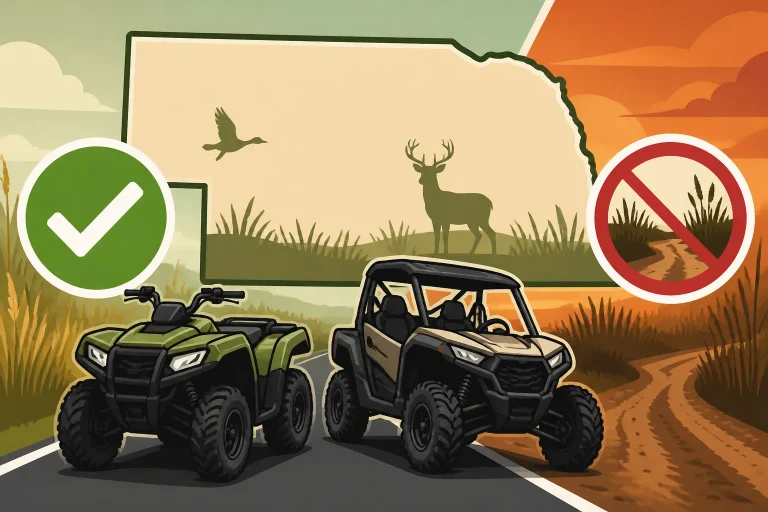
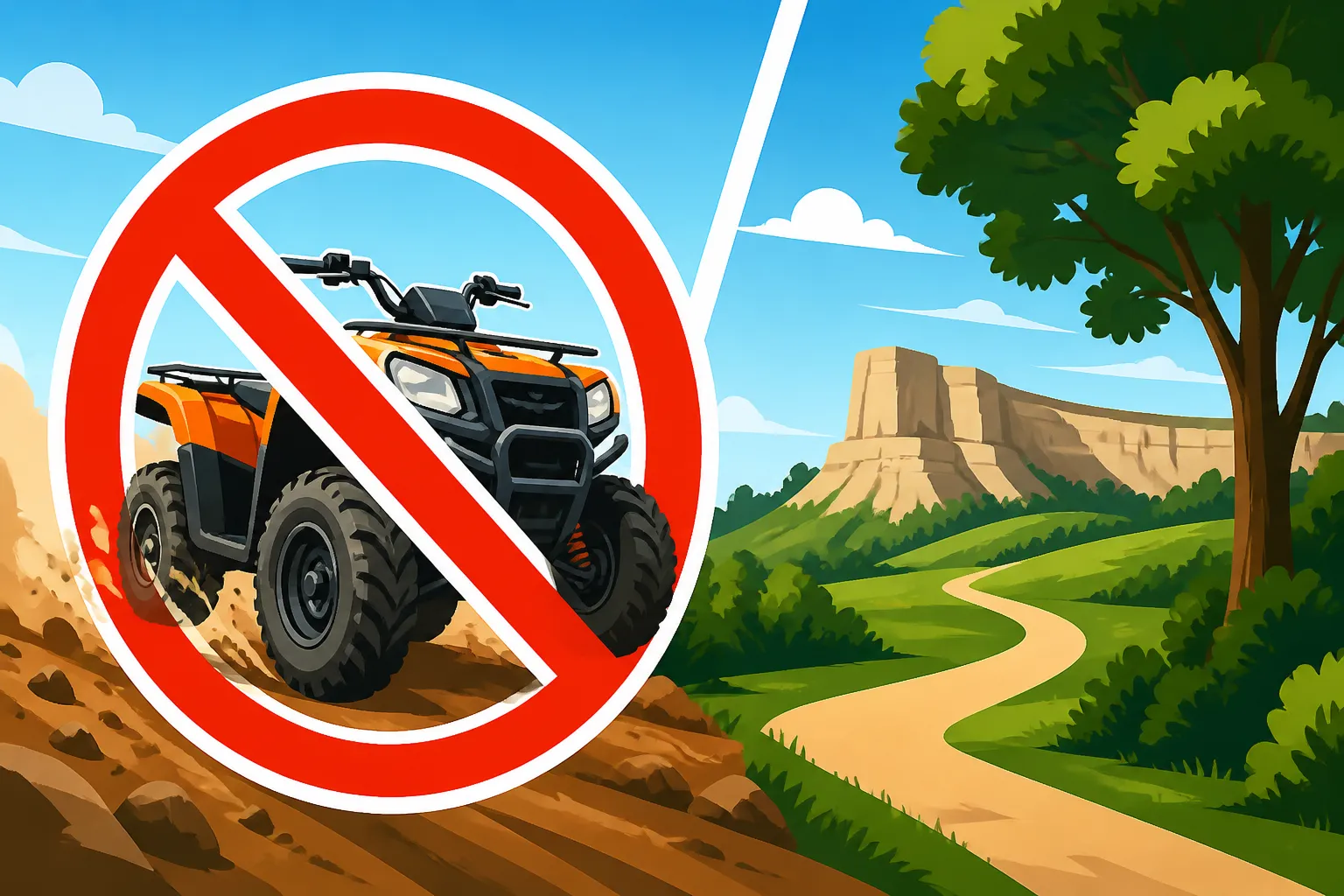
Nebraska state parks are not general-purpose off-highway vehicle riding areas. A recreational ATV or UTV rider should assume that riding is prohibited in a state park unless the park’s current rules clearly identify an allowed area or activity. A road or trail inside a park is not automatically open to motorized recreation just because it looks suitable for a machine.
This distinction matters because state parks are managed for a mix of activities, including hiking, camping, wildlife viewing and other forms of recreation. Motorized off-road use can conflict with those activities, damage trails and vegetation, and create risks where pedestrians and vehicles share space. The practical result for visitors is straightforward: do not unload and ride in a state park unless the park specifically authorizes it.
The restriction is not the same as a ban on owning an ATV, hauling one through Nebraska or riding one everywhere on public land. It applies to where recreational riding is allowed. Nebraska has different rules for state parks, state recreation areas, wildlife management areas, national forest land and private riding parks. A rule for one type of property does not automatically apply to another.
Nor does the word “park” settle the question. Visitors may use the term loosely for several kinds of public land, but each property has its own management rules. Before planning a ride, identify the exact location and managing agency. Then confirm whether that specific area allows the type of machine you intend to bring.
For background on the distinction between public-land access and machine use, see Nebraska Parks Closed to ATVs and Nebraska Recreation Areas Closed to ATVs. The names are similar, but checking the actual property category can prevent a wasted trip or an avoidable violation.
A park permit is not a riding permit
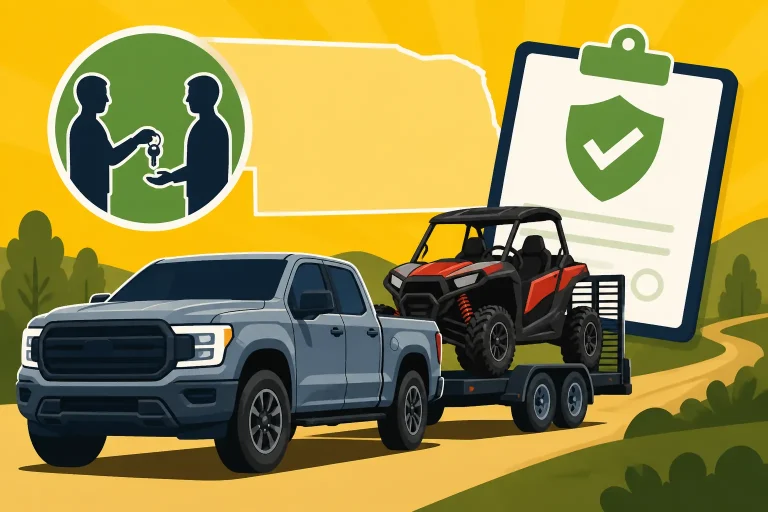
Nebraska’s state park entry permit is about entering or parking at covered park properties. It does not turn a park road, campground lane or hiking trail into an ATV route. Put another way, a valid permit may satisfy an entry requirement while the machine is still prohibited from riding there.
That is why it helps to keep two questions separate:
- Can the vehicle carrying you enter or park at the property?
- Can the ATV or UTV be ridden on that property?
A “yes” to the first question is not a “yes” to the second. The park permit may need to be displayed on the towing vehicle, but it does not authorize recreational ATV riding. For more on that distinction, see Why a Park Permit Does Nothing for Your ATV and Nebraska State Park Entry Permits.
Nebraska does not have a general state OHV sticker that makes an ATV legal to ride throughout state parks. Ownership papers, a title, insurance or an out-of-state registration also do not override a property’s access rules. Each document serves a different purpose, and none should be treated as blanket permission to ride. See Nebraska Has No OHV Permit or Sticker for more on the state’s permit system.
| What you have or see | What it may allow | What it does not establish |
|---|---|---|
| State park entry permit | Entry or parking under the permit’s terms | Permission to ride an ATV or UTV |
| ATV title or proof of ownership | Evidence related to ownership | Access to a closed trail or park |
| Out-of-state registration | Compliance with some rules where recognized | Automatic Nebraska state-park access |
| A road, path or open-looking area | A route that may be used by authorized vehicles | Permission for recreational ATV riding |
| A posted or written park exception | Use within the stated conditions | Permission to ride beyond that exception |
How to interpret exceptions and property boundaries
The safest approach is to treat a state park as closed to recreational ATV and UTV riding unless you can confirm a specific exception with the managing agency. Do not infer an exception from a map line, an unlocked gate, a packed track or the fact that another vehicle is present. An access road used by park staff or authorized contractors does not necessarily serve as a public riding route.
Some Nebraska public-land rules allow limited motorized use in particular situations. Frozen-water rules are one example that can be easily misunderstood. An exception for riding on a designated frozen surface, where applicable, is not a general permission to ride the surrounding park, its trails or its roads. It also does not mean every lake is open, every part of a lake is safe, or the exception remains in effect regardless of signs and conditions. Check Nebraska Frozen Lake Riding Rules before considering ice riding.
Check the exact property, not just the nearest town
A destination may include adjoining land managed under different rules. A state park could be near a wildlife management area, a national forest riding area or a privately operated OHV park. The fact that one parcel allows riding does not open neighboring property.
Before heading out, confirm:
- The exact name and boundary of the place where you plan to ride.
- Which agency or landowner manages that parcel.
- Whether ATVs, UTVs and your machine’s size or type are allowed.
- Which routes or surfaces, if any, are open to motorized use.
- Whether seasonal closures, weather, fire restrictions or posted signs change access.
- Whether your tow vehicle needs a separate park entry permit.
Wildlife management areas have their own rules, including restrictions that may limit motorized vehicles to designated roadways or parking areas. A machine being allowed on a specified roadway does not mean that cross-country riding is permitted. Review Nebraska WMA Access for a Quad and [Nebraska WMA Roadway Rules] when a wildlife management area is part of the plan.
National forest riding is also a separate question from state park access. Some national forest areas have designated OHV routes, while closures and route limits can still apply. Check the current rules for the specific forest area rather than assuming that all forest roads or trails are open. Nebraska National Forest Riding offers a starting point for understanding that distinction.
Private riding parks are different again. A private operator may allow riding subject to its own admission process, waivers, age limits, vehicle rules and closures. Those conditions do not carry over to public land. Review the operator’s current requirements before traveling; Nebraska Private Park Waivers and Rules explains why a private park’s permission is specific to that property.
Read signs and follow the narrowest instruction
Posted signs can tell you about a closure, an allowed route or a special restriction. Read them at the entrance and at trail or road junctions. If signs appear to conflict with what you were told elsewhere, do not choose the more permissive interpretation without checking with the property manager.
A general map may show roads, trails or recreation facilities without marking every current closure or use restriction. Maps are useful for planning, but they should not replace current posted instructions or agency guidance. The same is true of online rider reports: a trail someone rode previously may now be closed, may never have been open to the public, or may be on private land.
When a boundary is unclear, stop before entering the questionable area and contact the land manager. A quick check is more useful than trying to explain later that an open gate or visible tire tracks seemed like permission.
What to check before you haul an ATV to a state park
A little planning helps avoid bringing an off-road machine to a property where it cannot be ridden. Start by deciding whether your ATV is actually part of the visit. If you are going to camp, hike or fish and will leave the machine secured on a trailer, ask whether the tow vehicle and trailer may enter or park under the property’s rules. Do not assume that permission to park a trailer also allows you to unload and ride.
Use this process before leaving home:
- Identify the specific destination. Confirm the property’s official name and whether it is a state park, recreation area, wildlife management area, forest or private facility.
- Check the current riding rule. Look for an explicit statement that ATVs or UTVs may be ridden, along with any route limits or conditions. If the material is unclear, contact the managing office.
- Ask about the whole setup. If you are towing, confirm parking and entry requirements for the truck and trailer. Ask separately whether the ATV can be unloaded or operated.
- Check for temporary closures. Weather, maintenance, fire danger, seasonal protections and special events can change access.
- Plan a legal alternative. If the state park is closed to riding, choose a designated riding area or private facility before making the trip.
- Recheck shortly before departure. Current notices and conditions matter more than an old map, a past visit or a secondhand report.
When asking an office, make the question specific. “Can I bring my ATV?” could mean parking it on a trailer, unloading it at a campsite or riding it on a trail. Instead, ask whether recreational ATVs or UTVs may be operated at the exact property, on which named routes or areas, and under what conditions. If the answer depends on a designated frozen-water area or another narrow exception, ask where that exception applies and whether it is currently open.
Common misunderstandings
“I bought a park permit, so I can ride there.”
The permit relates to entry, not ATV access. Confirm machine use separately.
“There is a road through the property, so I can drive my UTV on it.”
A road can be restricted to authorized traffic, park operations or other users. Do not treat its presence as permission.
“The trail is wide enough for my machine.”
Physical fit is not a legal access rule. Trail designation and posted restrictions determine whether a machine may use it.
“A rider online said it was open.”
Reports can be old, incomplete or about a different property. Check with the current land manager.
“My machine is registered in another state.”
Registration does not give a rider the right to enter a closed area. Nebraska’s property rules still apply.
“I only want to ride a short distance to the campground.”
A short trip is still operation. If recreational riding is not allowed, the distance does not create an exception.
Where to ride instead and how to avoid a wasted trip
If riding is the purpose of the outing, choose a destination that expressly welcomes motorized OHV use. Nebraska has designated riding opportunities on certain public lands and at private facilities, but each has its own operating rules. Confirm that the location allows your particular machine, not just “motorized vehicles” generally. A trail may be open to ATVs but not to wider side-by-sides, or it may have separate routes for different vehicle types.
For public areas, verify the route map, entry or parking requirements, seasonal status and any equipment restrictions. Do not assume that a state park permit, hunting license or vehicle registration substitutes for a required property-specific permit. For private parks, check current admission procedures, age requirements, waivers, noise or equipment rules and operating hours with the operator.
A useful comparison is:
| Destination type | What to confirm before riding |
|---|---|
| Nebraska state park | Recreational riding is generally not allowed; confirm any specific exception and entry requirements |
| State recreation area | Check the property’s ATV restrictions separately from state park rules |
| Wildlife management area | Confirm designated roads, parking rules, seasonal restrictions and any ice exception |
| National forest riding area | Verify open routes, machine restrictions, closures and parking arrangements |
| Private riding park | Confirm the operator’s current rules, accepted machines, waivers and access process |
A destination’s reputation is not enough. Facilities can change rules, close routes or limit access. Check current notices and conditions as part of planning; Nebraska Trail Conditions Before You Tow is relevant when you are considering an off-road destination. For a state park visit, leave the machine on the trailer unless the property manager confirms a specific permitted use.
If there is no clearly authorized route, choose another location. Riding a road shoulder, ditch or informal path to get from a park entrance to a nearby trail can create a separate violation and may put the rider or other visitors at risk. Trail access must be legal for the entire route, not only at the destination.
A practical checklist for a compliant visit
Use this short checklist whenever an ATV or UTV is part of a Nebraska outdoor trip:
- Separate park entry from machine access. A permit for your vehicle does not approve recreational ATV use.
- Confirm the land category. State park, recreation area, wildlife management area and forest rules are not interchangeable.
- Find an explicit authorization. Do not ride based on assumptions, old reports or the appearance of an open route.
- Check the exact exception. If an exception is mentioned, confirm its location, conditions and current status.
- Ask about loading and parking. Bringing a machine on a trailer and operating it are different activities.
- Respect signs and closures. Stop when a route is marked closed or the access boundary is uncertain.
- Choose a designated alternative. If the park does not allow riding, plan for a legal riding area rather than improvising.
- Recheck before travel. Conditions and restrictions can change after an earlier visit or map review.
These steps also help when you are visiting from another state. A machine’s home-state registration, trail sticker or insurance policy does not necessarily match Nebraska’s access rules. Check what applies to the Nebraska property itself and what documents you should carry for the trip. The important point is not to confuse proof that you own or may operate a machine in one context with permission to ride on a particular parcel.
When in doubt, keep the ATV secured and ask the property manager before unloading. That is the most reliable way to avoid turning a park visit into an access problem.
Frequently Asked Questions
Can I ride an ATV on a Nebraska state park road?
Do not assume that a park road is open to recreational ATV or UTV use. Roads may serve park operations or other authorized traffic. Ride only if the managing agency clearly confirms that the specific route is open to your machine.
Does a Nebraska state park permit let me ride my ATV?
No. A state park entry permit concerns entry or parking under its terms. It does not grant permission to ride an ATV or UTV in a closed area.
Is there any exception for riding on frozen water?
A limited frozen-water exception may apply in designated circumstances, but it is not a general opening of state park roads or trails. Check the current rules, signs and conditions for the exact waterbody before riding.
Can I ride if my ATV is registered in another state?
Out-of-state registration does not override Nebraska property restrictions. You still need to follow the rules for the particular park or riding area, and registration should not be treated as permission to enter a closed route.
Disclaimer
This article is for general informational purposes only and does not constitute professional advice. Laws, prices and regulations vary by location and change over time. Consult a qualified professional for guidance on your specific situation.