Nebraska Private Park Waivers and Rules
A private riding park can have its own waiver, admission process and operating rules—even when Nebraska has no general statewide ATV sticker. That can leave riders unsure what paperwork to bring, whether an out-of-state machine is welcome, and what a waiver actually means. This guide explains how to prepare, what to check before signing, and how to avoid confusing a park’s permission with legal access elsewhere.
A private park sets its own entry conditions
A private ATV or UTV park is different from a Nebraska state park, a national forest trail or a wildlife management area. A privately operated venue can set conditions for using its property, including admission requirements, operating hours, machine limits, safety rules and a waiver process. Those requirements belong to that venue; another park may do things differently.
“Private park” can describe a business operating on privately owned land, or a private operator managing a site under an arrangement with a landowner. The details matter less to a visitor than this practical point: the operator may control entry to the riding area and can require riders and other visitors to follow posted and communicated conditions.
That does not put a private park outside all other rules. State and local laws still apply, and the property’s rules cannot grant access to a public road, neighboring property or public land. A park’s waiver is not a statewide riding permit, vehicle registration or proof that a machine is legal to operate on a road.
Nebraska does not have a general statewide OHV permit or sticker for every ATV and UTV. That does not mean every riding area is free to enter or that a private venue must accept every machine. A private park may charge admission, require a signed form, limit vehicle types, or close some trails. Public recreation sites can have separate permits and access rules. See Nebraska Has No OHV Permit or Sticker and Nebraska Park Rules for ATVs for the distinction between a statewide OHV sticker and other kinds of access requirements.
The same separation matters for visitors bringing a machine from another state. A Nebraska private park may have its own check-in requirements, but its policy does not establish what state requirements apply to the machine or rider in other settings. Review Nebraska Rules for an Out-of-State Machine and Nebraska Has No Registration to Reciprocate if you are bringing an out-of-state machine and want to understand the broader state-level issue.
Before you plan around a park’s website or a social media post, contact the venue directly. Ask about the specific riding area, not just the business in general. A property may have different rules for trail riding, a practice area, camping, spectators and special events. A rule that applies to one part of the property may not apply to another.
What a waiver usually covers and what to ask
A waiver is a document that sets out conditions for taking part in an activity. At an off-road venue, it may discuss the risks of riding, how participants accept or acknowledge those risks, and what claims the operator asks participants to release. The wording, scope and legal effect can differ. Do not assume every form is identical or that a waiver guarantees a particular result if someone is injured.
A waiver can also bundle administrative terms with the risk language. Depending on the park’s form, it may ask for participant and emergency-contact details, describe rules for minors, address photos or video, or explain how the operator handles an incident. Read the whole document rather than signing based only on the heading or the clerk’s short summary.
Watch for terms about:
- Who is covered. The form may name the rider, passengers, a parent or guardian, or other people entering the property. Check who must sign and who is being asked to acknowledge the terms.
- Which activities are included. A waiver for riding may or may not cover a separate practice area, event, campground or other activity. Ask if your plans include more than ordinary trail use.
- Risk acknowledgement and release language. Note what kinds of risks and claims the form discusses. If a phrase is unclear, ask the park to explain its meaning before signing.
- Responsibility for other people. The form may ask a signer to accept responsibility for a minor or guest, or to agree to certain conduct on their behalf. Do not assume you can sign for every person in your group.
- Emergency response. Check whether the form asks for emergency contact details or contains terms about responding to an injury. The form does not replace carrying useful medical information or knowing how to summon help.
- Images and privacy. Some venues include photo or video permission in their paperwork. Ask whether that is optional, how it is used, and whether there is another process if you do not agree.
- Park rules and removal. A waiver may refer to a separate rule sheet or say that the operator can end a visit for violations. Read the referenced rules too.
A waiver is not a substitute for understanding what the park expects. If the document refers to rules on a separate sign, online page or handout, ask for those rules before you sign. Keep a copy or take a clear photo of any form or policy the park allows you to retain. If a form is unclear, changes the terms you expected, or raises a serious concern, it is reasonable to pause and seek an explanation rather than signing in a hurry.
Signing a waiver also does not mean a rider should ignore hazards or skip ordinary precautions. A form is not a safety briefing, a helmet or a recovery plan. It is one part of the venue’s entry process. Ask what to do if a machine breaks down, someone is hurt, or a trail becomes unsafe.
Do not rely on a waiver you signed at a different venue. A prior form may not apply to a new park, a new visit, a different participant or a changed set of activities. If the park uses an online form, check whether each person needs to complete it and whether a confirmation must be shown at check-in. If the park uses paper forms, ask whether you can complete them before arrival.
Compare the rules that can affect your ride
A venue’s rules are easiest to follow when you check them before loading the trailer. Use this table as a question list, not as a claim that every private park has the same policy.
| Topic | What to confirm with the park | Why it matters |
|---|---|---|
| Waiver and check-in | Who must sign, whether forms can be completed ahead, and what identification or confirmation to bring | A group can be delayed if a rider, guardian or spectator is missing a required form |
| Machine types | Whether ATVs, UTVs, dirt bikes or other machines are allowed in the area you plan to use | A venue may separate vehicle types or restrict particular trails |
| Size and configuration | Any width, length, passenger or equipment limits | A machine may fit the property but not a particular trail or obstacle |
| Rider age | Minimum age, supervision expectations and any youth-specific process | Rules may vary by activity, machine and venue |
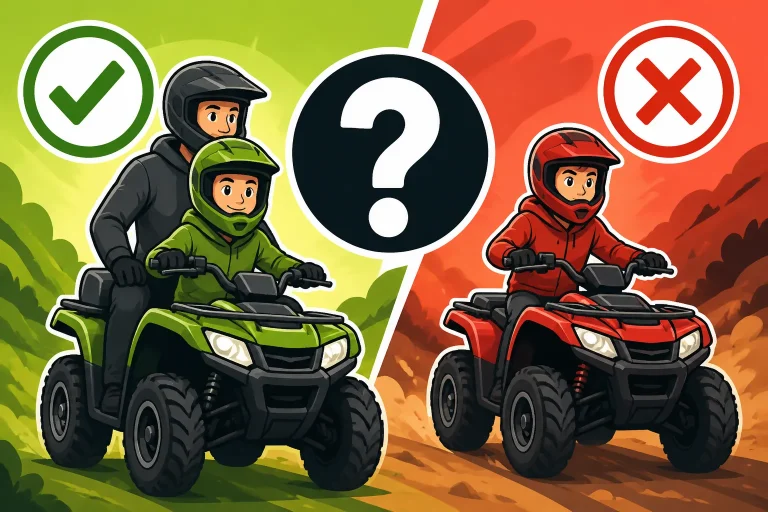
| Passengers | Whether a machine may carry a passenger and what the park expects of the operator | A two-person seat does not automatically mean a park allows passengers |
| Protective equipment | Helmet, eye protection, boots or other required equipment | Venue rules can be more specific than a rider expects |
| Hours and closures | Gate hours, last entry, trail closures and weather updates | Arriving after check-in closes or during a closure can waste a trip |
| Fees and payment | Admission, camping, deposits, payment methods and refund terms | Cost and payment conditions are set by the operator and can change |
| Alcohol and conduct | Whether alcohol is prohibited, where it is prohibited and how violations are handled | Riding while impaired is dangerous and may also violate applicable law |
| Camping and pets | Whether overnight stays or animals are allowed and under what conditions | A riding admission does not necessarily include camping or pet access |
| Recovery and incidents | Who to contact, where to report a crash, and what recovery help is available | Preparation is especially important where cell service or assistance is limited |
Do not treat a machine’s design as permission to use it in every part of a park. A UTV may be permitted on certain routes but too wide for another trail. A passenger seat may be installed, but the operator may prohibit passengers on a particular route or for a particular age group. Check the venue’s rules for the exact machine and the exact activity.
Rules can also change with weather, maintenance, fire conditions, events or staffing. A trail shown as available on an older map may be closed on the day you arrive. Ask how the park communicates short-notice closures and whether it posts conditions by phone, website, email or social media. For general planning, Nebraska Trail Conditions Before You Tow can help you think through the information to verify before leaving home.
If you are visiting from outside Nebraska, do not assume your home state’s rules or a registration document will satisfy every park’s check-in policy. A park may ask for details to identify the machine or confirm who is using it, even where Nebraska does not require a general statewide OHV decal. Confirm what the venue wants to see, and separately check the rules for any public roads or public lands on your route.
Minors, passengers and group paperwork
A group visit can be more complicated than one adult arriving on one machine. The key is to check who the park expects to sign and who must be present when paperwork is completed. A parent or guardian may need to handle forms for a minor, but the venue’s process can vary. Do not assume that an adult in the group can sign for a child who is not their own.
Ask the park these questions before travelling with young riders:
- Does every rider complete a separate waiver?
- Does a parent or legal guardian need to sign in person?
- Can the guardian complete paperwork remotely or in advance?
- Does the park require an adult to remain on site while a minor rides?
- Are there age or machine-size limits for a particular area?
- Are there separate requirements for a child riding as a passenger?
- What identification or proof of age, if any, should the guardian bring?
For more detail on those questions, see Who Signs the Waiver for a Rider Under 18 and Nebraska Private Park Minimum Ages. The park’s own policy is the one to verify for admission. Do not infer a venue’s minimum age from the child’s riding experience, a machine’s owner’s manual or a rule at another facility.
Passengers deserve a separate check. Some machines are designed for one rider; some have a passenger seat. Neither fact alone settles whether a park allows a passenger or what restrictions apply. Confirm the venue’s rules for the specific machine, and make sure the passenger’s waiver and safety requirements are handled before the ride. Does a Private Park Allow Passengers on a Quad? covers the questions worth asking.
If several families are travelling together, assign one person to gather the details, but do not let that person assume responsibility for signing everyone’s forms. Send the park’s instructions to each household and ask each family to confirm its own participants. That reduces the chance of arriving with a child whose guardian is absent or a rider who has not completed the required process.
For a larger group or a special event, ask whether the venue has a group check-in process. Find out whether the organizer submits a roster, whether each participant still signs individually, and what happens when a participant arrives late or changes machines. If anyone in the group is only watching, ask whether spectators need to complete a form or pay a separate admission charge. “Not riding” does not necessarily mean “not entering the property.”
A useful group plan includes one clear contact number for the organizer, a list of expected participants, the park’s entry instructions and a plan for anyone who must leave early. Keep children and first-time riders within the supervision arrangement the park requires. A signed form is not supervision; the responsible adult still needs to know where the child is and whether the route is appropriate.
Prepare your machine and gear before arrival
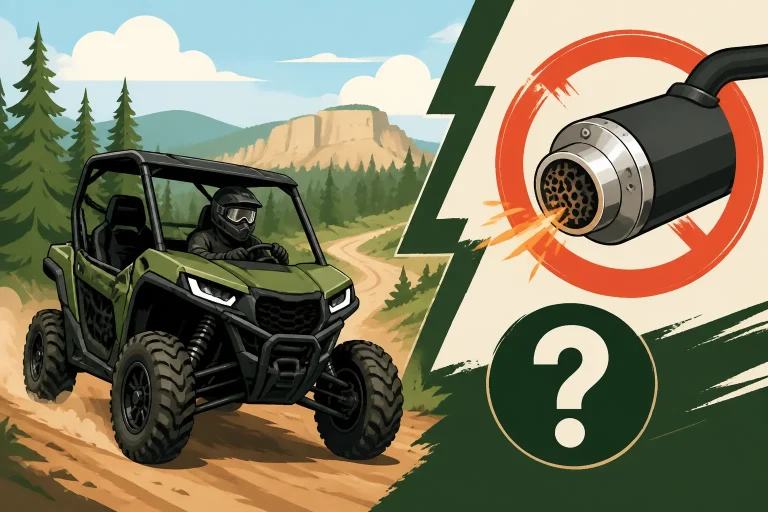
A park can require particular equipment or reject a machine that does not meet its operating conditions. Confirm the requirements directly rather than packing based on assumptions. Ask about helmets, eye protection, footwear, lights, sound limits, spark arresters, machine width, passenger arrangements and any restrictions on modifications. Not every item applies at every venue, but checking early avoids a disagreement at the gate.
If a helmet is required, check the park’s stated standard and condition requirements. A helmet that fits poorly, has been damaged or is not suited to the activity is a poor choice even if it looks acceptable from a distance. If shopping on Amazon, verify the model and safety information with the manufacturer and check that the fit is right; do not rely only on a listing photo or a seller’s short description. A local dealer can also help with fit and sizing.
Eye protection, gloves and suitable boots can make a long ride more comfortable and reduce exposure to dust, debris and branches. Confirm whether the park has any specific requirements before buying gear. Amazon can be useful for comparing replacement goggles or gloves, but check sizing, return conditions and compatibility with your helmet before a trip. For items where fit or protection matters, try them on before the ride rather than discovering a problem at the trailhead.
Bring the equipment you need to secure and maintain the machine as well as the gear you wear. That may include appropriate tie-downs for transport, basic tools, a tire repair kit, water, a first-aid kit and a charged phone or radio if the park allows it. Amazon may be one place to find basic replenishment items for a first-aid kit, but check contents and expiration dates yourself; having a kit does not guarantee it is adequate for your group or a particular ride.
Before loading, inspect the machine for obvious problems: damaged tires, loose parts, fluid leaks, worn controls or a weak battery. Check fuel range against the park’s trail distances and ask whether fuel is available on site or nearby. If a machine has a known mechanical issue, do not assume the venue’s staff can repair it or tow it out. Ask in advance what recovery support exists and what remains the rider’s responsibility.
For a first visit, keep your documents and confirmations together. Depending on the park’s process, that may mean a waiver confirmation, admission receipt, reservation details, emergency contact information and proof of ownership. A venue may not request all of these, so ask what is actually needed rather than bringing sensitive documents unnecessarily. Never leave an original title exposed or unattended at the riding area; a title is not ordinarily a substitute for park entry paperwork.
Pack for the location, not just the ride. A remote property may have limited cell service, little shade or no nearby repair shop. Consider water, weather-appropriate clothing, snacks and a way for the group to meet if people get separated. Read Planning for No Cell Service on a Forest Ride for useful preparation ideas that also apply when a private venue is outside reliable coverage.
A practical process for checking in and riding
A little preparation makes the waiver and rule-checking process straightforward. Use this sequence for a new park or a visit with a changed group.
- Identify the exact venue and riding area. Make sure you are checking rules for the property you will use, not another location with a similar name or a different part of the same business.
- Ask for the current waiver and rules. Request the actual form or a clear explanation of where to review it. Check whether rules are posted online, sent after a reservation or handed out at check-in.
- Describe your group accurately. Tell the park how many riders and spectators are coming, whether minors are included, what types of machines you plan to bring and whether anyone will camp.
- Confirm machine eligibility. Give the park the relevant details, such as whether the machine is a quad or UTV, its approximate size and whether it carries a passenger. Ask about any trail-specific restrictions.
- Settle the minor and passenger process. Confirm which adults need to be present, who signs each form and what applies to children riding as operators or passengers.
- Review the terms before the day of the trip. Read the waiver and separate rules while there is time to ask questions. Save any written clarification the operator provides.
- Check operating conditions again before departure. Confirm hours, closures, weather-related changes, payment arrangements and the location of check-in.
- Arrive with time to complete the process. Allow for unloading, paperwork, a safety briefing and any inspection the venue requires. Do not plan to arrive at the last minute.
- Follow the briefing and posted signs. Stay on permitted routes, respect closures and ask staff if a rule is unclear. A map or waiver does not override a closure sign.
- Know how to report a problem. Before heading out, identify the contact method for an injury, breakdown, damaged property or a rider who becomes separated from the group.
This process helps prevent a common mistake: treating booking confirmation as permission for every person and every machine in the group. A reservation may hold space or establish an arrival time, but the park can still require completed paperwork and compliance with its rules. If your group changes after booking, tell the venue rather than assuming the original submission covers new participants.
If you disagree with a term, do not alter the park’s form yourself and present it as if it were accepted. Ask whether the venue can explain the clause or provide an approved alternative. The operator may not be able to change its policy for an individual visitor. If you remain uncomfortable, you can decide not to ride. A waiver is most useful as an informed part of a visit, not as paperwork rushed through at the gate.
On-site conduct, enforcement and incidents
Once admitted, treat the park’s signs and staff instructions as part of the visit, not as optional suggestions. A private property operator can set conditions for using its facilities and may restrict access when a visitor ignores them. The consequences depend on the park’s policy and circumstances; they could include being told to stop riding or leave. Read When a Riding Park Can Send You Home for more on why it is worth understanding those conditions before the first lap.
Rules commonly address where you may ride, how to pass other users, speed, noise, stopping, parking, fires, alcohol, pets and quiet hours. A rule can apply even if you have ridden the same way elsewhere. Ask staff when the posted map and a sign appear inconsistent, and do not ride through a closed section while waiting to get an answer.
Be considerate around other users and nearby residents. Keep machines under control in staging areas, avoid revving needlessly, and give people on foot room. At a busy venue, dust and noise can affect other riders as well as neighbours. Observe the park’s designated routes for entering and leaving the riding area, and avoid blocking emergency access, gates or trailers.
Alcohol is a particularly important point to check. A park may prohibit it, limit where it can be consumed, or have policies that apply to both riders and spectators. Do not ride while impaired, and do not assume that consuming alcohol away from the trail makes it acceptable to operate a machine later. Read Alcohol Rules and Wristbands at a Riding Park if your group needs to understand how venues may handle this issue.
If someone is injured or a machine is damaged, stop riding and use the park’s reporting process. Contact staff or emergency services as appropriate; do not delay urgent care while trying to settle questions about fault or paperwork. Record the time, location and basic circumstances when it is safe to do so, and identify witnesses. Follow the venue’s instructions for incident reporting and keep copies of any report or correspondence you receive.
Do not assume the waiver is the only document relevant after an incident. A park may have an incident form, insurance details or a separate procedure. Report facts accurately and avoid guessing about what caused an injury or mechanical failure. If there is a serious injury or a significant dispute over the form or event, consider getting qualified legal advice for the specific situation.
Be careful with photos and video. Filming can distract a rider, create a hazard for other visitors or violate a park’s rules. A waiver that includes an image release is also a different issue from permission to fly a drone, film commercially or publish another person’s image. Ask the venue about its policy before bringing recording equipment or planning a public post.
Pets, camping and quiet hours are also easy to overlook when a riding trip becomes a weekend outing. A park may admit riders but prohibit animals, or permit camping only in designated areas. Confirm whether a dog must be leashed, whether pets may accompany riders, and whether overnight stays require a separate reservation. Check Bringing a Dog Along to a Riding Park and When Quiet Hours Start at a Trail Campground if those plans apply to your group.
Plan for fees, cancellations and a smooth return visit
Private park admission is separate from a statewide sticker or a public-land permit. The venue sets its own charges and may use different arrangements for riding, camping, spectators, special events, deposits or rentals. Because terms can change, confirm current costs and payment methods directly with the operator before travelling. Ask what is included and what is charged separately, especially if the group is staying overnight.
Clarify the cancellation policy before paying or reserving. Weather may make riding unpleasant or unsafe, and a park may close a route or the entire property. The operator’s policy determines whether a reservation can be moved, refunded or credited. Do not assume that a closure automatically produces a refund, or that a deposit is refundable. Do You Get a Refund When Rain Closes Trails? and Why a Riding Park Holds a Damage Deposit cover questions to raise before committing.
If you are reserving a campsite, verify that the site is actually connected to the riding area in the way you expect. Check whether a separate reservation is needed, whether the campground has quiet hours, and how far the campsite is from parking or the trailhead. See Reserving a Campsite Before a Riding Weekend for planning considerations. A campsite reservation does not necessarily include trail admission, and trail admission does not necessarily include an overnight site.
Make a simple record of the park’s contact information, your reservation confirmation, the current rule page and the person you spoke with about any unusual question. If a park gives verbal clarification, note the date and the substance of the answer. For a material issue—such as whether a particular UTV may use a route—ask for written confirmation if possible.
At the end of the visit, follow instructions for checking out, disposing of rubbish and reporting damage. Secure the machine and gear before leaving, and do not carry mud, seeds or debris from one riding property to another if the park asks visitors to clean their equipment. If you enjoyed the visit, keep the park’s rules with your trip notes, but recheck them before returning. A previous visit does not guarantee that a trail, form or policy remains unchanged.
The simplest rule is to keep three questions separate:
- Can I enter this venue? The private park’s current admission, waiver and operating rules answer that.
- Can I use this particular route or facility? The park’s maps, signs and staff instructions answer that.
- Can I operate or transport my machine elsewhere in Nebraska? State and local requirements answer that, not the private park’s waiver.
Keeping those questions separate helps avoid the most common misunderstanding: that a signed form, paid admission or out-of-state registration gives blanket permission to ride wherever you want. A well-planned visit starts with the venue’s current instructions and ends with respecting the limits they set.
Disclaimer
This article is for general informational purposes only and does not constitute professional advice. Laws, prices and regulations vary by location and change over time. Consult a qualified professional for guidance on your specific situation.