5 Feet Above the Ground
Trying to figure out where you can legally ride your ATV or UTV on Nebraska's roads can feel like navigating a maze of conflicting information. It’s a common frustration for riders, especially when you just want to take a short trip down a county road or cross a highway to get to a new field. This guide is here to untangle those rules, clarify the requirements, and help you understand exactly where and how your off-road machine can legally interact with Nebraska's public roadways.
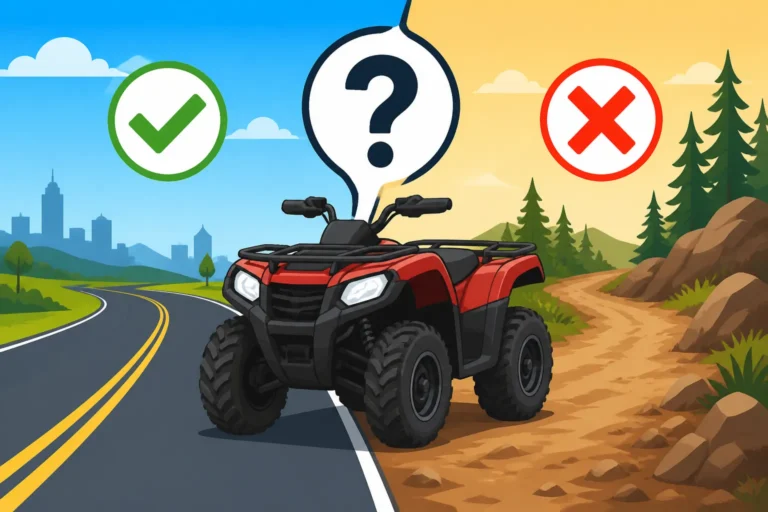
Understanding Nebraska's ATV/UTV Road Rules
The open road beckons, but for ATV and UTV owners in Nebraska, it’s not always a clear path. Unlike traditional vehicles, these machines have specific, and sometimes limiting, regulations regarding public road use. It’s crucial to understand these distinctions before you ever turn the key and pull onto a gravel road. Ignoring these rules can lead to hefty fines and even impoundment of your beloved machine. Many riders mistakenly believe that because they have a title, their machine is automatically street legal. However, [Why an ATV Title Says Not To Be Registered] helps clarify that a title is not the same as a registration for road use.
The Agricultural Exception – Why It Exists
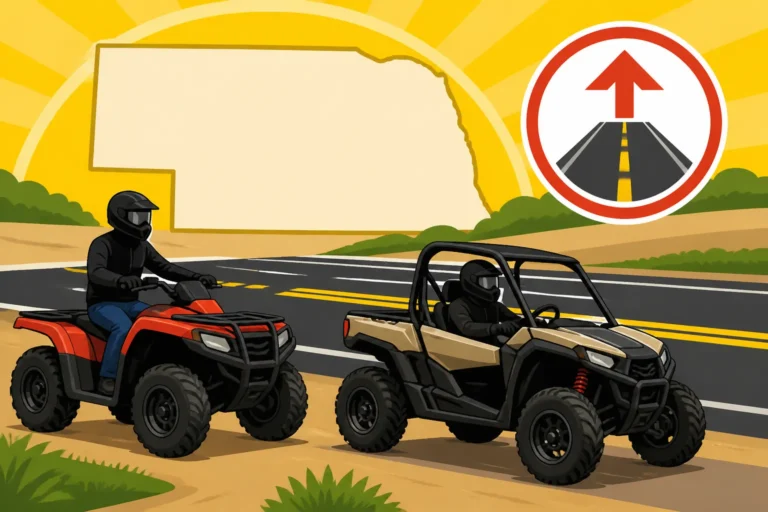
Nebraska is a state deeply rooted in agriculture, and many of our laws reflect that heritage. This is especially true when it comes to ATV and UTV use on public roads. The primary allowance for these machines on roads outside of city limits is for agricultural purposes. Think about it: farmers and ranchers often need to move their ATVs or UTVs from one field to another, check fence lines, or haul tools to an irrigation pivot. The law recognizes this practical necessity.
This "agricultural exception" isn't a free pass to ride anywhere, anytime. It specifically permits operation on public roads for agricultural purposes, which typically means directly related to farming, ranching, or other bona fide agricultural operations. This isn't just a casual cruise to a friend's house. It implies a direct, functional need for the machine in the context of agricultural work. For instance, moving feed to livestock on an adjacent parcel of land, or heading out to inspect crops, would fall under this umbrella. However, a joyride or going to the local convenience store for snacks typically would not. It's about legitimate work-related transit. The nuance can be tricky, which is why [Nebraska's Agricultural Road Exception] delves deeper into what truly qualifies.
City and Village Ordinances – Local Control
While the state has overarching rules, individual cities and unincorporated villages in Nebraska have the power to create their own ordinances regarding ATV and UTV use on their streets. This means that what's legal in one town might be completely prohibited just a few miles down the road. It's not a one-size-fits-all situation, and this local control can be incredibly confusing for riders.
Many smaller towns, especially those with strong agricultural ties, have embraced ATVs and UTVs as a practical mode of transportation for residents within their limits. These ordinances often come with their own set of requirements, which might include local registration fees, specific hours of operation, or even unique equipment mandates beyond state law. For example, a town might require a permit, proof of insurance, or even a visible flag even if state law primarily focuses on agricultural use. This patchwork of rules means you absolutely must check with the local city hall or county clerk's office before riding your machine on any municipal street. Don't assume anything; a quick phone call could save you a ticket. You can learn more about this by reading [Nebraska City Ordinances That Open Streets] and [Nebraska County Board Resolutions for Villages].
The Critical Safety Flag Requirement
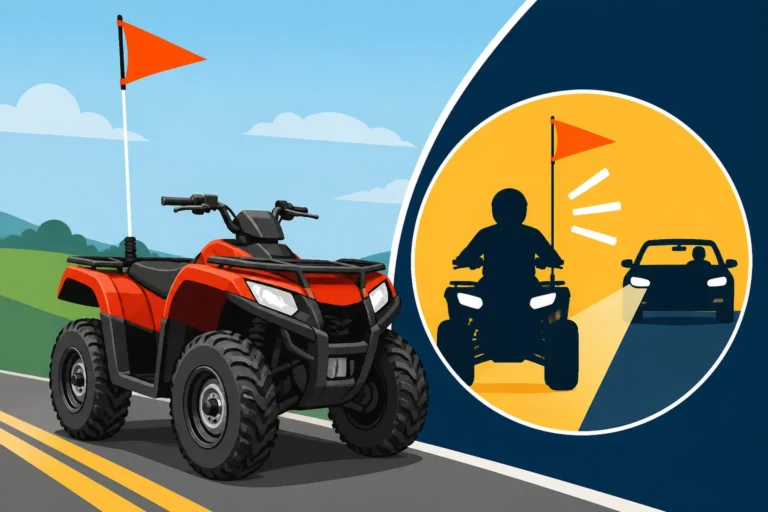
One of the most distinctive and non-negotiable requirements for ATVs and UTVs operating on Nebraska roads, particularly under the agricultural exception, is the safety flag. This isn't just a suggestion; it's a legal mandate designed to enhance visibility for other drivers, especially on dusty gravel roads or over hilly terrain where smaller machines might be easily obscured.
The rule states that when an ATV or UTV is operating on a public road, it must display a safety flag that extends at least [5 Feet Above the Ground]. This flag needs to be day-glow orange or another highly visible color, and it must be at least 30 square inches in size. Think of it as an extra measure of safety, making your machine stand out. You might be a smaller target than a car or truck, and that flag helps other motorists spot you sooner. Riders often look to aftermarket suppliers like SuperATV for durable, high-visibility flags and mounting solutions that can withstand the rigors of farm work and dusty conditions. It's a simple, yet incredibly effective, visual cue that you're on the road. Without it, you're not only risking a citation but also compromising your own safety.
Navigating Specific Road Scenarios in Nebraska
Beyond the general allowance and the safety flag, there are very specific rules governing how and when you can actually use your ATV or UTV on a Nebraska road. These aren't just minor details; they dictate the maneuvers you can make, the times you can ride, and the basic equipment you must have. Disregarding these specifics can lead to serious consequences, both legal and safety-related.
Crossing Highways and Divided Roads
This is where many riders get confused, and it’s a critical point for safety. Nebraska law is very clear: you cannot simply ride down or along a state highway or a controlled-access highway. However, you are generally allowed to cross them under strict conditions.
When crossing any highway, including a divided highway, your ATV or UTV must come to a complete stop and yield to all traffic on the highway. The crossing must be made at a ninety-degree angle to the highway. This means you approach the edge of the road, stop, look both ways, and then drive straight across, perpendicular to the flow of traffic. You cannot angle yourself to travel any distance along the highway itself, even for a few yards. This rule is designed to minimize the time your machine is in the path of fast-moving traffic, reducing the risk of a collision. It's a quick, direct movement from one side of the road to the other, not a prolonged journey. Remember, [Nebraska Bans ATVs on State Highways] for sustained travel.
Speed Limits and Daylight Riding
There are also specific limitations on how fast you can go and when you can operate your machine on public roads.
- Speed Limit: When an ATV or UTV is permitted on a public road under the agricultural exception or a local ordinance, its speed is strictly limited to 30 mph at most. This isn't a suggestion; it's the maximum speed allowed, regardless of the posted speed limit for other vehicles. These machines are not designed for high-speed road travel, and this rule reflects that. Driving faster than 30 mph puts both the rider and other motorists at risk.
- Daylight Riding: With a few exceptions, ATV and UTV road operation is restricted to the hours between sunrise and sunset. This means no riding after dark, period. The one notable exception is for snow removal operations, where a machine might need to be used at night. Otherwise, if the sun isn't out, your machine shouldn't be on a public road. This is another visibility measure, as ATVs and UTVs are generally less visible than cars or trucks in low light conditions. Even if you've added auxiliary lighting, this rule remains. You'll find more details on this in [Nebraska Daylight Riding Rule].
Licensing, Insurance, and Equipment Checks
Just because your machine isn't a car doesn't mean you're exempt from all typical road rules. When operating on public roads, certain requirements kick in:
- Driver's License: The operator of an ATV or UTV on a public road must possess a valid Class O operator's license (the standard Nebraska driver's license) or a farm permit. This is critical. You can't just have anyone operate the machine on a road, especially a minor without the appropriate permit. [Nebraska Requires a Class O License or Farm Permit] for a reason – it ensures the operator has met basic driving competency standards.
- Liability Insurance: This is a non-negotiable requirement. When an ATV or UTV is operated on a public road, it must be covered by liability insurance. This protects you and others in case of an accident. The minimum coverage amounts are typically the same as for other motor vehicles. Don't assume your existing auto policy covers your ATV for road use; it rarely does. You’ll need a specific policy for your off-road machine to legally drive it on public roads. The requirements are detailed in [Nebraska Requires Liability Insurance on Roads].
- Equipment Checks: Beyond the 5-foot safety flag, law enforcement officers can also check for other essential equipment. This includes working headlights and taillights (even though you're supposed to be riding in daylight, these are still required for the machine itself, and they must be on), functional brakes, and a properly working exhaust system. Ensure your machine is in good repair and meets basic safety standards before heading out.
What Happens If You Break the Rules?
It's easy to think that bending a rule here or there might not be a big deal, especially in rural areas. However, ignoring Nebraska's ATV and UTV road rules can lead to consequences that range from inconvenient to financially painful, and even dangerous. Understanding these repercussions is a powerful incentive to follow the law. Many riders wonder [What Paperwork a Deputy Can Ask to See] if they're stopped, and it's always best to be prepared.
Penalties for Illegal Road Use
The penalties for violating ATV and UTV road regulations in Nebraska can vary depending on the specific infraction and the local jurisdiction. However, common outcomes include:
- Fines: You can expect a fine for offenses such as riding without the required safety flag, exceeding the 30 mph speed limit, riding after dark, or operating on a prohibited road. These fines can quickly add up, especially if you're cited for multiple violations at once.
- Impoundment: In more serious cases, or for repeat offenders, law enforcement has the authority to impound your ATV or UTV. Getting a machine out of impound is not only a logistical headache but also comes with significant towing and storage fees, on top of any fines. It can turn an illegal joyride into a very expensive lesson.
- Court Costs and Legal Fees: Beyond the initial fine, you may also be responsible for court costs if you have to appear before a judge. If you decide to contest a ticket, you might incur legal fees as well.
- Insurance Implications: An ATV-related traffic citation could potentially impact your insurance rates, depending on the nature of the offense and your policy. In the worst-case scenario, if an accident occurs while you're operating illegally, your insurance company might deny coverage, leaving you personally responsible for damages.
Avoiding Common Mistakes
Many riders inadvertently break the rules because they're simply unaware or misinformed. Here are some common pitfalls to avoid:
- Assuming "Farm Use" Covers Everything: Just because you live on a farm or ranch doesn't mean every ATV trip on a public road is automatically considered agricultural. Ensure your journey is directly related to your agricultural operation. If you're heading to town for groceries, you're likely not covered by the agricultural exception.
- Neglecting the Safety Flag: It's easy to forget or intentionally skip putting up the flag, especially for a short trip. However, that [5 Feet Above the Ground] flag is a crucial safety and legal requirement. Investing in a quality flag and mount from a company like SuperATV can make compliance simple and quick.
- Ignoring Local Ordinances: Relying solely on state law is a mistake if you plan to ride within city or village limits. Always check with the local authorities. What's allowed in one town might be strictly forbidden in another. [Nebraska City Age Requirements] and [Nebraska City Insurance Requirements] are common local additions.
- Lack of Proper Licensing and Insurance: Thinking your regular car insurance covers your ATV, or that you don't need a license for a short jaunt, is a dangerous assumption. Ensure you have the proper license for the operator and valid liability insurance for the machine.
When to Consult Local Authorities
When in doubt, always ask. The best source of information for specific local regulations will always be your local government offices.
- County Sheriff or Local Police Department: These are the agencies that enforce the rules on the ground. They can provide clarification on specific interpretations of the law or common enforcement practices in your area.
- City Hall or County Clerk's Office: For city or village ordinances, your local city hall or the county clerk's office (if you're in an unincorporated village that the county board might have jurisdiction over) is the go-to resource. They can provide copies of ordinances or direct you to where they're published online. Don't hesitate to ask [Nebraska Title Questions Clerks Hear] or general riding questions before you hit the road.
- Nebraska Game and Parks Commission: While they primarily deal with recreational riding on designated trails and wildlife management areas, they can also offer insights into state-level regulations. However, for road use, local law enforcement and government are your primary points of contact.
Remember, a little proactive research can save you a lot of trouble down the road. Stay informed, ride safely, and enjoy the great outdoors Nebraska has to offer!
Nebraska ATV/UTV Road Use Quick Reference
This table summarizes some of the key rules we've discussed for operating ATVs and UTVs on Nebraska public roads. Always remember to check with local authorities for specific city or village ordinances.
| Rule Category | Requirement | Details |
|---|---|---|
| Purpose of Travel | Primarily Agricultural Exception | Permitted for bona fide farming, ranching, or other agricultural operations on county roads outside city limits. Casual riding or non-agricultural trips are generally not allowed. Local city/village ordinances may allow other uses on specific streets. |
| Safety Flag | Required | Must extend at least 5 feet above the ground. Day-glow orange or highly visible color, minimum 30 square inches. Essential for visibility, especially on dusty roads. Many riders buy flags and mounts from aftermarket suppliers like SuperATV. |
| Speed Limit | Maximum 30 mph | Even if the posted speed limit for other vehicles is higher, ATVs/UTVs must not exceed 30 mph on public roads. |
| Time of Day | Sunrise to Sunset | Riding on public roads is generally restricted to daylight hours. The primary exception is for snow removal operations. See [Nebraska Rules for Plowing Snow at Night]. |
| Highway Crossing | Stop, Yield, Ninety Degrees | Must come to a complete stop, yield to all traffic, and cross at a ninety-degree angle to the highway. Cannot travel along state highways or controlled-access highways. [Nebraska Crossing Rules at Ninety Degrees] explains this further. |
| Driver's License | Class O or Farm Permit Required | Operator must hold a valid Nebraska Class O (standard driver's license) or a farm permit. No permit means no road operation. [Do You Need a License for an ATV in Nebraska?] is a good resource. |
| Liability Insurance | Required | Must have liability insurance coverage when operating on public roads. Check your policy – typical auto insurance does not cover ATVs/UTVs for road use. Check [Nebraska Insurance Minimums Today] for current requirements. |
| Local Ordinances | Check Before You Ride | Cities and unincorporated villages can have additional rules, registration requirements, or allow road use beyond the state's agricultural exception. Always contact local authorities before riding within municipal boundaries. [Nebraska City ATV Registration Fees] might be an example of a local rule. |
| Required Equipment | Headlights, Taillights, Brakes, Exhaust | ATV/UTV must be in safe operating condition with functioning headlights (on during road use), taillights, brakes, and an appropriate exhaust system. Remember to check [Nebraska Lighting Requirements on a Machine]. |
Disclaimer
This article is for general informational purposes only and does not constitute professional advice. Laws, prices and regulations vary by location and change over time. Consult a qualified professional for guidance on your specific situation.