Nebraska Walk-In Access Land Rules
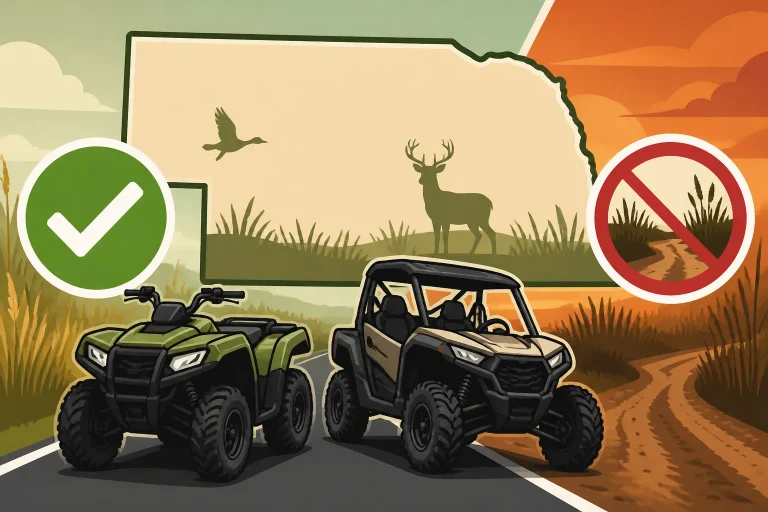
Nebraska Walk-In Access land can look like open public ground on a map, but permission to hunt there is not permission to drive an ATV or UTV across it. The key is to follow the enrolled parcel’s posted conditions and treat vehicle access as off-limits unless it is clearly authorized. Here’s how to check before you ride, hunt, park, or retrieve game.
What Walk-In Access means for ATV and UTV riders
Nebraska’s Walk-In Hunting Access program makes participating private land available to the public for specified hunting opportunities. It does not turn the property into a public riding area. The land remains privately owned, and access is limited by the program’s rules, the landowner’s conditions, posted signs, and the current access information for that parcel.
For an ATV or UTV rider, the practical starting point is simple: do not ride onto a Walk-In Access parcel unless the parcel’s current rules or the landowner expressly allow that vehicle use. Permission to enter on foot for an authorized activity does not automatically include permission to drive, unload, stage a machine, or cross the property.
That distinction matters because an ATV can seem like a useful way to reach a hunting spot or retrieve equipment. But a marked Walk-In Access boundary is not a trail designation, and a nearby road or parking area does not imply permission to continue by machine. Even a short ride across grass, a field edge, or a farm lane can cross a boundary or damage the property.
| What you want to do | Safe starting assumption | What to check |
|---|---|---|
| Hunt on an enrolled parcel | Access may be available for the listed hunting opportunity | Current parcel information, signs, dates, and any restrictions |
| Ride an ATV or UTV on the parcel | Do not assume vehicle access is allowed | Explicit permission from the landowner or a clear program rule |
| Park at or near the parcel | Use only a permitted public parking location | Posted directions and current access information |
| Cross the parcel to reach other land | Do not assume the parcel is a through-route | Permission covering the route and vehicle |
| Retrieve game with a machine | Do not assume hunting access includes motorized retrieval | Applicable rules and specific landowner permission |
Walk-In Access is also different from a public trail system. If you are looking for somewhere to ride, use places that specifically allow motorized recreation rather than treating enrolled hunting ground as an informal route. For broader context on using a machine while hunting, see Nebraska Hunting Land Access by Machine and Your Hunting License Does Not Open Any Trails.
How to check a parcel before you go
Access conditions can vary by parcel and may change. Before setting out, check the current Nebraska Game and Parks information for the specific property, then compare it with the signs at the site. Do not rely only on an old screenshot, a pin in a map app, a hunting forum post, or a previous visit.
- Find the parcel in current program information. Confirm that the land is enrolled and that the access period and permitted activity match your plans.
- Read the parcel-specific conditions. Look for restrictions on where people may enter, what areas are closed, and whether access is limited to particular dates or uses.
- Locate the boundary and any designated access point. A road that touches the property is not necessarily an authorized entrance. A driveway or farm track is not automatically public.
- Read signs when you arrive. Signs can identify boundaries or restrictions that are easy to miss on a screen. If posted information conflicts with what you expected, stop and verify rather than proceeding.
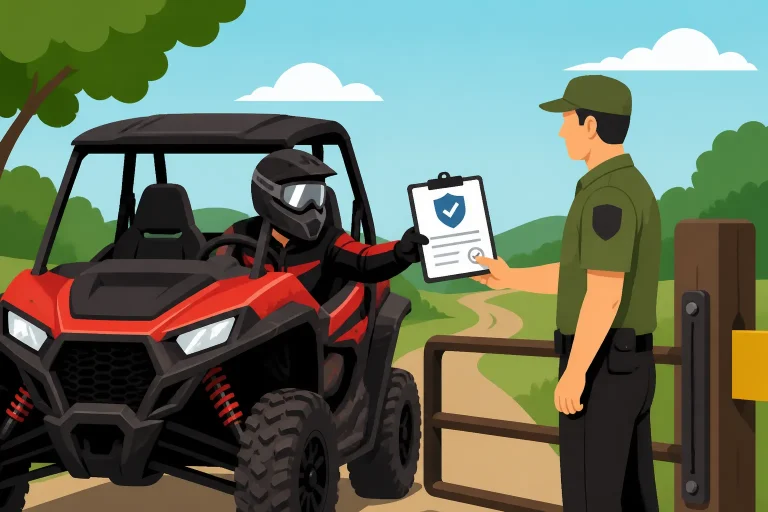
- Confirm vehicle permission separately. If the information does not clearly allow an ATV or UTV, assume you need the landowner’s direct permission before taking a machine onto the property.
The map is a planning tool, not a substitute for permission. Parcel boundaries may be difficult to see on the ground, especially where fields, pasture, tree lines, and roads meet. If you cannot tell whether your machine is on public road right-of-way, private land, or an enrolled parcel, do not keep riding while you guess.
A hunting license does not itself create permission to operate an ATV on private land. It also does not authorize travel across a parcel simply because that route would make a hunt more convenient. Review Nebraska Hunting License and Land Access alongside the parcel conditions, and get landowner permission for activities outside the access offered by the program. Nebraska Landowner Permission Rules explains why it is useful to be specific about the activity and location when asking.
Vehicle access, parking, and game retrieval
Treat the parcel as foot access unless told otherwise
The name “Walk-In Access” is a useful reminder: access for hunting does not mean vehicle access. Unless the current parcel information or the landowner clearly allows motorized use, leave the ATV or UTV on a lawful public road or at an authorized parking area. Do not drive in to unload, follow a field edge, or use a farm track as a shortcut.
A machine parked on a road shoulder may also create problems if it blocks traffic, a gate, a field entrance, or farm equipment. Use only a location where parking is lawful and does not obstruct access. If the program information identifies a parking area, follow those directions; if it does not, do not treat a convenient pull-off as an official staging area.
Do not use the parcel as a pass-through
A Walk-In Access parcel is not a public corridor between roads, hunting areas, or other parcels. A route that looks open on a map may cross private ground, a closed portion of the property, or a boundary the program does not include. Riding around a gate or across a field to reach another destination is not covered by ordinary walk-in access.
This is especially important when a machine can travel farther than a person can easily walk. A route may appear to save time but can take you across land for which you do not have permission. Ask the landowner before using any private route, even if it seems to be an established track.
Make a retrieval plan before hunting
Do not count on being able to bring an ATV or UTV onto the parcel later to retrieve game, gear, or a disabled machine. Permission to hunt and permission for motorized retrieval are separate questions. If a recovery situation comes up, contact the landowner and explain what you need to do before bringing a vehicle onto the property, unless an emergency requires immediate action.
A plan made before the hunt is more reliable than trying to sort out access after dark or in poor weather. Decide where the machine can legally remain, how far you are prepared to carry equipment on foot, and whom to contact if you need additional access. For other kinds of hunting land, see Carrying a Landowner’s Written Permission in Your Pocket.
Common mistakes and a safer way to plan
The most common mistake is treating a Walk-In Access parcel as if it were generally public land. It is private property made available for defined access, not a broad invitation to ride, camp, practice, or explore. A second mistake is relying on the fact that no one is visibly present. An empty field is not evidence that motorized entry is allowed.
Other avoidable problems include:
- Assuming an ATV is allowed because hunting is allowed. Confirm vehicle access separately.
- Following tire tracks or a farm road. Tracks may belong to the landowner or farm operations and do not establish public permission.
- Crossing a boundary to reach a better spot. Stay within the area and conditions shown for the parcel.
- Leaving a gate or fence open. Follow posted instructions and leave barriers as you found them, unless signs say otherwise.
- Using outdated maps. Recheck the current program information before each trip.
- Treating a Wildlife Management Area as the same thing. Rules for a WMA are not automatically the rules for Walk-In Access land. Check the specific area’s requirements, including Nebraska WMA Access for a Quad and Nebraska WMA Roadway Rules.
- Assuming permission for one use covers another. Hunting, parking, vehicle travel, and game retrieval may have different conditions.
A practical trip plan is to identify the parcel, read its current conditions, mark the boundary, and select a lawful place to leave the machine before you arrive. If you need to ride on the property, contact the landowner and request permission that specifically covers the machine, route, and purpose. Written permission can help avoid misunderstandings, but it does not replace any program restrictions or other applicable rules.
If the rules are unclear, do not treat uncertainty as approval. Contact the appropriate program office or landowner before entering with a vehicle. The same approach applies if you see a sign that appears inconsistent with the map: stop, verify, and choose a different route until access is clear.
Disclaimer
This article is for general informational purposes only and does not constitute professional advice. Laws, prices and regulations vary by location and change over time. Consult a qualified professional for guidance on your specific situation.