Nebraska Sound Limits on Public Land
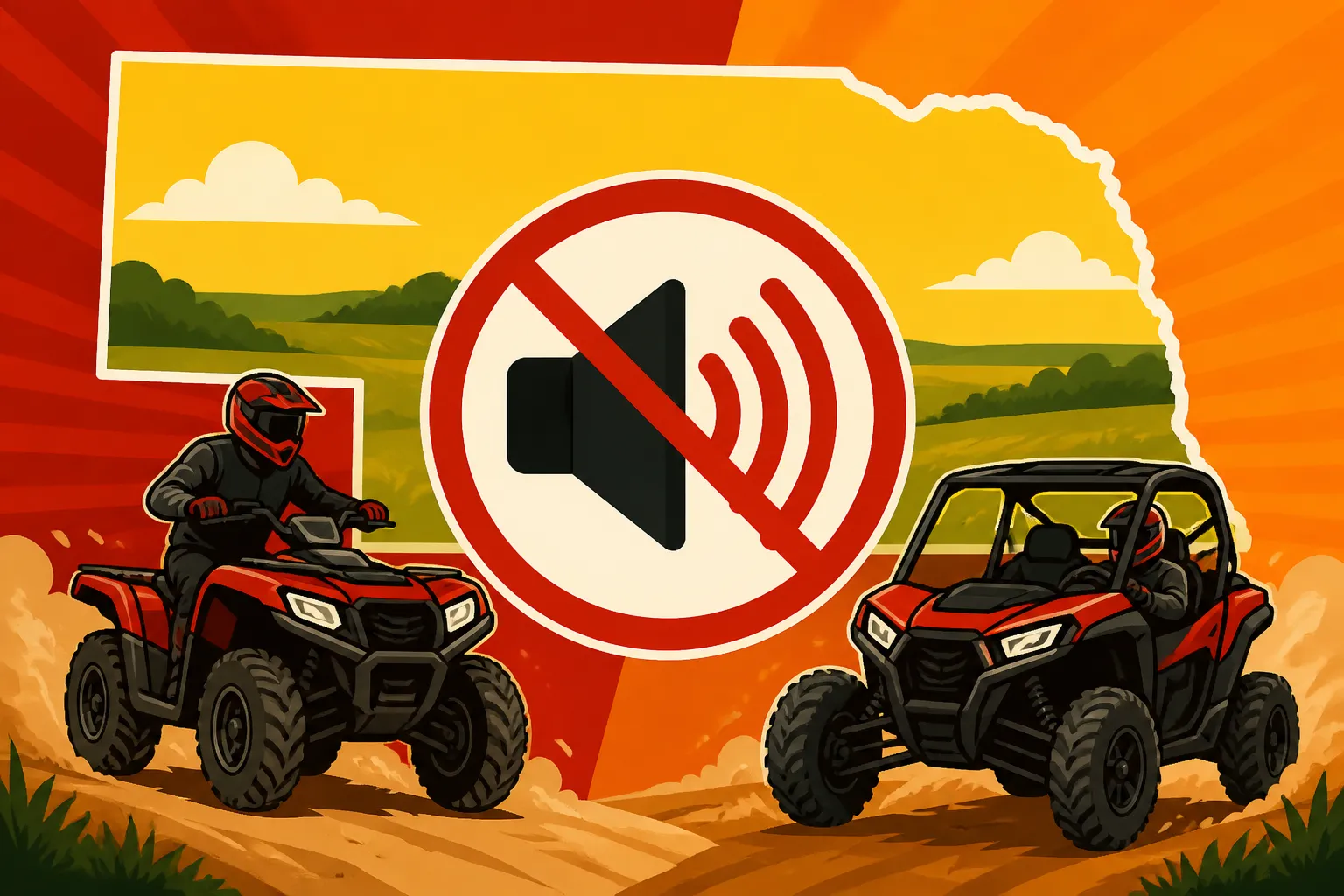
Nebraska riders often hear that public-land trails have a sound limit, but the answer can depend on who manages the land and which rules apply there. A statewide number should not be assumed. Here’s how to check the rules for a specific riding area, keep an ATV or UTV from becoming a noise problem, and respond if a ranger or land manager raises a concern.
How Nebraska public-land sound rules work
There isn’t one sound limit you can safely assume applies to every Nebraska public riding area. Different public lands may be managed by different agencies, and site-specific rules can apply alongside broader laws. A trail, campground, or riding area may also have restrictions that are not the same as rules for roads or private parks.
That means “public land” is not one set of noise rules. Before you haul out, identify the specific area and the agency or organization that manages it. Check current rules for that location rather than relying on what a friend recalls from another trail.
| What to check | Why it matters |
|---|---|
| The land manager’s current rules | Requirements may differ between public areas and change over time. |
| Posted signs and any site notices | They can explain limits, closures, or restrictions that apply at the trailhead or in a particular zone. |
| Your machine’s exhaust and muffler | Alterations or damage can make a machine louder and may violate equipment rules. |
| Local sound or operating restrictions | A land manager may address excessive noise even if you cannot find a single statewide decibel figure. |
| Rules for the specific trail or recreation area | A general land-use permission does not automatically mean every machine or use is allowed. |
Noise rules can also be separate from other vehicle requirements. For example, a machine may need particular equipment to ride in a certain area, while a separate rule addresses how it is operated. A spark arrester is not a sound limit, and meeting a sound requirement does not prove that the machine meets every other equipment rule. For details on that separate issue, see Do Nebraska National Forest Trails Require a Spark Arrester?.
Do not treat the absence of a posted decibel number as permission to ride an excessively loud machine. A land manager may be able to enforce a general rule about excessive noise or set local restrictions. Conversely, do not assume that a machine is automatically prohibited just because it sounds loud to someone nearby. The applicable rule, the location, and the circumstances all matter.
A permit is another separate issue. Nebraska does not have a statewide OHV permit or sticker, but that does not mean every public area is open to every ATV or UTV. Access rules, parking requirements, trail closures, and equipment conditions can still apply. See Nebraska Has No OHV Permit or Sticker for the distinction between a statewide permit and the rules at a particular riding area.
Check the site before you load the machine
The most useful first step is to look up the exact destination and its current rules. A broad search for “Nebraska ATV noise limit” may turn up a claim that does not apply to your trail. Start with the managing agency or the specific recreation area instead.
Confirm who manages the area
Find the official page or contact information for the land manager. If the location is a national forest trail, check the relevant Forest Service district. For a riding area managed by another public agency, use that agency’s current rules. If the trail is on land operated under a local agreement, make sure you are checking the entity responsible for day-to-day operations.
For example, riders planning to use Bessey OHV Trails at Halsey in Nebraska should check information for the Bessey area and the managing office, rather than assuming rules from a different forest or private park carry over. The same principle applies to any Nebraska riding destination: confirm the name and boundaries of the area, then check its own requirements.
Read the details, not just the headline
Look for wording about sound, mufflers, exhaust systems, operating behavior, quiet hours, and enforcement. Some rules may apply to a particular campground or event rather than every trail. Others may govern the condition of the machine, regardless of when or where it is operated.
If a rule gives a sound measurement, read how and where it is measured. A decibel figure without a testing method is not enough to tell whether a machine complies. Measurement distance, engine speed, meter placement, and testing conditions can affect the result. Do not compare a measurement from a phone app at the tailpipe with an official test unless the method is the same.
If online information is unclear, ask the managing office a direct question before traveling. Useful questions include:
- Is there a sound limit or muffler requirement for this area?
- Does the rule apply to ATVs, UTVs, or both?
- Is there a required testing method or sound standard?
- Are there quieter hours or areas where machines may not be operated?
- Are temporary closures or special event rules in effect?
- What should a rider do if a ranger or staff member says a machine is too loud?
Keep a note of the office’s answer and when you checked. That will not replace the official rule or guarantee that a machine is compliant, but it can prevent a wasted trip based on an outdated forum post or a rule for another location.
Treat signs and temporary notices as important
Rules can be posted at a trailhead, campground, or entrance, and temporary notices may apply after conditions change or during an event. Read them before unloading. If a sign is unclear, do not guess that it does not apply; ask the land manager or staff before riding into the area.
If you are comparing sites, Nebraska Public Land Rules Compared to Private can help clarify why a public trail and a private riding park may set different conditions. A private park’s waiver or sound policy does not determine what is allowed on public land, and a public-land rule does not automatically apply at a private park.
Keep ATV and UTV noise under control
Even when a riding area does not publish a clear decibel limit, riders can take practical steps to avoid unnecessary noise. The goal is not to make every machine silent. It is to keep the exhaust system in good condition, avoid modifications that increase noise, and operate considerately around other users, homes, and wildlife.
Inspect the exhaust system
Before a ride, check for a loose, damaged, or missing muffler and look for signs that the exhaust has been modified. A worn or leaking system can become louder over time. If you notice a sudden change in sound, investigate it before heading to public land instead of assuming it is normal.
Useful checks include:
- Look for loose fasteners and visible damage around the exhaust.
- Check for exhaust leaks, especially near joints or connection points.
- Confirm that required components have not been removed or altered.
- Use parts designed for the machine and have repairs made by someone qualified when needed.
- Follow the manufacturer’s maintenance guidance for the exhaust system.
A machine that came from a dealer or passed a prior inspection is not necessarily compliant forever. Parts wear, repairs may change the system, and a previous owner may have made modifications. Check the machine you are riding now.
Avoid relying on a phone app as proof
A phone app can offer a rough indication that one machine is louder than another, but it should not be treated as an official compliance test. Phone microphones vary, and results can be affected by wind, distance, nearby traffic, walls, or the way the engine is revved.
A handheld sound meter can be useful for a rough comparison or to notice a change after maintenance. If you shop through retailers such as Amazon, look for a meter with clear instructions and a stated measurement range. But owning a meter does not establish that your machine meets a land manager’s rule. If an area uses a particular test method, follow that method or ask the managing office how it evaluates sound.
Never rev a machine close to another person to compare noise. Keep a safe distance, avoid testing near homes or campsites, and do not conduct an improvised test in a way that creates a new disturbance.
Ride in a way that limits disturbance
Riding behavior can make a noisy machine more disruptive. Repeated hard acceleration, unnecessary high engine speed, and prolonged idling can be especially noticeable near a trailhead or campground. Use only authorized routes, keep to posted speed limits, and avoid revving the engine when stopped.
Be particularly considerate when entering or leaving a riding area. A machine may be close to other users at staging areas, parking areas, or campsites, where noise carries and people may be resting. If the area has quiet hours, follow them even if the engine itself has not been measured.
For broader trail conduct, see Nebraska Trail Etiquette Locals Expect. Good etiquette does not replace a legal requirement, but it can reduce conflicts and help keep access welcoming for riders and other visitors.
What to do if someone says your machine is too loud
If a ranger, land manager, or other authorized staff member raises a noise concern, stay calm and ask which rule applies. Do not argue based only on a claim you saw online, and do not assume that a sound complaint automatically means a ticket. Ask whether the concern is about a specific equipment rule, a local restriction, or the way the machine is being operated.
If you are asked to stop riding or leave a particular area, comply while you clarify the rule. Continuing to operate the machine during a disagreement can make the situation worse. If you believe a citation or direction was mistaken, get the relevant rule and the process for asking questions or contesting the decision afterward.
Write down the practical details while they are fresh:
- The name of the area and the location where the issue occurred.
- The date and approximate time.
- The wording of the rule or sign, if you were shown one.
- Whether anyone described a sound test or measurement method.
- The name or role of the person who spoke with you, if available.
- Any steps you took, such as stopping the machine or arranging an inspection.
Do not rely on a verbal recollection alone if you need to understand the rule later. Ask where the official rule is published or which office can explain it. If the issue involves a citation, follow the instructions on the citation and use the appropriate formal process. For a separate issue involving riding in a closed area, see Nebraska Penalties for Riding a Closed Area.
If your machine is plainly louder than it used to be, repair or inspect it before returning. If you cannot tell whether a modification is allowed, ask the land manager and a qualified repair professional. A small amount of time spent checking the exhaust and the site’s current rules is easier than making a long trip only to find that the machine cannot be used there.
The practical takeaway is simple: Nebraska riders should not assume a single public-land sound number applies everywhere. Confirm the rules with the managing authority for the specific area, keep the exhaust system intact, and operate with consideration for other people using the land.
Disclaimer
This article is for general informational purposes only and does not constitute professional advice. Laws, prices and regulations vary by location and change over time. Consult a qualified professional for guidance on your specific situation.