Nebraska Permits Valid a Calendar Year
A Nebraska annual park permit is easy to misunderstand: “annual” can sound like it lasts a full year from the day you buy it. In practice, the permit follows the calendar year, so the purchase date matters. Here’s how to plan around its expiration, avoid buying the wrong permit, and understand what the pass does—and does not—allow an ATV or UTV rider to do.
How Nebraska’s calendar-year permit works
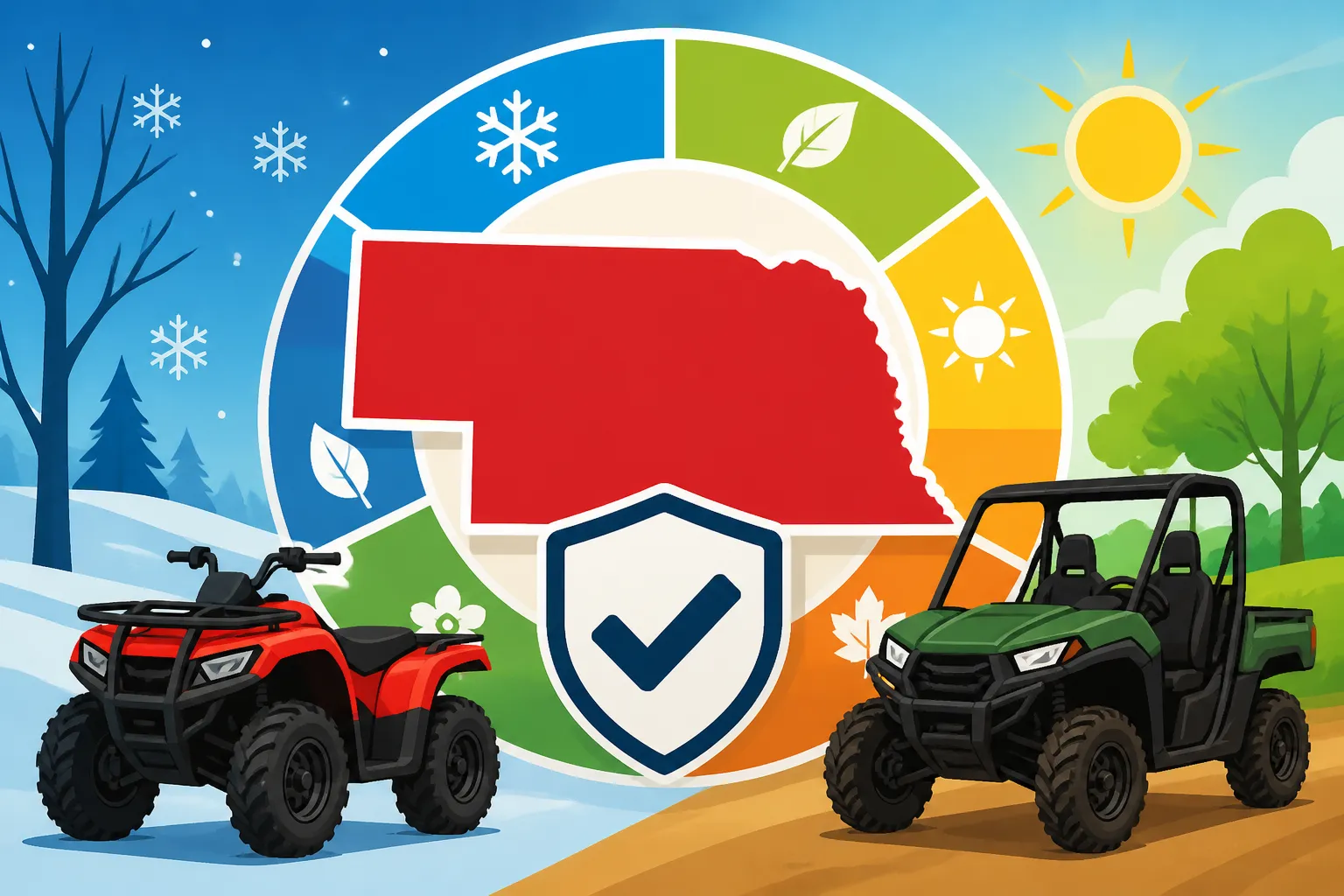
A Nebraska annual park entry permit is tied to a calendar year, not to a rolling 12-month period. The year runs from January 1 through December 31. If you buy an annual permit after the year has started, it generally covers only the remainder of that calendar year; it does not extend 12 months from your purchase date.
That distinction can change the value of buying one. A permit purchased early in the year may be useful for many months. One purchased late in the year may cover just a short stretch before it expires. The key question is not simply, “How much does an annual permit cost?” It is, “How often will I use it before December 31?”
| When you buy the annual permit | What to plan for |
|---|---|
| Near the start of the calendar year | You may have most of the year to use it |
| In the middle of the year | It covers the remaining part of that calendar year, not the next 12 months |
| Near the end of the year | It may expire soon after purchase; check whether the upcoming year’s permit is available |
| Before a new calendar year begins | Confirm which year the permit is valid for before relying on it |
The exact sale and display procedures can change, so check the current instructions from the state agency or the location where you plan to buy the permit. In particular, confirm that a permit bought ahead of the new year is valid for the year you intend to visit. Do not assume that a purchase date automatically determines the first day it can be used.
If you are unsure which year is printed on or associated with your permit, check that detail before driving to a park. A receipt can show that you paid, but the permit’s validity period is what matters when you arrive. Keep the receipt until you have confirmed that the permit is properly issued and displayed.
For more on the date printed or associated with a pass, see Nebraska Park Permit Expiration. If you are comparing an annual pass with a one-day option, [Nebraska Daily vs Annual Park Permits] can help you think through which better fits your plans.
Buying at the right time
The best time to buy depends on when you expect to use Nebraska’s state parks and recreation areas. If you take several trips spread across the year, an annual permit may be convenient. If you have one visit planned, a daily permit could make more sense. Either way, compare the permit period with the dates of your trips rather than treating “annual” as a guarantee of 12 months of coverage.
A practical approach is to write down your likely visit dates before purchasing:
- List the places you expect to visit.
- Estimate how many separate days you will go.
- Check whether your trips fall in one calendar year or across two.
- Compare the available permit types and current requirements.
- Confirm the permit’s effective year and where it must be displayed.
Trips around New Year’s deserve extra attention. A pass that covers one calendar year may not cover a visit in the next one, even if the visits are only days apart. If your plans straddle December and January, ask whether you need separate coverage for each year or whether another option is available. Confirm this before setting out, especially if you are traveling a long distance.
Nebraska’s park permits are sold through official channels, and availability or procedures may vary. Check How to Buy a Nebraska Park Permit for the practical purchasing steps, and verify the current permit cost with the official provider before budgeting. Fees and purchase methods can change, so avoid relying on an old receipt, a previous season’s information, or a general online listing as proof of the current rules.
Accessories can help keep travel documents organized, but they do not determine whether a permit is valid. For example, a waterproof document pouch from Amazon may be useful for holding a receipt and trip notes in a tow vehicle. If you use Amazon for a clear sleeve or folder, make sure it does not interfere with the required way the permit must be displayed. Follow the agency’s directions rather than choosing a placement based on the holder you happen to own.
A permit is not transferable just because the vehicle, truck, or trailer changes. Before switching vehicles or lending a vehicle to someone else, read the permit instructions. The rules for display and the vehicle covered by a pass matter just as much as the expiration date. If you need a duplicate or have lost a pass, use the official process described in Nebraska Duplicate Park Permits rather than assuming a photocopy or a saved image will be accepted.
What the permit covers—and what it does not
A calendar-year park permit is an entry permit for the vehicle under the applicable rules. It is not a statewide ATV registration, an OHV trail permit, or a general license to ride a quad or side-by-side wherever you find public land.
That difference is especially important for off-road riders. Nebraska does not issue a general state OHV sticker for ordinary ATV or UTV use. A park entry permit may be required for a vehicle entering a state park or recreation area, but it does not make a closed area open to ATVs. Nor does it override rules set by a land manager, a local authority, or a private property owner. See Nebraska Has No OHV Permit or Sticker for the distinction between the park permit and an ATV-specific permit.
A permit also does not turn roads into riding routes. A road-use exception, local ordinance, trail designation, or landowner’s permission is a separate question. A valid park pass cannot replace any of those requirements. Before traveling, check the rules for the specific place and type of riding you have in mind. Nebraska State Park Entry Permits explains the entry-permit side, while Nebraska Recreation Area Rules for ATVs addresses what an entry permit does not settle about ATV use.
This is where riders sometimes make an expensive planning mistake: they buy a park permit because they are going to a park, then assume that the pass authorizes riding there. Nebraska state parks generally do not allow ATVs, and recreation-area rules also restrict where motorized machines can go. Verify the rules for the exact area before unloading. If your intended route crosses multiple kinds of land, check each manager’s requirements separately.
There can be narrow, location-specific exceptions to general restrictions. For example, a rule involving a frozen surface is not a blanket authorization to ride any frozen water. Conditions, posted closures, access rules, and permit requirements can all matter. Read the signs at the site and check the relevant land manager’s current information. Do not infer permission from a general park permit or from a route that was open in a previous season.
Use this simple distinction when planning:
- Park entry permit: May be required to bring a vehicle into a state park or recreation area.
- ATV or UTV access permission: Depends on the specific land, trail, road, or local rule.
- Machine title: Establishes ownership records; it does not provide riding access.
- Road-use requirements: Apply separately where an ATV is allowed on a public road.
- Private-land permission: Comes from the landowner, not from a park permit.
If you are deciding where to ride, start with Which Public Land a Visitor Can Ride in Nebraska. For a discussion of the limited frozen-water question, see Does a Frozen WMA Lake Need a Park Permit?. Those are separate decisions from whether your annual park pass is still within its calendar-year validity.
Plan for two calendar years when your riding season crosses December
Riders who travel only in summer may rarely think about the calendar-year rule. It becomes more important if you visit late in the year, make winter trips, or plan a New Year’s weekend. A permit that is valid for one calendar year should not be treated as good for the same trip next year simply because you bought it near the end of the previous season.
Make a note of the expiration date as soon as you receive the permit. Add a reminder to your phone or keep a note with the tow-vehicle paperwork. If you are the person who manages a family’s riding trips, tell anyone who may take the vehicle that the permit is date-limited. A worn sticker or a remembered purchase date can be misleading; check the permit itself and current agency instructions.
If you carry a paper receipt, store it somewhere dry and easy to find. A simple vehicle document folder can help keep the receipt separate from registration papers, insurance documents, and machine title paperwork. Some riders use a sleeve or organizer from Amazon for this purpose, but the organizer is only for storage. It does not replace the official permit or change its required display location.
For a trip that crosses December and January, use a checklist rather than guessing:
- Identify the date you enter each park or recreation area.
- Check which calendar-year permit is valid on that date.
- Confirm whether the permit is already available for the new year.
- Verify display instructions for the vehicle you will bring.
- Recheck the destination’s ATV and UTV access rules.
- Keep proof of purchase and any relevant confirmation with your trip documents.
For a group trip, do not assume one vehicle’s permit covers every vehicle in the convoy. Check the permit conditions for each vehicle you plan to bring. If someone is borrowing a truck or tow vehicle, make sure the person understands whether the permit is associated with that vehicle and how it must be displayed. A quick call to the relevant office can resolve an unclear situation before the group leaves home.
It is also worth checking the permit before a trip if the vehicle has changed since the prior season. A replacement windshield, a new truck, or a different vehicle can affect how a pass is displayed. If the permit has been damaged or lost, ask the official seller or agency what to do. A homemade copy, photograph, or old pass may not satisfy the requirement.
Common mistakes and a quick pre-trip check
The calendar-year rule is straightforward once you separate the permit year from the purchase date. Most problems come from assumptions: that annual means 12 months, that a park pass authorizes ATV use, or that a permit from one vehicle automatically works with another.
Watch for these common mistakes:
- Buying late in the year without checking the expiry. Ask which calendar year the permit covers and when it stops being valid.
- Confusing a park entry pass with an OHV permit. Nebraska’s park permit does not create an ATV trail network or authorize riding in closed areas.
- Assuming a public area allows motorized riding. Check site-specific rules, signs, and current closures.
- Using a previous year’s permit for a January trip. Confirm the new year’s requirement before traveling.
- Assuming a receipt is the permit. Follow the official instructions for the actual permit and its display.
- Relying on a third-party accessory listing for rule information. A sleeve or holder bought from Amazon can organize papers, but only official instructions determine valid dates and display rules.
- Forgetting the tow vehicle’s permit when changing vehicles. Check whether the pass is attached to, issued for, or displayed on a particular vehicle.
- Treating a permit as permission to ride on roads. Road access, insurance, licensing, equipment, and local rules are separate issues.
Before leaving, take a minute to check the permit year, the vehicle carrying it, and the rules for the place you are visiting. If the trip includes riding, confirm that riding is actually allowed at the destination. A current entry permit can get the vehicle through the park-entry requirement, but it cannot substitute for trail access permission.
If the instructions are unclear, contact the official permit provider or the office responsible for the destination. Ask a specific question: “I plan to enter on this date in this vehicle; which permit year do I need, and where must I display it?” For riding access, ask separately whether the particular machine may use the intended trail, road, or area. Keep those questions distinct, and you are less likely to arrive with the right pass for the wrong activity.
Disclaimer
This article is for general informational purposes only and does not constitute professional advice. Laws, prices and regulations vary by location and change over time. Consult a qualified professional for guidance on your specific situation.