Nebraska Visitors From Iowa
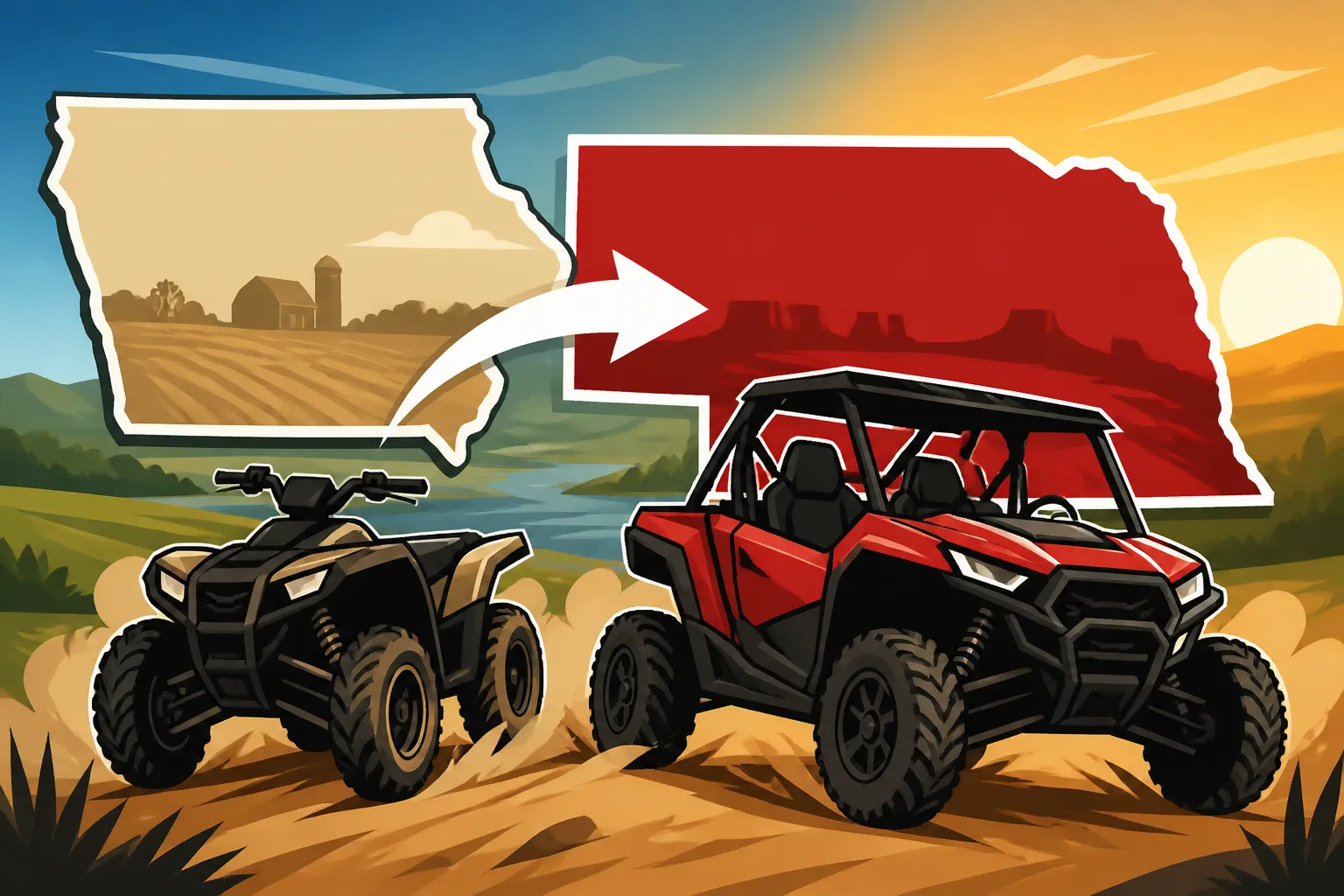
If you’re bringing an ATV or UTV from Iowa to ride in Nebraska, it’s easy to confuse your home-state paperwork with Nebraska access rules. The key point: Nebraska does not require a statewide OHV permit or sticker, but that does not mean every trail, public area, or road is open to you. Check the rules for the specific place before unloading.
What Iowa visitors need to know about Nebraska permits
Nebraska does not issue a statewide ATV or UTV permit or trail sticker for visitors to buy. You do not need to obtain a Nebraska OHV sticker simply because you crossed the state line. That is the short answer to the permit question, and it applies whether your machine is registered in Iowa or comes from somewhere else.
But “no statewide permit” is not the same as “ride anywhere.” Access depends on the land you are visiting. A forest trail, private riding park, wildlife management area, and town street can each have different rules. Some locations charge for parking or entry, and private parks may set their own check-in and safety requirements. Start with the place you plan to ride, not just the paperwork you carry from Iowa.
For a closer look at the statewide rule, see Nebraska Has No OHV Permit or Sticker. Nebraska does not have a state sticker to issue or a visitor permit that substitutes for site-specific permissions. The practical distinction is:
| Question | What Iowa visitors should expect |
|---|---|
| Do you need a Nebraska statewide ATV sticker? | No statewide OHV sticker is required. |
| Does Iowa registration or a permit open Nebraska trails? | No. It does not grant access to land or trails. |
| Can you ride on any Nebraska public land? | No. Each area has its own access rules, and some public areas prohibit ATVs. |
| Can you ride Nebraska roads because your machine is registered in Iowa? | No. Nebraska road-use laws and local restrictions still apply. |
| Might a park or private riding area charge separately? | Yes. Check the rules and current fees directly with the site. |
Nebraska’s approach can be confusing if you are used to a registration or permit system at home. Nebraska has no statewide ATV registration program that works like a pass for riding locations, so there is no Nebraska permit for Iowa’s registration to reciprocate with. The distinction is explained in Nebraska Has No Registration to Reciprocate and Nebraska Visitors Need No State Sticker.
Bring the documents that are relevant to your machine and trip, but don’t treat them as trail access credentials. Iowa paperwork may help establish that the machine is yours or meet requirements that apply in Iowa. It does not override Nebraska land-manager rules, a private park’s conditions, or Nebraska’s road laws.
Before leaving home, identify the exact place where you intend to ride and check its current rules. If your plan includes more than one site, check each one separately. Two riding locations in the same region can have different fees, vehicle restrictions, routes, and operating hours.
Where you can ride in Nebraska
For a visitor, the most important permit question is often really an access question: where can the machine legally be ridden? Nebraska does not offer one statewide trail pass that opens public land. Instead, permission depends on the landowner or managing agency and the rules for the specific area.
Nebraska Public Land Rules Compared to Private provides useful context, but the core habit is simple: verify that the site allows your type of machine and that the route you want to use is open to it. A place that welcomes hikers, campers, or other motor vehicles may still prohibit ATVs and UTVs.
National Forest trails
Nebraska National Forest areas are among the destinations riders may consider, but forest land is not a blanket invitation to ride off-road. Use only routes or areas designated for the type of vehicle you are bringing, and follow closures and posted signs. A trail may have vehicle-size or use restrictions, and conditions can change.
If you are planning a trip to Halsey, review Nebraska National Forest Riding and the specific information for Bessey OHV Trails at Halsey in Nebraska. Confirm which trailheads and routes are open, where trailers can be staged, and whether a parking fee or other site charge applies. A parking fee is not an ATV registration fee, and paying it does not give you permission to leave designated routes.
Check the latest site information before you tow. A route that appeared in an older map or trip report may be closed, under maintenance, or subject to seasonal restrictions. If the rules are unclear, contact the managing office before making the drive rather than relying on a social media post or an old map.
State parks and recreation areas
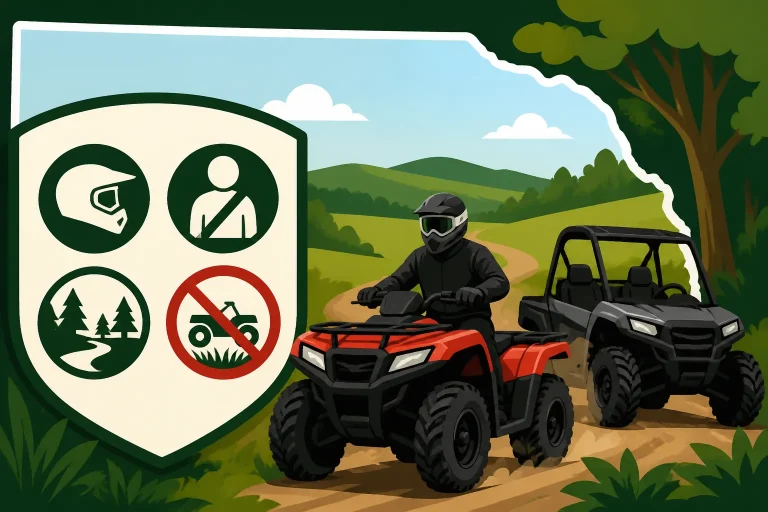
Do not assume that a Nebraska state park or recreation area is an ATV trail system. Nebraska state parks generally do not allow ATVs to ride on their grounds. The details are covered in Nebraska State Parks Ban ATVs and Nebraska Recreation Areas Closed to ATVs.
A state park permit, where required for your vehicle’s entry, is not an ATV riding permit. These are separate issues: a permit may apply to the vehicle you drive into a park, while the ATV itself remains prohibited from riding there. Ask the park what is allowed before planning to unload a machine or use it to travel around the property.
If a park borders a forest, lake, or other riding area, that proximity does not make the park’s internal roads or grounds open to ATVs. Plan the tow vehicle’s parking and the machine’s riding location as separate parts of the trip.
Wildlife management areas and other public land
Wildlife management areas are not automatically open for general ATV trail riding. Access may be limited to designated roadways or specific uses, and motor vehicle rules can differ from those at a forest trail system. Read the rules for the individual area before entering. Nebraska WMA Access for a Quad and Nebraska WMA Roadway Rules explain why a WMA should not be treated as an unrestricted trail network.
A hunting license, public access sign, or general permission to enter land does not necessarily authorize ATV use. Nor should you assume that a route used by farm equipment or agency vehicles is open to recreational riding. Respect barriers and signs, and don’t ride around a closure to reach an otherwise tempting trail.
For other public riding options, use Which Public Land a Visitor Can Ride in Nebraska as a starting point, then verify the particular location’s current conditions. Confirm the permitted vehicle types, open routes, access hours, parking arrangements, and any charges before setting out.
Private riding areas
A private park can be a practical option when you want a defined riding area, but its requirements are set by the operator rather than by Nebraska’s statewide permit system. Check whether the park allows your ATV or UTV, whether it has width or passenger limits, what safety equipment it expects, and whether minors need adult supervision or a signed waiver.
Ask about current entry charges, parking, reservations, operating hours, and trail conditions directly with the park. Requirements can differ between facilities, so an Iowa registration or an admission receipt from another location should not be assumed to count. Follow the park’s own route markings and instructions even if you have ridden there before.
Iowa paperwork, road use, and insurance
Your Iowa documents and Nebraska access permissions answer different questions. Paperwork from home may relate to ownership or operation in Iowa; it does not automatically make a Nebraska road or trail available to you. And Nebraska’s lack of a statewide OHV sticker does not exempt visitors from Nebraska laws.
Keep ownership records separate from riding permission
Carry the ownership documents you normally use for your machine and keep them accessible during transport and at the destination. If you are borrowing a machine, make sure you have the owner’s permission and know how to reach them. If a land manager or private park asks for proof of ownership, follow its instructions.
Do not rely on a registration card as proof that you can ride a particular parcel. A machine can be properly documented and still be prohibited from a trail or public area. Conversely, a site’s permission to ride does not settle questions about ownership paperwork or road operation.
It is also wise to check that the machine’s identification number is legible and that the paperwork matches the machine. That can make it easier to resolve a question at a park or after a breakdown. Keep documents protected from mud and rain, and avoid leaving original paperwork unsecured in a parked trailer.
Public-road riding is a separate issue
An Iowa registration, plate, or other home-state credential does not automatically authorize road riding in Nebraska. Road operation is governed by Nebraska law and can also depend on the road, the purpose of the trip, the machine’s equipment, and local rules. Nebraska restricts ATV and UTV road use; a visitor should not assume that a public gravel road is open just because it is quiet or convenient.
Before riding on or crossing a road, review Can You Drive an ATV on the Road in Nebraska? and Nebraska Rules for a Visiting Iowa Rider. If you are considering a specific road, check the applicable local ordinance or ask the relevant local authority. State rules and local permissions can interact, and a route allowed in one town or county may not be allowed in another.
Do not ride along a road to connect two trails unless that exact use is lawful. A short connector can still be a road trip under the rules. When in doubt, trailer the machine between riding locations instead of improvising a route.
Insurance and equipment
Insurance is another area where home-state assumptions can lead to trouble. Coverage that applies to riding in Iowa may not be the same as coverage for a machine used in Nebraska, especially if you plan to ride on roads or visit a private facility. Contact your insurer before traveling and ask what the policy covers in Nebraska, including liability, passengers, towing, and use on public roads.
Nebraska has specific insurance requirements for certain road use. Review Nebraska Insurance Proof for Road Use and confirm your policy meets the applicable requirements before operating on a road. Do not assume that a policy card alone proves the right kind of coverage; ask the insurer how the policy applies to your intended use.
Also check the destination’s equipment and safety requirements. A private park may require helmets or other gear, while public-road operation can involve specific equipment rules. Trail rules may separately address lighting, noise, width, or spark arrestors. The requirements can vary by location and type of use, so check them before loading up.
A pre-trip checklist for Iowa riders
The easiest way to avoid a wasted trip is to make access checks before you hook up the trailer. Use this process for a single destination or repeat it for each stop on a multi-day ride.
-
Choose the exact riding location. Identify the park, forest trailhead, private facility, or other parcel. A broad destination name is not enough if different parts have different managers or rules.
-
Confirm that ATVs or UTVs are allowed. Check the rules for your machine type, not just whether motorized recreation is allowed generally. Look for width limits, passenger restrictions, and designated routes.
-
Check for closures and current conditions. Ask whether trails are open, whether rain or maintenance has affected access, and whether seasonal limits apply. Confirm the information close to your departure date.
-
Separate entry and parking charges from ATV permits. Nebraska has no statewide OHV sticker, but a location may charge for parking, entry, or use of a private facility. Confirm current amounts and payment methods directly with the site.
-
Ask where to unload and stage. Find out whether trailers can park at the trailhead and where to unload without blocking roads, gates, or other visitors. If you are bringing several machines, ask whether the parking area can accommodate the group.
-
Review road plans independently. If your route includes any public road, check Nebraska requirements and local rules for that exact route. Do not treat Iowa registration as road permission in Nebraska.
-
Check your insurance and carry useful documents. Confirm coverage for Nebraska and the planned use. Bring ownership records, proof of insurance if relevant, the site’s confirmation details, and a contact number for the land manager or park.
-
Plan for a backup destination. A trail can close or prove unsuitable for your machine. Have another confirmed location rather than entering an area that is not clearly open.
This checklist also helps distinguish three things that are often confused: statewide registration, access permission, and a site’s own fee or entry pass. Nebraska does not require the first as a general ATV sticker, but the other two can still matter. A pass for parking, for example, does not authorize riding on a closed trail; permission to ride a private trail does not authorize riding the public road to get there.
If a rule is unclear, ask the agency, land manager, park operator, or local authority responsible for that specific place. Describe the machine and the activity you have in mind, such as trail riding, crossing a road, or using an area for a short connection. Getting a direct answer before your trip is safer than interpreting a sign or a general online description at the trailhead.
Disclaimer
This article is for general informational purposes only and does not constitute professional advice. Laws, prices and regulations vary by location and change over time. Consult a qualified professional for guidance on your specific situation.