Nebraska Visitors From South Dakota
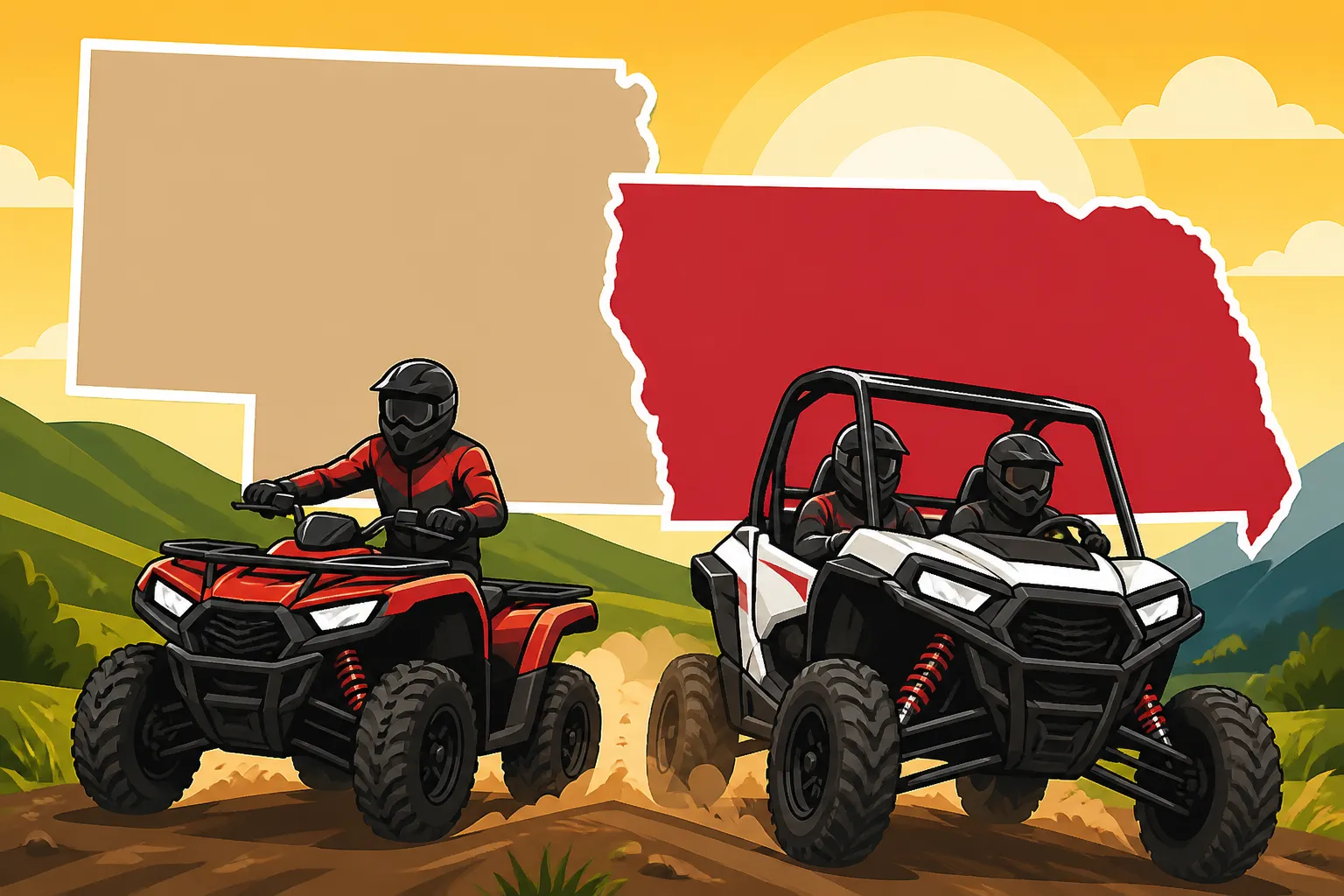
South Dakota riders planning a Nebraska trip may assume a home-state registration or permit carries across the border. It does not automatically grant riding access. Nebraska has no statewide ATV trail sticker, and each riding area sets its own access rules. Here’s how to sort out permits, land access, road use, and the paperwork worth checking before you tow.
What South Dakota Registration Does and Does Not Do
Nebraska does not issue a general state ATV or UTV permit or trail sticker. That means there is no Nebraska off-highway permit for visiting riders to buy as a statewide requirement. But the absence of a state sticker is not a blanket invitation to ride: you still need to be on land where motorized riding is allowed and follow the rules for that place.
A South Dakota registration or permit does not automatically authorize you to ride on Nebraska public or private land. Nebraska does not reciprocate with other states’ ATV registrations as a substitute for Nebraska access rules. In practical terms, your home-state paperwork may help identify or document your machine, but it is not permission to ride on a Nebraska trail. For the state-level distinction, see Nebraska Has No OHV Permit or Sticker and Nebraska Honors No Other State’s ATV Registration.
It helps to keep four different questions separate:
- Is the machine yours, and can you show that? Keep proof of ownership or other paperwork with you. The rules may differ by location, but being able to identify the machine and establish ownership is sensible preparation.
- Is riding allowed on the land? Public and private properties can have different restrictions. A trail on a map is not necessarily open to ATVs today.
- Does the site require a separate permit or fee? A parking charge, park-entry permit, or private-park admission is not the same thing as a statewide ATV registration.
- Are you using a road? Nebraska’s limited road-use rules are separate from trail access and may bring requirements for the rider, machine, equipment, and insurance.
For a broader overview of how those distinctions work for visitors, read Do Out-of-State Riders Need a Permit to Ride?. South Dakota riders can also check Nebraska Rules for a Visiting Iowa Rider for a neighboring-state comparison, but Nebraska’s own access rules—not another state’s system—control where you ride once you cross the border.
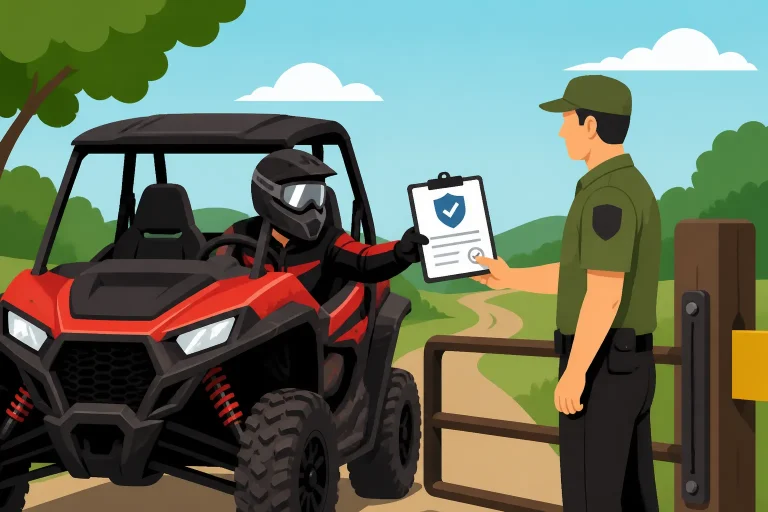
Before leaving home, check the current rules for the particular trail system or property you plan to visit. Confirm that your machine type is allowed, that the route is open, and whether there is a fee, permit, waiver, or registration requirement at that site. Do not treat a permit for one Nebraska location as permission to ride elsewhere.
| What you have or need | What it does | What it does not do |
|---|---|---|
| South Dakota ATV or UTV paperwork | May document the machine under your home-state system | Does not itself grant riding access in Nebraska |
| Nebraska state park entry permit | Covers park entry for the vehicle as directed by the park | Does not make an ATV trail-legal or allow ATV riding in a state park |
| Trailhead or parking payment | Covers the charge described by the site | Does not necessarily authorize every route or riding area |
| Private riding area admission or waiver | Applies under that operator’s rules | Does not authorize riding on nearby public or private land |
| Landowner permission | Allows the use the landowner has actually agreed to | Does not override laws or restrictions that still apply |
Where Visitors Can Ride and Which Permits May Apply
The most reliable way to plan a Nebraska ride is to start with the land manager, not with the type of registration on your machine. Different public areas have different purposes and restrictions, and the same general label—such as “state land” or “forest”—does not tell you whether an ATV is allowed.
National forest riding areas
Some Nebraska National Forest areas provide designated opportunities for motorized riding. That does not mean every forest road, path, or open area is available to every machine. Route designations, seasonal closures, machine-size limits, trail conditions, and parking arrangements can affect your plan. Check the current information for the specific district and trailhead before unloading. The overview at Nebraska National Forest Riding is a useful starting point, and Nebraska Trail Conditions Before You Tow can help you think through what to verify before a long drive.
Some locations may charge for parking or trail access; the charge and what it covers depend on the site. A parking fee should not be mistaken for a universal Nebraska riding permit. Look for instructions at the trailhead and on the land manager’s current materials, and keep any receipt or pass as directed. If the status of a route is unclear, ask the responsible office before riding it.
State parks and recreation areas
Nebraska state parks are not general ATV riding areas. A park entry permit for the vehicle you drive into a park does not turn the park into an ATV trail system. The distinction matters if you are towing your machines to a campground or other destination: you may need to comply with vehicle-entry rules for your tow vehicle, while the ATV itself still cannot be ridden where motorized ATVs are prohibited. Check Nebraska State Parks Ban ATVs before planning to ride inside a park or recreation area.
A park permit is also different from a trail permit. It relates to park entry, not permission to operate an ATV. Confirm which vehicle needs the permit and follow the site’s instructions for displaying it. If your trip includes a legal riding area outside the park, plan how you will transport the machine between locations rather than assuming you can ride it through the park.
Wildlife management areas
Wildlife management areas are not automatically open for casual ATV riding. Access may be limited to designated roadways or specific conditions, and the rules can vary by area. Some wildlife management areas have a limited frozen-water exception, but it should not be read as general permission to ride across wetlands, fields, or other closed terrain. Review Nebraska WMA Vehicle Rules and check the signs at the area you intend to visit.
Also consider the season and the purpose of the land. A route that is permitted in one situation may be closed at another time or subject to a site-specific restriction. If signs conflict with an old map or an online post, follow the posted closure and ask the managing agency for clarification.
Private parks and land
Private riding parks set their own operating conditions within applicable law. They may require admission, a waiver, advance reservations, particular safety equipment, or compliance with machine and age restrictions. Those requirements are not Nebraska statewide permits. Read the operator’s current rules before you haul in, especially if you have a youth rider, a passenger, or a side-by-side that may not fit every trail.
For private land outside a commercial park, obtain permission from the owner or authorized manager before riding. Do not assume that a field road, ranch track, or informal path is open because it is visible or appears on a map. Permission should cover the specific land and use you have in mind.
For a broader way to sort out the options, use Which Public Land a Visitor Can Ride in Nebraska. Match the land type to the rules rather than treating a single permit or registration as permission for the entire trip.
Road Use Is Separate From Trail Access
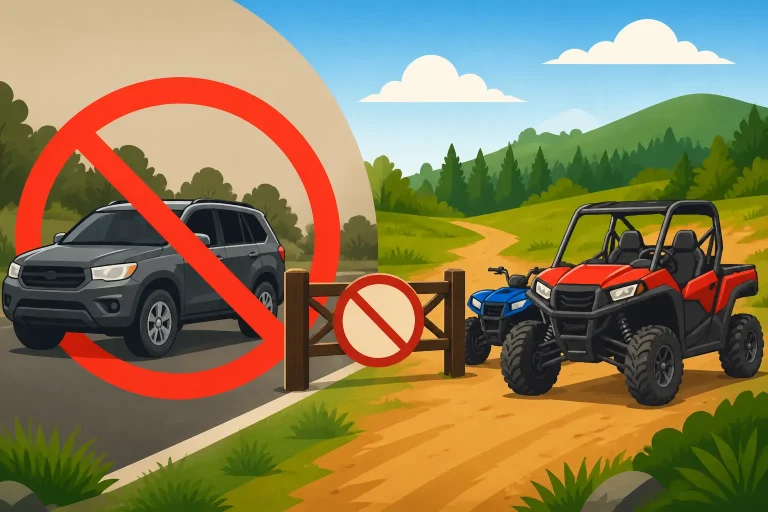
A South Dakota registration does not make an ATV or UTV eligible for unrestricted road use in Nebraska. Nebraska allows only limited road operation under particular conditions. The route, purpose, location, rider qualifications, equipment, time of day, and local rules can all matter. A machine that is legal to ride on a designated off-road trail may still be prohibited on a nearby public road.
Nebraska’s road rules include requirements that can apply to qualifying road use, such as a rider’s license or an applicable farm permit, liability insurance, lighting, and a safety flag. There are also restrictions on speed, hours, road types, and how a rider must cross a highway. These are not replaced by an out-of-state registration, and a local ordinance cannot be assumed to apply beyond the jurisdiction that adopted it.
Before riding on any road, confirm that the specific road is open to the kind of use you plan. State law, city ordinances, and county or village decisions can affect access. The articles Can You Drive an ATV on the Road in Nebraska? and Nebraska Rules for Riding a County Road explain why “road use” is not a simple extension of trail riding. If your plan involves crossing rather than traveling along a road, check Nebraska Rules for Crossing a Highway separately.
Do not use a road simply because it connects two trails or seems quiet. A route that is legal for a specific agricultural trip or under a local ordinance may not be available for a recreational ride. Likewise, the fact that a machine has the equipment required for road use does not by itself make every road open to it.
If road use is part of your trip, check these points before you unload:
- Whether the road or street is legally open to ATV or UTV use.
- Whether the permitted purpose covers your planned trip.
- Whether the rider meets the applicable license or permit requirement.
- What insurance and equipment requirements apply.
- Whether local rules add conditions or close the route.
- How to cross a highway legally, if a crossing is part of the route.
If any one of those points is uncertain, choose a different route or ask the relevant local authority before riding. A trail map, a seller’s assurance, or a South Dakota registration document is not a substitute for confirming the road’s legal status.
A Practical Checklist Before You Tow From South Dakota
A little preparation can prevent a long trip from ending at a closed trailhead or a rule you did not know applied. Start with the exact destination, then confirm access through the agency, park, landowner, or private operator responsible for it. Rules can change, and a general Nebraska overview cannot confirm current conditions at every site.
- Choose the actual riding area. Identify the trailhead or parcel, not just the nearest town or forest. Verify that ATVs or UTVs are allowed there and that your machine fits any restrictions.
- Check the route status. Look for closures, seasonal limits, trail conditions, and current operating notices. If you cannot confirm whether a route is open, contact the managing office.
- Ask what the payment covers. Find out whether you need a parking fee, park-entry permit, riding-area admission, or another site-specific permit. Confirm which vehicle it applies to and how it must be displayed.
- Carry proof of ownership. Bring the title or other relevant paperwork, along with identification. For more on what may be useful to have available, see Nebraska Proof of Ownership on the Trail.
- Get permission for private land. Confirm the boundaries and the scope of the permission. Do not assume that permission for one parcel includes an adjoining road or property.
- Keep trail riding and road riding separate in your plan. If a public road is involved, confirm that it is open and that the rider and machine meet the applicable requirements. Do not ride on a road as a shortcut unless you have verified that it is lawful.
- Plan for separate park and trail rules. A park permit for a tow vehicle does not authorize riding an ATV inside a park where ATVs are prohibited. Arrange legal transport to the riding area.
- Save current information. Keep directions, contact details, receipts, and any reservation or waiver instructions accessible. Cell service may be limited in some riding areas, so download or print what you need before departure.
If you are unsure which agency manages the land, ask the destination’s visitor office or local land manager to point you to the correct authority. A clear question helps: “Can I ride this ATV or UTV on this specific route, and what permit or fee is required?” That is more useful than asking whether Nebraska accepts a South Dakota registration, because registration recognition and access permission are separate issues.
The short version is straightforward: bring your South Dakota paperwork, but do not rely on it as a Nebraska riding permit. Confirm the specific land’s rules, obtain any site-specific permit or permission, and treat road use as a separate legal question. That approach gives you a much better chance of arriving prepared and riding only where you are allowed.
Disclaimer
This article is for general informational purposes only and does not constitute professional advice. Laws, prices and regulations vary by location and change over time. Consult a qualified professional for guidance on your specific situation.