What an ATV Safety Course Actually Teaches You
An ATV safety course is more than a list of warnings, but it is not a pass that makes every ride legal or safe. If you are deciding whether training is worthwhile, it helps to know what the lessons usually cover and what they leave out. Here is what riders can expect to learn, how online and hands-on formats differ, and how to use the training in Nebraska.
What ATV safety training covers
Course details vary by provider, but most training is designed to help riders make better decisions before and during a ride. It covers machine basics, preparation, riding technique, hazards and what to do when something goes wrong. The emphasis is not simply on memorizing rules: it is on noticing risk early enough to respond.
| Course topic | What you may learn | Why it matters on a ride |
|---|---|---|
| Machine basics | How controls work and what to check before starting | Familiar controls and a basic inspection reduce avoidable mistakes |
| Protective equipment | How helmets and other gear reduce exposure to injury | Appropriate gear helps protect you when a ride does not go to plan |
| Riding technique | How to start, stop, turn, climb and descend with control | Smooth technique helps you stay balanced and avoid abrupt maneuvers |
| Terrain and hazards | How to assess surfaces, obstacles, weather and visibility | Conditions can change faster than expected, especially off a maintained road |
| Passengers and group riding | How to account for other riders and communicate | A group needs space, predictable decisions and a plan for staying together |
| Emergency response | How to respond to a breakdown, injury or separation | A plan is useful when a phone signal or nearby help is not available |
Getting familiar with the machine
Training commonly starts with the parts a rider needs to understand: the throttle, brakes, steering, ignition, gear selection and any machine-specific controls. A course may also explain how the machine’s size, weight and design affect handling. A sport quad, utility ATV and side-by-side do not all respond in the same way, so a lesson on one type should not be treated as complete preparation for every other type.
A pre-ride inspection is another practical topic. Riders may be shown how to look for obvious damage, check tires, confirm that controls work and notice leaks or loose components. The exact inspection steps depend on the machine, so the owner’s manual remains important. A course gives you a useful routine; it does not replace maintenance instructions for your particular model.
Training also encourages riders to learn where controls are before moving. That matters for new riders, but it can help an experienced rider switching machines too. A control that is in a different position or behaves differently can become a problem if the rider only discovers it in a tight turn or on a slope.
Protective gear and riding readiness
Courses generally explain that protective equipment should be chosen for the ride and the machine, not just for appearance. A properly fitted helmet is a central part of riding protection. Eye protection, gloves, long sleeves, long pants and over-the-ankle boots can also help protect against debris, abrasion and contact with the machine or terrain.
Gear does not make risky riding safe, and no single set of clothing suits every condition. Heat, cold, dust, rain and the length of the ride all affect what is practical. A useful course helps riders consider these conditions before leaving rather than waiting until they are uncomfortable or distracted. For longer trips, that planning should include water, communication and a way to handle a minor injury or breakdown.
Readiness also includes the rider. Fatigue, alcohol or other impairment, illness and emotional distraction can affect judgment and coordination. Training should reinforce the value of not riding when you cannot make careful decisions. It can also prompt riders to think about whether passengers, children or less experienced members of a group are prepared for the conditions.
A class may introduce protective-gear principles, but it cannot determine what is legally required at every place you ride. Check the rules for the route, riding area and local jurisdiction. Nebraska-specific requirements and site restrictions are separate from general safety advice.
Riding skills, judgment and risk management
A large part of useful training is learning how to control speed and position. Lessons may cover starting, stopping, turning, braking and shifting body position. Riders are typically encouraged to practice in a clear area at a pace that matches their ability, rather than trying a difficult maneuver for the first time on a crowded or unfamiliar trail.
How terrain changes the ride
An ATV can feel stable on one surface and unpredictable on another. Loose sand, mud, gravel, ruts, rocks, slopes and wet ground can affect traction and steering. A course may teach riders to look ahead, read the surface, avoid obstacles they cannot safely cross and choose a route that fits their skill and machine.
The main idea is to assess the situation before committing. A steep slope, deep water or soft shoulder can leave little room to correct a mistake. Riders are often advised to avoid sudden inputs, keep a controlled pace and turn back when a route is beyond their ability or the machine’s limits. Training can teach general principles, but it cannot make an unfamiliar obstacle predictable. Local conditions and the machine’s manual still matter.
Weather belongs in that assessment. Rain can alter traction and trail conditions; heat can increase fatigue and dehydration; wind and dust can reduce visibility. A responsible decision may be to shorten the route or stop riding when conditions become unsafe. A course is valuable when it helps riders recognize that changing the plan is a safety skill, not a failure.
Passengers and riding with others
Training may discuss how passengers change the machine’s balance and handling. Riders should follow the machine manufacturer’s passenger instructions and never assume that an ATV designed for one person can safely carry another. Side-by-sides also require attention to seat belts, doors or other occupant restraints where equipped, and the instructions for the specific vehicle.
Group riding brings its own risks. Riders need enough space to stop without colliding, should avoid pressuring slower riders and benefit from agreeing on meeting points and signals before setting out. The lead rider should not assume everyone has seen a hazard, and the last rider should not be left without a way to communicate a problem. On narrow trails, the group should be prepared to give way safely rather than forcing a pass.
Training can also help parents and supervisors think carefully about a young rider’s maturity and machine fit. Age alone does not show whether a rider can understand instructions, control the machine or judge hazards. Review the relevant rules and the riding site’s own policies, including Nebraska Rules for a Ten-Year-Old Rider and Nebraska Private Park Minimum Ages.
What to do when something goes wrong
Courses commonly cover basic emergency planning: tell someone where you are going, carry suitable supplies and know how the group will respond if a rider is injured, lost or separated. Riders should consider how they will call for help if there is no reliable phone signal. A first-aid kit is useful only if someone can access it and knows how to use its contents.
A breakdown can create a hazard if the machine is stopped in a trail or other exposed place. Training may explain how to move to a safer location when possible, signal other riders and avoid attempting repairs beyond your ability. The right response depends on the situation, so the key lesson is to stop, assess risk and avoid turning a mechanical problem into an injury.
Online courses, hands-on practice and Nebraska rules
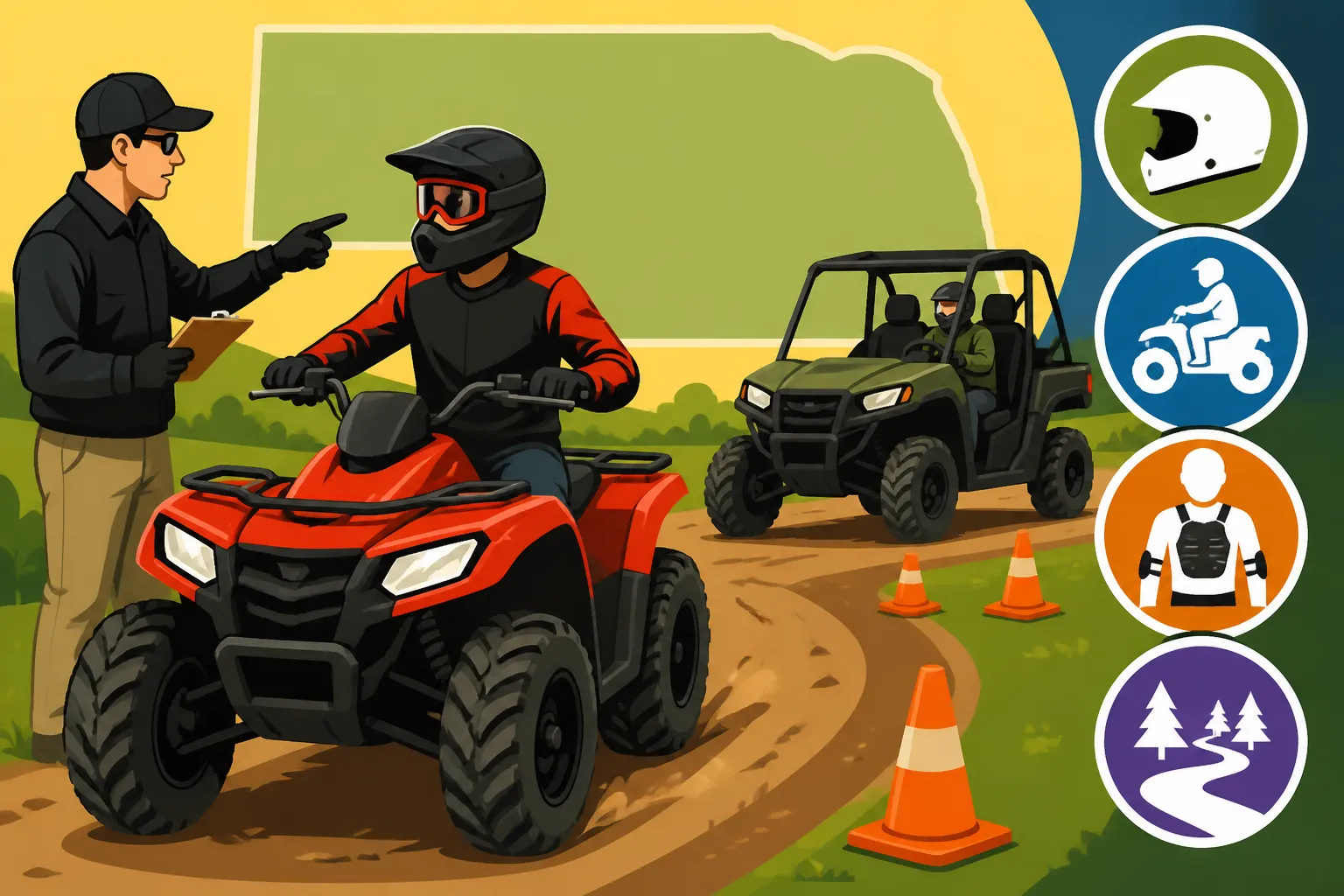
An online course can be a convenient way to study safety principles, terminology and decision-making. It may use reading, illustrations, videos or knowledge checks. A hands-on class can add supervised practice with controls and riding techniques, which is valuable for someone who has never operated an ATV or is moving to a different type of machine.
Neither format automatically guarantees that a rider can handle every real-world situation. An online lesson cannot observe your posture or correct a maneuver in the moment. A short practical session cannot reproduce every trail, weather condition or emergency. Think of training as a foundation, then practice gradually in a suitable place, follow the machine’s manual and ride within your ability.
| Training format | Often useful for | Possible limitation |
|---|---|---|
| Online course | Learning concepts at your own pace and reviewing safety topics | Usually cannot provide individualized, in-person correction |
| In-person course | Practicing under supervision and asking questions as situations arise | Availability, location and course content can vary |
| Self-study with the owner’s manual | Understanding controls and maintenance for your exact machine | Does not provide an instructor or structured practice |
Nebraska does not require a statewide ATV safety course, according to the state-specific information covered in Nebraska Has No Mandatory Safety Course. Voluntary training can still be worthwhile, especially for new riders, young riders and people who have not used that type of machine before. Options may include online or in-person instruction; see Nebraska Safety Course Options and Nebraska Online Safety Courses when comparing formats. Confirm course details with the provider, including what machines it covers and whether it includes supervised riding.
Training is not a permit or registration
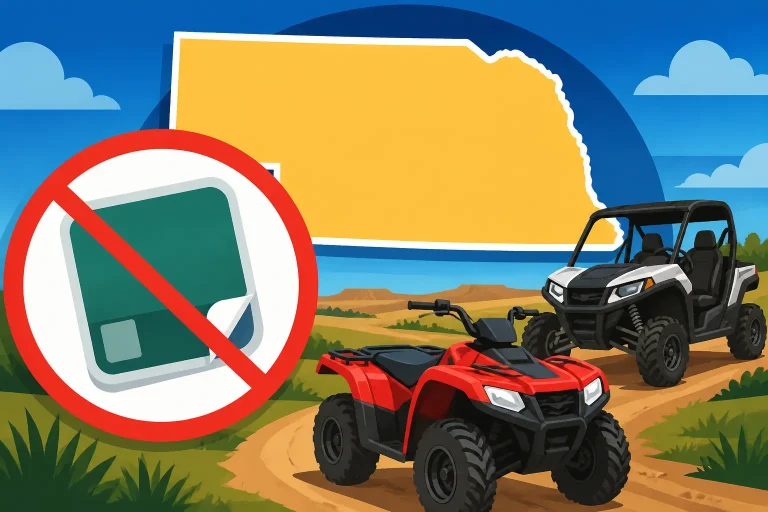
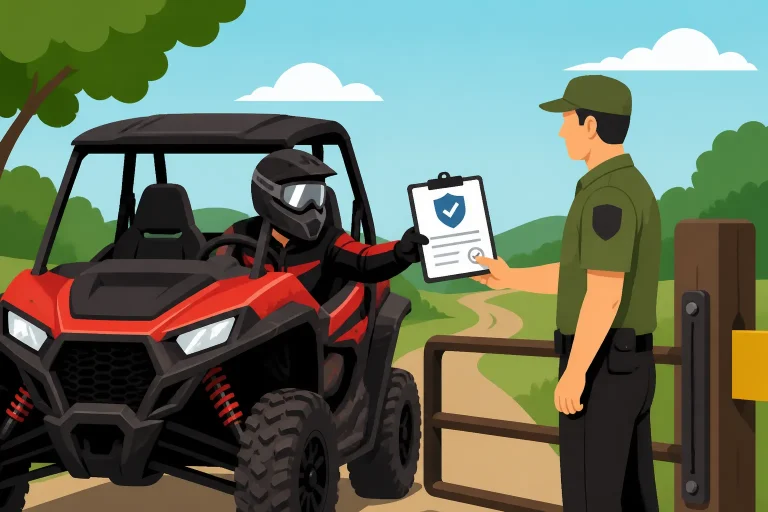
A course completion record should not be confused with permission to ride. It does not by itself authorize access to private land, open a closed public area, satisfy a local rule or replace a required park permit. Nebraska does not have a general statewide OHV sticker or permit, but individual riding locations can have their own access rules. Start with Nebraska Has No OHV Permit or Sticker and check the rules for the specific place you plan to ride.
The same distinction applies to out-of-state visitors. Completing a course in another state does not settle every Nebraska access question. Check the location’s current rules before unloading, and do not assume another state’s registration or training card is a substitute for local requirements. Nebraska Visitors From Iowa and Nebraska Has No Registration to Reciprocate address related visitor questions.
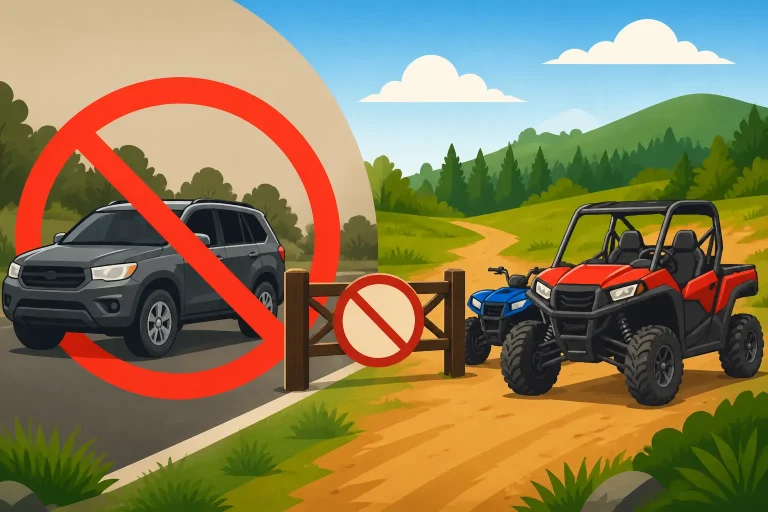
Land access is its own issue. On private property, get permission from the landowner; on public land, follow the managing agency’s rules and posted closures. Training can teach responsible conduct, but it does not grant access. For more on the difference, see Nebraska Landowner Permission Rules and Nebraska Public Land Rules Compared to Private.
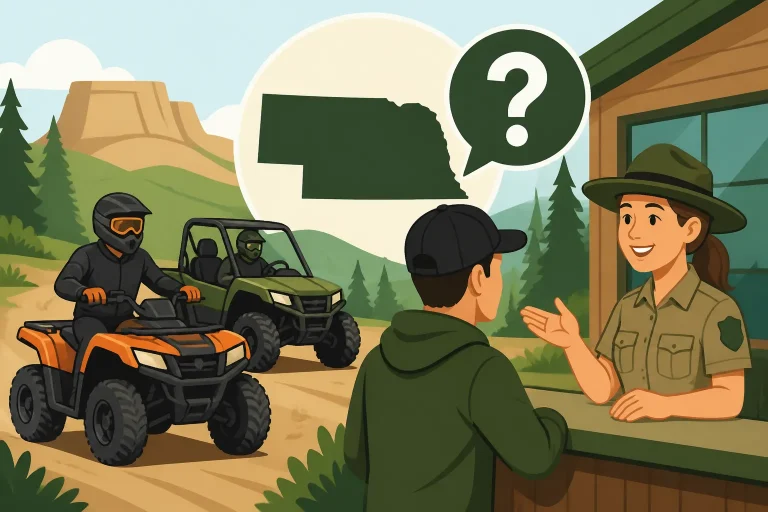
Before a ride, check the destination’s rules, make sure the machine is appropriate for the route and decide whether everyone in the group is prepared. If you are unsure what a course certificate means for a particular riding area, ask the course provider and the land manager directly. That simple check can prevent a safety lesson from being mistaken for a permit.
Disclaimer
This article is for general informational purposes only and does not constitute professional advice. Laws, prices and regulations vary by location and change over time. Consult a qualified professional for guidance on your specific situation.