Nebraska Private Park Minimum Ages
A child may be ready to ride an ATV or UTV before a private park is willing to admit them. Nebraska riding parks can set their own age and supervision policies, and those rules may differ by machine, trail, and activity. Before making the drive, confirm the minimum age for your child’s exact riding plan and ask what paperwork and safety gear the park requires.
How private park age rules work
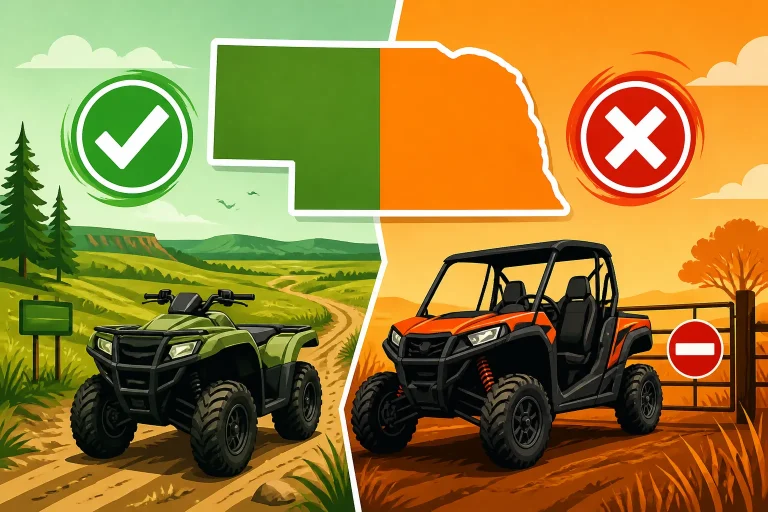
A private riding park is not required to use the same admission policy as another park. Each facility can set conditions for riding on its property, including minimum ages, adult supervision, helmet use, passenger limits, and which machines may use particular trails. A child who can ride at one park may not meet another park’s policy.
Age limits may also depend on what the child will be doing. A facility might have separate rules for operating a machine, riding as a passenger, joining a guided activity, or using a specific track or trail. Do not treat a general statement such as “kids are welcome” as confirmation that a child can ride every area or vehicle.
| What to check | Why it matters |
|---|---|
| Minimum age to operate | The park may set an age threshold for drivers, which can differ by activity or vehicle. |
| Passenger age and requirements | A child allowed to visit may not be allowed to ride as a passenger on every machine. |
| Adult supervision | The park may require a parent, guardian, or other responsible adult to stay nearby or ride along. |
| Machine type and size | Rules may differ for youth ATVs, full-size ATVs, and side-by-sides. |
| Helmet and protective gear | A park may require equipment beyond what a rider planned to bring. |
| Waivers and check-in documents | A minor may need a parent or guardian to complete paperwork before riding. |
Park policies are separate from rules that apply when riding on public roads or public land. A private park’s permission to ride on its property does not automatically allow the same machine to use a public road, trail, or recreation area. For a broader look at age-related questions, see Does Nebraska Set a Minimum Age for Riders? and Nebraska Rules for a Ten-Year-Old Rider.
Do not assume a machine’s age label settles the question either. Manufacturer guidance, the park’s admission rules, and the rider’s actual ability are separate considerations. A park may decline to admit a child who meets an age threshold if staff believe the rider cannot safely handle the machine or follow instructions.
The safest approach is to get the current policy directly from the specific park. Look for a written rules page, but call if the wording does not clearly cover your child’s age, machine, or role. Ask whether the rule applies to riding, entering the facility, or both. A child might be allowed to accompany a parent without being allowed to operate a vehicle.
Questions to ask before you go
A quick call or message can prevent a long trip ending at the gate. Give the park the child’s age, the machine type, and whether the child will drive or ride as a passenger. Then ask about the conditions that apply to that exact plan.
- What is the minimum age to operate this type of machine? Ask about the specific ATV or UTV, not just “youth riding.” If the park uses different rules for different areas, ask which areas the child may enter.
- Can a child of this age ride as a passenger? Passenger rules may differ from driver rules. For a side-by-side, ask whether the park has a minimum passenger age and any seating or restraint requirements. The same question matters for a quad designed to carry a passenger; see Does a Private Park Allow Passengers on a Quad?.
- Does an adult have to accompany the child? Clarify whether the adult must be a parent or legal guardian, stay at the facility, ride on the same machine, or remain within a particular area.
- What identification or paperwork is needed? Ask whether the park requires proof of age, an emergency contact, or a signed waiver. Some facilities may require the parent or guardian to complete the waiver in person.
- What protective equipment is mandatory? Confirm helmet type and any requirements for eye protection, gloves, boots, or other gear. The park’s rule may be stricter than what you expected.
- Are there separate rules for instruction or beginner areas? A facility may have a designated practice area, supervised session, or beginner route, but do not assume one is available. Ask whether it must be reserved and whether age limits still apply.
- Can the child use the family’s machine? Some parks may have vehicle-specific conditions, including limits based on size, passenger configuration, or the rider’s ability to control the machine.
- Can the parent watch without riding? This helps you plan if the park permits a child to ride only with supervision but does not require the adult to operate a second machine.
When the park’s website and staff give different answers, ask which written policy controls and whether staff can confirm the answer in a message. Keep that confirmation with your trip details. Policies can change, so an old social media post or a friend’s previous visit is not a reliable substitute for checking directly.
If you are comparing parks, record the answers in one place. A simple note with the child’s age, vehicle, supervision arrangement, required gear, and any waiver instructions makes it easier to compare facilities without relying on memory.
Preparing a young rider for a private park
Meeting the park’s minimum age is only an entry condition. It does not establish that a child is ready to ride safely, and it does not guarantee that the child will enjoy a full day on trails. Before booking, match the riding plan to the child’s experience, confidence, and ability to follow directions.
Start with the machine. The rider should be able to reach and operate the controls, understand how to stop, and manage the vehicle at a speed appropriate to their skill. A machine that is too large or powerful can be difficult to control even for a child who has ridden smaller models. If you are unsure, ask the park what it permits for a rider of that age and experience, and follow the manufacturer’s guidance for the machine.
Talk through basic riding expectations before arriving. A young rider should know to follow posted signs, stay on permitted routes, leave room between machines, and stop if they lose sight of the adult or become uncomfortable. Explain that they should not try to keep up with faster riders or follow another machine onto a route they have not been cleared to use.
Check the safety gear in advance rather than assuming it can all be borrowed or rented. Ask the park what it requires and whether it provides any equipment. A helmet should fit securely and be appropriate for the activity; a loose helmet can shift when the rider moves. Eye protection, gloves, long sleeves, long pants, and sturdy footwear can also help protect against dust, debris, and minor impacts. If ordering gear through Amazon or another retailer, check the manufacturer’s sizing and fit guidance rather than choosing only by a child’s age or clothing size.
Parents should also plan for fatigue and changing conditions. Children may tire faster than adults, especially in heat, dust, or on uneven ground. A short first session, regular breaks, water, and a clear agreement about when to stop can make the visit more manageable. If the child becomes tired, distracted, frightened, or overwhelmed, end the ride instead of encouraging them to continue.
For the paperwork side, ask who must sign the park’s release and whether each minor needs a separate form. A waiver is not a substitute for supervision or safe riding, but arriving without the required adult or completed documents can delay or prevent participation. See Who Signs the Waiver for a Rider Under 18 for more on what to clarify.
A practical pre-trip checklist:
- Confirm the park’s current minimum age for the child’s exact role and machine.
- Ask whether adult supervision is required and what “supervision” means at that facility.
- Check passenger rules separately from operator rules.
- Confirm required protective gear and whether rentals are available.
- Find out who must sign the waiver and whether any proof of age is needed.
- Review the park map, allowed areas, and any beginner or youth-specific rules.
- Make sure the child can operate the controls and understands how to stop.
- Bring water, suitable clothing, and a plan for breaks.
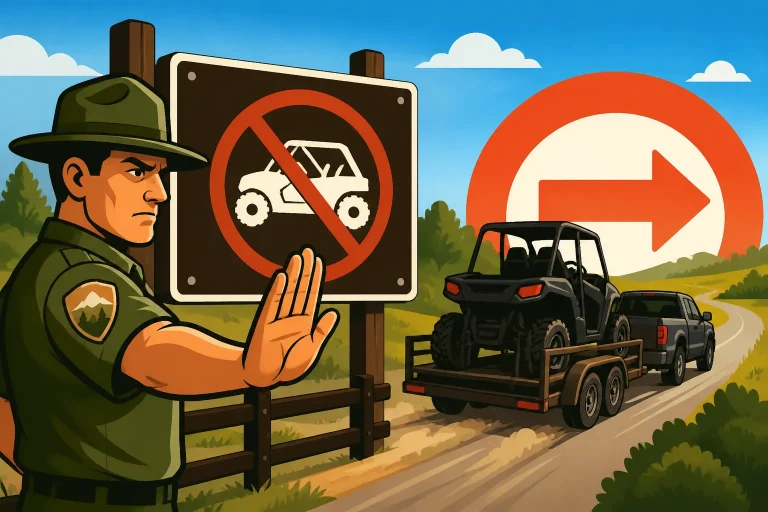
If a park sets a minimum age higher than your child’s age, do not try to work around the policy by presenting the child as a passenger or using a different machine without approval. Ask whether the facility offers another activity the child can participate in, or choose a park whose rules fit your family’s plans. Park policies are conditions of riding on that property, and staff can deny access when a rider does not meet them.
For children who are old enough to ride but new to the activity, a parent riding alongside can help with supervision, but it does not replace the facility’s requirements. Review Nebraska Parent Riding With a Child and Nebraska Private Park Helmet Rules before setting out. If the child will ride on a quad with another person, check both passenger eligibility and the machine’s seating design; never assume a child can safely occupy a seat simply because the park allows passengers.
The main takeaway is straightforward: there is no single private-park age rule that you can safely apply to every Nebraska facility. Confirm the specific park’s current policy, describe the machine and riding arrangement accurately, and choose a plan that suits both the written rules and the child’s ability.
Disclaimer
This article is for general informational purposes only and does not constitute professional advice. Laws, prices and regulations vary by location and change over time. Consult a qualified professional for guidance on your specific situation.