Nebraska Private Park Helmet Rules
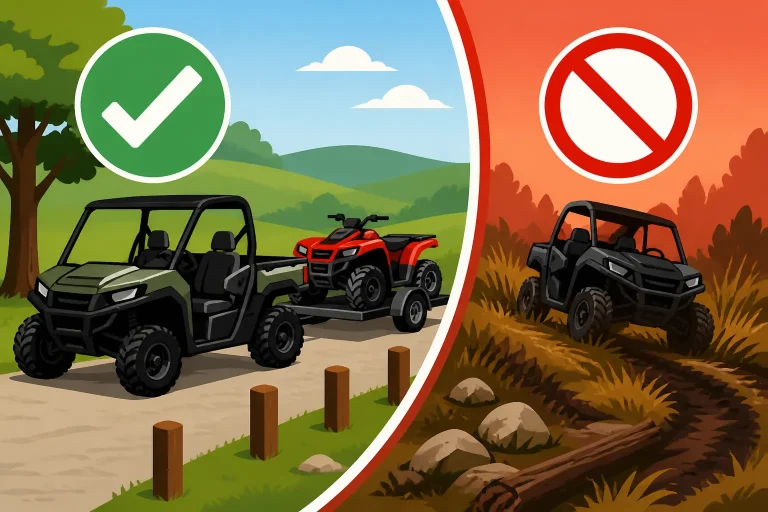
A helmet rule at a Nebraska private ATV or UTV park may come from the park, not from a single statewide rule that applies to every off-road ride. That distinction matters when you are packing for a family day or planning a group trip. Here’s how to check the rule, choose suitable head protection, and avoid being turned away at the gate.
Who Sets Helmet Rules at a Nebraska Private Riding Park?
Nebraska’s helmet law is not a universal helmet mandate for every ATV and UTV rider on private property. The state helmet statute discussed for motorcycles does not automatically settle what a private off-road park requires. A park can set its own conditions for entry and riding, including requiring helmets even when a rider believes state law does not require one in that situation.
That means there are two different questions to answer:
- Does a state or local law apply to the way you plan to ride?
- What does the specific park require as a condition of using its property?
The park’s rule can be stricter than the minimum legal requirement. It may apply to every rider, to certain vehicles, to passengers, or only to riders below an age threshold. It may also require a particular kind of helmet or require the helmet to be worn and fastened whenever the vehicle is moving.
Do not assume that a helmet is optional because you will be riding off-road, because the property is privately owned, or because another park allowed you to ride without one. The answer depends on where you are going and that operator’s current rules.
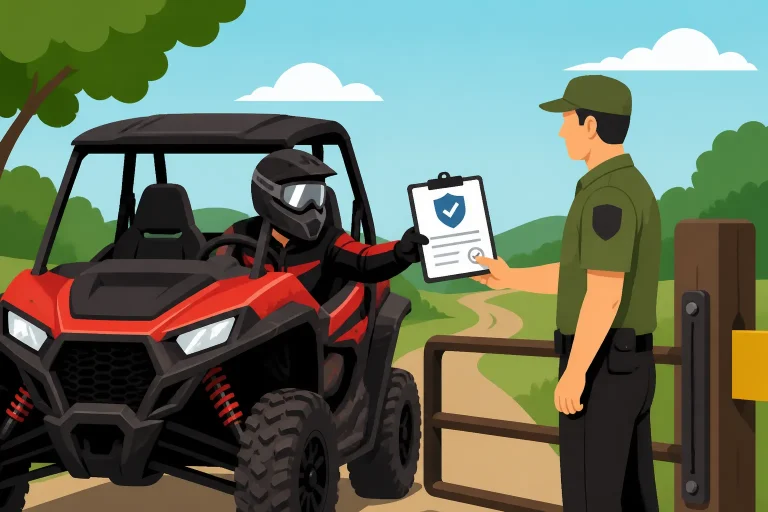
A private park’s admission agreement, waiver, posted safety rules, or staff instructions may make helmet use a condition of riding. If you refuse to comply, the operator may deny access or stop your ride under its property rules. Read the park’s full terms, not just a short description on a social media page or a booking listing.
For a broader look at how private facilities set entry conditions, see Nebraska Private Park Waivers and Rules. Helmet requirements are only one part of those conditions; age limits, passenger rules, alcohol policies, and machine restrictions may also apply.
Private property does not mean no rules
A private park controls access to its trails and riding areas. That control gives the operator room to establish safety requirements for visitors. A rule might be stricter than what a rider expects from ordinary off-road use, but it can still govern whether that rider may enter the park.
The operator may also distinguish between types of machines. A helmet requirement could apply to ATV riders but be written differently for UTV occupants, or it could cover everyone on every vehicle. Do not infer the rule from the vehicle’s design. A side-by-side’s rollover protection, doors, or seat belts do not automatically mean that a helmet is unnecessary under park policy.
Likewise, a rule for a driver may not answer what applies to a passenger. A UTV passenger, a second rider on a quad, and a child riding with an adult can all be treated differently by a park’s written policy. Check the wording for each person who will be riding.
State rules and park rules can overlap
A park rule does not erase any law that applies to a ride outside the park. If you plan to travel on a public road before reaching the property, or to ride on public land elsewhere, check the rules for that location and activity separately. A private park’s helmet policy is not permission to ignore road laws, and a state rule does not guarantee that a private operator will let you ride without the gear it requires.
Nebraska does not have a statewide mandatory ATV safety course requirement, but a private park may set its own instruction, age, supervision, or orientation conditions. See Nebraska Has No Mandatory Safety Course for the distinction between a statewide requirement and a facility’s rules. Even if a course is not required by law, it can help a rider understand basic controls, braking, terrain, and safe spacing.
What to Confirm Before You Drive to the Park
A quick check before departure can prevent a frustrating trip, especially when several people are bringing different machines. Park policies can vary, and posted rules may be updated. Use the park’s official website, current visitor information, or direct contact with the operator rather than relying only on an older review or a friend’s recollection.
Ask specific questions. “Are helmets required?” may not clarify whether the rule applies to children, passengers, UTV occupants, or riders using a particular trail. A few minutes spent confirming the details can save a long drive with gear that does not meet the park’s conditions.
| What to verify | Why it matters |
|---|---|
| Whether helmets are required for every rider | A policy may cover everyone, even if state law does not require a helmet in that setting |
| Whether the rule differs for ATVs and UTVs | The operator may specify separate conditions by vehicle type |
| Whether passengers must wear helmets | Driver requirements do not necessarily answer passenger requirements |
| Whether children have additional requirements | A park may set age-based gear, supervision, or riding conditions |
| What helmet types are accepted | The park may specify a design or safety label |
| Whether helmets must stay on throughout the ride | Some rules apply whenever the vehicle is moving, not only on designated trails |
| Whether the park provides rentals or loaner helmets | Do not assume rental gear is available or included |
| Whether goggles or other protective equipment are required | Eye protection and other gear may be addressed separately |
| Whether your machine is allowed on the trails | A helmet does not make an otherwise restricted machine eligible |
| Whether a waiver or orientation is required | Every rider may need to complete park entry steps before riding |
When you contact the park, identify your machine and who will be riding. For example: “We’re bringing two ATVs and one side-by-side, with an adult driver and a teen passenger. Does each person need a helmet, and do you specify an accepted type?” This is more useful than asking only whether “helmets are needed.”
Ask about the exact rule for minors too. Some facilities set their own minimum ages, supervision requirements, or equipment conditions. Those policies are separate from the state’s general rules. Related information is covered in Nebraska Private Park Age Minimums and Who Signs the Waiver for a Rider Under 18.
If you are bringing a passenger on a quad, confirm that the park allows that arrangement at all. A helmet requirement does not make an otherwise prohibited passenger setup acceptable. See Does a Private Park Allow Passengers on a Quad? for the separate issue of passenger permission.
Check all versions of the park’s rules
Look for a current visitor or safety page, but also check any booking terms, waiver, and posted signs at the entrance. If the information is inconsistent, contact the operator and ask which rule applies when you arrive. Save the response or take a screenshot of the current policy so your group can refer to it.
A brief call or message should cover:
- Helmet requirement for each vehicle type
- Rules for passengers and minors
- Whether the park provides any protective equipment
- Any requirements for helmet labels or condition
- Whether additional gear is required
- Whether the park has a safety briefing or orientation
A park employee’s verbal answer can be helpful, but written rules and posted signs are important too. If the operator tells you to bring a particular type of helmet, follow that instruction rather than debating whether another standard should be sufficient.
Choosing and Fitting a Helmet for ATV or UTV Riding
A helmet only helps if it is suitable for the activity, fits correctly, and is in sound condition. A loose helmet can shift or come off; one that is too tight can become painful and distracting. Use the park’s stated requirements first, then choose gear that fits each rider and is appropriate for off-road conditions.
Do not rely on appearance alone. A helmet that looks substantial may not meet the park’s requirements, and a helmet accepted at one facility may not be accepted at another. Check any safety labels, product information, and park specifications before buying or packing it.
For a helmet purchase, confirm the model and certification details from the manufacturer or retailer rather than relying on a listing title or product photo. If comparing options on Amazon or another retailer, check that the listing is for the exact model you intend to buy, review the stated safety information, and verify the return policy in case the fit is wrong. The retailer’s listing does not override the park’s acceptance rules.
Fit matters as much as the label
A proper fit should feel secure without creating sharp pressure points. The helmet should sit level, cover the intended area, and remain stable when the rider moves their head. Follow the maker’s sizing and fit instructions. If the helmet rocks, slides, or lifts easily, it may be too loose or the wrong shape for that rider.
For a group with children or multiple adults, do not assume one helmet can be passed around. Head sizes and shapes vary, and a helmet adjusted for one person may not fit another. Check each person’s fit before leaving home, including whether the chin strap can be fastened correctly and comfortably.
A helmet should be worn as designed, with the retention system fastened. Carrying it, resting it on the handlebars, or fastening it loosely will not meet a rule that requires a helmet to be worn properly. If a park says helmets must be on whenever a vehicle is moving, treat that as applying to short trips and slow areas too unless staff clarify otherwise.
Inspect gear before the ride
Before a trip, check for visible damage, worn or broken straps, cracked components, loose hardware, and missing interior pieces. Follow the manufacturer’s instructions on cleaning, storage, and replacement. A helmet involved in a significant impact may need to be replaced even if damage is not obvious; check the maker’s guidance rather than judging only by appearance.
If you are unsure whether an older helmet is acceptable, ask the park before arrival and check the manufacturer’s instructions. A damaged or poorly fitting helmet can be a problem even if a staff member allows it through the gate.
Eye protection can matter on dusty trails, where debris and wind can interfere with vision. Goggles or a face shield may be useful, but check whether the park requires a specific form of eye protection and whether it works with the helmet you plan to use. Do not assume a helmet includes suitable eye protection.
ATVs, UTVs, Passengers, and Children
Helmet policies can be easy to misunderstand when a group includes more than one kind of vehicle or rider. The safest planning approach is to confirm the rule person by person and machine by machine. A UTV’s enclosed or semi-enclosed design does not guarantee a helmet exemption, and a passenger’s requirements may not match the driver’s.
A park might require helmets for every occupant, specify a rule for ATV riders only, or set different conditions based on the vehicle. It might also restrict passengers for reasons unrelated to helmets. Before loading the trailer, confirm whether each machine is allowed and whether it can carry the planned number of riders.
For young riders, check both the park’s age policy and its helmet policy. A parent or guardian may need to complete a waiver, supervise the rider, or meet other conditions. Do not treat a child’s smaller helmet as an adult helmet in a different size; choose equipment designed to fit the child and follow its manufacturer’s instructions. See [Nebraska Rules for a Ten-Year-Old Rider] or [Nebraska Rules for a Fourteen-Year-Old Rider] if you are also checking age-related questions beyond the park’s own entry policy.
A park may have its own minimum age for driving a machine, even if state law does not set a single age rule for every private off-road facility. It may also separate the minimum age for drivers from the rules for passengers. Confirm those details before bringing a young rider, since a helmet alone does not establish that the rider is allowed to operate a particular machine.
Build a gear plan for the whole group
For a family or group outing, make one checklist for every rider. Record the machine, driver, passengers, helmet, and any other required equipment. This helps catch gaps such as one UTV passenger without a helmet or a child whose gear does not fit securely.
A simple checklist might include:
- Helmet for each rider, if required by the park
- Correct fit and working retention strap
- Eye protection if required or appropriate
- Gloves and suitable clothing
- Any additional equipment named in the park’s rules
- Completed waivers or other entry documents
- Contact details for the operator in case requirements are unclear
If the park allows a rider to use a loaner helmet, ask whether sizes are available for everyone in the group and whether the equipment is supplied as part of admission or rented separately. Availability can be limited, especially for less common sizes. Bringing correctly fitting gear avoids depending on stock at the gate.
What to Do If the Rule Is Unclear or You Arrive Without the Right Gear
If the park’s website is vague, ask for clarification before traveling. State the details that matter: ATV or UTV, adult or minor, driver or passenger, and the helmet you plan to bring. Ask whether the park has an accepted helmet standard or simply requires a properly fitted helmet. Request a response you can keep.
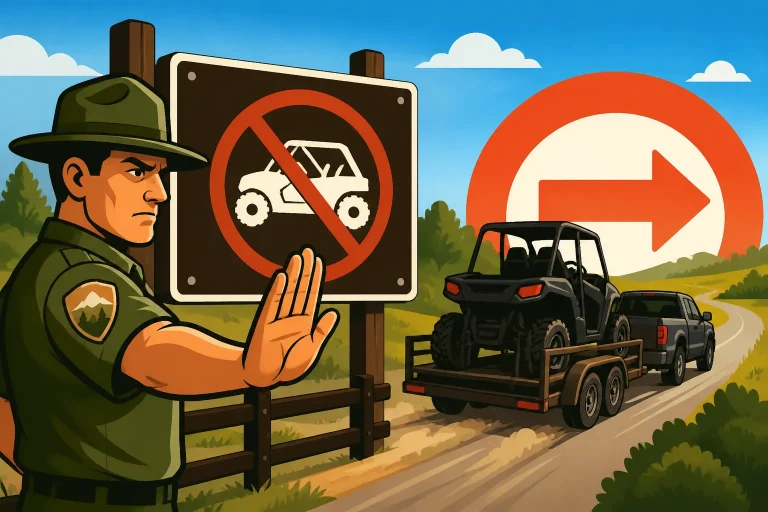
If you arrive and staff say your helmet does not meet the policy, do not assume you can ride because you believe the state rule is different. The operator can enforce its own conditions for access to its property. Ask whether a compliant loaner is available or whether the helmet can be replaced, but be prepared to skip the ride if it cannot.
Avoid trying to solve the problem by borrowing a helmet that does not fit. A helmet that shifts, cannot be fastened, or is damaged is not a sensible substitute. If there is no appropriate gear available, the practical choice is to stay off the machine and plan better for the next visit.
If staff give an instruction that seems different from the written policy, ask politely for the current rule and which part applies to your group. A clear explanation can resolve a misunderstanding. For questions about waivers, minors, or passengers, the park’s full visitor rules may answer what the helmet sign does not.
Keep in mind that the park’s helmet policy is only one part of trip preparation. Also check machine eligibility, trail access, hours, reservations, required waivers, and any rules about passengers or age. Nebraska Private Park Waivers and Rules offers context for the other conditions a private facility may set, while Helmet Rules a Private Riding Park Enforces covers why an operator’s requirements can be different from a rider’s expectations.
Frequently Asked Questions
Does Nebraska require every ATV rider to wear a helmet?
Do not treat Nebraska’s motorcycle helmet statute as a universal helmet rule for every off-road ATV ride. The applicable law can depend on where and how you ride, and a private park can require helmets as a condition of access. Check both the relevant law and the park’s current policy.
Can a private Nebraska park require helmets even if state law does not?
Yes. A private operator can set safety and entry conditions for its property. If the park requires helmets, visitors should expect to comply or risk being denied access or stopped from riding.
Do UTV drivers and passengers need helmets at private parks?
It depends on the park’s written policy. Some rules may cover all occupants or distinguish between machine types. Ask specifically about the driver and every passenger rather than assuming a UTV is exempt.
Can I use any helmet the park accepts at the gate?
Not necessarily. Follow the park’s stated requirements, use a helmet that fits and is in good condition, and check the manufacturer’s safety information. If the park specifies an accepted type or label, confirm that your helmet meets it before traveling.
Does completing an ATV safety course replace a park helmet requirement?
No. A course does not replace a helmet rule or other entry condition. Nebraska has no statewide mandatory ATV safety course requirement, but a private park may impose its own conditions, and training does not excuse visitors from following them.
Disclaimer
This article is for general informational purposes only and does not constitute professional advice. Laws, prices and regulations vary by location and change over time. Consult a qualified professional for guidance on your specific situation.