Nebraska Insurance Proof at a Gate
You arrive at a Nebraska trailhead or riding park and someone asks for proof of insurance. Whether you need to show it depends on where you are riding and who controls the entrance. The key distinction is between insurance required for road use and an entry rule set by a land manager or private park. Knowing which applies helps you avoid a wasted trip or an unnecessary argument at the gate.
Does Nebraska Require Insurance to Enter Every ATV Trail?
Nebraska does not have one statewide insurance-proof rule that automatically applies at every ATV or UTV trail entrance. A request at a gate may come from a private park, an event organizer, or a particular land manager. The request does not necessarily mean Nebraska requires insurance for every off-road ride.
Road use is different. Nebraska requires liability insurance for an ATV or UTV being operated on roads where that use is allowed. An insurance card can therefore be important if your route includes legal road riding, even if the trail itself does not ask to see it. Review Nebraska Insurance Required on Roads and Nebraska Insurance Proof for Road Use before planning a road trip.
| Where you plan to ride | What an insurance request may mean | What to check |
|---|---|---|
| Public trail or public land | The site may have its own entry or operating rules; a statewide trail-insurance rule should not be assumed | Ask the managing agency what it requires for the specific area |
| Private riding park | Insurance may be a condition of entry, part of a waiver, or not required by that park | Check the park’s current rules before hauling |
| Organized ride or event | The organizer may set requirements for participants or vehicles | Read the event information and ask the organizer |
| Public road where ATV or UTV use is allowed | Nebraska road-use insurance requirements apply | Confirm that your policy meets the current requirement and covers the machine |
| Private land with the owner’s permission | The landowner may set conditions for access | Get permission and clarify any insurance expectations |
A public trailhead, private riding park, and road are not interchangeable settings. A rule posted by a private park can be stricter than the general rules for an off-road trail. Likewise, an insurance requirement for road use does not automatically tell you what a trail operator requires at its entrance.
Nebraska has no general statewide OHV permit or sticker, but that does not mean every place is open to riding or that every site has identical rules. See Nebraska Has No OHV Permit or Sticker for the permit distinction, and Nebraska Public Land Rules Compared to Private for why the land manager matters.
A gate request may be a site rule, not a state rule
If staff ask to see insurance, treat the request as an entry condition until you have clarified what it means. A private park can set its own participation rules, and an event organizer may have requirements that apply only to that event. Public-land rules can also depend on the area and the agency responsible for it.
Ask what kind of proof they accept and whether the requirement applies to the rider, the machine, or both. Do not assume that a title, bill of sale, park permit, or waiver is a substitute for insurance. Each document serves a different purpose.
If you are unsure whether a public site requires proof, contact the office that manages that site rather than relying on a rule from a different trailhead. Questions Worth Asking a Ranger District Office can help you prepare for that call.
What Counts as Proof, and Does Your Policy Cover the Ride?
The simplest proof is usually an insurance card or other document issued by your insurer that identifies the insured person or policy and the covered vehicle. Some sites may accept a digital card; others may prefer a printed copy or require additional information. Ask before leaving home, especially if the gate is staffed only at certain times or cell service may be unreliable.
Proof that a policy exists is not the same as confirmation that the policy covers the activity you plan to do. An ATV policy may treat road use, trail riding, racing, commercial use, passengers, and machines owned by a business differently. A policy can also have exclusions, conditions, or limits that are not visible on a basic insurance card.
Check the coverage, not just the card
Before a ride that involves a gate requirement or public-road travel, contact the insurer and ask direct questions:
- Is this specific ATV or UTV listed or otherwise covered?
- Does liability coverage apply while riding off-road?
- Does coverage apply on the particular type of land or at a private riding park?
- Are passengers covered, and are there restrictions on who may operate the machine?
- Does the policy cover travel on roads where Nebraska permits ATV or UTV use?
- Are racing, timed events, rentals, commercial use, or organized rides excluded?
- What proof can the insurer provide, and will the site accept it?
Do not rely on a general statement that your household or vehicle is insured. Coverage for a car, truck, trailer, or homeowner’s policy does not automatically establish coverage for an ATV or UTV. If your machine is financed, a lender’s insurance requirements are also separate from a park’s entry rules and from Nebraska road-use requirements.
For road riding, confirm that the policy satisfies the current Nebraska requirement. Requirements can change, so check with your insurer or an official source rather than relying on an old card, a friend’s policy, or an online summary. The related page Nebraska Insurance Changes Coming in 2027 is useful if you are checking how future requirements may affect your planning.
Carry a usable backup
A clear photo or digital insurance card can be convenient, but it is sensible to keep a printed copy as well. A phone may lose power, have no service, or be difficult to access in poor weather. Store the paper copy where it will stay dry, and avoid leaving sensitive policy details visible in an unattended vehicle.
If you ride more than one machine, make sure the proof corresponds to the one you brought. If the policy or card identifies a vehicle by serial number or other identifying information, check that it matches your ATV or UTV. An old card for a machine you sold may not satisfy a site’s request.
Also keep insurance proof separate from ownership documents. A title or bill of sale can help establish ownership, but it does not prove insurance coverage. Conversely, an insurance card does not prove you own the machine or have permission to ride on the land.
What to Do When a Gate Asks for Insurance Proof
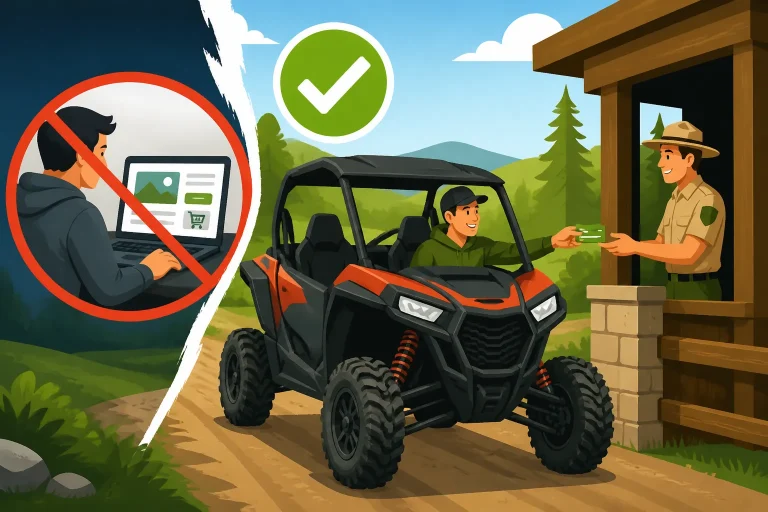
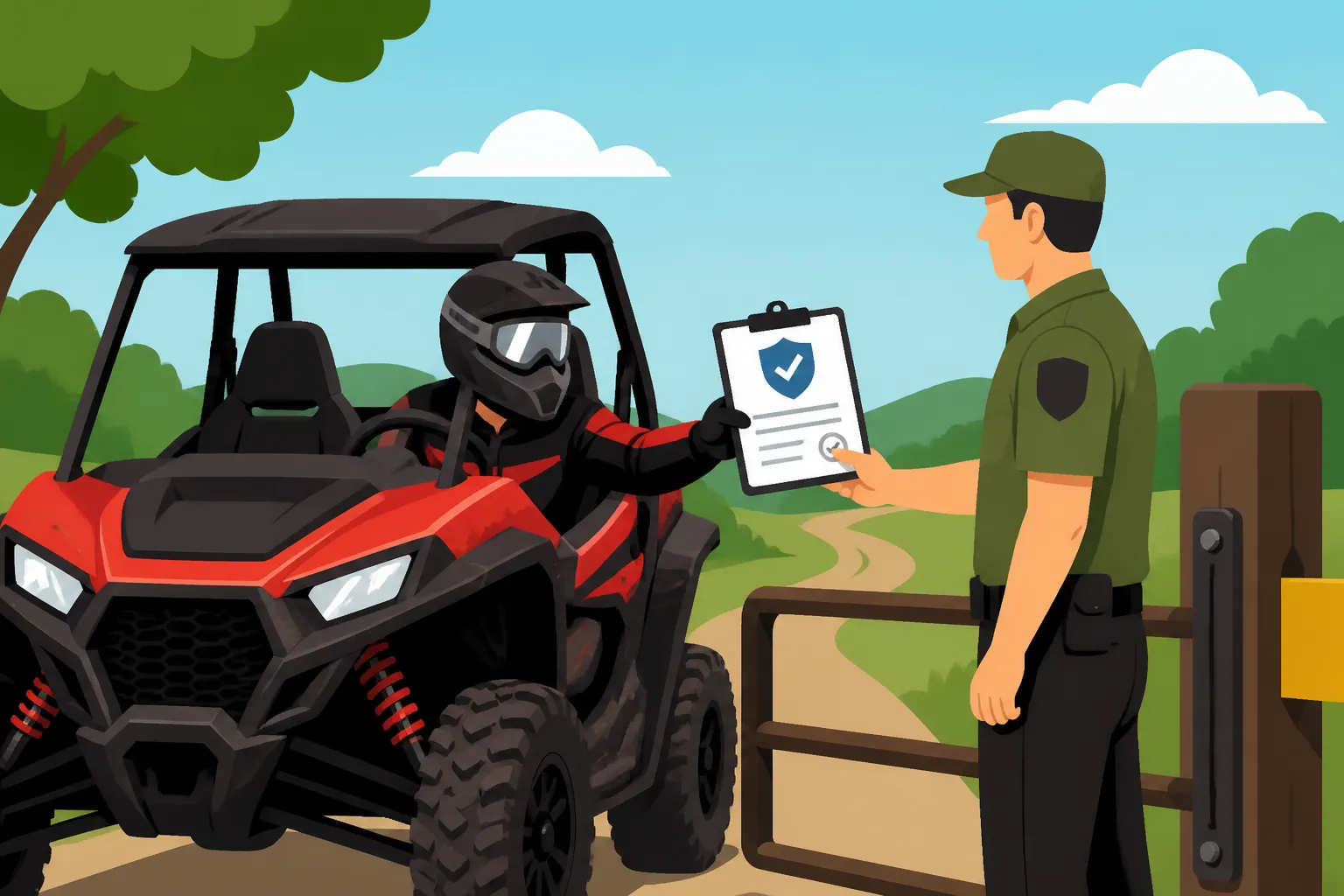
A calm, practical response is usually the quickest way to sort out whether you can enter. Ask the person at the gate which specific rule applies and what document they need. If the answer is unclear, do not assume that showing a vehicle title or a park permit will resolve it.
- Ask who sets the requirement. Find out whether it is a Nebraska road-use rule, a land-manager requirement, a private park policy, or an event condition.
- Ask what proof is accepted. Confirm whether a digital card is enough, whether the machine must be named, and whether any additional document is required.
- Show the relevant document if you have it. Use the card or policy information that corresponds to the machine and rider, while keeping personal details private when possible.
- If you cannot meet the rule, do not try to bypass the gate. Ask whether there is another option, such as returning with the required document or riding another day.
- If road travel is part of the trip, keep that separate from trail admission. A trail that does not ask for insurance proof does not waive the insurance requirement for legal road use.
If a gate employee says insurance is required but you believe the site’s published rules say otherwise, ask for the written policy or a contact for the manager. Avoid holding up other riders or treating a disagreement about the rule as permission to enter. A private facility can generally enforce its access conditions, and a land manager may close or restrict access under rules that apply to that location.
For private facilities, read the waiver and entry terms before arriving. A waiver is not an insurance policy, and signing one does not necessarily mean the park accepts your insurance as proof. The facility may ask riders to acknowledge risks, follow safety rules, or provide information about the machine. Check Nebraska Private Park Waivers and Rules for the distinction between a waiver and other site requirements.
For public land, verify the rules with the office responsible for the exact trail or recreation area. Rules can differ between areas, and a sign at one entrance may not describe another location. If the site’s requirements are not clear online, call ahead and write down the name of the office or staff member who answers. You can also check Nebraska Trail Conditions Before You Tow before making a long drive.
If you have no proof with you
If the gate requires proof and you cannot produce it, the safest choice is to pause and ask what the operator will accept. Do not claim that insurance is unnecessary simply because Nebraska has no general OHV sticker. A permit system and insurance requirement are different issues.
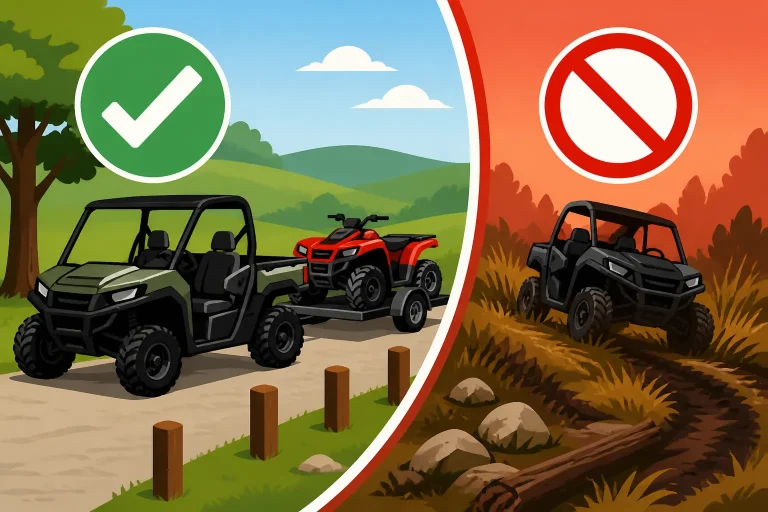
If you discover that your policy does not cover the planned ride, contact the insurer before riding. Do not assume coverage can be added retroactively after an incident. If the issue is road use, avoid operating the machine on the road until you have confirmed that the required insurance is in place. Hauling the machine to a riding area can help keep the trip separate from road operation, but it does not override a park’s own entry rules.
If a site does not require insurance proof, carrying your insurance information can still be useful. It makes it easier to confirm coverage after a collision and to handle questions about a road segment. Keep emergency contacts and the insurer’s claim instructions accessible, but do not treat an insurance card as a replacement for permission to ride, a required land-access permit, or a site waiver.
Disclaimer
This article is for general informational purposes only and does not constitute professional advice. Laws, prices and regulations vary by location and change over time. Consult a qualified professional for guidance on your specific situation.