Nebraska Permit Questions Parks Hear
Nebraska riders often ask whether an ATV or UTV needs a permit, especially when crossing state lines or towing to a public riding area. The key distinction is that Nebraska has no statewide OHV permit or sticker, but that does not mean every trail or park is open. The land manager’s rules determine what you need and where you can ride.
Is there a Nebraska ATV or UTV permit?
Nebraska does not require a general statewide off-highway vehicle permit or sticker for ATVs and UTVs. There is no state OHV pass that gives a machine permission to ride across public land, and an out-of-state registration does not replace a Nebraska permit because Nebraska does not have a statewide ATV registration system to reciprocate with.
That simple answer can be misleading, though. “Do I need a permit?” can mean several different things: a state OHV sticker, an entry permit for the vehicle you use to reach a recreation area, permission to ride on a specific trail, or a fee charged by a private riding park. Those are separate questions.
A park entry permit, where required, generally concerns access to the state park or recreation area by the vehicle bringing you there. It does not convert an ATV into a permitted trail vehicle or make riding legal in an area where ATVs are prohibited. Check Nebraska State Park Entry Permits before you set out, and keep the permit question separate from whether the machine itself can be ridden there.
Nebraska’s statewide lack of an OHV sticker also does not cancel local rules, landowner permission requirements, or public-land restrictions. A machine might not need a state trail decal, but a particular site can still require an entry permit, parking payment, reservation, waiver, or other condition of access. The relevant rules depend on who manages the land.
| What riders mean by “permit” | What to check |
|---|---|
| State OHV permit or sticker | Nebraska does not have a statewide ATV or UTV OHV permit or sticker |
| State park entry permit | Whether the vehicle bringing you into the area needs an entry permit |
| Permission to ride a machine | Whether ATVs or UTVs are allowed on that specific land or trail |
| Trail or parking fee | The land manager’s current fee and payment instructions |
| Private park admission | The park’s rules, waiver, age limits, and machine requirements |
| Out-of-state registration | Whether the riding site asks for proof of ownership or other documents |
What rules apply at different riding areas?
The biggest source of confusion is treating Nebraska’s public and private riding areas as if they share one permit system. They do not. The first step is to identify the exact place you plan to ride and the organization that manages it.
State parks and recreation areas
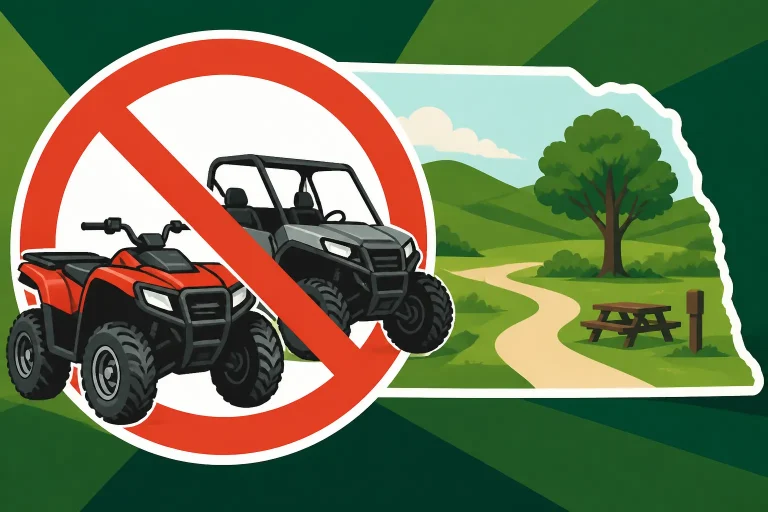
A state park entry permit is not permission to ride an ATV or UTV. Nebraska state parks are closed to ATVs, and recreation areas also have restrictions on these machines. Before treating a park permit as a green light, check Nebraska Parks Closed to ATVs and Nebraska Recreation Area Rules for ATVs.
Riders sometimes assume they can unload at a campground, picnic area, or parking lot and take a machine onto nearby land. Don’t rely on proximity. A trail visible from a campsite may be closed to motorized vehicles, or it may be managed by a different agency with different rules. Follow posted signs and check with the land manager about the exact route you intend to use.
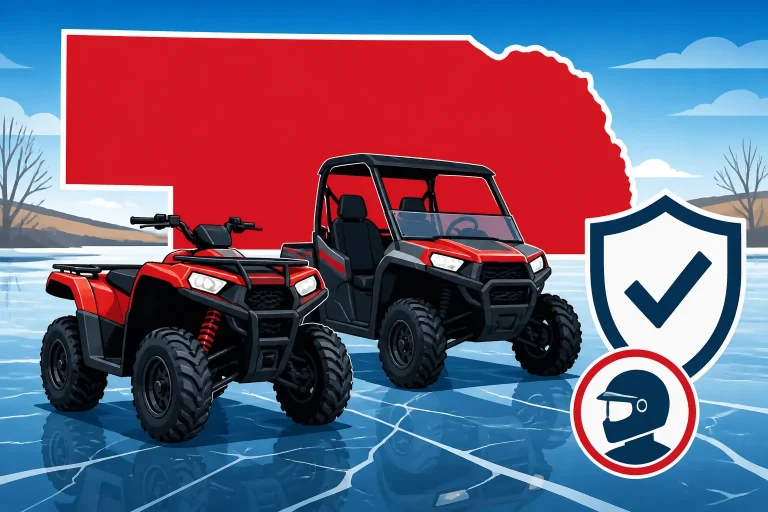
There can be narrow, specific exceptions for riding on frozen water at certain sites. That is not a general winter riding pass: the area, conditions, and posted restrictions matter. Confirm the rules for the particular location rather than assuming that frozen water makes riding lawful.
Wildlife management areas
Wildlife management areas are not general-purpose OHV parks. A quad may be allowed only on designated roadways or in specific circumstances, and parking rules can also limit where you may unload or leave a vehicle. Check Nebraska WMA Access for a Quad and the signs at the site.
A hunting license does not automatically open every road or trail to ATV use. Likewise, permission to enter a management area for one purpose does not necessarily authorize riding anywhere on it. Look for posted closures and verify whether the route is designated for motorized travel.
National forest and other trail systems
A trail system managed for OHV riding may have different access rules from a state park or wildlife management area. Some places have designated trails, staging areas, parking procedures, or fees. For example, check Nebraska National Forest Riding for the riding rules that apply to National Forest areas, then look up the specific trailhead and parking instructions.
A parking fee is not always an OHV permit. It may cover parking or access to a recreation site, while the actual riding permission comes from the trail designation and the land manager’s rules. See Nebraska Trail Fees Worth Checking before assuming that one payment covers every trailhead or riding area.
Private riding parks
A private riding park sets its own entry conditions. It may require admission, a signed waiver, a parent or guardian’s signature for a minor, or compliance with rules about helmets, passengers, noise, and machine type. These are park policies, not a Nebraska statewide OHV permit. Review Nebraska Private Park Waivers and Rules and contact the park if anything is unclear.
Do not assume that a state permit or out-of-state registration overrides a private park’s conditions. A park can turn away a rider or machine that does not meet its posted requirements, even if the machine is otherwise legal to own and transport.
Questions riders commonly ask parks
These questions are useful to ask before loading up. They also help clarify whether you are asking about legal access, a fee, or paperwork.
“Do I need a Nebraska ATV sticker?”
No statewide ATV or UTV OHV sticker is required in Nebraska. A specific riding area can still have its own entry, parking, or use requirements.
“Will my state registration let me ride here?”
Not by itself. Registration or ownership documents do not make a closed area open to riding. Ask the land manager what the site requires and what routes are designated for machines.
“I have a state park permit. Can I take my ATV on the trails?”
A state park entry permit is not ATV authorization. Nebraska state parks are closed to ATVs, so check the rules for that location before unloading.
“I’m visiting from another state. Do I need a Nebraska permit?”
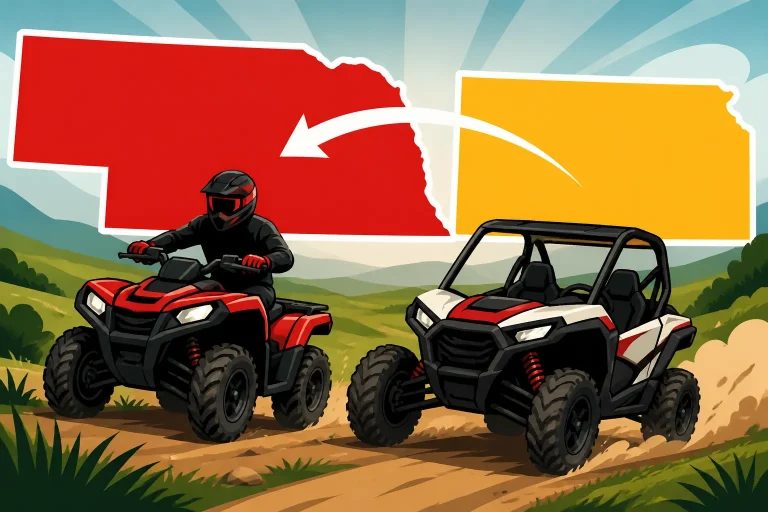
Nebraska does not require a statewide OHV permit or sticker for visitors. You still need to follow the rules at the place you visit, including any entry or parking requirements. Do Out-of-State Riders Need a Permit to Ride? covers the distinction between state stickers and site-specific access rules.
“Does my home-state registration count as a Nebraska registration?”
Nebraska does not have an ATV registration system that recognizes another state’s registration as a substitute for its own. That does not mean a visitor can ride anywhere. The location’s access rules still apply. See Nebraska Honors No Other State’s ATV Registration for more on the reciprocity question.
“Can I ride from the parking lot to a trail?”
Only if the route is allowed. A road or path between a parking area and a trail may be closed to ATVs, even when the trail itself is open. Ask the site manager which route riders are expected to use.
“Do I need proof of ownership?”
A site may ask for paperwork, or an enforcement officer may ask questions about a machine. Carrying ownership information can help resolve a question, but it does not replace permission to ride. Ask the manager what documents, if any, are required at the gate.
“Is the fee I paid good at every trailhead?”
Not necessarily. Fees and permits can be specific to a facility, trailhead, vehicle, or period of access. Confirm where the payment applies and how to display or document it.
How to check before you tow
A short check before leaving can prevent a wasted drive or an awkward conversation at a gate. Use this process for public and private riding areas.
-
Name the exact destination. “A state park near the lake” is not enough. Identify the park, trail system, management area, or private riding park, along with the trailhead or entrance you plan to use.
-
Find out who manages it. A nearby campground and trail can belong to different agencies. Check the land manager’s information or contact the office responsible for that specific site.
-
Ask whether the machine may be ridden there. Be specific about whether you have an ATV or UTV and whether you plan to use a designated trail, road, or staging area. Ask about machine-width limits if you have a side-by-side.
-
Separate riding permission from entry and parking. Ask whether you need an entry permit for the truck or other road vehicle, whether parking costs extra, and whether the fee covers the trailhead you plan to use. Don’t assume a park entry permit is an OHV pass.
-
Check the details that can change. Confirm operating hours, closures, payment methods, reservations, and any seasonal limits with the official land manager or park. If you are going to public land, read the signs on arrival as well as checking ahead.
-
Ask about paperwork and group rules. Find out whether riders need proof of ownership, waivers, identification, or a parent or guardian for minors. Private parks may also set their own helmet, passenger, sound, or age requirements.
-
Keep the answer with your trip information. Save the official rules or contact details, and follow signs at the site. If the information you find is ambiguous, call before unloading rather than relying on another rider’s experience at a different location.
A useful question to ask is: “Is this machine allowed on this specific route, and are there any separate entry or parking requirements for the vehicle bringing it here?” That wording makes clear that you are asking about both access for the ATV or UTV and access to the site itself.
The practical takeaway is straightforward: Nebraska’s lack of a statewide ATV sticker does not mean permits and rules never apply. Instead, requirements depend on the place. Verify the riding area, the route, and any separate entry or parking conditions before you travel.
Disclaimer
This article is for general informational purposes only and does not constitute professional advice. Laws, prices and regulations vary by location and change over time. Consult a qualified professional for guidance on your specific situation.