When a Riding Park Can Send You Home
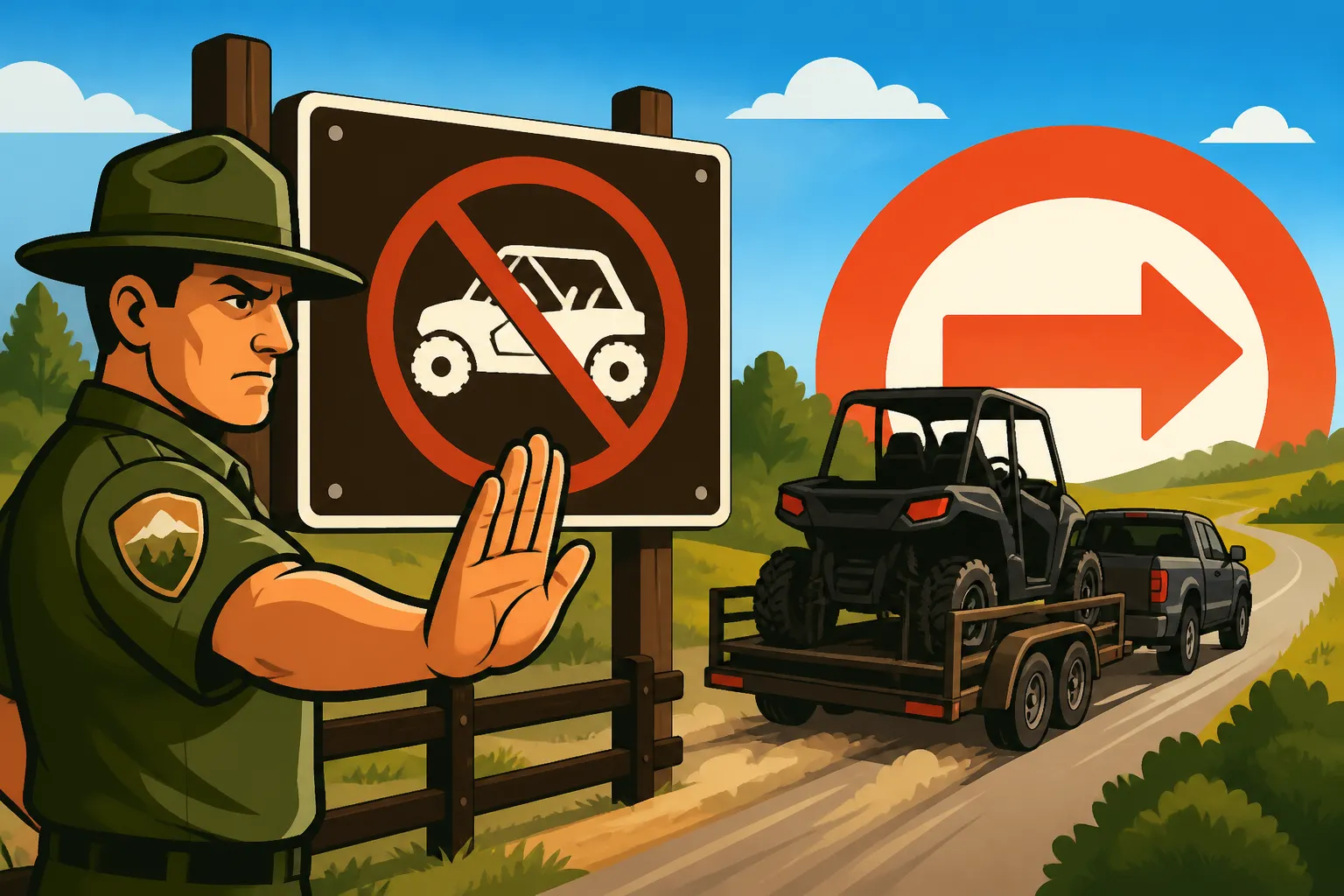
A day at a Nebraska riding park can end early if a rider breaks a posted rule, ignores staff, or creates a safety problem. The exact grounds for removal depend on the park’s policies, which can differ from state rules for public land. Knowing what staff may enforce—and what to do if there’s a disagreement—can help you avoid losing a day of riding.
Why a riding park may ask a rider to leave
A private riding park controls access to its property and can set conditions for using its trails and facilities. Those conditions may be posted online, included with a reservation, printed on a waiver, or explained at the gate. If a rider does not follow them, staff may stop that person’s riding or require them to leave. The details depend on the park’s terms and the circumstances; there is no single policy that applies to every Nebraska riding park.
Admission is not blanket permission to ride anywhere on the property or in any way you choose. A park may restrict certain trails, machines, activities, or areas, and staff may change access when conditions become unsafe. A trail closure after heavy rain, a mechanical problem, fire danger, or an active event can affect where you’re allowed to ride. A park can also have its own requirements for riders, passengers, helmets, waivers, and conduct.
Do not assume a state permit or a machine’s title gives you a right to ride at a private park. Those documents address separate questions, such as access to certain public areas or proof of ownership. They do not replace the park’s admission rules. See Nebraska Private Park Waivers and Rules and Why a Park Permit Does Nothing for Your ATV for more on the difference between park access and other requirements.
A removal decision can involve more than an individual rider. Staff may ask an entire group to stop if members are riding together unsafely, allowing a child to ride without required supervision, or refusing to follow a direction. A park may also suspend someone’s riding while staff investigate a reported incident. Ask calmly what rule or safety concern is involved, but don’t keep riding while the issue is being sorted out.
Removal and a refund are separate matters. A park’s policy may explain whether admission is refundable after a rider is asked to leave, and exceptions may depend on the circumstances. Don’t count on getting money back just because you disagree with the decision. Check the park’s terms before paying, especially if you’re buying admission for a group or traveling a long distance.
Conduct and safety problems that can end a ride
Park rules are generally intended to protect riders, staff, other visitors, and the property. Common reasons for being stopped include riding into a closed area, ignoring a staff member, using an unsafe speed, carrying an unauthorized passenger, or riding while impaired. A park may have additional requirements that are specific to its trails or facilities.
| Issue | Why staff may intervene | What to check before riding |
|---|---|---|
| Riding a closed trail or restricted area | Closures may protect riders, property, wildlife, or trail conditions | Current maps, signs, and staff instructions |
| Unsafe speed or reckless riding | Fast or unpredictable riding can put others at risk | Posted speed limits and riding directions |
| Alcohol or impairment | Impaired riding can create immediate safety risks | The park’s alcohol and conduct policy |
| Age or supervision violation | A rider may not meet the park’s minimum age or supervision rules | Age limits and adult-supervision requirements |
| Helmet or equipment issue | Required protective gear or suitable equipment may be part of admission conditions | Helmet, machine, and passenger rules |
| Refusing staff instructions | Staff may need to direct traffic, close a route, or respond to an incident | Check-in instructions and park authority rules |
Riding into a closed area is an easy rule to miss if a route has changed since your last visit. Watch for signs at trail junctions, barriers, and instructions from staff. Don’t treat a missing sign as proof that a route is open, particularly if staff have announced a closure or directed riders elsewhere. If a route is unclear, stop and ask before continuing.
Unsafe riding can include more than speeding. Tailgating, racing where it is not allowed, riding too close to pedestrians or parked machines, doing stunts outside a designated area, or driving aggressively around other groups can all prompt intervention. A machine that is too wide for a trail can create a similar problem. Check the park’s machine restrictions in advance; When a Side-by-Side Is Too Wide for a Trail covers one common fit question.
Alcohol rules deserve special attention. A park may restrict drinking while riding, set limits on where alcohol is allowed, or prohibit it altogether. Even if a visitor believes they are riding safely, staff may respond to signs of impairment or conduct that raises a safety concern. Read the specific policy rather than relying on what is allowed at another park. Alcohol Rules and Wristbands at a Riding Park explains what to ask about.
Age and protective-gear rules are also park-specific. A Nebraska rule that applies in one setting does not automatically tell you what a private park will require. A park may set its own minimum ages, supervision conditions, and helmet policies as part of admission. Confirm requirements for each rider and passenger before you go; see Minimum Riding Ages a Private Park Sets Itself and Helmet Rules a Private Riding Park Enforces.
Finally, staff may treat refusal to follow directions as a separate conduct problem. If an employee tells you to stop, move your machine, or stay out of a closed section, arguing while continuing the activity can make the situation worse. Stop first, then ask for an explanation when it is safe to do so.
What to do if staff tells you to stop riding
A calm, practical response gives you the best chance of understanding the issue and resolving it without escalating the situation.
- Stop riding and move to a safe place. Follow any immediate direction about where to park or wait. Don’t block a trail, gate, or emergency route.
- Ask what the concern is. A short question such as “Which rule should I check?” can clarify whether the issue is a closure, equipment requirement, riding behavior, or something else.
- Listen to the full instruction. If staff asks you to leave, don’t ride off elsewhere on the property while disputing the decision. Follow directions for exiting safely.
- Keep the discussion respectful. Avoid threats, insults, or physical confrontation. If you believe there has been a misunderstanding, explain briefly and ask whether a manager can review it.
- Make a note of the facts afterward. Record the time, location, staff directions, and rule cited. Keep admission receipts, reservation details, and any relevant messages.
- Ask about the park’s complaint and refund process. If you want the decision or payment reviewed, use the park’s stated process. A staff member’s decision to end a ride does not necessarily settle whether a refund is available.
Don’t assume that a disagreement over a refund lets you remain on the property. Handle the immediate safety direction first; raise billing questions afterward through the park’s designated contact. Refund policies may differ for voluntary departure, weather-related closures, rule violations, or a park-wide shutdown. Do You Get a Refund When Rain Closes Trails? addresses one situation where the reason riding stops can matter.
If staff has asked you to leave but you think the instruction is based on a simple misunderstanding—for example, a mistaken assumption about who signed a waiver—ask if you can show the relevant paperwork. Keep the conversation factual. If staff confirms that your admission is ended, leave rather than trying to negotiate while still riding.
For a serious injury, collision, or immediate threat, prioritize safety and emergency help over a dispute about admission. Give staff accurate information about what happened. If there is a later question about responsibility or insurance, preserve any incident records and contact your insurer or a qualified professional as appropriate.
How to reduce the chance of being sent home
The most useful step is to check the rules for the specific park, not just general Nebraska riding information. Policies can vary even between parks that have similar trails. Review the park’s website or contact staff before you travel, and ask about anything that could affect your group: machine types and size, passengers, helmets, age limits, supervision, alcohol, speed, pets, noise, camping, and trail closures.
Before unloading, make sure every rider understands the rules and has completed any required waiver or check-in. A parent or guardian should verify the park’s process for minors rather than assuming that an adult’s admission covers a child. If different people in your party arrive separately, make sure each person receives the same current instructions.
At the gate or trailhead, pay attention to signs and staff briefings. A map from a previous visit may be out of date, and a familiar route may have closed. Follow posted speed limits and stay within permitted areas. Speed Limits Posted Inside a Private Riding Park and Group Size Limits on a Busy Riding Weekend are useful reminders that operational rules can change with the site and conditions.
Do a basic machine and gear check before starting. Confirm that the machine is allowed on the trails you plan to use, that passengers are permitted for that machine, and that required safety equipment is present. If a park has noise, width, or other equipment limits, ask before paying rather than hoping staff will make an exception at the gate.
For groups, choose one person to review the rules and share them with everyone. Agree on a simple plan: stay together where appropriate, stop if someone is unsure about a route, and don’t follow another rider through a closure. Group leaders should make clear that one person’s decision to ignore staff can affect everyone’s day.
If the park’s policy is unclear, ask specific questions before admission: What conduct can lead to removal? Who should riders contact if they disagree with a staff decision? Does the park offer any refund or credit after a rider is asked to leave? Getting answers in advance won’t guarantee that a dispute never happens, but it helps you make an informed choice and avoid preventable surprises.
Disclaimer
This article is for general informational purposes only and does not constitute professional advice. Laws, prices and regulations vary by location and change over time. Consult a qualified professional for guidance on your specific situation.