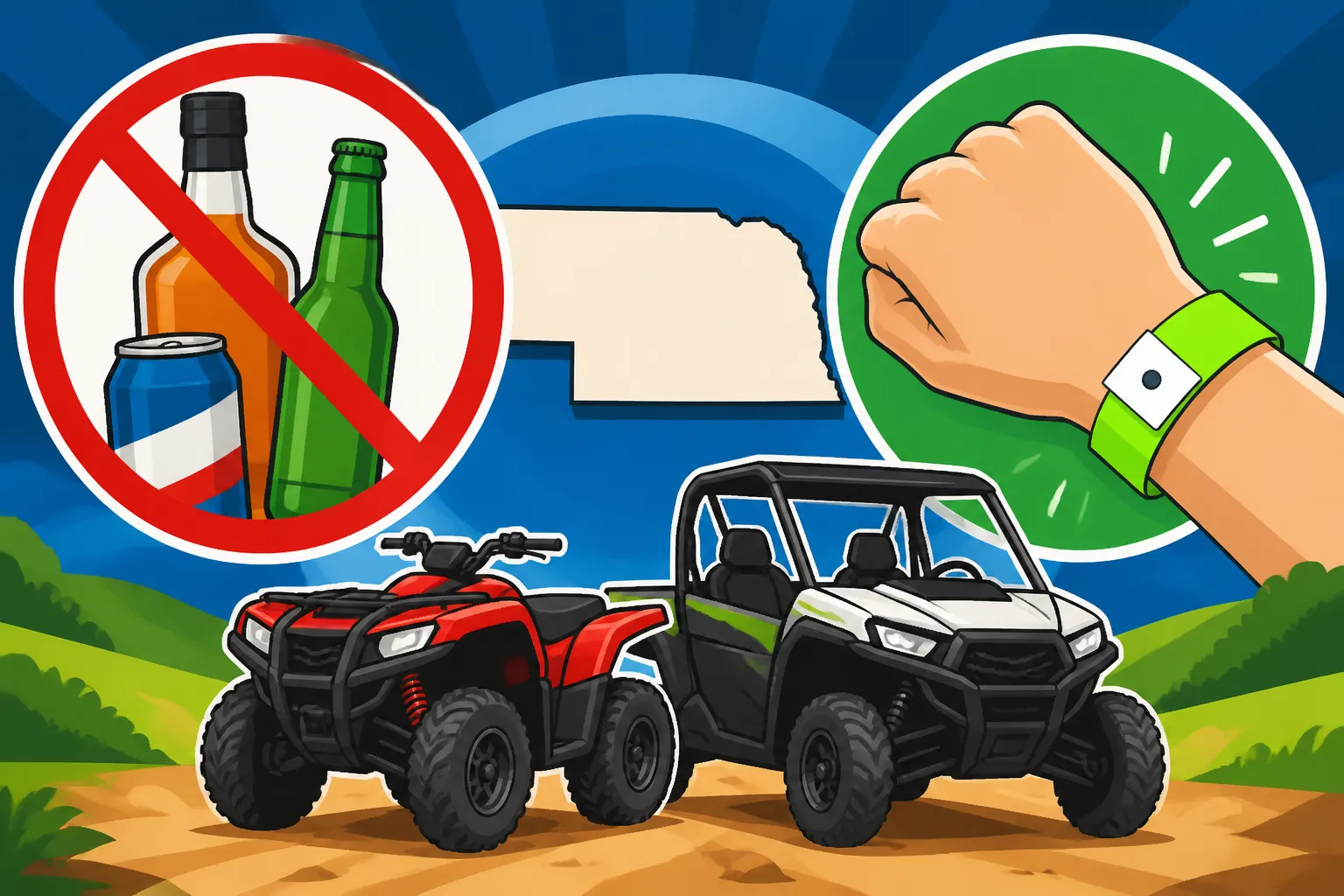
Alcohol Rules and Wristbands at a Riding Park
A wristband at an ATV or UTV park can look like a simple entry marker, but it may also signal that staff checked a rider’s age, waiver, or event status. Alcohol rules are a separate matter, and they can vary from one private park to another. Before you haul your machine, find out what the park allows, where alcohol may be used, and whether anyone who drinks can ride afterward.
Why alcohol rules vary from park to park
A private riding park sets its own operating policies for guests, campsites, events, and facilities. One park may prohibit alcohol throughout the property. Another may allow it only in a camping area or after riding ends. Some may impose different rules during organized events. There is no safe reason to assume that a rule you encountered at one park applies at another.
Park policy does not replace the law. A guest must follow applicable laws as well as the property’s rules. Being on private land, having a wristband, or carrying a park permit does not grant permission to operate a machine after drinking. If there is a question about what a specific Nebraska law covers, check the current rule or ask a qualified legal professional rather than relying on a park employee’s informal explanation.
It also helps to separate alcohol rules from general admission and access requirements. A wristband may be used to show that a guest has checked in, signed a waiver, paid an admission charge, or met an event requirement. It might identify adults permitted to buy or consume alcohol at a particular event, but that use is not universal. A wristband by itself does not prove that the wearer is legally old enough to drink, nor does it establish that the park allows alcohol.
For more about the range of rules a privately operated riding area may set, see Nebraska Private Park Waivers and Rules. A waiver or wristband can help staff manage entry, but neither should be mistaken for blanket permission to ignore posted restrictions or laws.
| Question | What to confirm with the park |
|---|---|
| Is alcohol allowed at all? | Whether it is prohibited, limited to certain areas, or allowed only at specific events |
| Can guests bring their own? | Whether outside alcohol is allowed and how it must be stored |
| Does the park use wristbands? | What each band means and whether it must stay visible |
| Can someone drink and then ride? | Whether riding after drinking is prohibited and how staff handle suspected impairment |
| Do camping rules differ? | Whether alcohol rules change at campsites or during quiet hours |
| What happens after a violation? | Whether staff may remove a guest, suspend riding access, or take another action |
Ask about the policy for the exact park and the exact visit. A weekend event, a campground, and a day-use riding area may not have identical conditions. If a rule is unclear, request the current written policy before you leave home.
What a wristband does and does not mean
Wristbands are practical tools for staff. They can make it easier to distinguish registered guests from visitors, check that a waiver has been completed, or identify people assigned to a group or event. If alcohol is part of a permitted event, a park might use a separate band as one part of its age-check process. But band colors, meanings, and procedures are set by the individual operator.
Do not infer permission from a band color you have seen somewhere else. A colored band at one park may indicate registration, while a different color at another might be used for a different purpose. Ask staff what the band means when you check in. If you are attending with children or teens, make sure everyone in your group understands that a band is not permission to drink or ride outside the park’s rules.
Age checks may involve identification rather than a wristband alone. If alcohol is allowed, expect staff to explain their process and follow it. A band is not a substitute for valid identification when staff request it. Do not transfer, alter, or share a band to get around an age or access rule. A park can treat that as a policy violation and may deny entry or remove a guest.
Wristbands also do not establish that a machine is permitted on every trail or that a rider has met every safety requirement. Parks may set separate rules for helmets, passengers, machine size, age, or trail access. Read the park’s full conditions, including Nebraska Private Park Helmet Rules and Nebraska Private Park Age Minimums, rather than treating check-in as proof that all requirements have been met.
A sensible check-in routine is simple:
- Ask staff what each wristband in your group represents.
- Confirm whether the band must remain on the wearer for the full visit.
- Keep it visible if staff require that, and do not lend it to another guest.
- Ask whether the band is connected to alcohol service, age verification, a waiver, or only admission.
- Clarify how staff handle a lost or damaged band before leaving the check-in area.
If you are bringing a group, pass the park’s written rules to everyone before the trip. That avoids relying on a single person’s memory and helps prevent a disagreement at the gate or campsite.
Drinking, riding, and group safety
The safest plan is not to ride after drinking. Alcohol can affect judgment, coordination, balance, and reaction time, all of which matter when operating an ATV or UTV. A rider may have to respond quickly to a changing trail, another machine, a passenger, or an unexpected obstacle. A slow ride or familiar route does not remove those risks.
Do not use a wristband, a park’s alcohol allowance, or another guest’s opinion as a test of whether someone is fit to ride. If a person has been drinking, arrange for them to stop riding and let a sober person handle any necessary machine movement. The same approach applies to passengers: someone who is impaired may have difficulty following instructions or staying safely positioned, even if they are not driving.
Plan the day so that riding and alcohol are kept separate. Agree on a clear stopping point for riding before anyone drinks, and do not plan to resume riding after a break involving alcohol. If your group is staying overnight, decide in advance who is responsible for securing machines and helping guests get back to their campsites. Do not let a social plan turn into an expectation that someone must ride to move a machine or retrieve belongings.
Keep alcohol away from machine operation areas unless the park expressly allows it there. If the park permits alcohol only at a campsite or designated gathering area, use that area and follow its instructions. A beverage container in a cup holder does not make it acceptable to ride while drinking, and an allowed campsite does not mean trails are included in that permission.
Have a sober person serve as the point of contact if anyone in the group needs help. They can speak with staff, arrange a safe way back to camp, or help prevent a guest from attempting to ride. For a large group, it may be useful to agree on a straightforward rule: anyone who drinks is finished riding for the day. That rule is clearer and safer than trying to judge impairment after the fact.
Safety, insurance, and waiver issues can be separate from alcohol policy. A signed waiver does not make unsafe behavior safe, and a wristband does not guarantee coverage for an incident. Review your own insurance terms and ask the park what it requires for organized rides or events. What Insurance an Organized Trail Ride Needs can help clarify the kinds of questions to raise when a ride is formally organized.
How to check the rules before you arrive
Look for the park’s current visitor rules, event information, and camping conditions before loading your machines. If the website does not answer your questions, contact the operator directly. Ask about the visit you are planning, since a special event may use different procedures from ordinary day access.
Use direct questions rather than asking only, “Is alcohol allowed?” That question may not reveal restrictions on where guests can drink, what they can bring, or whether alcohol service ends before riding closes. Ask:
- Is alcohol allowed anywhere on the property, and if so, in which areas?
- Are guests allowed to bring their own alcohol?
- Are there different rules for campsites, trails, or event areas?
- Does the park use wristbands, and what does each type indicate?
- What identification should guests bring if age verification applies?
- Is riding prohibited after drinking under the park’s rules?
- What should a guest do if someone has been drinking and wants to ride?
- Do quiet hours or other campground rules affect gatherings?
Save the answer or the park’s written policy where the group can find it. If staff give instructions at check-in that differ from what you expected, follow the current direction and ask for clarification before riding or opening alcohol. Park staff may restrict access or remove guests for violations, but the exact response depends on the operator’s rules and the situation.
Camping plans deserve particular attention. A park may allow alcohol in a designated campsite but prohibit it near riding areas, registration, or shared facilities. It may also have separate rules about noise, fires, or visitors. Check Nebraska Private Park Camping Rules and When Quiet Hours Start at a Trail Campground when deciding where and when your group can gather.
Finally, do not confuse private-park permission with a permit or access rule for public land. A wristband from a private park does not serve as a state permit or authorize riding somewhere else. Access conditions differ by location, so confirm the rules for each destination independently. A clear plan—check in, understand the band, keep alcohol away from riding, and follow staff instructions—helps your group avoid preventable trouble and focus on a safe visit.
Disclaimer
This article is for general informational purposes only and does not constitute professional advice. Laws, prices and regulations vary by location and change over time. Consult a qualified professional for guidance on your specific situation.