Youth Safety Courses Offered at a Riding Park
A youth safety course at a riding park can help a new rider build confidence before heading onto trails, but the word “course” can mean anything from a short orientation to hands-on instruction. In Nebraska, parents should check what a park actually teaches, which ages and machines it accepts, and whether the course changes any riding or entry requirements.
What a Youth Safety Course at a Riding Park May Include
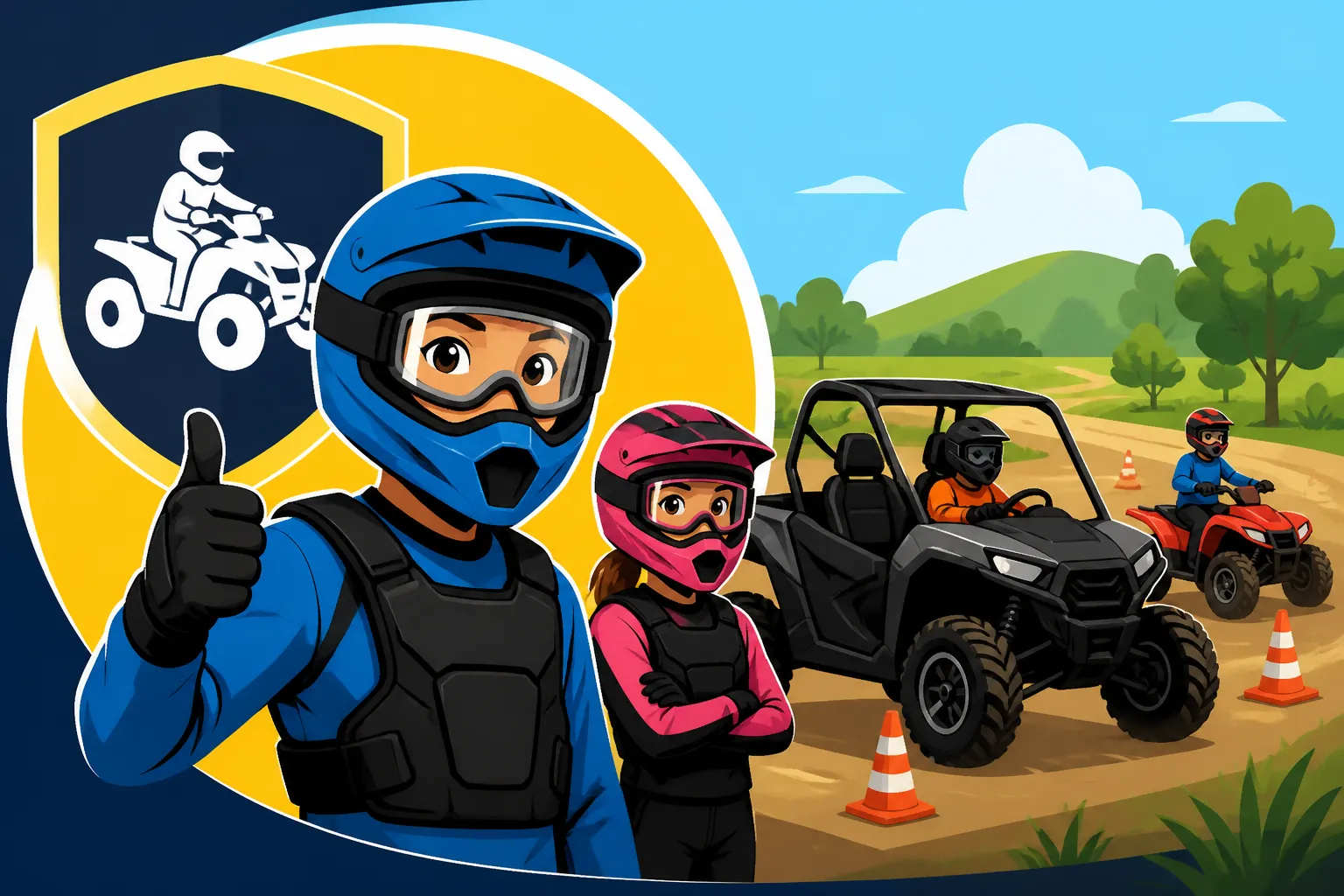
A park’s youth course is usually intended to prepare a child for riding at that particular facility. It may cover basic controls, safe starting and stopping, turning, braking, spacing, trail signs, and what to do if the machine stalls or a rider falls. Some courses include supervised practice; others may focus more on rules and orientation. The park can explain what its program includes.
That distinction matters. A brief safety talk may be useful, but it is not the same thing as coached practice on a machine. If your child has never ridden before, ask whether the course includes riding time and whether an instructor can observe the child operating the type of vehicle they plan to use.
Check that the instruction matches the machine
An ATV and a side-by-side have different controls, handling characteristics, and passenger considerations. A child who has practiced on one type of machine should not be assumed ready for another. Ask whether the park teaches on the same general type of vehicle your child will ride there, and whether it accommodates youth riders on that vehicle.
The child’s size and ability to reach the controls matter as much as age. A rider should be able to reach and operate the controls comfortably, keep a stable position, and understand the instructor’s directions. If a child struggles with those basics, more instruction or a different machine may be appropriate. A course cannot make an oversized or unsuitable vehicle a safe fit.
Ask who teaches and supervises
Before enrolling, find out whether instruction is provided by park staff, a designated instructor, or another organization. Ask how many riders are grouped with each instructor and whether a parent or guardian is expected to stay nearby. If children practice on a trail or course, ask how they are supervised and what happens if a rider needs help.
Parks set their own operating policies, and their requirements may differ. One park might offer a scheduled youth session; another may provide a safety briefing but no formal training. A course might be available only on selected dates or require advance registration. Confirm the details directly rather than assuming that a program described online is available for every visit.
What Parents Should Verify Before Signing Up
A little checking before the trip can prevent a wasted drive or a difficult conversation at the gate. Ask the park for current information about its course, youth rules, equipment, and waiver. Park policies are separate from state-level requirements, and one facility’s rules do not automatically apply at another.
Nebraska does not have a mandatory statewide ATV safety course requirement, but a private riding park may establish its own conditions for entry or riding. A course may be optional, required by the facility, or recommended for certain riders. For context on the statewide distinction, see Nebraska Has No Mandatory Safety Course and Nebraska Safety Course Options. Neither title should be taken as a statement of a particular park’s policy.
| Question to ask | Why it matters |
|---|---|
| What ages can enroll, and are age limits different for riding? | A course’s age range may not match the park’s minimum riding age or vehicle rules. |
| Does the session include supervised riding practice? | An orientation alone may not give a new rider hands-on experience. |
| Which vehicle types are covered? | Training on an ATV may not prepare a child for a side-by-side. |
| Does the child need to bring a machine? | Some programs may use participant vehicles; others may provide instruction without supplying a vehicle. |
| What protective equipment is required? | The park can clarify its helmet, clothing, and footwear rules. |
| Does a parent or guardian need to attend or sign forms? | Youth participation often involves consent and supervision requirements set by the facility. |
| Is advance booking required? | A course may not run every day or may have limited spaces. |
| Does completion satisfy any park-specific requirement? | Confirm whether the course is recognized by that facility and what proof it provides. |
Understand the waiver and parent role
A parent or guardian may need to complete a waiver or other paperwork before a minor can take part. Read the form before signing, and ask the park to explain anything unclear, including which activities it covers and whether it applies to practice, trail riding, or both. Do not assume a course enrollment form and a riding waiver are the same document.
Ask whether adults must remain at the facility during instruction, accompany the child on the trail, or be available at a specific location. The park’s policy can depend on the child’s age, the activity, and its staffing. More on this question is covered in Who Signs the Waiver for a Rider Under 18. For related facility rules, see Nebraska Private Park Waivers and Rules.
Confirm age and helmet policies separately
A park’s minimum course age does not necessarily tell you the minimum age to ride there, ride a specific machine, or ride without an adult. Ask about each separately. Facilities may also set different rules for youth passengers, machine size, or supervision. These are park policies, so check the exact requirements for the location you plan to visit. Minimum Riding Ages a Private Park Sets Itself explains why those limits can vary.
Ask what helmet the park accepts and whether the rider must bring one. Do not rely on a general statement that helmets are “recommended” to infer that they are optional for every child or activity. Check the specific rule, then make sure the helmet fits securely and is suitable for riding. A helmet that shifts, blocks the rider’s view, or cannot be fastened properly is not a good fit. Facility rules are discussed in Helmet Rules a Private Riding Park Enforces.
What a Good Session Should Help a Young Rider Practice
A useful course should give a child a chance to understand the machine and make safe decisions, not just memorize a list of rules. The exact lesson plan varies, but parents can look for clear explanations, a gradual introduction to controls, and practice suited to the child’s experience.
Basic controls and riding posture
A young rider should know how to start and stop the machine, use its controls, and shut it down when needed. They should learn to keep a stable position, look where they want to travel, and avoid making sudden movements they cannot manage. The instructor should explain how to respond if the machine behaves unexpectedly and how to get help without putting themselves or others in greater danger.
If the child is riding a machine supplied by the family, make sure they know that machine’s controls before the session begins. Controls and operating procedures can differ between models. Do not assume a child who learned on one ATV will automatically know how to use another.
Speed, space, and terrain
Children need to understand that a safe speed depends on conditions, not just on what the machine can do. Loose ground, uneven surfaces, slopes, dust, and other riders can change how much room is needed to stop or turn. A course can introduce the value of leaving space, following instructions, and not trying a feature simply because another rider attempts it.
A new rider may need more time on a flat, controlled area before navigating uneven terrain. Ask whether the practice session is adjusted for beginners and whether instructors can keep more experienced riders separate from first-timers. If a child is uncomfortable or overwhelmed, it is reasonable to stop and ask what options are available.
Trail awareness and courtesy
A riding park may teach riders to obey posted directions, stay on designated routes, watch for other users, and avoid crowding. Children should know to pause when they are unsure where to go and to follow the facility’s directions rather than trying an unmarked route. Parents can reinforce these habits during the visit.
For a broader look at what safety training can cover, see What an ATV Safety Course Actually Teaches You. A park’s course may be more specific to its own trail layout and procedures, so ask what the session covers rather than treating any course description as a complete list.
Limits and emergency response
A child should know when to stop riding and tell an adult: for example, if they are tired, frightened, injured, or having trouble controlling the machine. Ask whether the course explains how to alert staff and where to go for help. Parents should also learn the park’s procedure for reporting a crash or other incident.
Training is not a promise that an accident will not happen, and course completion does not replace attentive adult supervision. Children still need an adult to judge whether conditions, the machine, and the rider’s skill level are a reasonable match.
Planning the Visit and Supporting the Rider Afterward
A well-planned first visit can make instruction easier for a child and less stressful for the family. Confirm the course details and gather the required equipment before leaving home. If the park has separate rules for the course and for general trail access, ask for both sets of information.
Before you go
- Contact the park. Confirm the course date, registration process, age range, session length, and whether the program is currently being offered.
- Describe your child’s experience. Tell staff whether the rider is a beginner, what machine they have used, and whether they will bring their own vehicle.
- Ask about gear. Verify helmet and clothing requirements, and ask whether the park supplies any equipment.
- Read the paperwork. Review waivers, participation conditions, and parent or guardian responsibilities before arrival.
- Plan for the whole visit. Check whether course participants can ride afterward, what additional entry rules apply, and whether the family needs to bring anything beyond the rider’s gear.
If you are shopping for equipment, focus first on a correct fit and the park’s stated requirements rather than choosing by appearance or convenience. A retailer such as Amazon may offer a wide selection, but a product listing does not confirm that a particular item meets a riding park’s policy or fits your child. Check the product details and the park’s requirements before buying.
During instruction
Let the instructor know about the child’s experience and any concerns before practice begins. Stay available if the park expects a parent or guardian to remain on site. Watch how the instructor explains the controls, supervises practice, and responds when a child needs more time.
Avoid pressuring a child to continue if they are upset or uncomfortable. A course is more useful when a rider can ask questions and proceed at a manageable pace. If the child is not ready to ride, listening to instruction without taking a machine onto the trail may be the sensible choice.
After the course
Ask your child to explain the key safety steps in their own words. A simple conversation can show whether they understood how to stop, where to ride, how to respond when uncertain, and when to ask for help. Praise careful decisions and honest communication, not just speed or completing a route.
Before moving from a practice area to trails, check with the instructor or park staff about whether the child appears ready and what routes are appropriate. A certificate or completion note, if offered, should not be treated as proof that the child is prepared for every machine or terrain. Training is a starting point; skills develop through supervised practice and good judgment.
Finally, do not confuse a safety course with a permit, sticker, or permission to ride anywhere. Course completion does not by itself grant access to public land or override local facility rules. For details about Nebraska course formats, Nebraska Online Safety Courses may help explain options outside a park’s own program. For the facility you plan to visit, the park remains the best source for its current youth course, waiver, equipment, and riding policies.
Disclaimer
This article is for general informational purposes only and does not constitute professional advice. Laws, prices and regulations vary by location and change over time. Consult a qualified professional for guidance on your specific situation.