Taking the Voluntary Online ATV Safety Course
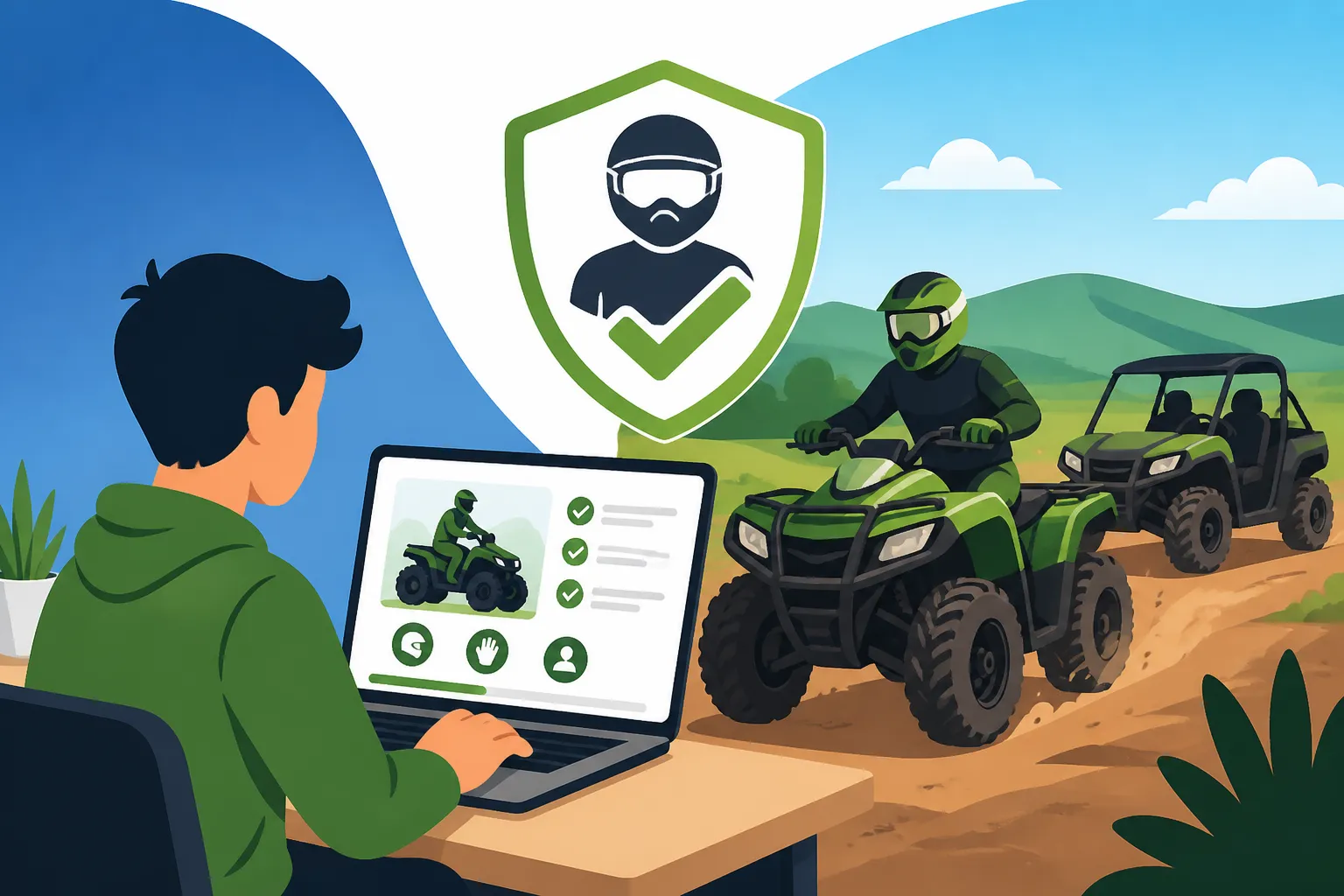
Taking a voluntary online ATV safety course can help Nebraska riders prepare for trails, farm roads and private riding areas. But it is easy to confuse training with permission to ride: a course certificate does not automatically provide access, satisfy every park’s rules or replace other requirements. Here’s what the course can teach, how to choose one and what to check before you ride.
What an online ATV safety course does and does not do
Nebraska does not generally require ATV riders to complete a state safety course before riding. Taking one is voluntary, but it can still be useful for new riders, parents, occasional riders and experienced operators who want to refresh safe habits. For an overview of the available training approaches, see Nebraska Safety Course Options.
A course is primarily an education tool. It can explain how to control a machine, spot hazards and make better decisions around other riders. It does not, by itself, give you permission to ride on someone else’s land or a public trail, make a machine street legal, or prove that a particular riding area will accept your training certificate.
That distinction matters in Nebraska because training, land access and permits are separate questions. A rider may complete a course and still need permission from a landowner or need to follow the rules for the specific public or private riding area. Nebraska also does not have a statewide ATV registration sticker or OHV permit that a safety course can replace. Read Nebraska Has No Mandatory Safety Course alongside Nebraska Has No OHV Permit or Sticker to keep those separate issues clear.
| What you want to know | What an online course can do | What you still need to check |
|---|---|---|
| How to ride more safely | Teach basic operating habits, hazard awareness and risk management | Whether your machine and experience fit the terrain |
| Whether training is required | Help you complete voluntary instruction | Whether a riding park, event or other organization requires its own training |
| Whether you can ride a particular place | Explain general safety principles | The land manager’s access, permit and machine rules |
| Whether a child can ride | Help a parent discuss safe practices | Age, supervision, machine-size and passenger rules for the location |
| Whether your ATV can use a road | Provide general awareness | Applicable road rules, local ordinances, equipment and insurance requirements |
An online certificate is not the same thing as a legal license or a guarantee that a rider is qualified for every machine or setting. If a park, club, event organizer or employer asks for training proof, ask what type of course and certificate it accepts before enrolling. Requirements can differ, and an online course may not satisfy a rule that calls for in-person instruction or a specific provider.
The course also does not make an ATV safe for every rider. A machine can be too large or powerful for someone’s strength and experience, and online lessons cannot confirm that a rider can control it in real conditions. Use the training as one part of a safety plan, not as a substitute for supervision, practice and sensible machine choice.
What you can expect to learn
Online courses vary, so review the course outline before starting. Many cover the fundamentals that matter whether you ride on a farm, at a private park or on an authorized trail. A course may address controls and safe operating techniques, riding posture, braking, turning, hills, surface changes, visibility and avoiding collisions. For a closer look at typical lesson topics, see What an ATV Safety Course Actually Teaches You.
A useful course should encourage riders to assess conditions rather than rely on a single rule for every situation. Loose sand, mud, slopes, ruts, standing water and gravel can each affect traction and stopping distance. The right response depends on the machine, the rider and the conditions. Training can help you recognize those variables, but it cannot inspect your ATV or judge a specific trail for you.
Courses may also cover protective gear and passenger safety. Helmets and other protective equipment can reduce some risks, but equipment does not prevent every injury. Riders should check the machine’s instructions about passengers and seating, and should never assume that an extra seat means every passenger is an appropriate size or age for the ride.
For families, a course can give adults and younger riders a shared vocabulary for discussing hazards, boundaries and stopping when conditions change. It can also prompt useful conversations about riding within sight of an adult, keeping a safe distance from other machines and asking for help instead of attempting a difficult obstacle. For age-related questions, review Does Nebraska Set a Minimum Age for Riders? and Nebraska Rules for a Teen Rider. A riding park may set its own limits even when a statewide rule does not settle the question.
Safety content is most useful when it connects principles to decisions a rider will actually make. As you work through lessons, consider how each topic applies to your plans:
- Before starting: Check the machine’s controls, tires, fuel, brakes and visible damage. Wear appropriate protective gear and secure loose items.
- Before choosing a route: Check whether you have permission to ride there and whether the area allows your type of machine. Look for closures, posted hazards and route limits.
- While riding: Adjust speed and spacing to visibility, traction and traffic. Leave room to stop, and avoid following closely in dust.
- When conditions worsen: Stop somewhere safe, reassess the route and turn back if needed. Completing a course does not obligate you to continue into terrain beyond your ability.
- After a ride: Check the machine for damage, clean it as appropriate and discuss any close calls or confusing situations before the next outing.
These are practical habits, not a guarantee against injury. A safety course should support cautious judgment, including the decision not to ride.
How to choose and complete an online course
A course that is easy to access is not necessarily the right course for your purpose. Before signing up, decide whether you want general education, a certificate for a particular organization or instruction for a young rider. Then check that the course’s format and completion record fit that need. The options described in Nebraska Online Safety Courses can help you compare what is available.
Use this process to avoid paying for a course or spending time on one that does not meet the requirement you have in mind:
- Ask the organization that may require proof. If you are preparing for a private park, organized ride or work assignment, contact it first. Ask whether it accepts online training, whether it recognizes a particular provider and what documentation it expects.
- Read the course description. Look for the intended audience, topics, language, accessibility and whether the course is designed for adults, youth or both. Check whether it focuses on ATVs, UTVs or both rather than assuming the terms are interchangeable.
- Check how completion is recorded. Find out whether you receive a certificate or other proof, how to save or retrieve it, and whether the organization you need to satisfy accepts that form of proof. Keep a copy, but do not assume you must carry it everywhere unless a rule or organizer says so.
- Set aside focused time. Take the course somewhere you can read and watch the material carefully. Avoid rushing through safety lessons just to reach the end screen.
- Review and discuss the material. If a child is taking the course, an adult should review the key lessons with them and connect the material to the actual machine and riding location.
- Practice in a controlled setting. Apply what you learned gradually, in an authorized area with manageable conditions and appropriate supervision. Start with basic control and stopping before attempting difficult terrain.
A good course should be clear about what it covers and what it does not certify. Be cautious of claims that a completion document automatically permits riding anywhere or satisfies all local and private-park requirements. Confirm those claims with the organization that controls access.
Online instruction has practical limits. It cannot give a student hands-on feedback about posture, braking, steering or how a machine responds under load. It also cannot recreate the noise, dust, changing traction or distractions of an actual ride. If a new rider is uncertain, supervised practice and in-person instruction may be valuable even when not required. Parents can also check Youth Safety Courses Offered at a Riding Park when looking for a setting where a young rider can receive more direct guidance.
What to check before your first ride after training
Finishing a course is a good point to review the whole plan, not simply to load the machine. First, confirm that you are allowed to ride at the destination. Permission from a private landowner, access to a designated public trail and permission to use a town street are different things. Do not treat a course certificate, a title or a registration from another state as proof that a particular Nebraska route is open to you.
Next, check the rules for the location. Public land, private riding parks, wildlife areas and local streets can have different restrictions on machine types, routes, hours, equipment and rider conduct. A course may teach sound safety practices without explaining every rule for every location. Confirm the current requirements with the land manager or operator, especially if the rules affect access or change seasonally.
If you plan to ride with a child, check both the child’s readiness and the location’s requirements. Consider the child’s ability to reach and use controls, follow instructions, recognize hazards and stop when asked. Do not choose a machine only by age or appearance; the rider must be able to operate it safely. Some private parks set their own age, supervision and passenger rules, so check those directly. Nebraska Private Park Age Minimums offers more context on why park rules deserve a separate check.
Before setting out, make sure the machine is in sound condition and that riders have suitable protective equipment. Tell someone where you are going if the ride is remote, plan a route that matches the least experienced rider and agree on what to do if the group gets separated. In areas with limited phone service, do not rely on a phone as your only safety plan.
Finally, keep the certificate where you can retrieve it if a park or organizer asks for proof, but do not treat it as a substitute for checking rules. A voluntary online course can make riders more informed and can help families talk about safer choices. Its value comes from applying what it teaches and pairing that knowledge with permission, preparation and careful decisions on the ground.
Disclaimer
This article is for general informational purposes only and does not constitute professional advice. Laws, prices and regulations vary by location and change over time. Consult a qualified professional for guidance on your specific situation.