Campfire Rules When the Forest Turns Dry
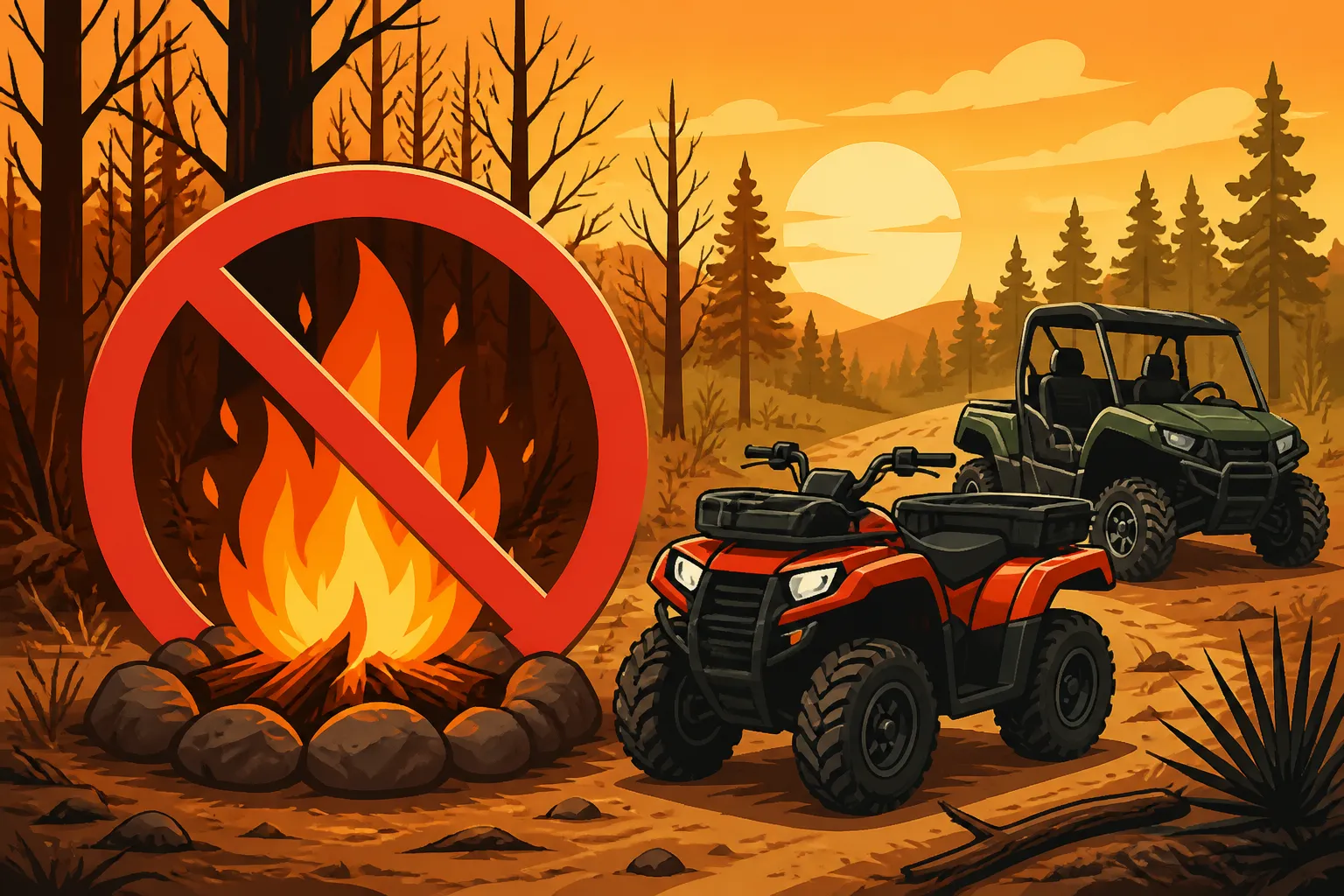
A dry forest can turn a casual campfire into a fast-moving wildfire, especially when wind, dry grass and hot equipment are part of an ATV or UTV trip. The safest plan is to check the rules for the exact place you’ll camp, treat fire restrictions as separate from riding permits, and be ready to skip the fire entirely.
Check the local fire rules before you travel
Campfire rules can change with weather and fire danger. A campground that normally allows fires may restrict them during a dry spell, and different agencies or landowners may set different rules for nearby areas. Don’t rely on an old trip report, a familiar fire ring or rules from another state.
Before leaving, identify who manages your campsite and riding area. In Nebraska, a trip to a national forest, a state recreation area, a wildlife management area or a private riding park can involve different rules. Check the current notices from the land manager and the campground or park operator. If a restriction is unclear, contact the responsible office and ask whether wood fires, charcoal grills and portable stoves are allowed.
For a forest ride, the Nebraska National Forest Riding page can help you distinguish riding information from the details you still need to verify with the land manager. If you’re planning to camp near a riding area, Nebraska OHV Camping With Trail Access can help narrow down options, but confirm each site’s current fire rules before you go.
| What to verify | Why it matters |
|---|---|
| Whether fires are allowed at your exact campsite | Permission can differ between developed campgrounds, dispersed sites and nearby public land |
| Whether a temporary restriction is in effect | Dry weather, wind or local fire danger can change what is allowed |
| Which fuel types are permitted | A wood fire, charcoal grill and gas stove may be treated differently |
| Whether a designated fire ring is required | An existing ring does not necessarily mean fires are currently permitted |
| How to dispose of ashes | Leaving warm ash or embers can start a fire after you leave |
| Whether the riding area and campsite have separate rules | A permit or pass for one activity does not automatically cover the other |
A permit, pass or reservation is not a blanket authorization to make a fire. A park permit may cover access to an area or vehicle, while the campground sets fire rules. Likewise, a private park’s riding waiver does not override a fire restriction from the land manager. For an overnight trip, verify the rules for both where you ride and where you sleep.
If you’re unsure who manages a site, ask the campground host, ranger district or park office. Questions worth asking include: Are wood fires allowed today? Must I use the established ring? Are charcoal or gas devices restricted too? Is there a specific way to extinguish and dispose of ashes? For help preparing those questions, see Questions Worth Asking a Ranger District Office.
Know when to skip a fire
A dry forest doesn’t need a formal ban to make a campfire a poor choice. Dry grass, leaf litter, pine needles and small branches can catch easily, while gusts can carry sparks beyond a fire ring. If the wind is rising, the ground around the site is tinder-dry or you cannot keep water and a shovel close by, cook without a wood fire or choose food that needs no cooking.
Follow posted closures and restrictions even if the campsite looks safe. Don’t assume a small fire is exempt, that a contained fire is always allowed, or that a fire ban applies only to overnight campers. The restriction may cover particular devices or activities, so read the notice carefully. If the wording is unclear, ask the agency that issued it instead of guessing.
When conditions are dry, a camp stove may be a safer option, but it is not automatically allowed under every restriction. Some orders limit more than open wood fires. Check whether your stove’s fuel type and design are permitted, set it on a stable nonflammable surface, and keep it away from dry vegetation. Never use a stove inside a tent or enclosed vehicle.
A few practical signs that should prompt extra caution include:
- Wind that moves leaves or carries sparks away from a fire ring.
- Dry grass, needles or leaves close to the cooking or fire area.
- A site where you cannot keep water or an appropriate extinguisher within reach.
- A restriction notice, closure sign or instruction from campground staff.
- Conditions that make it hard to watch the fire continuously.
A ban or closure is not a challenge to work around. Don’t move a fire to a less visible spot, use a makeshift pit or assume a private area is exempt. If fire use is prohibited, use an allowed alternative or go without. For a longer day in heat and dry conditions, preparation matters as much as the campsite; What to Pack for a Hot Dry Riding Day covers supplies that can help you manage those conditions.
Use a designated fire site and keep the fire small
When fires are allowed, use only the location and equipment the site permits. A permanent ring is generally preferable to clearing a new spot, but it is not proof that a fire is allowed under current restrictions. Keep the fire within the designated area and small enough to control. A bigger fire creates more heat, more embers and a harder cleanup.
Clear loose, dry material from around the permitted fire area if the site rules allow it, and keep combustible items well away. Don’t build a fire under low branches, beside dry brush or where a gust can blow embers toward grass or camping gear. Keep children, pets, fuel containers and riding equipment at a safe distance. Never use gasoline or other accelerants to start a campfire.
Have extinguishing supplies ready before lighting anything. Water is a dependable choice where it is available, and a shovel can help you stir and cover the remains. A compact shovel and an appropriate fire extinguisher can be included in a riding kit; if shopping online, Amazon is one place to compare options, but check that any extinguisher is suitable for the type of fire and vehicle use you have in mind. The important point is to bring usable equipment, know where it is, and keep it accessible rather than buried under cargo.
Assign someone to watch the fire. Don’t leave it while you ride, even for a short trip, and don’t assume another person will take responsibility unless you have agreed on it. Before leaving camp, going to sleep or stepping away, put the fire out completely.
An ATV or UTV trip has additional ignition risks beyond the campfire. Park on a surface where hot exhaust or other hot components won’t contact dry grass. Avoid idling or parking in tall vegetation, and check the machine before stopping for a break. A trailer’s safety chains can drag and throw sparks if they are not secured correctly. Don’t smoke near dry vegetation, and dispose of smoking materials fully rather than tossing them onto the ground.
For a remote ride, plan for limited communication as well as fire risk. Planning for No Cell Service on a Forest Ride can help you prepare for areas where you may not be able to call for help promptly. A phone is not a substitute for preventing an ignition in the first place.
Put every ember out and leave the site safe
A fire is not out just because visible flames have disappeared. Coals and ash can remain hot beneath the surface and reignite when wind reaches them. Start extinguishing well before you need to leave, rather than waiting until departure time.
- Stop adding fuel and let the fire burn down only while someone remains in attendance.
- Slowly pour water over the fire and its contents, including the edges of the ring. Avoid throwing water so forcefully that ash and embers scatter.
- Stir the ashes and coals with a shovel to expose hot material underneath.
- Add more water, stir again and repeat until there is no heat, glow or smoke.
- Check around the fire area for escaped embers and follow the site’s directions for ash disposal.
If water is not available, follow the land manager’s specific instructions rather than improvising. Covering a fire with dirt alone may leave hot material underneath, and moving hot ashes can spread embers. Don’t dump ashes in vegetation, on a trail or beside a vehicle. Use the designated disposal method, if the site provides one.
Before leaving, look over the campsite and nearby ground. Check for sparks or embers that traveled beyond the ring, and make sure the ring and surrounding area are cold. If you discover a fire you cannot control, move to safety and contact emergency services as soon as possible. Don’t put yourself in danger trying to fight a spreading wildfire.
Choose a campsite with its rules in mind, not just its proximity to the trail. A listed campground may have designated facilities and posted instructions; a dispersed site may have fewer services and require more planning. For example, check the specific information for Camping at Whitetail in Nebraska rather than assuming every camping area near a trail has identical facilities or restrictions. Conditions can change, so confirm the details for your dates.
A simple pre-trip check can prevent a costly mistake:
- Confirm the managing agency or campground operator.
- Check current fire notices shortly before departure.
- Ask whether your cooking device is allowed.
- Pack water, a shovel and any required safety equipment.
- Park machines and trailers away from dry vegetation.
- Keep someone responsible for the fire until it is fully cold.
- Have a no-fire meal plan in case restrictions change.
The safest approach is straightforward: follow the current local rule, don’t light a fire when conditions feel unsafe, and leave no heat behind. That protects the campsite, nearby forest, other riders and the trip you came to enjoy.
Disclaimer
This article is for general informational purposes only and does not constitute professional advice. Laws, prices and regulations vary by location and change over time. Consult a qualified professional for guidance on your specific situation.