Running a Generator at a Trailside Campground
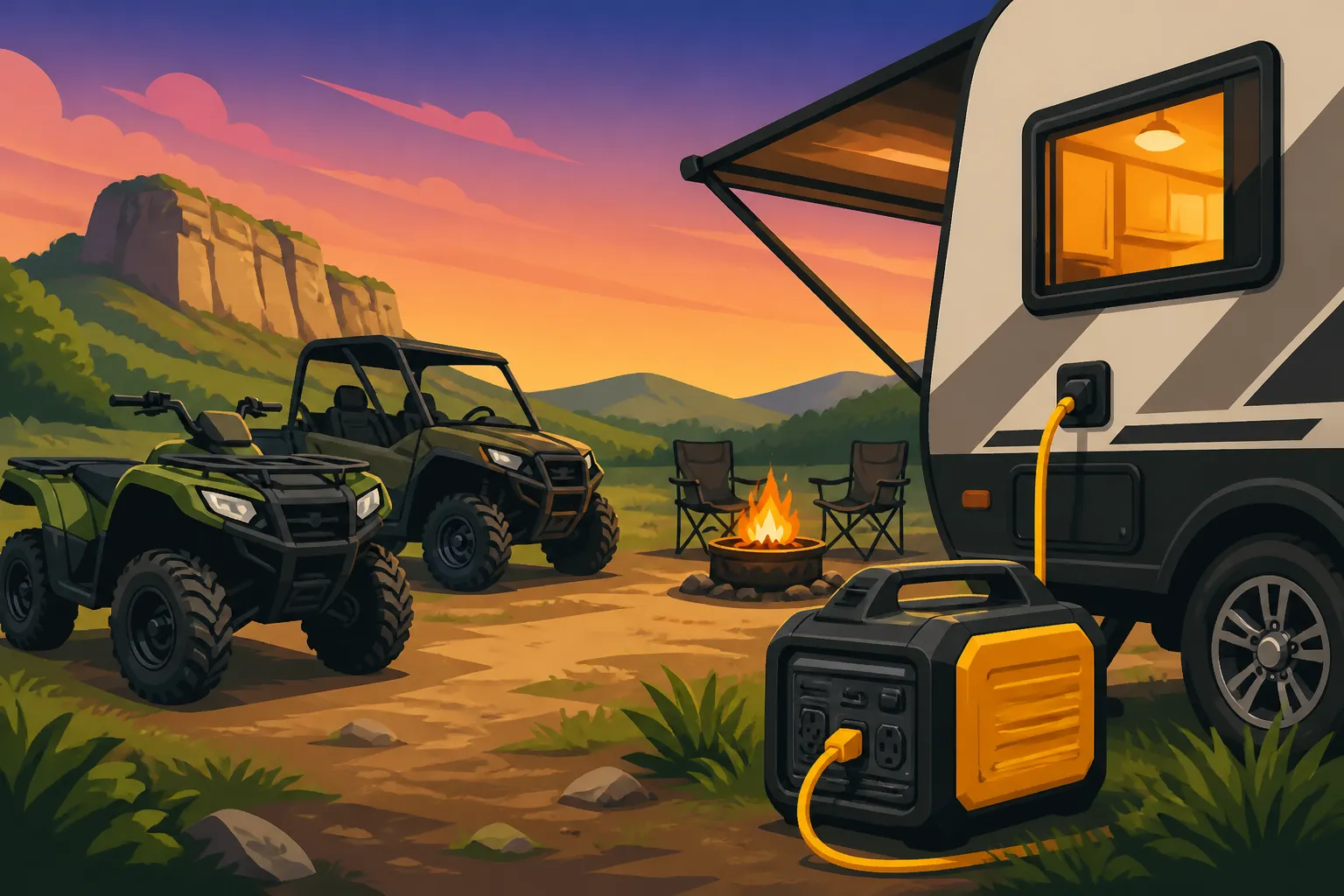
A generator can make a Nebraska riding weekend more comfortable, but it can also disturb neighboring campers or create a serious exhaust hazard. Before you set one up, confirm the campground allows it, plan where its sound and exhaust will go, and follow safe operating and fueling practices. A little preparation helps keep power available without making the campsite unpleasant for others.
Check the campground rules before you pack
Generator policies vary by campground and site. A public campground, a private riding park, and a campground near an OHV trail may each set different rules for generator use, operating hours, and fuel storage. Do not assume that being able to bring a generator means you can run it whenever you want.
Check the campground’s current rules before leaving home. If the policy is unclear, contact the campground or managing office and ask specific questions:
- Are portable generators allowed at the site you booked?
- Are there designated generator hours or quiet hours?
- Are there limits on generator type, sound, or placement?
- Can you store fuel at the campsite, and are there restrictions?
- Are there temporary fire restrictions or other safety rules?
Confirm the rules for the exact campground, not just the general riding area. For places to consider when planning a trip, see Nebraska OHV Camping With Trail Access, Camping at Whitetail in Nebraska, and Camping at a Main Campground in Nebraska. Campsites with hookups may offer another way to power a camper without running a portable generator, but availability and site features need to be checked directly.
A written policy, reservation page, or direct answer from the campground is more useful than a general assumption based on another place you have stayed. Rules can also change for a particular event, weather condition, or fire restriction. Check again close to your trip if the campground’s guidance says to do so.
| Before you go | What to confirm |
|---|---|
| Generator use | Whether generators are permitted at your site |
| Operating schedule | Quiet hours and any generator-specific hours |
| Placement | Required distances from tents, vehicles, and neighboring sites |
| Fuel | Whether fuel may be stored and how it must be handled |
| Fire conditions | Any current restrictions affecting engines or fuel |
| Power needs | Whether hookups or another approved option are available |
If generators are allowed only during certain hours, plan your charging and appliance use around that window. Charge batteries, run a refrigerator on generator power if appropriate, or prepare hot water while operation is permitted. That can reduce the need to keep the generator running just because you might want power later.
Set up for safer exhaust and less noise
The first priority is carbon monoxide safety. Generator exhaust contains carbon monoxide, a poisonous gas that you cannot reliably see or smell. Run the generator outdoors, in open air, and according to the manufacturer’s placement instructions. Never operate it inside a tent, camper, enclosed trailer, vehicle, shed, or other enclosed or partly enclosed space. A covered area can still trap exhaust, so a tarp or improvised shelter is not a safe substitute for an open location.
Direct the exhaust away from people and occupied spaces. Consider the position of your tent, RV doors and windows, neighboring campsites, and the direction the wind is carrying exhaust. Do not rely on wind direction alone: it can change, and exhaust can drift toward an opening. If you are unsure whether the location is safe, move the generator farther from occupied areas and follow its manual.
A working carbon monoxide alarm in an RV or camper is an important backup, not permission to run a generator closer to the vehicle. Follow the alarm manufacturer’s placement and maintenance instructions. If an alarm sounds, people feel dizzy or nauseated, or anyone develops a headache or confusion, move into fresh air immediately and seek emergency help.
Noise is a separate concern. A generator that sounds tolerable during the day can seem much louder at night, when nearby campers are trying to sleep. Inverter generators are often marketed as quieter, but no type should be treated as silent. The campground’s rules set the limits, and neighbors may hear the machine even if it is at your own site.
Use these steps to reduce the disturbance:
- Place the generator as far from neighboring campsites as rules and safe exhaust placement allow.
- Point the exhaust away from tents, campers, and people.
- Use a level, stable surface and follow the manufacturer’s instructions about ventilation and clearance.
- Do not put a generator in a box, vehicle, or closed sound enclosure. Blocking airflow can cause overheating and may trap exhaust.
- Run it only when you need power, rather than letting it idle for convenience.
- Shut it down promptly when the campground’s quiet period begins.
Do not move the generator into an unsafe spot just to make it less noticeable. A location that sends exhaust toward a neighbor, camper opening, or sleeping area is not a good compromise. If the only available placement is unsafe or violates site rules, use another power option or do without generator power.
For timing and neighbor considerations, read When Quiet Hours Start at a Trail Campground. If your trip includes an RV, check Nebraska Riding Areas With RV Sites as part of choosing a place that fits how you plan to camp. Campgrounds can differ in both their amenities and their generator rules.
Match the generator to the power you actually need
A generator’s job is to supply the power your equipment requires, not to run every appliance you might bring. Before the trip, list what you want to power and check each item’s wattage and starting requirements. Appliances with motors or compressors can draw more power when starting than they use while running.
Add up the loads you expect to use at the same time, then compare that total with the generator’s rated output. Check the generator and appliance manuals rather than guessing. If a device’s starting draw is not clear, look for its label or ask the manufacturer. Running several high-draw appliances at once may overload a small generator or cause it to shut down.
| Power need | Useful planning question |
|---|---|
| Phone and radio charging | Can these be charged from a battery pack or vehicle instead? |
| Camper battery | Does the charger’s draw fit within the generator’s output? |
| Refrigerator | What are its starting and running power needs? |
| Cooking appliance | Can meals be planned to avoid running a high-draw appliance? |
| Lights | Could lower-power or battery lighting cover the evening? |
| Medical equipment | Is there a reliable backup plan if the generator stops? |
Use a cord rated for the load and outdoor conditions. Inspect it before each trip for cuts, damaged plugs, or loose connections. Keep cords where people will not trip over them, and protect connections from rain and standing water as the equipment instructions require. Do not overload a cord or use damaged electrical equipment.
Never connect a portable generator to a building or camper electrical system in a way that could send power back through wiring. Improper connections can endanger utility workers and damage equipment. If you need to connect generator power to an RV inlet or other fixed wiring, use equipment intended for that purpose and follow the manufacturer’s directions; get qualified help if the setup is unfamiliar. A regular extension cord is not a substitute for a proper connection.
If power needs are modest, a battery pack, charged RV battery, or other approved battery system may cover essential devices with less noise. For a longer trip, test your setup at home before loading the trailer. That gives you time to identify an undersized cord, an unexpected appliance load, or a battery that does not hold enough charge. For remote rides, also plan for limited communication options; Planning for No Cell Service on a Forest Ride covers another part of preparing for a trip away from reliable service.
Handle fuel, weather, and campsite traffic carefully
Refuel only as directed by the generator’s manual. In general, turn the generator off and let it cool before adding fuel. Hot surfaces can ignite fuel or vapors. Keep fuel in an approved container, away from heat and ignition sources, and follow the campground’s storage rules. Do not leave fuel where it can spill, tip over, or be accessed by children.
Avoid refueling in a crowded spot where a spill could reach a fire, hot equipment, or a neighboring site. If fuel spills, keep people away from the area and follow the generator and campground instructions for cleanup. Do not restart the generator until it is safe to do so. Keep the operating area clear of loose gear, dry leaves, and anything else that could contact hot components.
Nebraska weather and fire conditions can change the practical risks of running an engine outdoors. Check for current local restrictions before you go, and follow any directions posted at the campground or trail area. Do not assume a generator is exempt from restrictions just because it is being used at a campsite. If a rule is unclear, ask the responsible campground staff or land manager before operating it.
Campsites near trails can also have more movement and noise than a quiet overnight stop. Riders may return dusty, vehicles and trailers may need room to pass, and neighbors may be getting ready early. Position the generator, cords, and fuel so they do not block shared access or create a trip hazard. Keep it within your site and out of roads, walkways, and staging areas. Reviewing Nebraska Trail Etiquette Locals Expect can help with the broader task of sharing trail and campground space considerately.
Before leaving the campsite, shut down the generator and secure fuel and equipment. Check that cords are unplugged and stored, the generator is cool before moving it, and nothing has been left in a shared area. These simple steps reduce the chance of damage, spills, or problems for the next camper.
A practical generator plan for a riding weekend
A generator is most useful when it has a clear purpose and a safe place to run. Decide what genuinely needs power, verify that the campground permits generator use, and check quiet hours before the trip. If your plan depends on running a generator throughout the evening or close to a tent or RV, rethink the setup before you arrive.
Use this short planning sequence:
- Choose the campground first. Review its current generator and fuel rules, including any hours or placement requirements.
- List essential devices. Check their power needs and decide which can use batteries instead.
- Test the setup at home. Confirm cords, connections, and appliances work together as intended.
- Choose a safe operating location. Follow the generator manual, keep exhaust outdoors and away from occupied spaces, and stay within the site rules.
- Plan for quiet hours. Schedule charging and other generator-dependent tasks so you can shut down on time.
- Check conditions before starting. Look for posted notices, changing weather, fire restrictions, and hazards around the site.
- Shut down and secure everything. Cool the generator before refueling or moving it, and store fuel as instructed.
The best plan may be to leave the generator at home. If the campground has electrical hookups, if batteries can cover your needs, or if generator hours do not fit your schedule, those options may be more practical. For a campground without hookups, use the generator only if it is allowed and you can operate it safely and considerately.
A riding trip already involves equipment, trailers, and changing conditions. Keeping generator use simple helps avoid adding unnecessary noise or risk to the campsite. When rules, placement, or exhaust safety are uncertain, ask the campground before starting the machine.
Disclaimer
This article is for general informational purposes only and does not constitute professional advice. Laws, prices and regulations vary by location and change over time. Consult a qualified professional for guidance on your specific situation.