Nebraska Visitors From Colorado
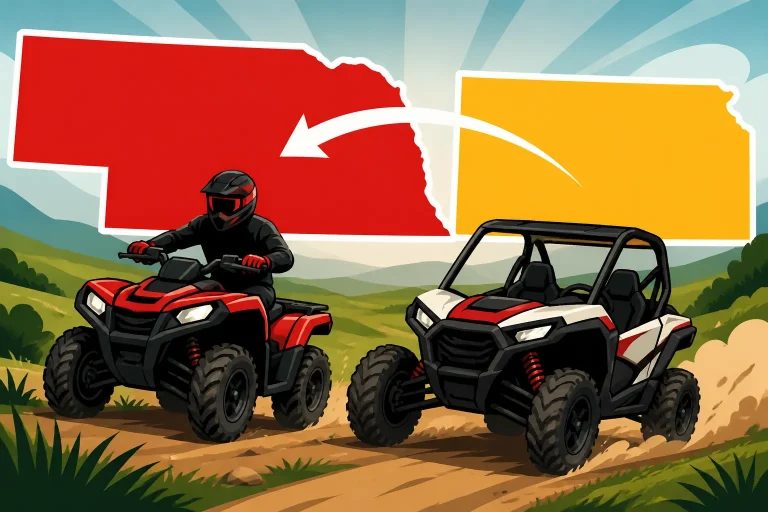
Colorado riders planning an ATV or UTV trip to Nebraska may wonder whether their home-state registration or permit is enough—or whether Nebraska requires another sticker. The short answer: Nebraska has no statewide OHV permit or sticker for visitors, but Colorado paperwork does not decide where you may ride. Trail access, land rules and separate vehicle permits still matter.
Do Colorado visitors need a Nebraska ATV permit?
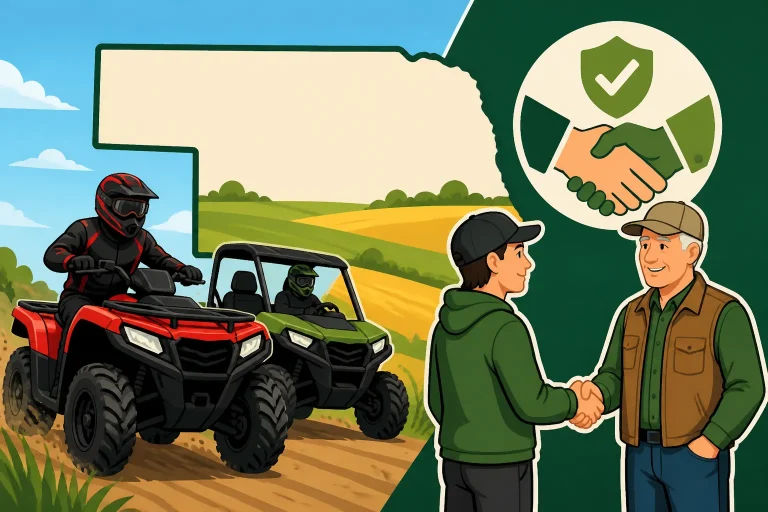
Nebraska does not require a statewide off-highway vehicle permit or registration sticker for ATVs and UTVs. A visitor does not need to buy a Nebraska OHV sticker before riding, and Nebraska does not have an ATV registration system that reciprocates with Colorado’s. In other words, Colorado registration or an OHV permit is not something Nebraska converts into a Nebraska permit.
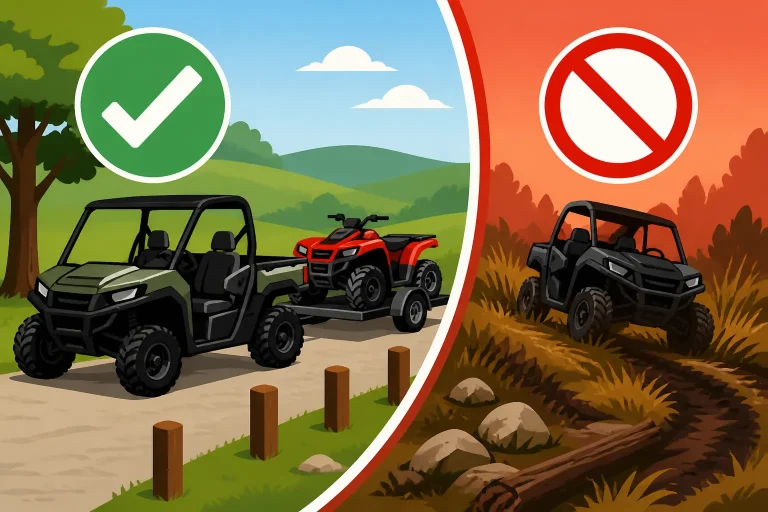
That does not mean a Colorado machine can be ridden anywhere in the state. A permit is only one part of the question: you also need a place where the machine is allowed. Nebraska public lands, private riding areas and roads have different rules, and a Colorado plate or sticker does not override them.
For a closer look at the statewide permit question, see Nebraska Has No OHV Permit or Sticker. The separate issue of out-of-state paperwork is covered in Nebraska Has No Registration to Reciprocate and Riding in Nebraska on an Out-of-State Registration.
| What you are asking | What generally applies to a Colorado visitor |
|---|---|
| Is a Nebraska OHV sticker required? | No statewide ATV or UTV sticker is required. |
| Does Colorado registration give permission to ride everywhere in Nebraska? | No. It does not open trails, public land or roads. |
| Does Nebraska recognize Colorado’s paperwork as a Nebraska registration? | Nebraska has no statewide ATV registration system to reciprocate with. |
| Could a separate permit still be required? | Yes. A park entry permit, parking payment or private-area fee may apply to the vehicle or location. |
| Can you ride on a public road because the ATV is registered in Colorado? | No. Road use is governed by Nebraska law and any applicable local rules. |
Keep the machine’s Colorado documents with you if they help establish ownership or identify the vehicle, but don’t treat them as trail access credentials. If you are unsure which documents to carry, Nebraska Proof of Ownership on the Trail offers useful context.
Permits that may still apply to your trip
“No Nebraska ATV permit” is not the same as “no permits or fees anywhere.” The main distinction to keep straight is what a permit covers. An entry permit for a park, a parking fee at a trailhead and permission to ride a trail are different things.
Park entry permits are not ATV permits
Nebraska park entry permits concern access to designated state parks and recreation areas by vehicle. They are not OHV registration, and they do not authorize ATV or UTV riding where those machines are prohibited. Nebraska state parks generally bar ATVs; having an entry permit for your truck does not make a closed ATV area open.
If your trip includes a Nebraska state park for camping, sightseeing or another activity, check whether your vehicle needs a park entry permit. If your plan is to ride, verify the riding rules for that specific place separately. Nebraska State Park Entry Permits explains the distinction, while Nebraska Park Rules for ATVs focuses on where ATVs are allowed or barred.
Be especially careful with broad statements such as “the park permit covers the machine.” A park permit may apply to the vehicle bringing you into the area, while the riding rules apply to the ATV itself. Neither should be assumed to substitute for the other.
Trailhead and riding-area charges are location-specific
Some places charge for parking, day use, riding or camping; others may have different arrangements. A parking charge at a trailhead is not a statewide ATV permit. Likewise, a fee paid to a private riding park only covers what that operator allows under its rules.
If you are heading to a public riding area, confirm the current rules with the managing agency or site before towing from Colorado. For example, Nebraska National Forest Riding can help you identify the kind of access questions to check for forest trails. For a broader overview of locations and planning, use Nebraska ATV Trails: Where to Ride.
Do not rely on an old social post, a friend’s recollection or a sign photographed during a previous visit for current access details. Trail openings, parking arrangements and operating rules can change. Confirm whether the specific trail is open to your machine type, whether the trailhead has a fee, and whether any seasonal or vehicle restrictions apply.
Private parks set their own entry conditions
A commercial or private riding area may require an admission payment, waiver, proof of ownership, age compliance, insurance or other conditions. Those requirements come from the operator, not from Nebraska’s statewide OHV permit system. A Colorado permit will not automatically satisfy a private park’s rules.
Before you load the trailer, contact the riding area and ask about:
- Which machine types are allowed, including side-by-sides and wider UTVs
- Required paperwork for the machine and driver
- Whether riders must sign a waiver or meet an age requirement
- Helmet, passenger and safety-equipment rules
- Admission, parking, camping and reservation arrangements
- Whether a Colorado registration document is useful or required for its records
A site may have stricter rules than state law. If its requirements differ from another park’s, follow the rules of the place where you are riding.
How to plan a Nebraska ride from Colorado
The simplest way to avoid a wasted trip is to check the destination first, then confirm the machine and paperwork requirements. A Colorado registration card does not answer whether a Nebraska trail is open, and a lack of Nebraska sticker requirements does not eliminate local rules.
Confirm the riding area before you tow
Choose a specific trail or riding property rather than heading toward a general region and assuming public land is open. Check the managing agency’s current information or contact the property directly. Confirm that the area permits your type of machine, that the trail is open on your travel dates, and that your vehicle can fit any trail-width limits.
A destination article can help you narrow the options, but treat it as a starting point rather than a substitute for current conditions. Nebraska Trail Conditions Before You Tow is useful for planning, and Nebraska National Forest Riding provides a starting point for questions about forest access. If you choose a private park, check that operator’s own current rules.
Also ask whether a permit or fee applies to the towing vehicle, the riding vehicle, parking or camping. These can be separate charges. Knowing which one applies helps avoid both surprises at the gate and the mistaken assumption that one permit covers every part of the visit.
Carry useful documents, but do not confuse them with permission
Bring the Colorado documents you normally use to identify your machine, along with any purchase or ownership records that may help if questions arise. Keep them protected and accessible during travel. If the machine is borrowed, confirm that you have the owner’s consent and any paperwork the riding area asks to see.
For a private park, ask the staff what they expect visitors to show. On public land, check the managing agency’s requirements. Nebraska does not impose a universal ATV permit on visitors, but a site may still have a process for checking machines, confirming eligibility or handling an incident.
Do not assume a photo of a Colorado sticker on your phone replaces the documents required by a park or other authority. Nor should you assume paperwork proves permission to ride a particular parcel. Ownership documents identify your machine; permission and access rules determine whether you may ride there.
Treat road use as a separate question
A machine that is legal to operate on a Colorado road or has Colorado registration is not automatically legal on Nebraska roads. Nebraska road use is a separate legal issue, with state requirements and possible local rules. Many roads are not open to ATVs or UTVs simply because a visitor has brought a registered machine across the state line.
If your route includes any public-road segment, verify the Nebraska requirements before using it. Check whether the road is legally open, whether a local ordinance applies and what equipment or driver requirements are in force. Do not use a road to connect two riding areas unless that route is lawful. A highway crossing also has its own rules; a registration sticker does not create an exception.
For a ride that stays on a designated trail or private property, this may be less of a concern, but the distinction is still important when planning transport between sites. Trail access does not imply permission to ride public roads, and permission to ride on a road does not open nearby land.
Use a short pre-trip checklist
Before leaving Colorado, work through these checks:
- Pick the exact riding location. Confirm it is open and allows your ATV or UTV.
- Check the destination’s current rules. Ask about fees, parking, permits, reservations, equipment and paperwork.
- Separate permits by purpose. Determine whether a charge applies to the truck, the trailhead, the machine, camping or admission.
- Bring ownership and travel documents. Carry relevant Colorado paperwork, but do not treat it as Nebraska trail authorization.
- Plan the route without assuming road access. Verify every road segment and crossing you intend to use.
- Recheck before unloading. Look for closure notices, posted restrictions and instructions at the site.
The practical takeaway is straightforward: Colorado visitors do not need a Nebraska statewide ATV sticker, but they still need a lawful place to ride and must follow that location’s rules. Confirm trail access and any separate park, parking or private-area requirements before making the drive.
Disclaimer
This article is for general informational purposes only and does not constitute professional advice. Laws, prices and regulations vary by location and change over time. Consult a qualified professional for guidance on your specific situation.