Nebraska Bans Crossing a Controlled-Access Highway
Navigating the maze of rules for riding your ATV or UTV on public roads in Nebraska can feel like trying to find your way through a cornfield in the dark. Many riders face the frustration of not knowing where they can legally go, especially when it comes to bigger, faster highways. This guide will shine a light on one of the most critical restrictions: the absolute ban on crossing a controlled-access highway in Nebraska, detailing why it exists, what it means for you, and how to stay on the right side of the law while still enjoying your machine.
Understanding Nebraska's Controlled-Access Highway Ban for ATVs
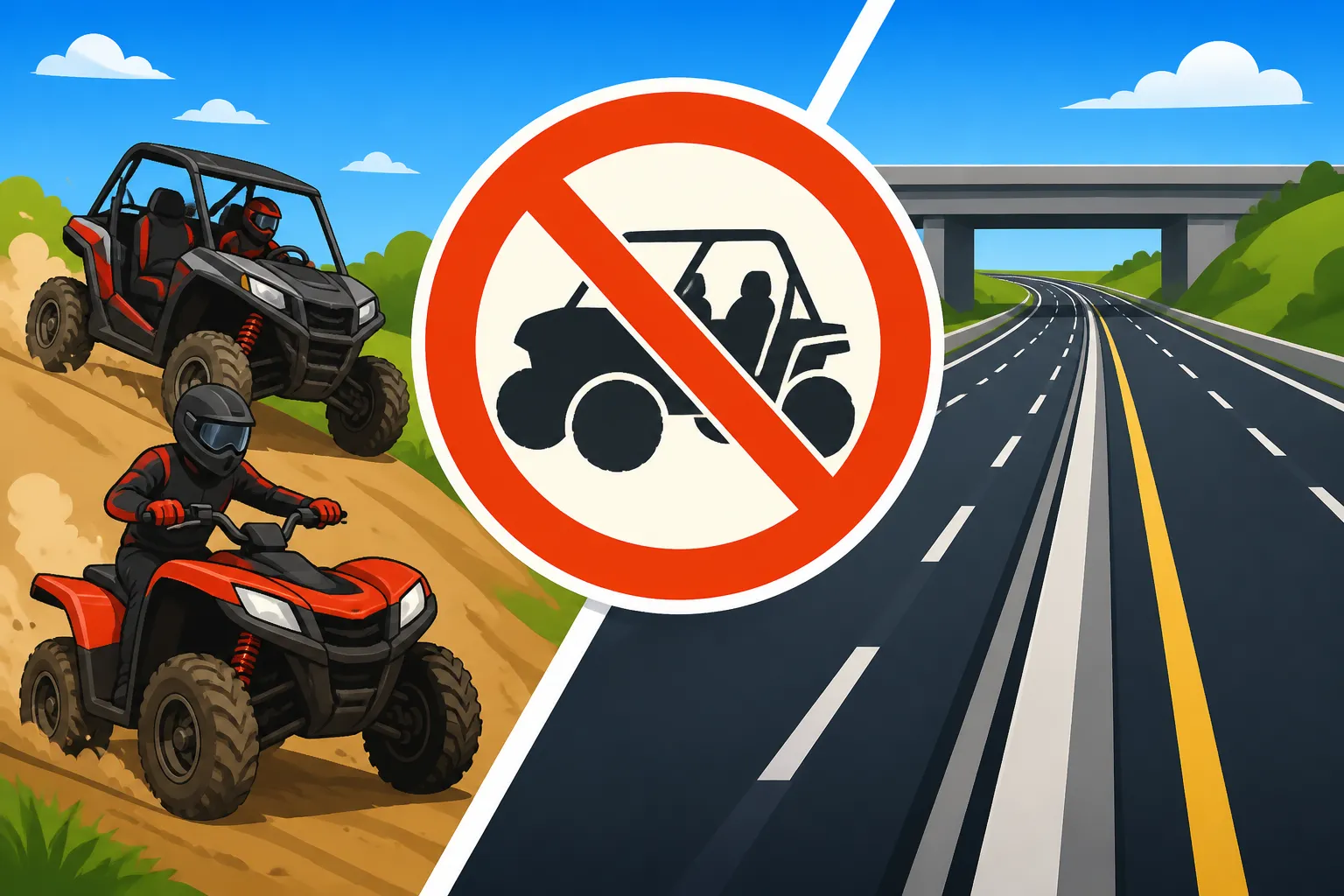
The thought of taking your ATV or UTV on a major highway might seem appealing for quick travel, but Nebraska law is very clear on this: it's a firm no. This isn't just a suggestion or a guideline; it's a critical safety regulation designed to protect both ATV riders and other motorists. The state's stance on controlled-access highways is one of the most important rules for any off-road enthusiast to understand, especially if you ever find yourself needing to get from one side of a major road to another.
The Rationale Behind the Restriction
Let's be real, ATVs and UTVs are simply not built for the speeds and demands of a highway environment. The primary reason for the ban on controlled-access highways comes down to a fundamental issue of safety. These machines, while incredibly capable off-road, lack the protective enclosure of a car or truck. A collision between an ATV and a vehicle traveling at highway speeds is almost always catastrophic for the ATV rider. Furthermore, ATVs and UTVs typically have lower top speeds, which creates a dangerous speed differential with highway traffic, leading to risky situations where other drivers might not anticipate a slow-moving vehicle. Imagine trying to merge onto an interstate going 30 mph when traffic is flying by at 75 mph – it’s a recipe for disaster. The state recognizes these inherent dangers and has wisely prohibited ATVs from these high-risk areas.
Distinguishing Between Crossing and Riding On
It’s crucial to understand that Nebraska's prohibition extends beyond just "riding on" a controlled-access highway. The law explicitly [Nebraska Bans Crossing a Controlled-Access Highway]. This means you cannot simply attempt a quick dash across the lanes, even if you think the coast is clear. While some states might have specific rules for crossing certain roads, controlled-access highways in Nebraska are off-limits entirely. There's no exception for a quick "ninety-degree crossing" like you might find for other types of roads. This blanket ban acknowledges the rapid speeds and often limited sightlines on these highways, where even a momentary crossing attempt puts you in extreme peril. Lawmakers have determined that the risk is simply too high, and as riders, we need to respect that for our own safety and the safety of everyone else on the road.
What Exactly is a Controlled-Access Highway in Nebraska?
So, if you can't ride on or even cross these roads, how do you know what to avoid? It's not always immediately obvious, especially if you're exploring new areas. Understanding the characteristics of a controlled-access highway in Nebraska is key to preventing accidental violations and ensuring your safety. It's not just about looking for an "Interstate" sign; there are other features that define these restricted roadways.
Identifying These Roadways
In Nebraska, a controlled-access highway is primarily characterized by its design, which limits direct access to properties or other roads. Think about the big ones: the interstates like I-80, I-29, or even many of our major four-lane state highways. What they all have in common are dedicated on-ramps and off-ramps, rather than intersections with stop signs or traffic lights. You won't find private driveways leading directly onto these roads, and there are typically no at-grade crossings. Their purpose is to move high volumes of traffic quickly and efficiently, which means high speed limits and constant flow. These are not the places for an ATV or UTV, regardless of how tricked out your machine is with road-legal accessories.
Signs and Markings to Look For
Beyond the physical design, there are often clear signs that identify a controlled-access highway. Look for highway shields that specifically designate Interstates or major U.S. routes. You might also see signs indicating "No Access" from adjacent properties or "Limited Access Highway" at entry points. These are designed to funnel traffic onto and off the highway via specific interchanges. It’s always best to be proactive and plan your route in advance, especially when you’re out exploring in unfamiliar territory. A quick glance at a map or GPS before you head out can save you a lot of trouble and prevent you from inadvertently straying onto one of these prohibited roadways. Remember, ignorance of the law is rarely an excuse that holds up well with local law enforcement. For similar restrictions, you might want to review information on [Nebraska Bans ATVs on State Highways].
Other Nebraska Road Rules for ATVs and UTVs
While controlled-access highways are a definite no-go, Nebraska does permit ATVs and UTVs on certain other public roads under very specific conditions. It’s not a free-for-all, though. There are a host of regulations concerning speed, equipment, and rider qualifications that you absolutely must adhere to if you plan on taking your machine off the dirt and onto the pavement. Ignoring these can lead to fines, citations, and even serious accidents.
Speed Limits and Right-of-Way
One of the most critical rules to remember is the speed limit. When operating an ATV or UTV on any public road where it's legally permitted, your top speed is generally restricted. In most situations, you'll be limited to [30 mph at Most]. This lower speed is in place for safety, acknowledging that ATVs and UTVs handle differently than cars and aren't designed for high-speed road travel. You also need to pay strict attention to right-of-way rules. Even if you're legally on a county road, you must yield to other traffic. Assume that other drivers may not be expecting to encounter an ATV, so remain vigilant and drive defensively. Always give way to cars, trucks, and especially larger farm equipment.
Required Safety Equipment
If your ATV or UTV is going to touch public pavement, even briefly, it needs to be properly equipped. Nebraska law mandates certain safety features to ensure you're visible and can operate safely. This includes having a working headlight and taillight. For riding after dark or when visibility is low, these lights are absolutely essential, and it's always a good idea to have them on even during daylight hours. You can find robust lighting solutions from brands like SuperATV that meet or exceed these requirements, making your machine much more noticeable.
Beyond lighting, you'll also need a safety flag. This flag must be a day-glow orange triangle, at least 30 square inches in size, mounted at least [5 Feet Above the Ground]. This tall, bright flag helps make your machine more visible to other drivers, especially over hills or around corners, giving them more time to react. Checking [Nebraska Safety Flag Dimensions] can give you the exact specifics. Equipping your machine properly isn't just about following the law; it's about making sure you get home safely.
Insurance and Licensing
Don't even think about taking your ATV or UTV onto a public road without the proper insurance and licensing. If you're going to use your machine on any road that is open to public vehicular traffic, even a gravel county road, [Nebraska Requires Liability Insurance on Roads]. This isn't just a suggestion; it's a legal requirement designed to protect you and others in the event of an accident. Make sure your policy meets Nebraska's minimum liability coverage requirements.
In addition to insurance, the person operating the ATV or UTV must hold a valid driver's license. For most riders, this means a Class O operator's license, the standard license for cars and light trucks. However, if you're using the machine strictly for agricultural purposes, you might qualify to operate it with a farm permit. It’s crucial to understand these distinctions. You can get more details on [Nebraska Requires a Class O License or Farm Permit]. Remember, riding without the proper license or insurance can lead to significant penalties, far outweighing the convenience of a quick road trip.
Permissible Road Use: Where You Can Ride Your ATV in Nebraska
So, we've covered where you can't ride. Now let's explore where you can legally operate your ATV or UTV on public roads in Nebraska. While the restrictions are strict, there are specific scenarios and locations where riders are permitted, primarily revolving around agricultural needs and local ordinances. Understanding these exceptions is crucial for responsible riding and avoiding run-ins with law enforcement.
Agricultural Exceptions and Farm-to-Farm Travel
Nebraska, being an agricultural state, has carved out significant exceptions for farmers and ranchers. If you're using your ATV or UTV for an "agricultural purpose," you often have more leeway to use public roads. This means if you're checking cattle, moving feed, or transitioning between fields, you might be allowed on certain roads that would otherwise be off-limits. This is referred to as [Nebraska's Agricultural Road Exception]. This exemption is vital for the farming community, as these machines are indispensable tools for daily operations. However, this isn't a blanket pass; it specifically applies to work-related travel. Cruising around for fun under the guise of "agricultural purpose" is not what the law intends, and deputies will likely see right through it. For more clarity, check out [When Farm Use Makes an ATV Road Trip Legal].
City and Village Ordinances
Here's where things get a bit more localized and require some homework on your part. While the state has general rules, individual cities and unincorporated villages have the power to create their own ordinances allowing ATV and UTV use on specific streets within their boundaries. This means what's legal in one town might be strictly prohibited just a few miles down the road. [Nebraska Cities That Adopt ATV Ordinances] is a growing list, but it's never exhaustive, and ordinances can change. Before you ride in a new town, it's always best to contact the city clerk or local law enforcement to inquire about their specific rules. Some towns might require a special city registration sticker, an additional fee, or specific equipment beyond state requirements (like turn signals or mirrors). Companies like SuperATV offer a wide array of accessories designed to make your machine compliant with various local requirements, from rearview mirrors to complete turn signal kits. Similarly, [Nebraska County Board Resolutions for Villages] can open up riding in smaller, unincorporated communities.
Crossing Other Roadways at Ninety Degrees
Even outside of agricultural exceptions or specific city ordinances, Nebraska law does permit ATVs and UTVs to cross certain public roads under very specific conditions. This is a key distinction from the controlled-access highway ban. On a non-controlled-access road, such as a county road or smaller state highway, you may be allowed to cross at a [Nebraska Crossing Rules at Ninety Degrees]. This means you must approach the road, stop, ensure it's safe to proceed, and then cross directly at a ninety-degree angle to the flow of traffic. You cannot ride down the road, merge into traffic, or make a turn onto the road, unless specifically allowed by agricultural exception or local ordinance. This "ninety-degree crossing" rule is intended to minimize the time your machine spends in the path of vehicular traffic, reducing collision risk.
Equipment and Licensing Requirements for Road-Legal ATV Use
To legally operate your ATV or UTV on the permissible roads in Nebraska, your machine needs to be equipped to meet certain safety standards, and you, the operator, must meet specific licensing requirements. This isn't just about avoiding a ticket; it's about ensuring visibility and safety for everyone sharing the road, given the inherent differences between off-road machines and traditional vehicles.
Essential Lighting and Visibility Gear
When you're sharing the road, being seen is paramount. Nebraska law stipulates that any ATV or UTV operating on a public road must have at least one headlight and one taillight, which must be illuminated from one-half hour after sunset to one-half hour before sunrise, and at any other time when there is insufficient light or adverse weather conditions. However, many riders choose to run their lights all the time for maximum visibility. These lights need to be in good working order.
Additionally, as mentioned before, the day-glow orange safety flag is non-negotiable. It needs to be at least 5 feet high with a flag that is at least 30 square inches. This requirement helps make your machine more visible to other drivers, especially those in larger vehicles who might not easily spot a smaller ATV or UTV. If you're looking to upgrade your machine with high-quality, durable lights or flags that meet these standards, companies like SuperATV offer a range of products specifically designed for off-road machines that can also help with road compliance. Having proper lighting and visibility is not just about avoiding a citation; it's a critical safety measure that can genuinely save lives by preventing collisions. You can find the specific requirements in [Nebraska Lighting Statute 60-6,357].
Driver's Licenses and Permits
Just like driving a car, operating an ATV or UTV on a public road in Nebraska requires you to be a licensed driver. The standard requirement is a valid Class O operator's license, which is the same license you'd need to drive most passenger vehicles. This means that if you're not old enough to get a driver's license, or if your license is suspended, you cannot legally operate an ATV or UTV on a public road.
There is an exception for those using the machine strictly for agricultural purposes, where a valid farm permit might suffice. However, this permit is specifically tied to agricultural activities. It's not a loophole for general road use. Also, be aware of passenger rules. Many ATVs are designed for a single rider, and carrying passengers on a public road when your machine isn't designed for it, or when prohibited by law, can lead to tickets and dangerous situations. Always ensure you meet the licensing requirements before you venture onto any public roadway. If you have questions about what kind of license you need, referring to [Do You Need a License for an ATV in Nebraska?] is a good starting point.
| Road Type | ATV/UTV Use Allowed? | Conditions/Notes |
|---|---|---|
| Controlled-Access Highways (e.g., I-80) | NO | Absolutely prohibited from riding on or crossing. High speeds, no access points. |
| State Highways (non-controlled-access) | Generally NO (with exceptions) | Not typically allowed for continuous travel, but some specific conditions or crossings may be permitted. Check locally. |
| County Roads (Gravel/Paved) | YES (with conditions) | Often allowed for agricultural purposes or specific crossings. Speed limit 30 mph. Requires insurance, license, equipment. |
| City/Village Streets | YES (if local ordinance allows) | Requires checking local city/village ordinances. May have additional fees, registration, or equipment requirements. |
| Private Property | YES (with permission) | Always allowed with landowner's express permission. No public road rules apply, but safety is still paramount. |
| Crossing Other Roadways | YES (non-controlled, at 90-degrees, if safe) | Must stop, yield, and cross directly. No riding along the road. |
Consequences of Violating Nebraska's ATV Road Rules
Ignoring Nebraska's road rules for ATVs and UTVs isn't just a slap on the wrist. The state takes these regulations seriously, primarily because they are in place for safety. Violating them can lead to a range of unpleasant consequences, from financial penalties to safety risks and potential legal liabilities that could follow you for years. It’s simply not worth the risk to yourself or others to break these rules.
Penalties and Fines
If you're caught riding your ATV or UTV on a controlled-access highway, or any other prohibited roadway, or if you're operating it without the required equipment, license, or insurance, you're looking at a citation. These aren't minor traffic tickets; they can carry substantial fines, court costs, and potentially points on your driving record. Depending on the severity of the violation, your machine could even be impounded. Imagine having your prized ATV towed away, incurring impound fees on top of the fines! Getting a ticket for [Nebraska Penalties for Illegal Road Riding] can put a real damper on your riding season and your wallet. Always factor in the potential costs of non-compliance, which far outweigh the cost of proper registration, insurance, and equipment from a provider like SuperATV. For a breakdown of what a citation might cost you, it’s useful to look at [Nebraska Ticket Costs for Road Riding].
Safety Risks and Liabilities
Beyond the legal and financial penalties, the most significant consequence of violating ATV road rules is the heightened risk to your safety and the safety of others. As discussed earlier, ATVs and UTVs are not designed for highway speeds or heavy traffic. Operating them in such environments dramatically increases your risk of a serious accident, which could result in severe injury or even death. If you are involved in an accident while illegally operating your ATV on a public road, the legal ramifications can be immense. Your insurance company may deny coverage, leaving you personally responsible for potentially massive medical bills, property damage, and legal fees.
Furthermore, you could face criminal charges if your actions result in injury or death to another party. The legal liability of causing an accident while violating state law can haunt you for years, affecting your finances, your freedom, and your peace of mind. Reporting an accident is also a critical step, but if you were operating illegally, it only compounds the issues. Familiarize yourself with [Nebraska Accident Reporting for an ATV Crash] to understand the process, but always prioritize preventing such incidents by adhering to the law.
Disclaimer
This article is for general informational purposes only and does not constitute professional advice. Laws, prices and regulations vary by location and change over time. Consult a qualified professional for guidance on your specific situation.