How a County Board Opens a Village to ATVs
It's a familiar scenario across our beautiful state: you live in a charming small village, perhaps one that doesn't have its own city hall or official municipal government, and you've got an ATV or UTV that would be perfect for zipping down to a neighbor's place, grabbing the mail, or just getting across town for a quick errand. The problem? The roads you rely on every day are public, and figuring out the legalities of riding your off-road machine on them can feel like navigating a maze. This guide is here to untangle that confusion, showing you exactly how a Nebraska county board can step in to open your unincorporated village's streets for legal ATV and UTV use.
The Unique Challenges for ATV Riders in Unincorporated Villages
Living in a small, unincorporated village in Nebraska certainly has its perks – a tight-knit community, a slower pace of life, and often, more wide-open spaces. But when it comes to riding your ATV or UTV on the local streets, these benefits can come with a perplexing set of challenges. Without the clear-cut rules that larger towns and cities often establish, residents often find themselves in a "gray area," unsure of what's allowed and what's not.
The "Gray Area" of Off-Road Machine Use on Local Streets
Picture this: you've just hauled your side-by-side back from a great weekend at the Bessey OHV Trails at Halsey, and all you want to do is take it a few blocks down the road to wash off the dust at your friend's place. Or maybe you want to use your quad to check on the cattle just a quarter-mile away, but that quarter-mile involves public roads within your village. You might assume it's fine, but the legal landscape for off-road machines on public roads in Nebraska is quite specific. Generally, state law restricts ATV road use to specific agricultural purposes, for crossing, or under very limited circumstances. For most day-to-day errands or short trips, if your community doesn't have a specific rule, you're likely out of bounds.
This creates immense frustration. You invested in these machines for their utility and convenience, only to discover that using them for basic tasks near your home is legally ambiguous or outright prohibited. Unlike residents of larger municipalities who might benefit from [Nebraska City Ordinances That Open Streets], folks in unincorporated areas often feel overlooked, caught in a legal vacuum where common sense and convenience clash with the letter of the law. It’s a classic small-town dilemma, where you just want to get from Point A to Point B without breaking the law, but the path isn't clear.
Why County Boards Become the Solution for Small Communities
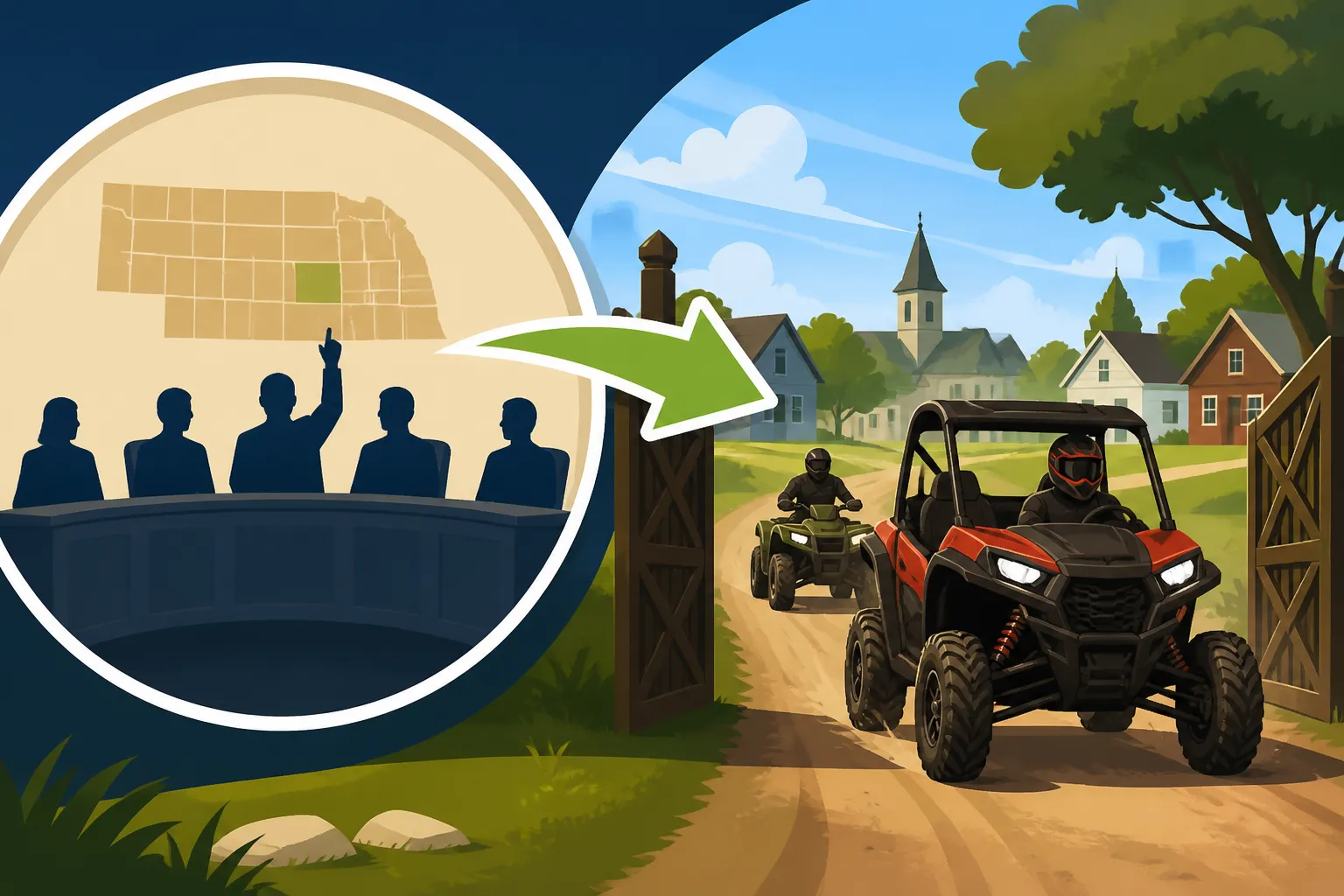
So, if your village doesn't have its own city council to pass ordinances, who does have the authority to greenlight ATV use on local streets? This is where your county board steps in. Unincorporated villages, by definition, don't have their own municipal government structure. They rely on the county for a host of services, from law enforcement to road maintenance, and crucially, for local governance. This means that any specific local rules governing ATV use on streets within these communities must come from the county level.
The county board acts as the legislative body for these areas, much like a city council does for an incorporated city. They have the power to enact resolutions that apply specifically to the roads and public ways within a defined unincorporated village. This isn't about opening all county roads to ATVs – that's a much broader and more complex issue – but rather about creating targeted access within the specific boundaries of your small community. It’s a vital distinction, and understanding this framework is the first step toward advocating for and achieving legal ATV access right where you live.
How a County Board Formally Opens Village Streets to ATVs
Navigating the legal pathway to open village streets for ATV and UTV use requires understanding who holds the keys to local governance. For unincorporated communities in Nebraska, that authority firmly rests with the county board. It's a structured process that requires community engagement and a clear presentation of needs.
Understanding Unincorporated Villages and County Jurisdiction
First, let's clarify what we mean by an "unincorporated village." In Nebraska, an unincorporated village is essentially a populated area that has not formally organized itself as a municipality with its own elected officials, city charter, and separate tax base. These communities rely on the county government for many services that an incorporated city would provide for itself. This means that the county board is the primary legislative and administrative body overseeing these areas. For a deeper dive into this concept, you might want to look at [Nebraska Unincorporated Villages and County Boards].
Because there's no town council or village board to pass local ordinances, any changes to traffic laws, including those concerning ATV and UTV use on public roads within the village, must be initiated and approved by the county board. This includes setting speed limits, regulating parking, and, in our case, creating exceptions for off-road vehicle use on certain streets. It’s a crucial point, as many residents might initially assume their local township or some other entity would be responsible.
The County Board Resolution Process Explained
So, how does a county board actually go about opening these village streets? It typically begins with residents. If you and your neighbors want to see ATVs and UTVs legally permitted on your village streets, you'll likely need to:
- Gather Support: Form a group, circulate a petition, and demonstrate widespread community interest. A unified voice is far more effective than individual complaints.
- Prepare a Proposal: Draft a clear, concise request outlining which streets you want opened, why it's beneficial (e.g., local errands, farm access, community events), and what safety measures you propose (speed limits, flag requirements, etc.).
- Present to the County Board: Request a spot on the county board's agenda. This is your chance to make your case directly to the decision-makers. Be prepared to answer questions and address concerns.
- Public Hearing: The board will likely hold a public hearing, giving all residents, both proponents and opponents, a chance to voice their opinions. This is an important step for transparency and democratic process.
- Board Discussion and Vote: After considering all input, the county board will discuss the proposal and eventually vote on a resolution. If it passes, the resolution becomes law within the specified boundaries of your unincorporated village.
It’s not always a quick process, but a well-organized effort can certainly lead to success. For specific guidance on initiating this, consider resources like [How to Ask a County Board to Allow Riding]. These resolutions are powerful because they provide the clear legal framework that was missing, turning "gray area" riding into fully legal and regulated activity within your community.
Key Differences: County Resolution vs. City Ordinance
While both city ordinances and county board resolutions serve to open public streets to ATVs and UTVs, they operate on different scales and through different legislative bodies. Understanding these distinctions is key to knowing who to approach and what to expect.
A city ordinance is enacted by an incorporated city's council and applies specifically to the streets and areas within that city's municipal limits. These ordinances can be quite detailed, addressing everything from registration fees and age restrictions to specific hours of operation and allowed routes. They reflect the unique needs and priorities of that specific city.
A county board resolution, on the other hand, is passed by the county board and applies to unincorporated areas within the county's jurisdiction. In our context, this means specifically designated streets within an unincorporated village. The county board's resolution for a village will typically focus on the legality of using ATVs on public ways, often incorporating existing state laws regarding equipment and rider requirements. The scope is generally narrower, targeting the specific problem of access in an un-governed community rather than a broad municipal regulatory framework. [Nebraska County Board Resolutions for Villages] details this approach.
Here's a quick comparison:
| Feature | City Ordinance | County Board Resolution |
|---|---|---|
| Governing Body | Incorporated City Council | County Board |
| Scope of Application | Within specific city limits | Within designated unincorporated village boundaries |
| Legislative Process | City council meetings, public hearings, votes | County board meetings, public hearings, votes |
| Typical Focus | Broad range of local rules, fees, hours | Primarily on legal access, often incorporating state rules |
| Local Customization | High degree of local tailoring | Limited, often deferring to state law for details |
The main takeaway is that for residents of unincorporated villages, the county board is your direct line to achieving legal ATV and UTV access on your local streets.
Riding Legally in a County-Designated Village: What You Need to Know
Once your county board passes a resolution opening the streets of your unincorporated village to ATVs and UTVs, it's not a free-for-all. There are still crucial rules to follow, equipment to ensure, and a responsibility to ride safely and respectfully. This section will walk you through what you need to know to enjoy your newfound access without running into trouble.
Navigating the Specific Rules of the Road
Even with a county resolution in place, Nebraska state laws governing ATV and UTV use on public roads still largely apply. The resolution primarily provides the permission for your machine to be on those specific village streets, but it doesn't usually override the state's baseline requirements for road legality. This means you’ll still need to adhere to rules that aim to ensure safety and integrate ATVs into the existing traffic flow.
Key state-mandated requirements you'll need to know include:
- Speed Limits: Generally, ATVs are restricted to a maximum speed of [Nebraska's 30 mph Road Limit] on public roads, even if the posted speed limit for cars is higher. Always observe the lowest applicable speed.
- Safety Flags: You'll almost certainly need to equip your machine with a visible safety flag. [Nebraska's 5-Foot Safety Flag Rule] specifies that the flag must be at least five feet above the ground and made of day-glow orange. This makes your lower-profile machine more visible to other motorists.
- Licensing: The operator must hold a valid Class O operator's license, or if operating for agricultural purposes, a valid farm permit. [Nebraska Requires a Class O License or Farm Permit] is a non-negotiable requirement.
- Lighting: Your ATV or UTV must have functional head and tail lights. [Nebraska Requires Head and Tail Lights] for any road use, ensuring you can see and be seen, especially at dawn, dusk, or in inclement weather.
- Insurance: Liability insurance is a must. [Nebraska Requires Liability Insurance on Roads] to protect you and others in case of an accident. Make sure your policy covers road use in accordance with state minimums.
While the county resolution opens the door, these state laws are the framework within which you must operate. Always check the specific language of your county's resolution, as it might include additional restrictions pertinent to your village, such as specific hours for ATV use or routes to avoid certain areas.
Essential Equipment for Street-Legal Compliance
Beyond the absolute necessities mandated by state law, equipping your ATV or UTV for safe and legal road use in a county-designated village often means adding a few extra features. Think of it from a defensive driving perspective: how can you make yourself as visible and predictable as possible to other vehicles?
While not always explicitly required by law for every situation, adding accessories like rearview mirrors, turn signals, and even a horn significantly enhances your safety and communication on shared roadways. Many stock ATVs and UTVs are not designed with road use in mind, so upgrading components is a smart move. For riders looking to equip their machines for safer road use and compliance, brands like SuperATV offer a wide range of accessories. Their universal turn signal kits, robust rearview mirrors, and high-visibility flags can help you meet or exceed requirements and dramatically improve your safety profile. Equipping your machine with quality lights, perhaps even brighter LED options, also ensures you're easily seen by drivers of larger vehicles.
Furthermore, ensure your tires are in good condition and suitable for road surfaces, and that your brakes are responsive. Regular maintenance, just like you would perform on a car, becomes even more critical when operating your machine on public streets. A well-maintained and properly equipped machine is a safer machine for everyone on the road.
The Importance of Responsible Riding and Community Relations
Legal access is a privilege, not an absolute right, and it can be easily jeopardized if riders aren't responsible. Even with a county resolution, your actions as an ATV or UTV operator directly impact public perception and the future of ATV access in your village.
This means being a good neighbor. Respect posted speed limits, especially in residential areas where children might be playing. Keep noise levels to a minimum, particularly during evening hours. Yield to pedestrians, bicyclists, and traditional vehicle traffic. Be courteous, and set an example of what responsible ATV use looks like. Nothing can turn public opinion against ATV access faster than a few riders operating recklessly or disregardfully.
Remember that deputies can still enforce traffic laws and issue citations for violations. Understanding [Nebraska DUI Law and Off-Road Machines] is critical, as operating under the influence applies to ATVs on public roads just as it does to cars. Similarly, know that [Nebraska Ticket Costs for Road Riding] can be substantial, not just in fines but also in potential legal fees. Protecting your riding privileges means being a vigilant and respectful member of the community.
Maintaining Access and Looking to the Future
The passing of a county board resolution to open village streets for ATV and UTV use is a significant win for local riders. However, it's not a "set it and forget it" situation. Maintaining this access requires ongoing engagement, responsible riding, and an awareness of broader legislative efforts that could affect all off-road enthusiasts in Nebraska.
Staying Informed and Advocating for Your Riding Rights
Once a resolution is in place, it's crucial for riders and the broader community to stay informed about its specifics and any potential amendments. Attend county board meetings occasionally, subscribe to local government newsletters, or join local ATV clubs if they exist. These groups often serve as vital liaisons between riders and local authorities. For example, groups like the Nebraska Off-Highway Vehicle Association often track legislative changes and can provide valuable resources and support for local advocacy efforts.
Your continued advocacy doesn't necessarily mean constant petitioning, but rather demonstrating that the resolution is working well for the community. This includes reporting issues responsibly, participating in community discussions, and continuing to highlight the positive impacts of legal ATV use—whether it’s for local commerce, agricultural efficiency, or simply enhancing the quality of life for residents. If there are discussions about potential changes or repeals, being an organized and articulate advocate is key to protecting the access you've worked hard to gain.
The Potential for Broader State-Level Changes
While this article focuses on local county board actions, it's worth noting that the landscape of ATV and UTV use in Nebraska is always subject to broader state-level discussions. In the past, there have been efforts by lawmakers to introduce legislation that could dramatically alter how and where ATVs can be ridden across the entire state, including proposals for statewide registration.
For instance, you might recall discussions around topics like [Lawmakers Proposed Registering Every ATV Statewide]. While such initiatives have not always come to fruition, they highlight the ongoing nature of policy development. A statewide registration program, if ever passed, would undoubtedly impact local resolutions by providing a uniform framework for road use, potentially adding new requirements or expanding legal access in different ways. Staying aware of these broader legislative movements helps you anticipate potential changes and participate in public discourse when opportunities arise. Even if your village is covered by a county resolution, understanding the state's evolving stance on off-road machines helps ensure you're prepared for any future shifts in regulations.
Disclaimer
This article is for general informational purposes only and does not constitute professional advice. Laws, prices and regulations vary by location and change over time. Consult a qualified professional for guidance on your specific situation.